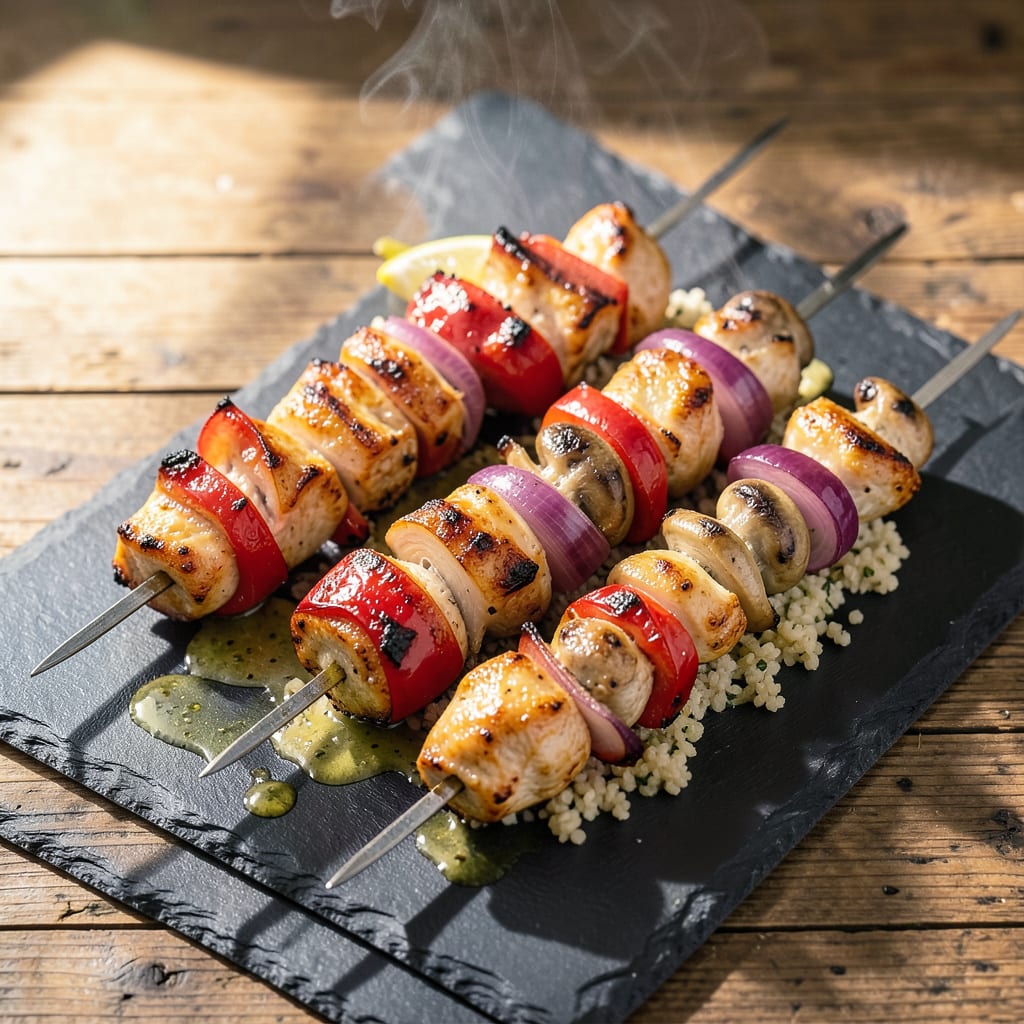
Yes, you can cook kabobs in the oven by arranging them on a baking sheet or broiler pan. Use high heat (400-450°F) and turn them halfway for even cooking—typically 12-18 minutes depending on protein and veggie size.
I’ve found oven-cooked kabobs deliver surprisingly great results when you optimize for heat circulation. The key difference from grilling is moisture retention—your veggies stay juicier, while meats develop a nice caramelized exterior without drying out. 🔥 For best texture, I recommend cutting ingredients into uniform sizes and leaving small gaps between skewers on the pan to allow hot air to flow freely.
What I love about this method is its versatility for different proteins. Chicken benefits from the consistent heat, shrimp cooks perfectly without over-char, and beef maintains its tenderness. Just remember to preheat your oven fully and use the upper rack position for that ideal balance between browning and even cooking. ✨
💡 In This Article
- How Oven Heat Affects Kabob Cooking Results
- Best Oven Kabob Recipes and Skewer Tips
How Oven Heat Affects Kabob Cooking Results
Oven cooking transforms kabobs through convection heat—hot air circulating around the food—rather than direct flame contact. This creates a gentler cooking environment where proteins like chicken or beef reach safe internal temperatures (165°F for poultry, 145°F for beef) without the risk of charred exteriors.
The enclosed space also traps steam, keeping veggies like bell peppers and zucchini tender rather than dried out. 🔥
Broiling mimics grilling by exposing kabobs to intense radiant heat from above. Set your oven to high broil (500°F+) and position skewers 4-6 inches from the element for that signature char. Conventional baking at 425°F works too, but requires rotating skewers halfway for even browning.
Convection ovens excel here—their fans create 20% faster cooking and more uniform results than standard models.
Spacing matters because crowded skewers create steam pockets that lead to soggy veggies. Leave 1-inch gaps between kabobs on the baking sheet for proper airflow. I’ve found metal skewers conduct heat better than wooden ones, helping ingredients cook more evenly. The tradeoff? Wooden skewers (soaked 30 minutes in water) add subtle smokiness when broiled. ✨
Moisture retention is the oven’s secret weapon. Unlike grills where juices drip away, oven-cooked kabobs baste in their own liquids. This means marinades with olive oil or yogurt bases penetrate deeper, while acidic components (lemon, vinegar) tenderize proteins more effectively. For maximum flavor, pat ingredients dry before skewering to encourage browning rather than steaming.
Here’s what surprised me: oven kabobs often develop more complex caramelization than grilled versions. The consistent heat allows natural sugars in onions and pineapple to brown gradually, creating deeper flavor layers. Just watch the timing—veggies like mushrooms cook faster than dense proteins, so thread similar-textured ingredients together. 💫
Pro tip: Use a wire rack on your baking sheet to elevate kabobs. This prevents the bottoms from steaming in their juices and promotes all-around crispness. For extra char, finish with 2-3 minutes under the broiler after baking—this replicates that coveted grill-mark appearance without the outdoor setup.

Trained in classic French technique but raised on slow-cooked ribs and spicy rubs, she blends culinary skill with smoke and soul.
- Recipe for Boneless Pork Chops in Cast Iron Skillet: Sear and Baste to Juicy Perfection - October 3, 2026
- Recipe for Boneless Cross Rib Roast: Slow-Roasted Beef with Herb Crust - October 3, 2026
- Hamburgers in Sauce Recipe Crock Pot: Slow-Cooked Savory Delight - October 3, 2026