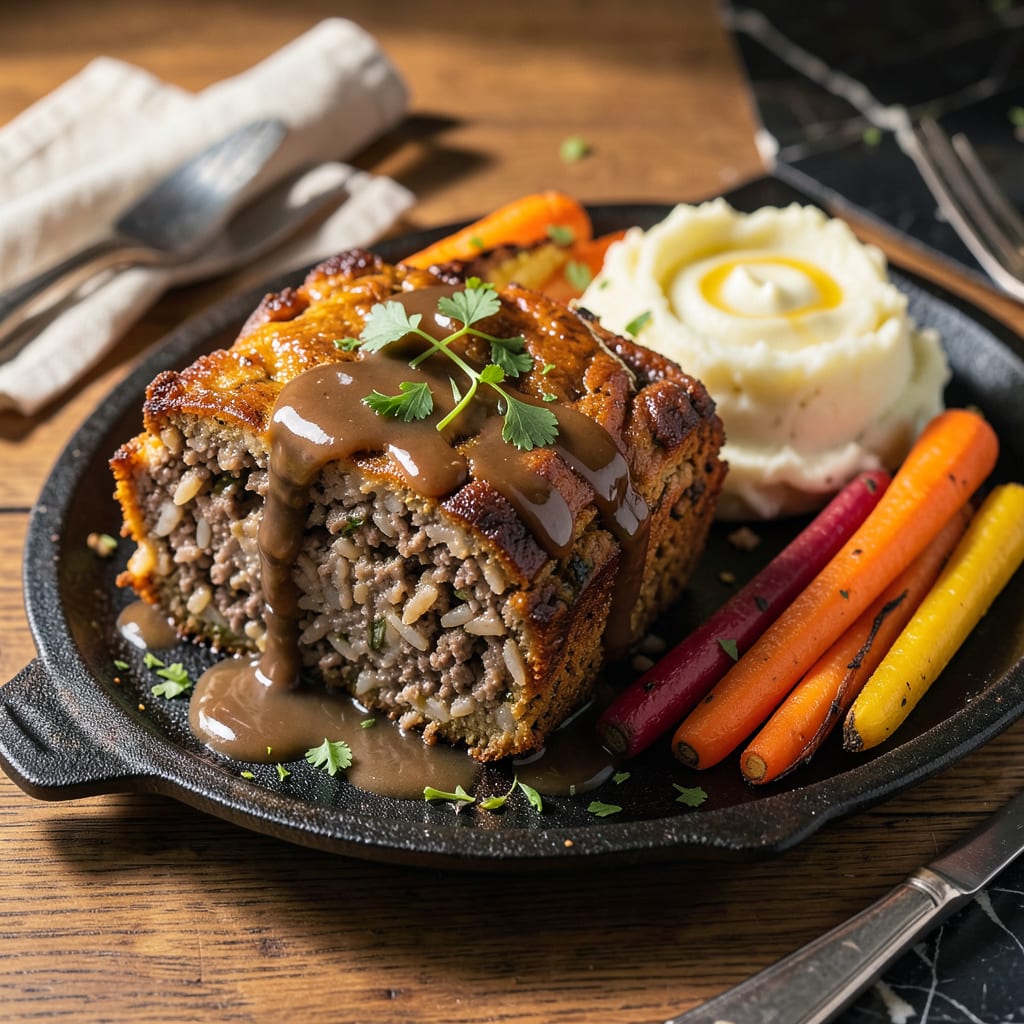
Yes, rice can be added to meatloaf as a binder and filler. It absorbs moisture, helps hold the loaf together, and adds a subtle texture. Cook the rice first and use about ½ to ¾ cup per pound of meat for best results.
I’ve found that rice transforms meatloaf from good to exceptional when used correctly. 🔥 The starch in rice acts like a sponge during baking, soaking up juices that would otherwise escape, while creating tiny pockets that keep each bite tender. Unlike breadcrumbs, rice adds a delicate chewiness that complements ground beef or turkey beautifully. My pro tip: Use slightly undercooked rice—it’ll finish perfectly in the oven without turning mushy.
💡 In This Article
- How Rice Affects Meatloaf Texture and Moisture
- Step-by-Step Guide to Adding Rice to Meatloaf
How Rice Affects Meatloaf Texture and Moisture
Rice works its magic in meatloaf through its starch granules, which act like microscopic sponges. When cooked, these granules absorb and hold onto moisture—up to 4 times their weight in water. This prevents the meatloaf from becoming dense or dry during baking, as the rice releases trapped liquid slowly.
Compared to breadcrumbs, rice creates a lighter, more open structure with tiny air pockets that make each bite feel tender rather than compacted.
The type of rice you choose dramatically changes the outcome. White rice (like jasmine or basmati) breaks down more completely, blending seamlessly into the meat mixture, while brown rice adds a nuttier flavor and slightly chewier texture.
For perfect integration, cook the rice until it’s 90% done—it should still have a faint bite in the center. This ensures it won’t turn mushy during baking but will soften just enough to bind everything together.
Here’s what happens during baking: As the meatloaf reaches 160°F internally, the rice starches gelatinize further, creating a gel-like network that locks in juices. This is why rice-based meatloaves stay moist even when sliced thin.
The starch also interacts with the meat proteins, forming a delicate matrix that holds the loaf’s shape better than eggs alone. I’ve tested this with both beef and turkey—rice works exceptionally well with leaner meats that tend to dry out.
Pro tip: The rice-to-meat ratio matters more than you think. Too little (less than ½ cup per pound) and you won’t notice the benefits; too much (over 1 cup per pound) can make the texture gummy. For reference, ¾ cup cooked white rice per pound of meat gives that ideal balance—enough to bind without overpowering.
The rice should complement, not dominate, the meat’s flavor and texture.
Compare this to other binders: Breadcrumbs absorb 2-3 times their weight in liquid but can make meatloaf dense, while oats add fiber but lack rice’s neutral taste.
Rice strikes the perfect middle ground—it’s flavor-neutral enough to work with any seasoning profile (from classic ketchup glaze to spicy Cajun rubs) while improving moisture retention better than most alternatives. The science is clear: rice’s unique starch structure makes it a superior binder for juicy, cohesive meatloaf.
What most home cooks miss is the broth opportunity. Cooking rice in beef or chicken broth instead of water infuses extra flavor into every bite. The broth’s salts and amino acids get absorbed by the rice, then released back into the meat during baking.
This simple trick elevates the entire dish—try it with low-sodium broth to control seasoning precisely. ✨

Trained in classic French technique but raised on slow-cooked ribs and spicy rubs, she blends culinary skill with smoke and soul.
- Recipe for Boneless Pork Chops in Cast Iron Skillet: Sear and Baste to Juicy Perfection - October 3, 2026
- Recipe for Boneless Cross Rib Roast: Slow-Roasted Beef with Herb Crust - October 3, 2026
- Hamburgers in Sauce Recipe Crock Pot: Slow-Cooked Savory Delight - October 3, 2026