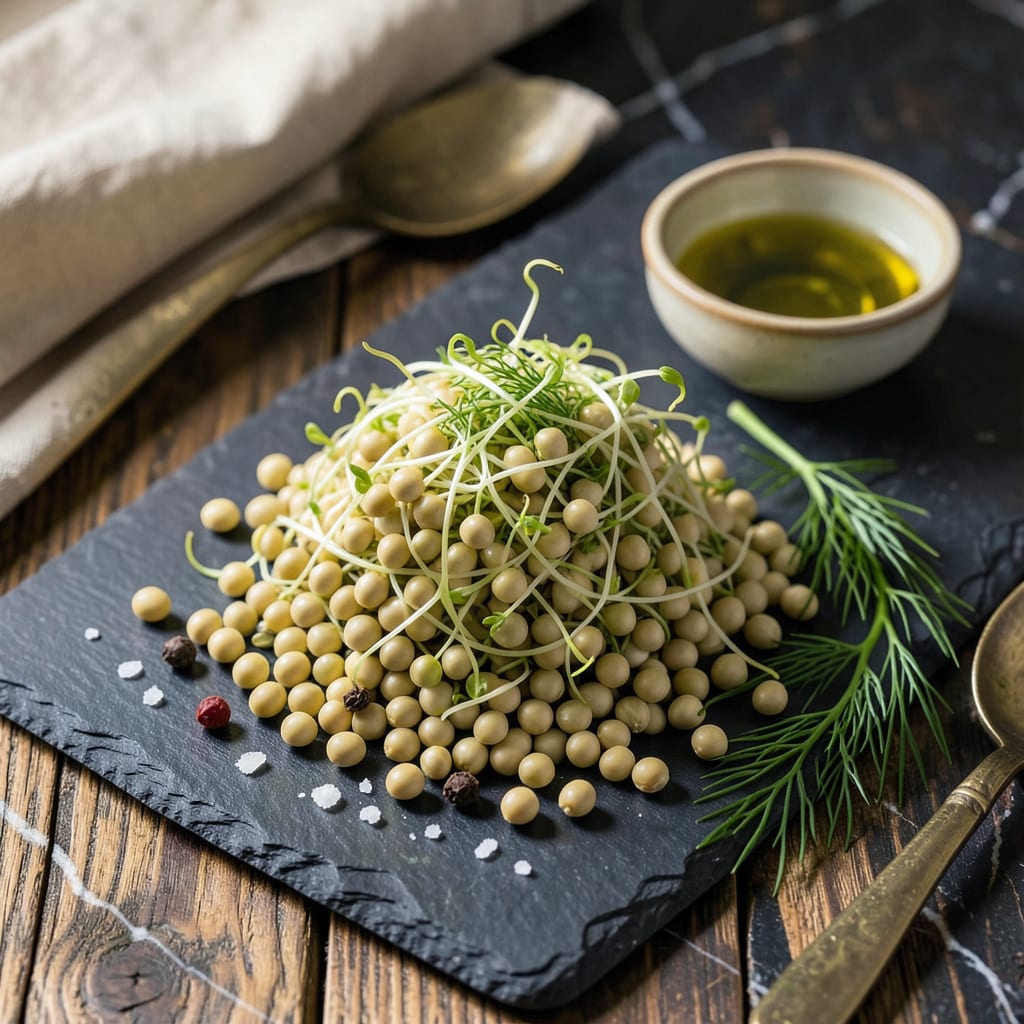
Yes, you can sprout split peas, though they require careful handling due to their delicate texture. Use whole dried peas (not pre-split) for best results, soaking them 8-12 hours before rinsing twice daily until sprouts appear in 2-4 days.
I’ve found that split peas behave differently than other legumes when sprouting because their protective outer layer is compromised during processing. 🔥 This makes them more vulnerable to over-soaking and bacterial growth, which is why I always recommend starting with whole dried peas instead. The sprouting process activates enzymes that break down complex starches into simpler sugars, creating a sweeter, more digestible food. Temperature control is crucial—keep them in a warm spot (around 70°F) but out of direct sunlight to prevent spoilage.
💡 In This Article
- Why Split Peas Need Special Care for Sprouting
- Step-by-Step Guide to Sprouting Split Peas at Home
Why Split Peas Need Special Care for Sprouting
The moment peas are split, their protective seed coat is damaged, exposing the delicate embryo inside. This outer layer normally acts as a barrier against excessive moisture and pathogens during germination. Without it, split peas absorb water too quickly, which can lead to mushy texture or bacterial growth.
The germination rate drops significantly—whole peas typically sprout at 85-95% success, while split peas may only achieve 50-70% under ideal conditions.
Enzyme activation becomes unpredictable with split peas. When you soak whole peas, enzymes like amylase break down starches into sugars at a controlled rate. Split peas, however, release these enzymes unevenly because their internal structure is exposed. This can cause some peas to sprout too fast while others lag behind.
The ideal temperature window of 65-75°F becomes even more critical—below 60°F, enzymes slow dramatically; above 80°F, you risk fermentation instead of sprouting.
Moisture management is where most people struggle. Split peas require shorter soaking times (6-8 hours max) compared to whole peas (8-12 hours). Their exposed starches turn to paste if over-soaked, creating a breeding ground for mold. I use a fine-mesh strainer for rinsing to prevent the tiny pieces from slipping through while ensuring thorough drainage.
The rinsing frequency must increase to 3-4 times daily to compensate for their vulnerability.
Here’s what’s actually happening at the cellular level: The cotyledon (seed leaf) in split peas is directly exposed to water, causing rapid hydration that can rupture cell walls. Whole peas hydrate gradually through their seed coat, allowing for even water distribution.
This difference explains why split pea sprouts often develop unevenly—some may show 1/4-inch tails in 2 days while others remain dormant.
The starch-to-protein ratio shifts during processing too. Whole peas contain about 25% protein and 50% complex carbs, but splitting can degrade some proteins through oxidation. This means your sprouts may have slightly less nutritional value than those from whole peas.
For comparison, lentils (which sprout easily) maintain 90% of their protein content through sprouting, while split peas may lose up to 15% of theirs.
What most people don’t realize is that split peas were originally designed for quick cooking, not sprouting. The industrial splitting process often involves heat treatment (around 140°F) to prevent spoilage during storage. This partial cooking can denature some of the enzymes needed for germination.
That’s why I always recommend seeking out “raw” or “untreated” split peas if you’re determined to sprout them, though whole peas remain the gold standard.
The reward for this extra care? Sprouted split peas develop a surprisingly sweet, almost corn-like flavor with a crisp texture. Their starch converts to maltose during sprouting, creating a naturally sweeter profile than unsprouted peas.
The vitamin C content also increases by about 300% in the first 48 hours of sprouting, making them a nutritional powerhouse when successful. ✨

Trained in classic French technique but raised on slow-cooked ribs and spicy rubs, she blends culinary skill with smoke and soul.
- Recipe for Boneless Pork Chops in Cast Iron Skillet: Sear and Baste to Juicy Perfection - October 3, 2026
- Recipe for Boneless Cross Rib Roast: Slow-Roasted Beef with Herb Crust - October 3, 2026
- Hamburgers in Sauce Recipe Crock Pot: Slow-Cooked Savory Delight - October 3, 2026