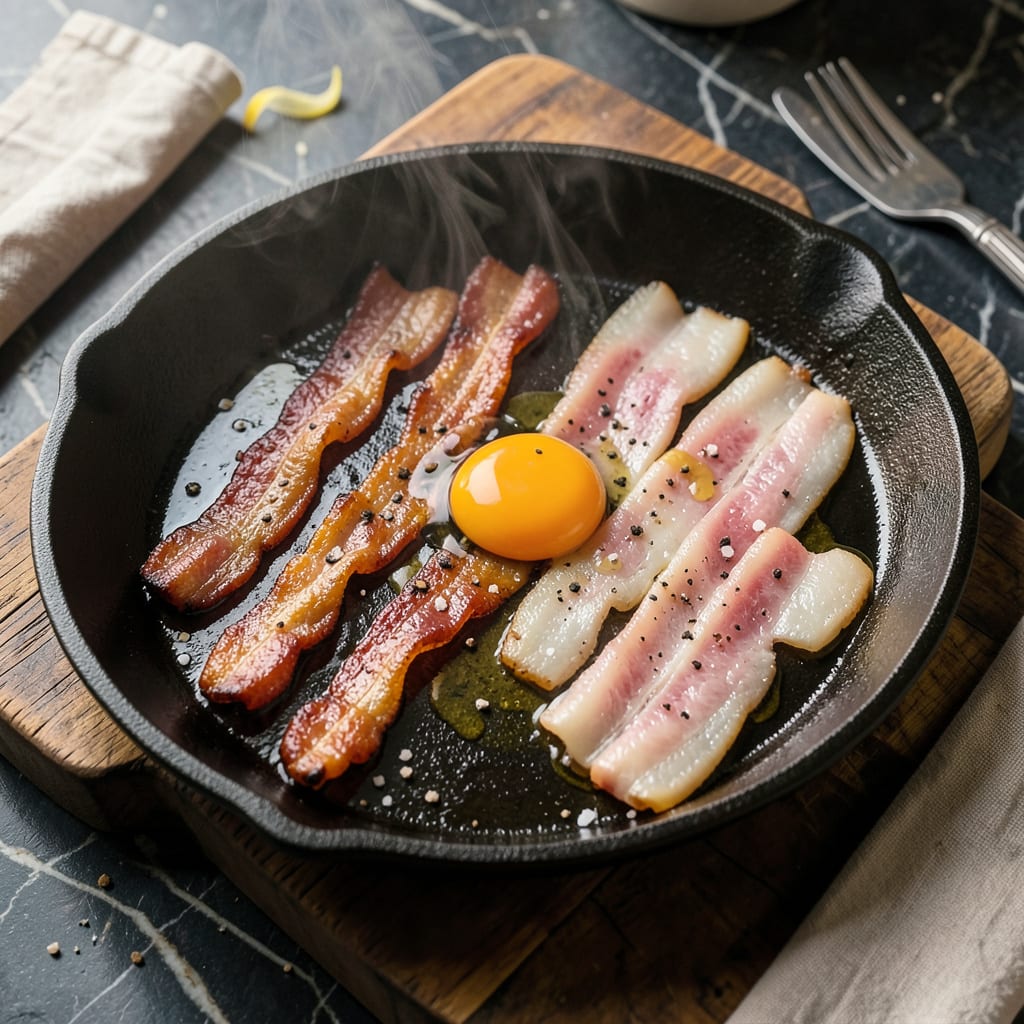
Undercooked bacon poses serious health risks due to potential bacteria like salmonella and parasites. Always cook it until crispy or reaching an internal temperature of 145°F for pork (160°F for ground pork products).
I’ve seen too many home cooks assume bacon’s cured status makes it safe when slightly pink—but that’s a dangerous myth. 🔥 The curing process reduces some risks but doesn’t eliminate pathogens like trichinella or E. coli, which thrive in undercooked pork. Even thick-cut artisanal bacon needs proper heat treatment to break down these threats. What’s tricky is that bacon’s high fat content can mask undercooking, making visual checks unreliable without a thermometer.
From my pitmaster experience, the crispiness test is your best friend here. When bacon reaches that perfect glass-like shatter when bent, you’re in the safe zone. But for absolute certainty, I always recommend using a meat thermometer—especially with specialty cuts or sugar-cured varieties that might brown prematurely. ✨
💡 In This Article
- Health Risks of Eating Undercooked Bacon Explained
- How to Tell If Bacon Is Fully Cooked (Without a Thermometer)
Health Risks of Eating Undercooked Bacon Explained
Bacon’s curing process creates a false sense of security—while salt and nitrates inhibit some bacterial growth, they don’t eliminate all pathogens. The real danger lies in trichinella spiralis, a parasite that causes trichinosis.
This microscopic worm can survive in pork muscle until temperatures reach 137°F, but the USDA recommends 145°F for whole cuts to ensure complete destruction. What makes this tricky is that bacon’s fat content can insulate these parasites, allowing them to survive even when the edges appear cooked. 🔥
Beyond parasites, undercooked bacon harbors bacterial threats like salmonella and E. coli. These bacteria thrive in the 40-140°F “danger zone” where pork often lingers during uneven cooking. A study from Kansas State University found that 25% of raw pork samples tested positive for Yersinia enterocolitica, another foodborne pathogen that causes fever and diarrhea.
The smoking process used in bacon production only penetrates the surface—leaving the interior vulnerable if not properly cooked through. ✨
Here’s what happens at the cellular level: Heat denatures proteins in both the meat and any present pathogens. At 140°F, bacterial cell walls begin breaking down, while 145°F ensures complete protein coagulation that kills most microorganisms.
The fat rendering process also matters—properly cooked bacon will have at least 40% fat render, creating that telltale crispness that signals safety. Without this transformation, you’re essentially eating raw pork with added salt. 💫
Specialty bacons require extra caution. Thick-cut varieties (over 1/4-inch) need longer cooking times to reach safe internal temps. Sugar-cured bacons caramelize faster, potentially masking undercooked centers. Even “pre-cooked” bacon products labeled as “ready-to-eat” should reach 140°F when reheated to eliminate any post-processing contamination.
I’ve seen too many cases where beautiful, expensive artisanal bacon caused foodborne illness simply because it wasn’t cooked to proper temperature. ⚡
The USDA’s 160°F recommendation for ground pork products (including some bacon blends) isn’t arbitrary—it accounts for the increased surface area where bacteria can proliferate. When pork is ground, any contaminants on the surface get distributed throughout the meat.
This is why that extra 15°F makes all the difference between a delicious breakfast and a trip to the emergency room. Always remember: color isn’t a reliable indicator—only temperature guarantees safety. 🌟
Consider these critical factors when assessing bacon safety:
- Thickness: Standard slices (1/16-inch) cook through faster than thick-cut (1/4-inch+)
- Curing method: Dry-cured needs more heat than wet-cured to penetrate fully
- Fat content: Higher fat (>50%) requires lower temps to render properly without burning
- Cooking method: Oven-baked reaches more even temps than stovetop frying
From my years working with pork products, I’ve developed a simple mantra: “When in doubt, cook it out.” That extra minute of crisping could save you from days of discomfort—or worse. The sensory payoff of perfectly cooked bacon—that ideal balance of crispy edges and tender meat—is worth the precision.
Your taste buds and your digestive system will thank you. 💛

Trained in classic French technique but raised on slow-cooked ribs and spicy rubs, she blends culinary skill with smoke and soul.
- Recipe for Crock Pot Swiss Steak: Slow-Cooked Beef With Mushroom Gravy - October 3, 2026
- Recipe for Kabsa Rice: Spiced Middle Eastern Feast in One Pot - October 3, 2026
- Hamburger Stir Fry Recipe Healthy: Lean Protein and Veggie-Packed Dinner - October 3, 2026