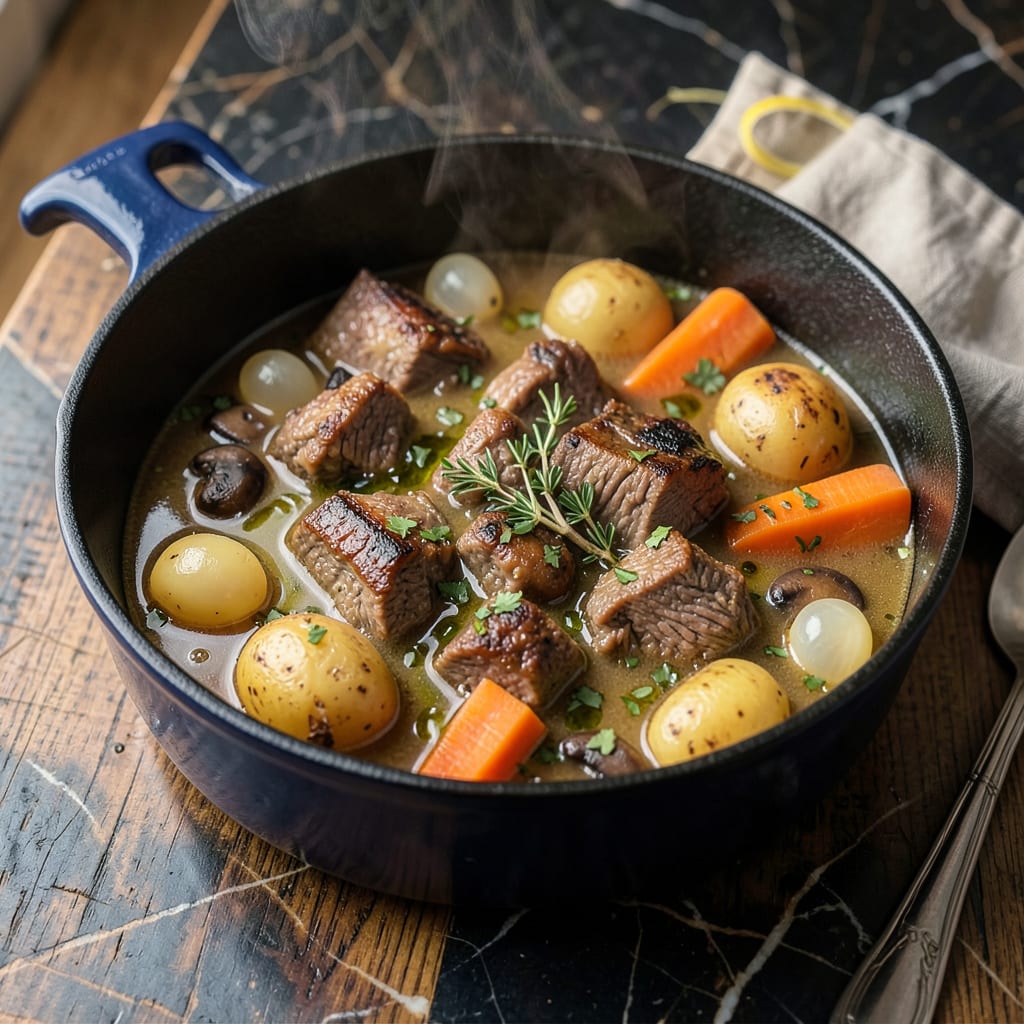
Yes, you can substitute bone broth for beef broth in most recipes. Bone broth has a richer, deeper flavor due to longer simmering and collagen content, but it works well in soups, stews, and sauces. Adjust seasoning if needed for balance.
I’ve made this swap countless times in my kitchen, and here’s what I’ve learned: the extended cooking process of bone broth extracts more minerals and gelatin, giving it a velvety mouthfeel that regular beef broth lacks. 🔥 This makes it particularly effective in braised dishes where you want that extra body, or in sauces that need to cling beautifully to ingredients. Just remember that bone broth often has less sodium than store-bought beef broth, so you might need to compensate with a pinch more salt or a splash of soy sauce for depth.
💡 In This Article
- Flavor and Nutritional Differences Between Bone Broth and Beef Broth
- Best Recipes to Swap Bone Broth for Beef Broth
Flavor and Nutritional Differences Between Bone Broth and Beef Broth
The magic happens in the simmering time—bone broth cooks for 12-48 hours compared to beef broth’s 2-6 hours. This extended process breaks down collagen into gelatin, creating that signature silky texture you feel on your tongue. The bones release minerals like calcium and magnesium, while beef broth focuses more on meaty flavor from muscle tissue.
You’ll taste the difference immediately: bone broth has a deeper, almost umami-rich quality, while beef broth delivers straightforward savory notes.
Here’s what’s actually happening chemically: The long simmer extracts 10-20% more amino acids from bones, including glycine and proline, which contribute to that “mouth-coating” sensation. Sodium levels typically run lower in homemade bone broth (50-100mg per cup) versus store-bought beef broth (400-600mg per cup).
This means you’ll often need to adjust seasoning—try adding ½ teaspoon salt per cup as a starting point and taste from there. ✨
The gelatin content (about 6-12 grams per cup in bone broth) creates a natural thickening effect in sauces and stews. I’ve watched this transform thin gravies into luscious coatings that cling to mashed potatoes or roasted meats. The trade-off? Bone broth’s intensity can overpower delicate dishes.
In my French onion soup tests, it added wonderful body but required 25% more white wine to balance the richness.
Nutritionally, you’re getting more than just flavor. That extended cooking pulls 30-50% more minerals from bones—think calcium for your teeth and magnesium for muscle function. The collagen supports gut health, while beef broth offers more iron from the meat.
For someone watching their sodium, bone broth is often the cleaner choice, but check labels if buying pre-made versions.
Consider these key differences when swapping:
- Texture: Bone broth creates velvety sauces; beef broth stays lighter
- Flavor Impact: Bone broth adds umami depth; beef broth keeps things classic
- Cooking Time: Bone broth reduces faster due to higher protein content
- Color: Bone broth appears darker, richer (thanks to caramelized collagen)
What most people don’t realize is that bone broth’s gelatin actually helps emulsify fats in dishes. I’ve seen this create stunningly smooth pan sauces where the butter stays suspended instead of separating. For braised dishes, this means your final reduction will have that professional sheen without extra effort. 💫
The one place I’d caution against swapping? Delicate consommé or clear broths where you want crystal-clear results. The gelatin in bone broth can create slight cloudiness, though I’d argue the flavor trade-off is often worth it. For everything else—from risotto to pot roast—this swap can elevate your dish from good to restaurant-worthy.

Trained in classic French technique but raised on slow-cooked ribs and spicy rubs, she blends culinary skill with smoke and soul.
- Recipe for Boneless Pork Chops in Cast Iron Skillet: Sear and Baste to Juicy Perfection - October 3, 2026
- Recipe for Boneless Cross Rib Roast: Slow-Roasted Beef with Herb Crust - October 3, 2026
- Hamburgers in Sauce Recipe Crock Pot: Slow-Cooked Savory Delight - October 3, 2026