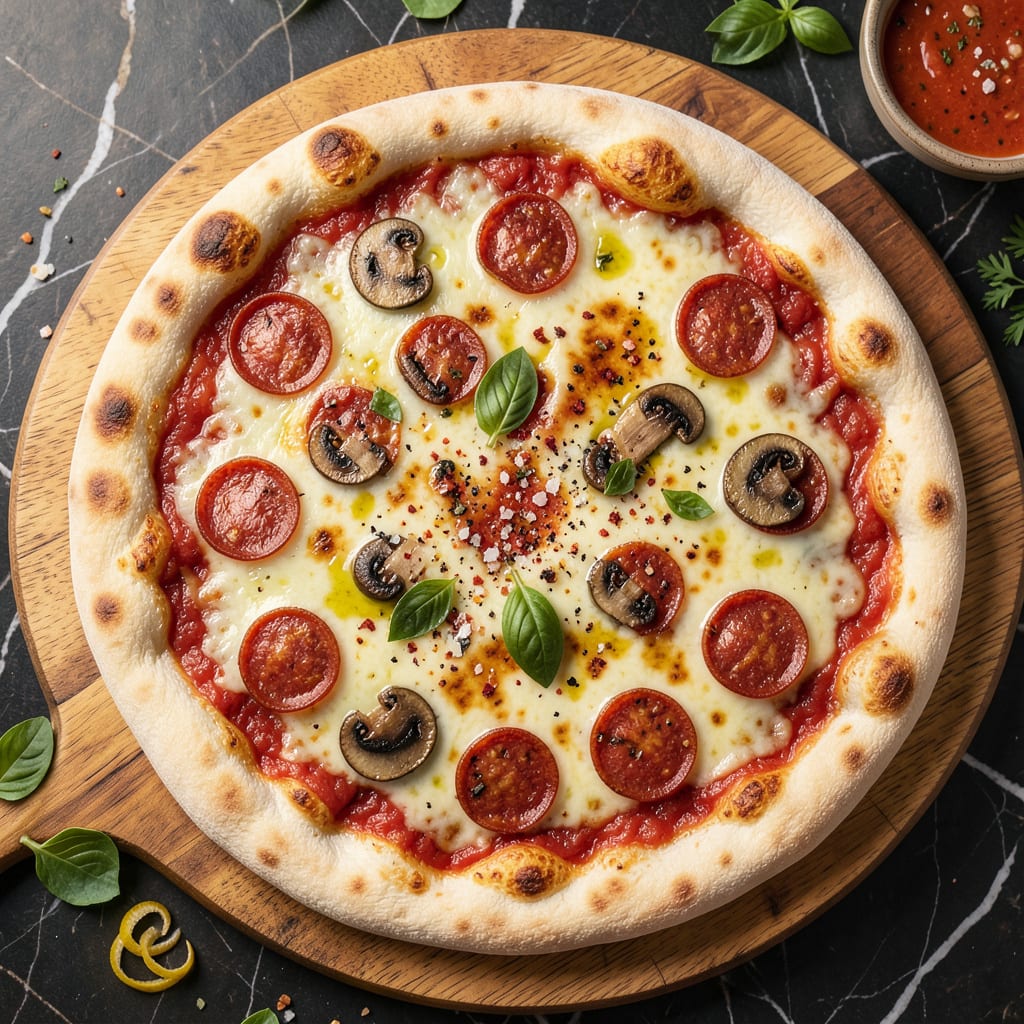
Yes, you can use bread dough for pizza, but it creates a thicker, chewier crust. Adjust hydration slightly, pre-bake the dough for 3-5 minutes, and use less sauce to prevent sogginess for best results.
This approach works because bread dough contains more yeast and sugar than traditional pizza dough, which affects how it rises and browns. 🔥 I’ve found that pre-baking creates a protective barrier against moisture from toppings, while reducing sauce prevents the crust from becoming waterlogged. The key is balancing the dough’s natural sweetness with savory toppings—think caramelized onions, smoked cheeses, or bold tomato sauces to complement the richer base.
What’s fascinating is how the higher gluten content in bread dough gives you that satisfying chew, almost like a focaccia-style pizza. ✨ Just remember to roll it thinner than you would for bread loaves, and don’t skip the pre-bake step—it’s what transforms a potential disaster into a crispy, flavorful crust.
💡 In This Article
- Why Bread Dough Differs from Traditional Pizza Dough
- Step-by-Step Guide to Perfect Pizza with Bread Dough
Why Bread Dough Differs from Traditional Pizza Dough
The secret lies in the gluten network and hydration levels. Bread dough typically contains 12-14% protein (higher gluten) compared to pizza dough’s 10-12%, creating a denser, chewier structure.
The extra gluten development during kneading makes bread dough more elastic and resistant to stretching thin—this is why your pizza crust might fight back when you try to roll it out. 🔥
Yeast activity also plays a crucial role. Bread dough often uses 2-3% yeast by weight versus pizza dough’s 0.5-1%, leading to faster fermentation and more gas production. This creates larger air pockets and a thicker final product.
The higher sugar content (often 2-5% in bread dough) accelerates browning through Maillard reactions, giving your crust a deeper color at lower temperatures. ✨
Hydration levels tell another important story. Pizza dough usually sits at 60-65% water content, while bread dough ranges from 55-60%. That 5-10% difference might seem small, but it dramatically affects how the dough handles and bakes.
The lower hydration in bread dough means less steam during baking, which contributes to a denser, more bread-like texture rather than pizza’s characteristic crispness.
Here’s what happens during baking: The extra yeast in bread dough creates rapid oven spring, but without proper pre-baking, the moisture from toppings gets trapped in the dense structure. This is why traditional pizza dough uses less yeast—it allows for a more controlled rise and better moisture evaporation during the short, high-heat baking process. 💫
Temperature sensitivity becomes critical with bread dough. The higher sugar content means it browns faster at lower temperatures. While pizza dough thrives at 700-900°F in wood-fired ovens, bread dough can burn at those temperatures. I’ve found 475-500°F works best for bread dough pizza, giving you that golden crust without charring before the center cooks through.
⚡
The fermentation timeline differs too. Bread dough often completes its first rise in 1-2 hours at room temperature, while pizza dough benefits from slower, colder fermentation (sometimes 24-48 hours in the fridge). This extended fermentation develops more complex flavors in pizza dough that bread dough simply can’t match in a short rise time.
What most home cooks don’t realize is that bread dough’s higher fat content (from butter or oil) creates a richer flavor but also makes the crust more prone to sogginess. The fat interferes with gluten formation just enough to soften the structure, which is wonderful for sandwich bread but requires careful handling for pizza applications.
🌟

Trained in classic French technique but raised on slow-cooked ribs and spicy rubs, she blends culinary skill with smoke and soul.
- Recipe for Boneless Pork Chops in Cast Iron Skillet: Sear and Baste to Juicy Perfection - October 3, 2026
- Recipe for Boneless Cross Rib Roast: Slow-Roasted Beef with Herb Crust - October 3, 2026
- Hamburgers in Sauce Recipe Crock Pot: Slow-Cooked Savory Delight - October 3, 2026