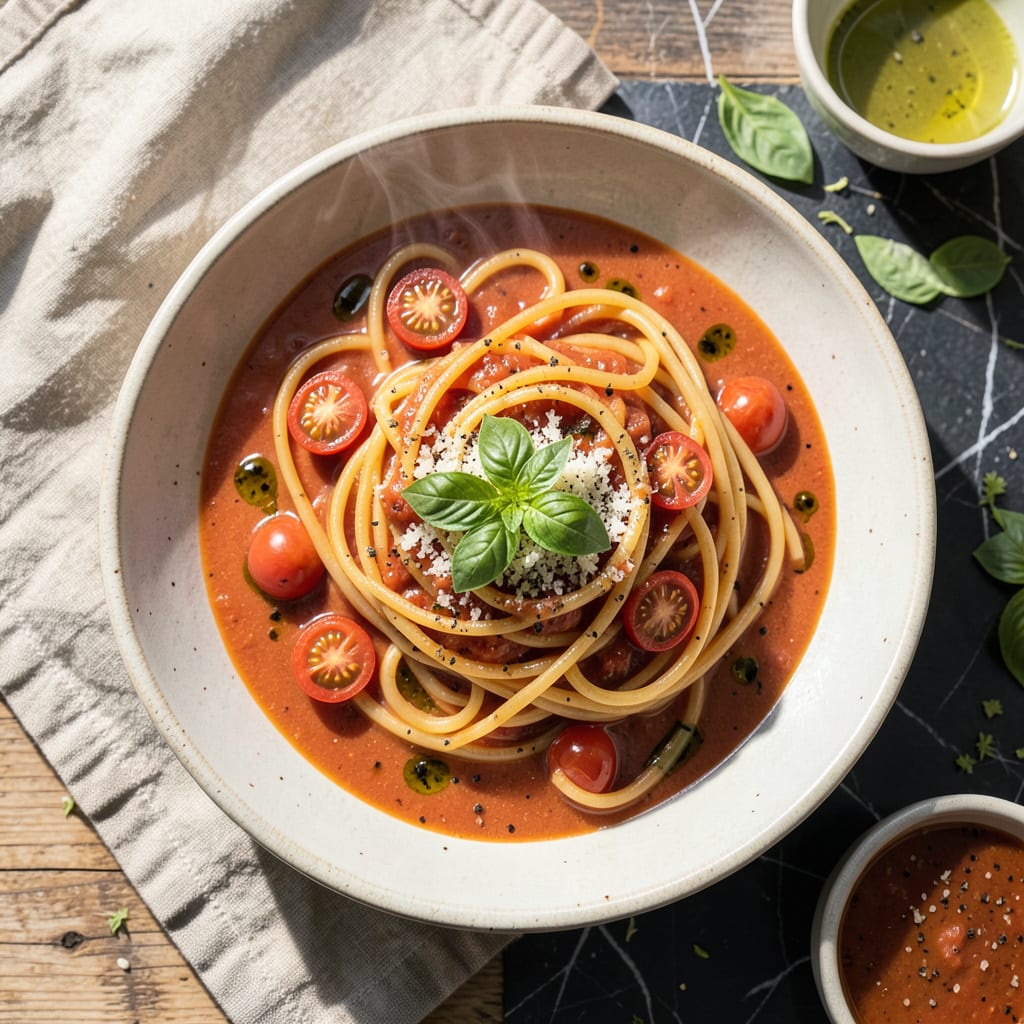
Yes, you can use tomato soup as a quick spaghetti sauce base. Its creamy texture and seasoned tomato flavor work well when simmered with garlic, herbs, and a splash of pasta water for better consistency.
I love this trick for busy weeknights when I need a sauce in under 10 minutes. The soup’s pre-seasoned base already contains tomato concentrate and spices, which means you’re starting with deeper flavor than plain canned tomatoes. 🔥 What really makes it shine is how the natural sweetness caramelizes when reduced—just be sure to balance it with a pinch of red pepper flakes or a splash of vinegar to brighten the taste. This method works especially well with creamier soups, though I always recommend tasting as you go since brands vary in salt content.
💡 In This Article
- How Tomato Soup Transforms Into Spaghetti Sauce
- 5 Easy Upgrades for Tomato Soup Spaghetti Sauce
How Tomato Soup Transforms Into Spaghetti Sauce
Tomato soup works as a sauce base because of its concentrated tomato solids and pre-seasoned profile. Most brands contain tomato paste, sugar, and spices—already a head start over plain canned tomatoes. When you simmer it, the water content evaporates, intensifying flavors through Maillard reactions between amino acids and sugars.
This creates deeper, meatier notes even without added protein. The key is reducing it by 30-40% to achieve marinara-like richness.
The creamy texture comes from added dairy or starches in condensed soups. This gives your sauce body but can make it sweeter than traditional marinara. I balance this with 1-2 tablespoons of red wine vinegar or lemon juice per can, plus a pinch of crushed red pepper for heat.
For comparison, classic marinara has about 5% sugar, while tomato soup often contains 8-12%—that’s why acidity adjustment is crucial.
Consistency control is where pasta water becomes your secret weapon. The starch in 1/4 cup pasta water helps emulsify the sauce, creating a silky texture that clings to noodles. Unlike watery marinara, tomato soup sauce coats strands more like Alfredo—just thinner. For thicker results, simmer uncovered for 12-15 minutes until it reaches a spoon-coating consistency.
Here’s what’s happening chemically: The soup’s pH (~4.2) softens pasta fibers slightly, allowing better flavor absorption. This is why your noodles taste more seasoned than with plain tomato sauce. The fat content (typically 2-3g per serving) also carries flavor compounds more effectively than oil-free marinara, giving you richer taste with less effort.
Temperature matters too. Simmering at medium-low heat (275-300°F) prevents scorching while allowing flavors to meld. I’ve found this method works best with condensed soups—ready-to-serve versions contain too much liquid and require 20-25 minutes more reduction time. For quickest results, start with 1 can (10.5oz) condensed soup + 1 can water, then reduce by half.
What most people don’t realize is that tomato soup contains natural glutamates from cooked tomatoes. These compounds enhance umami perception, making your sauce taste more complex than its simple preparation suggests. A sprinkle of Parmesan rind during simmering boosts this effect further, adding depth without extra salt.
The final texture should glisten slightly and mound on a spoon before slowly spreading. This indicates proper starch-fiber alignment from the pasta water integration. Unlike traditional sauces that separate when cooled, tomato soup-based versions maintain their creamy consistency even after refrigeration—perfect for meal prep!

Trained in classic French technique but raised on slow-cooked ribs and spicy rubs, she blends culinary skill with smoke and soul.
- Recipe for Boneless Pork Chops in Cast Iron Skillet: Sear and Baste to Juicy Perfection - October 3, 2026
- Recipe for Boneless Cross Rib Roast: Slow-Roasted Beef with Herb Crust - October 3, 2026
- Hamburgers in Sauce Recipe Crock Pot: Slow-Cooked Savory Delight - October 3, 2026