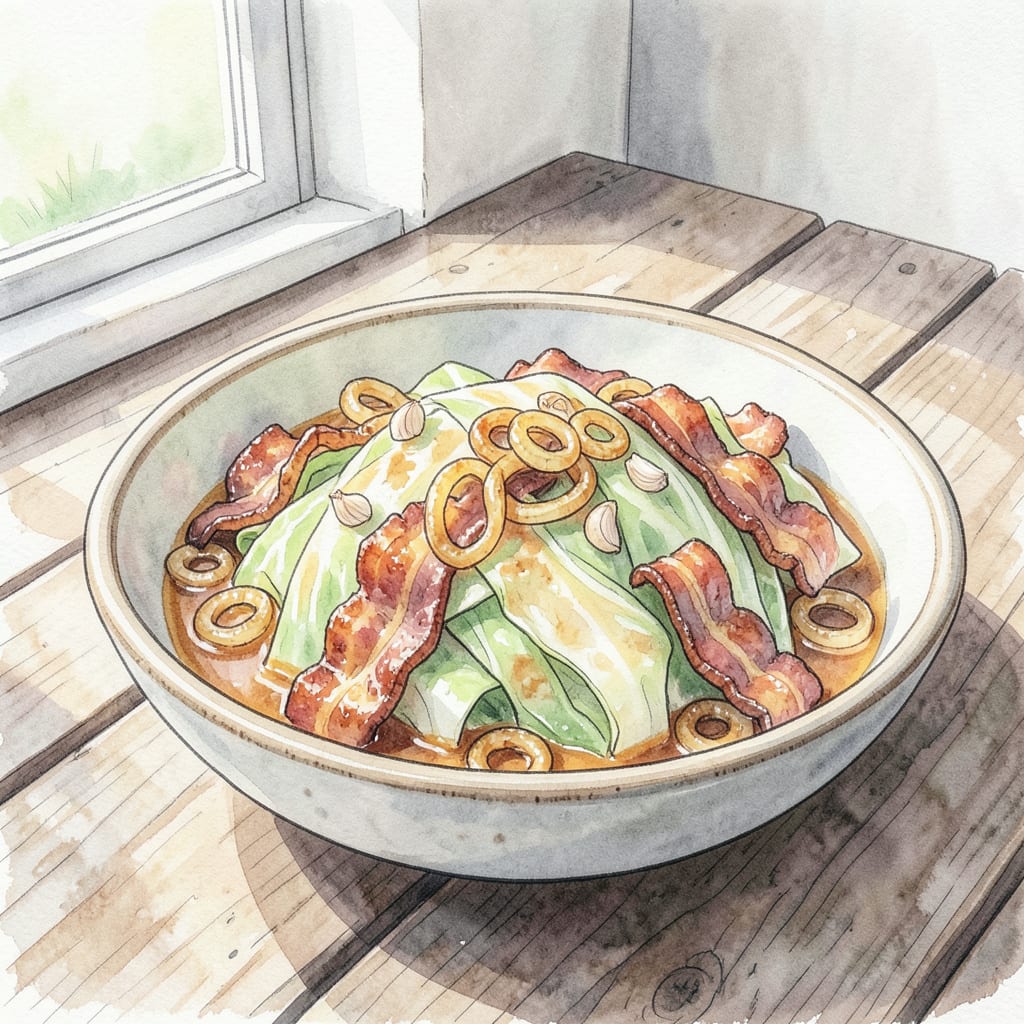
As a pitmaster with a passion for comfort food, I’m excited to share my canned cabbage recipe that transforms humble canned goods into a hearty, satisfying side dish. This recipe is a game-changer for anyone looking to elevate their canned cabbage into a comforting meal.
By combining canned cabbage with aromatic spices and slow-cooking it to perfection, you’ll create a dish that’s both nourishing and delicious. Let’s get started on this simple yet flavorful recipe that’ll become a staple in your kitchen.
Ingredients for Canned Cabbage
These comforting ingredients come together to create a hearty, satisfying side dish that’s perfect for any meal.
| Ingredient | Amount | Notes |
|---|---|---|
| Canned Cabbage 🥬 | 1 can | Drained and rinsed |
| Bacon 🥓 | 4 slices | Thick-cut, smoked |
| Onion 🧅 | 1 whole | Yellow or sweet |
| Garlic Cloves 🧄 | 3 cloves | Minced |
| Apple Cider Vinegar 🍎 | 2 tbsp | Or white wine vinegar |
| Brown Sugar 🍮 | 1 tbsp | Packed |
| Smoked Paprika 🌶️ | ½ tsp | For smoky flavor |
| Black Pepper 🌶️ | ¼ tsp | Freshly ground |
| Salt 🧂 | ½ tsp | Kosher or sea salt |
| Chicken Broth 🍲 | 1 cup | Low-sodium |
| Unsalted Butter 🧈 | 2 tbsp | For finishing |
[recipe_ingredient_scaler]
For the best flavor, look for thick-cut, smoked bacon at your local butcher or Costco. The cabbage is already canned, so we’re starting with a time-saver there. When shopping for onion, yellow onions work great here, but if you have sweet onions on hand, they’ll caramelize beautifully. I often grab my spices from Penzeys for quality.
No apple cider vinegar? White wine vinegar or even balsamic will work in a pinch, though it changes the flavor profile slightly. For a vegetarian version, swap the bacon for smoked tempeh or extra mushrooms. If you prefer a less smoky dish, regular paprika is fine—just adjust to taste. The chicken broth can be vegetable broth for a vegetarian option.
This dish keeps well in the fridge for 4-5 days. Reheat gently on the stovetop with a splash of broth if it’s too thick. Freezes well too—portion into containers or freezer bags for up to 3 months. When reheating from frozen, add a bit more broth to get the right consistency back.
Step-by-Step Instructions for Transforming Canned Cabbage into Comfort Food
Let’s turn canned cabbage into a delicious comfort dish with these straightforward steps.
Cooking the Bacon and Aromatics
Start by cooking the 4 slices of bacon in a large skillet over medium heat. I like to use thick-cut, smoked bacon for its rich flavor. Cook until the bacon is crispy and golden brown, which should take about 8-10 minutes. Remove the bacon from the skillet and set it aside on a paper towel-lined plate to drain excess fat. Leave the rendered bacon fat in the skillet as it adds a wonderful flavor to the dish.
Next, add the 1 whole onion, thinly sliced, to the same skillet. Cook until the onion is softened and translucent, stirring occasionally. This should take about 5-7 minutes. Add the 3 cloves of minced garlic and cook for another 1-2 minutes until fragrant. Be careful not to burn the garlic as it can quickly become bitter.
Combining the Ingredients and Simmering
Add the 1 can of drained and rinsed canned cabbage to the skillet with the onions and garlic. Stir to combine and cook for 2-3 minutes until the cabbage is heated through. Pour in the 1 cup of chicken broth, 2 tbsp of apple cider vinegar, 1 tbsp of brown sugar, 0.5 tsp of smoked paprika, 0.25 tsp of black pepper, and 0.5 tsp of salt. Stir well to combine all the ingredients.
Bring the mixture to a simmer, then reduce the heat to low and let it cook, covered, for 15-20 minutes. This allows the flavors to meld together and the cabbage to absorb all the delicious flavors. Stir occasionally to prevent sticking.
Finishing Touches
Once the cabbage mixture has simmered and the flavors have melded together, stir in the 2 tbsp of unsalted butter until melted. This adds a rich and creamy texture to the dish. Crumble the cooked bacon back into the skillet and stir to combine.
Taste and adjust the seasoning as needed. If it’s too thick, you can add a bit more chicken broth. If it’s too thin, simmer for a few more minutes uncovered. Serve hot, garnished with additional crispy bacon if desired.
Common Mistakes When Making canned cabbage
Overcooking Canned Cabbage
One of the biggest mistakes is overcooking canned cabbage, which can make it mushy and unappetizing. To avoid this, check the cabbage frequently during the last 5 minutes of cooking. I like to test it with a fork – it should still have a bit of texture. If you’re adding it to a slow cooker, add it during the last 30 minutes of cooking.
Skipping Proper Drainage
Not draining the canned cabbage properly can lead to a watery dish. After opening the can, I recommend draining the liquid and rinsing the cabbage with cold water. Then, gently squeeze out excess moisture using a clean kitchen towel or paper towels. This step makes a huge difference in the final texture.
Not Balancing Flavors
Canned cabbage can be quite bland on its own, so it’s crucial to balance its flavor with other ingredients. I always add aromatics like garlic and onions to enhance the taste. A splash of apple cider vinegar or a pinch of smoked paprika can also elevate the dish. Don’t be afraid to experiment with different seasonings to find your perfect balance.
Using Low-Quality Bacon
The quality of bacon can make or break this recipe. I prefer using thick-cut, smoked bacon from local butcher shops or specialty stores. Avoid thin, low-quality bacon as it won’t provide the same depth of flavor. If you’re looking for a vegetarian alternative, try using smoked tempeh or extra mushrooms to add depth.
Not Adjusting Seasoning
After simmering the cabbage mixture, taste and adjust the seasoning before serving. Canned goods can be salty, so you might need to adjust the salt level. I often add a final sprinkle of freshly ground black pepper to brighten the flavors.
Serving Without Garnish
Finally, serving the dish without a proper garnish can make it look unappetizing. I like to top mine with crumbled, crispy bacon and a sprinkle of fresh herbs if available. This adds visual appeal and a nice textural contrast. For an extra touch, serve in a nice serving dish to elevate the presentation.
Nutrition Facts

Trained in classic French technique but raised on slow-cooked ribs and spicy rubs, she blends culinary skill with smoke and soul.
- Recipe for Boneless Pork Chops in Cast Iron Skillet: Sear and Baste to Juicy Perfection - October 3, 2026
- Recipe for Boneless Cross Rib Roast: Slow-Roasted Beef with Herb Crust - October 3, 2026
- Hamburgers in Sauce Recipe Crock Pot: Slow-Cooked Savory Delight - October 3, 2026