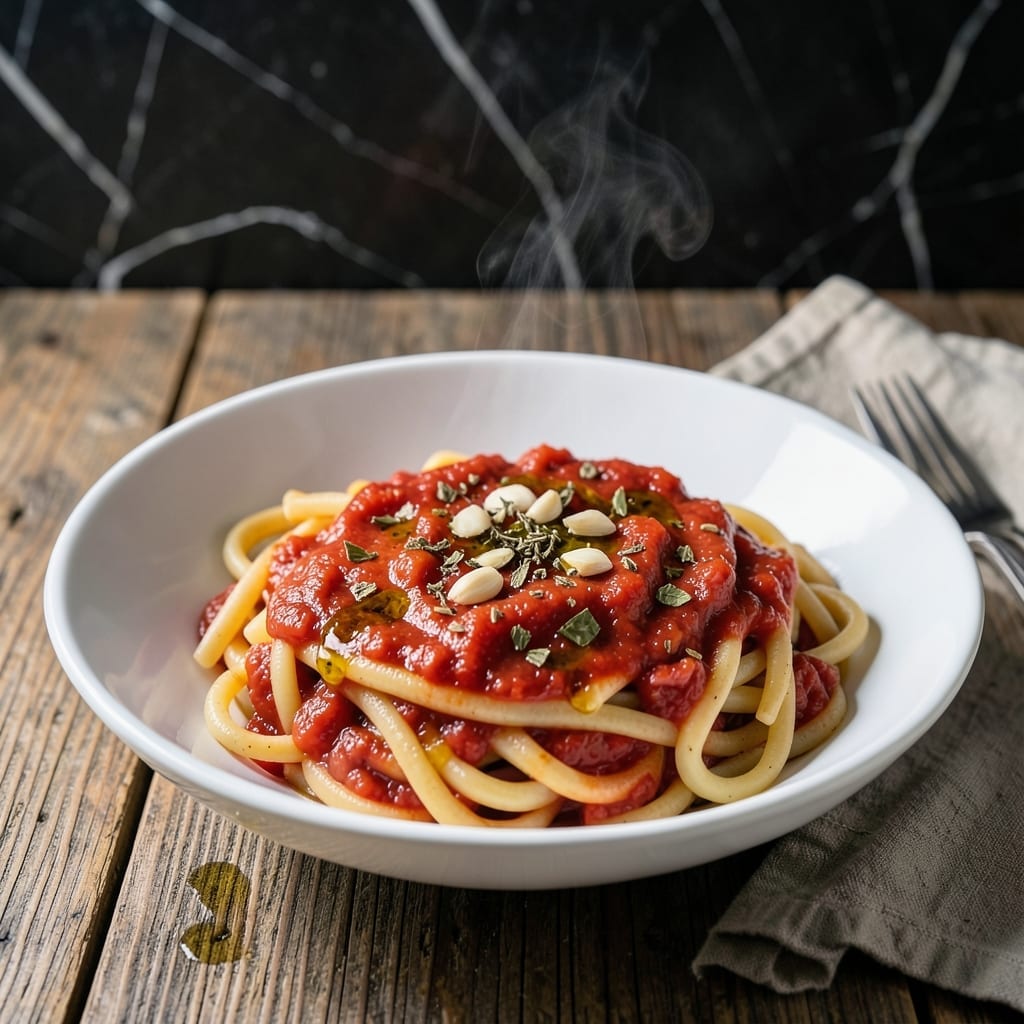
This simple canned tomato sauce transforms into something extraordinary with just a few additions and time. The slow simmer develops rich, complex flavors that cling beautifully to pasta.
You’ll achieve a perfect balance of sweetness and acidity, creating a velvety sauce that tastes far more sophisticated than its humble ingredients suggest.
Ingredients for Canned Tomato Sauce Recipe for Pasta
Transform humble canned tomatoes into a rich, velvety pasta sauce with these pantry staples.
| Ingredient | Amount | Notes |
|---|---|---|
| Canned Crushed Tomatoes 🍅 | 28 oz | San Marzano preferred for sweetness |
| Extra-Virgin Olive Oil 🫒 | ¼ cup | High quality, fruity notes |
| Yellow Onion 🧅 | 1 whole | Finely diced for base flavor |
| Garlic Cloves 🧄 | 4 cloves | Minced for aromatic depth |
| Dried Basil 🌿 | 1 tbsp | Or 1 tbsp fresh chopped |
| Dried Oregano 🍃 | 1 tbsp | Mediterranean variety preferred |
| Red Pepper Flakes 🌶️ | ½ tsp | Adjust for heat preference |
| Sea Salt 🧂 | 1 tsp | Fine grain for even distribution |
| Black Pepper 🌶️ | ½ tsp | Freshly ground for best flavor |
| Granulated Sugar 🍚 | 1 tsp | Balances acidity naturally |
[recipe_ingredient_scaler]
The tomatoes are non-negotiable—San Marzano from Eataly or Whole Foods deliver superior sweetness and low acidity. Extra-virgin olive oil should be from a recent harvest (check the label for a date within the last 18 months). Yellow onions provide the right sugar content for caramelization, while garlic cloves should be plump and firm, not sprouted or shriveled.
Short on time? Frozen diced onions work fine (no thawing needed). No fresh garlic? Jarred minced garlic at half the amount—though fresh is ideal. Fresh basil can replace dried at a 3:1 ratio, but add it at the end to preserve color. For heat, cayenne at a pinch substitutes for red pepper flakes.
This sauce deepens in flavor over 4-5 days refrigerated in an airtight container. For longer storage, freeze in portions for up to 6 months. The oil may separate when chilled—simply stir to recombine before reheating.
Why You’ll Love This Recipe
- One Pot Wonder: I just dump the crushed tomatoes, sautéed onion, garlic, and basil into a pan—no fancy steps.
- Rich and Savory: The olive oil and garlic bloom into this deep, aromatic base that clings perfectly to pasta.
- Meal Prep Hero: I make a double batch on Sunday and it reheats beautifully for quick dinners all week.
- Pantry Staples: Honestly, I always have these ingredients on hand, so it’s my go-to when the fridge is bare.
Step-by-Step Instructions for Canned Tomato Sauce for Pasta
Master the technique for a deeply flavorful sauce that clings beautifully to pasta.
Step 1: Build the Aromatic Base
Heat the 0.25 cup extra-virgin olive oil in a heavy-bottomed pot over medium-low heat. Finely dice the 1 whole yellow onion and add it to the oil, cooking for 8-10 minutes until translucent and softly golden at the edges.
This slow cooking process draws out the onion’s natural sweetness without browning. Add the 4 cloves garlic cloves, minced, and the 0.5 tsp red pepper flakes. Cook for 1 minute until the garlic releases its fragrance—be careful not to let it color.
Step 2: Introduce the Tomatoes and Seasonings
Pour in the 28 oz canned crushed tomatoes, stirring to combine with the aromatics. Add the 1 tbsp dried basil, 1 tbsp dried oregano, 1 tsp sea salt, 0.5 tsp black pepper, and 1 tsp granulated sugar.
The sugar balances the tomatoes’ natural acidity, while the herbs infuse the sauce with depth. Stir well and bring the mixture to a gentle simmer. You’ll notice the color deepen as the flavors begin to meld.
Step 3: Simmer for Rich, Concentrated Flavor
Reduce the heat to maintain a low, steady simmer. Partially cover the pot and let the sauce cook for 30-45 minutes, stirring occasionally to prevent sticking. The sauce should thicken slightly and develop a rich, velvety texture.
Taste and adjust seasoning if needed, though the initial measurements should provide perfect balance. The sauce is ready when it has reduced by about a quarter and the oil begins to separate slightly at the edges.
Step 4: Finish and Serve
Remove the sauce from heat and let it rest for 5 minutes before serving. This allows the flavors to settle and the sauce to reach its ideal consistency for coating pasta.
The finished sauce should be thick enough to cling to pasta but still loose enough to toss evenly. Serve immediately over your favorite pasta, ensuring each strand is well coated with the rich, herb-infused tomato sauce.
Pro Tips For Making Canned Tomato Sauce Recipe For Pasta
- Sauté the Onions Low: Cook your yellow onion over medium-low heat for 8-10 minutes until soft and translucent—rushing this step with high heat will make them burn and turn bitter before they sweetened properly.
- Bloom the Basil: Add the dried basil to the hot olive oil for 30 seconds before the tomatoes go in—this wakes up the flavor and makes it taste fresher than just dumping it in with the sauce.
- Simmer Uncovered: Let the sauce bubble away uncovered for at least 20 minutes so it thickens and the raw canned taste cooks off—I learned this the hard way after serving watery sauce more times than I’d like to admit.
- Crush the Garlic: Smash the garlic cloves with the side of your knife before mincing—it releases more of that sweet, punchy flavor and saves you from chopping forever.
Wine and Beer Pairings for This Dish
Beer Pairings
A hearty canned tomato sauce for pasta calls for beers that complement its rich, savory depth. A Sierra Nevada Pale Ale offers a crisp, citrusy contrast that cuts through the acidity of the tomatoes while enhancing the sauce’s herbal notes. For a darker pairing, try a Guinness Draught—its roasted malt flavors and creamy texture balance the sauce’s tanginess beautifully.
Wine Pairings
Wine lovers will find plenty to enjoy with this dish. A medium-bodied Chianti Classico is a classic choice, as its bright acidity and cherry notes mirror the tomato sauce’s vibrancy. For something richer, a Barbera d’Asti delivers juicy red fruit flavors and a smooth finish that pairs effortlessly with the pasta’s coating.
Non-Alcoholic Options
If you prefer to skip the alcohol, a sparkling San Pellegrino Aranciata brings a refreshing citrusy fizz that lifts the sauce’s flavors. For a cozy option, try a Mott’s Apple Cider—its natural sweetness and subtle spice complement the tomato’s acidity without overpowering it.
Nutrition Facts

Trained in classic French technique but raised on slow-cooked ribs and spicy rubs, she blends culinary skill with smoke and soul.
- Recipe for Boneless Pork Chops in Cast Iron Skillet: Sear and Baste to Juicy Perfection - October 3, 2026
- Recipe for Boneless Cross Rib Roast: Slow-Roasted Beef with Herb Crust - October 3, 2026
- Hamburgers in Sauce Recipe Crock Pot: Slow-Cooked Savory Delight - October 3, 2026