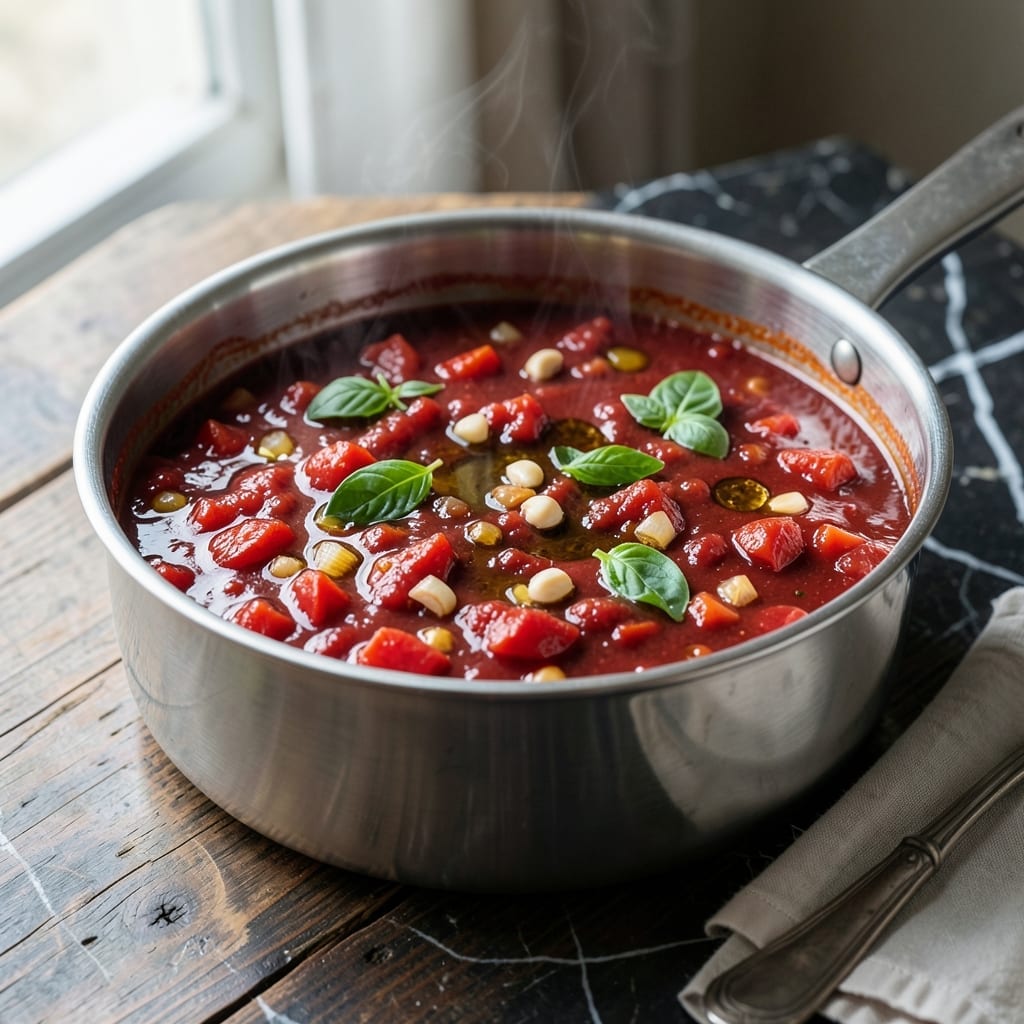
This hybrid sauce captures summer’s peak flavor by combining fresh tomatoes with canning techniques for year-round richness.
The process preserves the bright acidity of vine-ripened fruit while creating a smooth, concentrated base perfect for pasta, stews, or pizza.
Ingredients for Canned Tomato Sauce Recipe with Fresh Tomatoes
Fresh summer tomatoes meet pantry staples for a sauce that tastes like year-round summer.
| Ingredient | Amount | Notes |
|---|---|---|
| Vine-Ripened Tomatoes 🍅 | 8 lb | Cored and quartered |
| Yellow Onions 🧅 | 2 whole | Peeled and diced |
| Garlic Cloves 🧄 | 6 cloves | Peeled and smashed |
| Extra-Virgin Olive Oil 🫒 | ½ cup | Divided for cooking and finishing |
| Fresh Basil Leaves 🌿 | 1 cup | Loosely packed, chopped |
| Sea Salt 🧂 | 2 tbsp | Adjust to taste |
| Black Pepper 🌶️ | 1 tsp | Freshly ground |
| Crushed Red Pepper Flakes 🔥 | ½ tsp | Optional for heat |
| Tomato Paste 🍅 | ¼ cup | For depth and concentration |
| Balsamic Vinegar 🍷 | 2 tbsp | Aged for complexity |
[recipe_ingredient_scaler]
The tomatoes are the foundation here. Seek out vine-ripened, in-season fruit from local farmers markets or a well-stocked grocery like Whole Foods. Look for deep red color and a slight give when gently pressed. Heirloom varieties add complexity, but any ripe tomato will work. The onions should be sweet—Vidalia or Walla Walla if available. For garlic, fresh heads with firm cloves are non-negotiable.
No fresh basil? Dried basil at one-third the amount works, but fresh is ideal. Skip the tomato paste? Reduce the sauce longer to concentrate flavors naturally. For acidity, red wine vinegar or lemon juice can replace balsamic. If avoiding oil, substitute vegetable broth for sautéing. The red pepper flakes are optional, but a pinch adds depth without overwhelming heat.
This sauce keeps beautifully. Refrigerate for up to 1 week or freeze for 6 months in airtight containers. For canning, process in a water bath for 35 minutes. The flavor deepens over time, making it even better after a few days.
Why You’ll Love This Recipe
- One Pot Wonder: I just toss the tomatoes, onions, and garlic in a pot with olive oil and let it simmer—no fancy steps.
- Sunshine in a Jar: The vine-ripened tomatoes and fresh basil make it taste like summer, even in winter.
- Pasta Night Saver: I use this sauce for everything—pasta, pizza, even as a soup base.
- Budget Stretcher: A big batch costs pennies and fills jars for months of easy meals.
Step-by-Step Instructions for Canned Tomato Sauce With Fresh Tomatoes
This method transforms fresh ingredients into a rich, concentrated sauce with professional consistency.
Step 1: Prepare and Cook Down the Tomato Base
Core and quarter the 8 lb vine-ripened tomatoes, then pulse them in batches in a food processor until chunky but not fully pureed. This texture ensures the sauce thickens properly during cooking. Transfer the tomatoes to a heavy-bottomed pot.
Add 2 whole yellow onions (peeled and diced) and 6 cloves garlic cloves (peeled and smashed) to the pot. Pour in ¼ cup extra-virgin olive oil—this provides the fat needed to carry the flavors. Stir in the 0.25 cup tomato paste, then bring the mixture to a gentle simmer over medium heat.
Step 2: Season and Simmer for Depth of Flavor
Once simmering, add 2 tbsp sea salt, 1 tsp black pepper, and 0.5 tsp crushed red pepper flakes for a subtle kick. Stir well to distribute the seasonings evenly. The sauce will initially look watery—this is normal.
Partially cover the pot and reduce the heat to medium-low. Simmer for 1 hour, stirring occasionally to prevent sticking. You’ll notice the sauce darkening and thickening as the tomatoes break down and the liquid evaporates.
Step 3: Incorporate Aromatics and Finish the Sauce
Stir in the 1 cup fresh basil leaves (loosely packed and chopped) and the remaining ¼ cup extra-virgin olive oil. The basil adds brightness, while the oil enriches the sauce. Simmer uncovered for another 30 minutes.
Add the 2 tbsp balsamic vinegar and cook for a final 15 minutes. The vinegar balances the acidity and adds complexity. Taste and adjust the sea salt if needed—the flavors should be bold and well-rounded.
Step 4: Achieve the Perfect Consistency
By now, the sauce should have reduced by about one-third and coat the back of a spoon. If it’s too thin, continue simmering for 10-15 minutes longer. If it’s too thick, thin it with a splash of water.
Remove the pot from heat and let the sauce cool slightly. The final texture should be thick but pourable, with visible flecks of basil and onions. This sauce is now ready for canning or immediate use.
Pro Tips For Making Canned Tomato Sauce Recipe With Fresh Tomatoes
- Blanch First: Toss vine-ripened tomatoes in boiling water for 30 seconds, then ice bath—skins slip right off and you’ll save 20 minutes of peeling frustration.
- Sweat the Onions: Cook yellow onions in olive oil on medium-low for 8-10 minutes until translucent; raw onion bite ruins the sauce’s sweetness.
- Skip the Seeds: After chopping tomatoes, squeeze out excess seeds and juice to avoid a watery sauce that needs forever to reduce.
- Late Basil: Stir in fresh basil leaves at the very end—adding them early turns the sauce bitter and the herb mushy.
Health Benefits of This Dish
Rich in Essential Vitamins
This canned tomato sauce recipe with fresh tomatoes packs a punch with vitamins A and C, which support immune function and skin health. 🥗 Fresh tomatoes contribute lycopene, a powerful antioxidant that may reduce inflammation and lower disease risk.
Heart-Healthy Goodness
Tomatoes are naturally low in fat and high in fiber and potassium, promoting cardiovascular health. 💪 The sauce’s natural compounds help regulate blood pressure and cholesterol levels, making it a heart-smart choice.
Hydration and Digestion
With a high water content, tomatoes aid hydration while the fiber in this sauce supports healthy digestion. 📊 The blend of fresh and canned tomatoes ensures a balanced intake of nutrients for gut wellness.
Low-Calorie, High-Flavor
This sauce delivers bold taste without excess calories, making it ideal for weight management. 🍎 Packed with antioxidants and minimal added sugars, it’s a nutritious way to enhance meals.
Nutrition Facts

Trained in classic French technique but raised on slow-cooked ribs and spicy rubs, she blends culinary skill with smoke and soul.
- Recipe for Boneless Pork Chops in Cast Iron Skillet: Sear and Baste to Juicy Perfection - October 3, 2026
- Recipe for Boneless Cross Rib Roast: Slow-Roasted Beef with Herb Crust - October 3, 2026
- Hamburgers in Sauce Recipe Crock Pot: Slow-Cooked Savory Delight - October 3, 2026