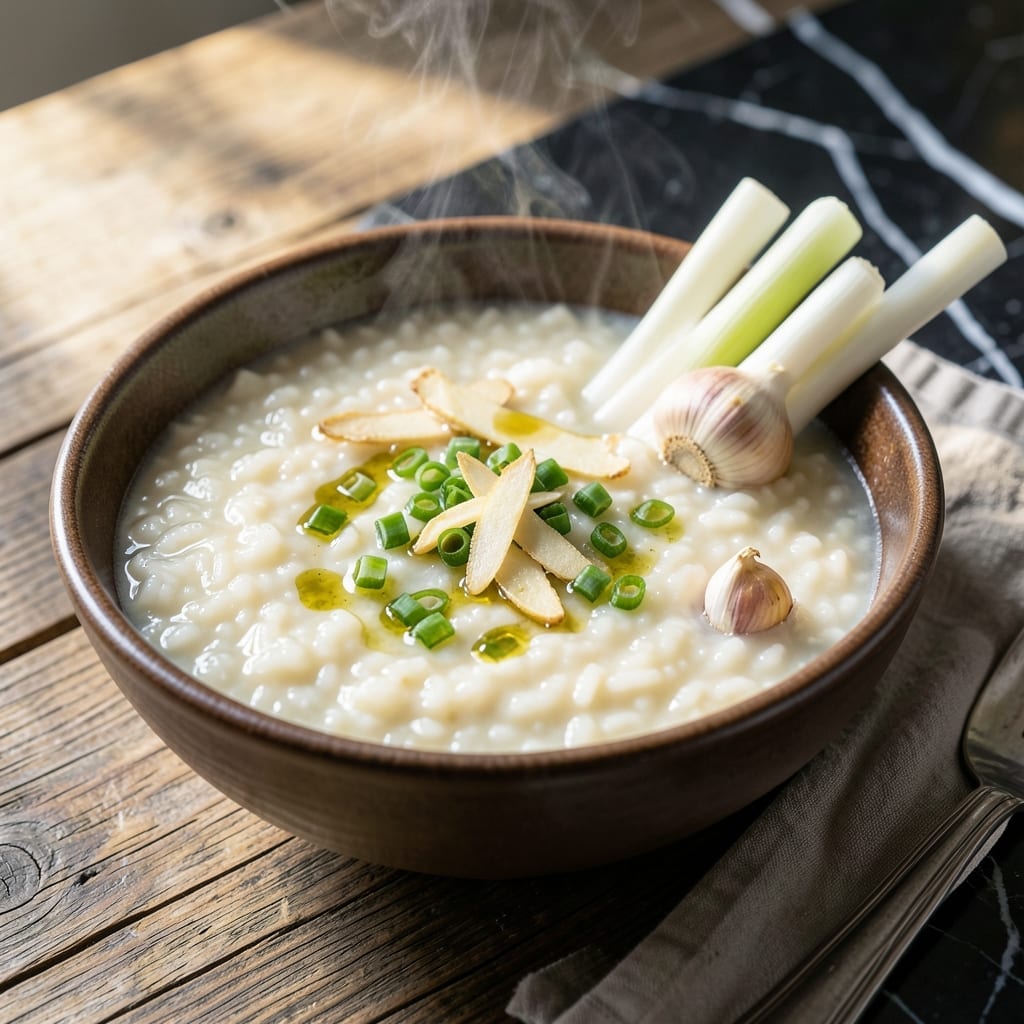
This Cantonese congee delivers silky smooth comfort in every bowl. The slow-cooked rice breaks down into a creamy porridge, while ginger and scallions add bright, aromatic depth.
A one-pot dish that’s both nourishing and versatile, perfect for any meal. The key is patience—low heat transforms simple ingredients into something extraordinary.
Ingredients for Cantonese Congee
Silky rice, aromatic ginger, and fresh scallions create this comforting one-pot porridge with ease.
| Ingredient | Amount | Notes |
|---|---|---|
| Jasmine Rice 🍚 | 1 cup | Short-grain preferred for creaminess |
| Water 💧 | 8 cups | Or use chicken stock for depth |
| Fresh Ginger 🌿 | 2 tbsp | Peeled and julienned |
| Scallions 🧅 | 4 whole | Thinly sliced, whites and greens separated |
| Garlic Cloves 🧄 | 3 cloves | Minced finely |
| Neutral Oil 🫒 | 1 tbsp | Vegetable or peanut oil preferred |
| Salt 🧂 | 1 tsp | Adjust to taste as rice cooks |
| White Pepper 🌶️ | ½ tsp | Freshly ground for authenticity |
| Century Egg 🥚 | 2 whole | Optional topping, sliced |
| Soy Sauce 🫕 | 2 tbsp | Light soy sauce preferred |
| Sesame Oil 🫒 | 1 tsp | For finishing drizzle |
| Cilantro 🌿 | ¼ cup | Chopped, for garnish |
| Fried Shallots 🧅 | ¼ cup | Store-bought or homemade |
[recipe_ingredient_scaler]
The rice is everything here. Jasmine rice from Asian markets gives the silkiness you’re after—avoid long-grain varieties that stay stubbornly intact. Fresh ginger should be firm with smooth skin; old ginger gets fibrous and bitter. For the century eggs (if using), Wing Hop Fung or 99 Ranch usually stock them in the refrigerated section. The oil needs to be neutral so the ginger and scallion flavors shine.
No jasmine rice? Short-grain sushi rice works in a pinch but requires 1.5 cups to match the creaminess. Skip the century egg? Soft-boiled egg, shredded chicken, or crispy fried tofu all add protein. The soy sauce can be swapped for tamari if gluten’s a concern. White pepper is traditional (milder than black), but freshly ground black pepper works if that’s all you have.
Congee thickens as it cools. Store in the fridge for up to 3 days—add water when reheating to restore the silky texture. Freezes well for 1 month, though the rice may separate slightly. Garnishes like scallions and cilantro are best added fresh right before serving.
Why You’ll Love This Recipe
- One Pot Wonder: I just dump jasmine rice, water, and a knob of ginger in a pot and let it simmer—no fancy steps.
- Warm & Aromatic: The garlic and scallions bloom in the broth, making every spoonful smell like home.
- My Sick-Day Staple: Honestly, it’s the only thing I crave when I’m under the weather or need something gentle.
- Stretches for Days: A big batch lasts all week, and it tastes even better reheated with a drizzle of soy sauce.
Step-by-Step Instructions for Cantonese Congee
Master the technique for creamy, velvety congee with these precise, professional steps.
Step 1: Prepare the Aromatics Base
Heat 1 tbsp neutral oil in a large pot over medium heat. Add the 2 tbsp fresh ginger, 4 whole scallions (whites only, save greens for garnish), and 3 cloves garlic cloves. Sauté for 2-3 minutes until fragrant and the whites of the scallions soften.
This aromatic foundation infuses the congee with depth. Avoid letting the garlic brown—it should release its essence without bitterness. The ginger should sizzle gently, filling your kitchen with its warm, spicy perfume.
Step 2: Toast the Rice and Add Liquid
Stir in the 1 cup jasmine rice and cook for 1-2 minutes, allowing the grains to absorb the flavors of the aromatics. You’ll notice the rice turn slightly translucent at the edges, a sign it’s ready for liquid.
Pour in the 8 cups water and bring to a rolling boil. Add 1 tsp salt and 0.5 tsp white pepper. The water should immediately turn cloudy as the rice starch begins to release—this is the start of that signature silky texture.
Step 3: Simmer to Silky Perfection
Reduce heat to low and partially cover the pot. Maintain a gentle simmer, stirring every 10-15 minutes to prevent sticking. After 45 minutes, the rice should begin breaking down, and the mixture will thicken noticeably.
Continue cooking for another 30-45 minutes, stirring more frequently as it thickens. The congee is ready when it reaches a porridge-like consistency and the rice has completely disintegrated into the liquid. The surface should shimmer slightly, with small bubbles breaking lazily.
Taste and adjust seasoning—you may need more salt as the rice absorbs liquid. The ideal texture coats the back of a spoon and drips slowly.
Step 4: Prepare and Add Toppings
While the congee simmers, thinly slice the 2 whole century egg and chop the reserved scallion greens, 0.25 cup cilantro, and 0.25 cup fried shallots. These provide textural contrast and vibrant color against the creamy base.
Just before serving, stir in 1 tsp sesame oil for a final layer of aroma. Ladle the congee into bowls and arrange the toppings artfully on the surface. The century egg’s dark, custardy yolk should stand out against the pale porridge.
Serve with 2 tbsp soy sauce on the side for diners to add to taste. Each bowl should offer a balance of creamy congee, briny egg, crispy shallots, and fresh herbs in every spoonful.
Pro Tips For Making Cantonese Congee
- Rinse the Rice: Soak jasmine rice for 15-20 minutes before cooking, then rinse until the water runs clear. This removes excess starch and gives your congee that silky, not gummy, texture.
- Simmer Low and Slow: Keep the heat at a gentle simmer—tiny bubbles, not a rolling boil. I learned this the hard way after scorching three pots of congee before realizing patience is non-negotiable here.
- Grate the Ginger: Skip the chunks and grate fresh ginger directly into the pot. It disperses evenly and infuses the broth with flavor without the chewy bits that make you regret not mincing finer.
- Add Aromatics Late: Stir in minced garlic and scallions in the last 5 minutes of cooking. Sounds weird, but it works—this keeps their bright, fresh flavor from turning bitter after hours of simmering.
Troubleshooting Great cantonese congee
Too Thick or Thin
If your congee is too thick, stir in ½ cup hot water and simmer for 5 minutes. Too thin? Uncover and cook for 10-15 minutes longer. I keep a kettle of hot water nearby for quick adjustments during cooking. 💡
Rice Not Breaking Down
Using the wrong rice type is the most common culprit. Stick with jasmine rice—it has the perfect starch content. If it still resists, cook for an extra 20 minutes with vigorous stirring to help the grains disintegrate.
Sticking to the Pot
A heavy-bottomed pot prevents scorching. I use a Dutch oven for even heat distribution. If sticking occurs, immediately reduce heat and stir more frequently. Add ¼ cup water to loosen any browned bits from the bottom.
Bland Flavor
Underseasoning is easy to fix. Stir in 1 tsp soy sauce and ¼ tsp white pepper to boost flavor. Fresh ginger and scallions added at the end can revive dull taste—use 1 tbsp of each for a bright finish.
Lumpy Texture
This usually means the rice wasn’t stirred enough early on. Use a whisk to break up lumps, or blend briefly with an immersion blender for ultra-smooth results. I find a wooden spoon works best for stirring without crushing the rice too much.
Toppings Sinking
Add delicate toppings like scallion greens and cilantro just before serving. For century egg, slice thinly and arrange on top after ladling. This keeps each bowl looking as beautiful as it tastes. 🌟
Nutrition Facts
Frequently Asked Questions
What’s the best rice for congee?
Use jasmine rice for authentic creaminess. Short-grain sushi rice works too but needs 1.5 cups for similar texture. Avoid long-grain varieties—they stay too firm.
How long does it take to cook?
Total cooking time is 75-90 minutes. Simmer for 45 minutes until rice starts breaking down, then another 30-45 minutes for silky perfection. Stir every 10-15 minutes.
Can I make it ahead?
Yes! Store in the fridge for up to 3 days. Reheat with extra water to restore creaminess. Freezes well for 1 month, though texture may separate slightly.

Trained in classic French technique but raised on slow-cooked ribs and spicy rubs, she blends culinary skill with smoke and soul.
- Recipe for Boneless Pork Chops in Cast Iron Skillet: Sear and Baste to Juicy Perfection - October 3, 2026
- Recipe for Boneless Cross Rib Roast: Slow-Roasted Beef with Herb Crust - October 3, 2026
- Hamburgers in Sauce Recipe Crock Pot: Slow-Cooked Savory Delight - October 3, 2026