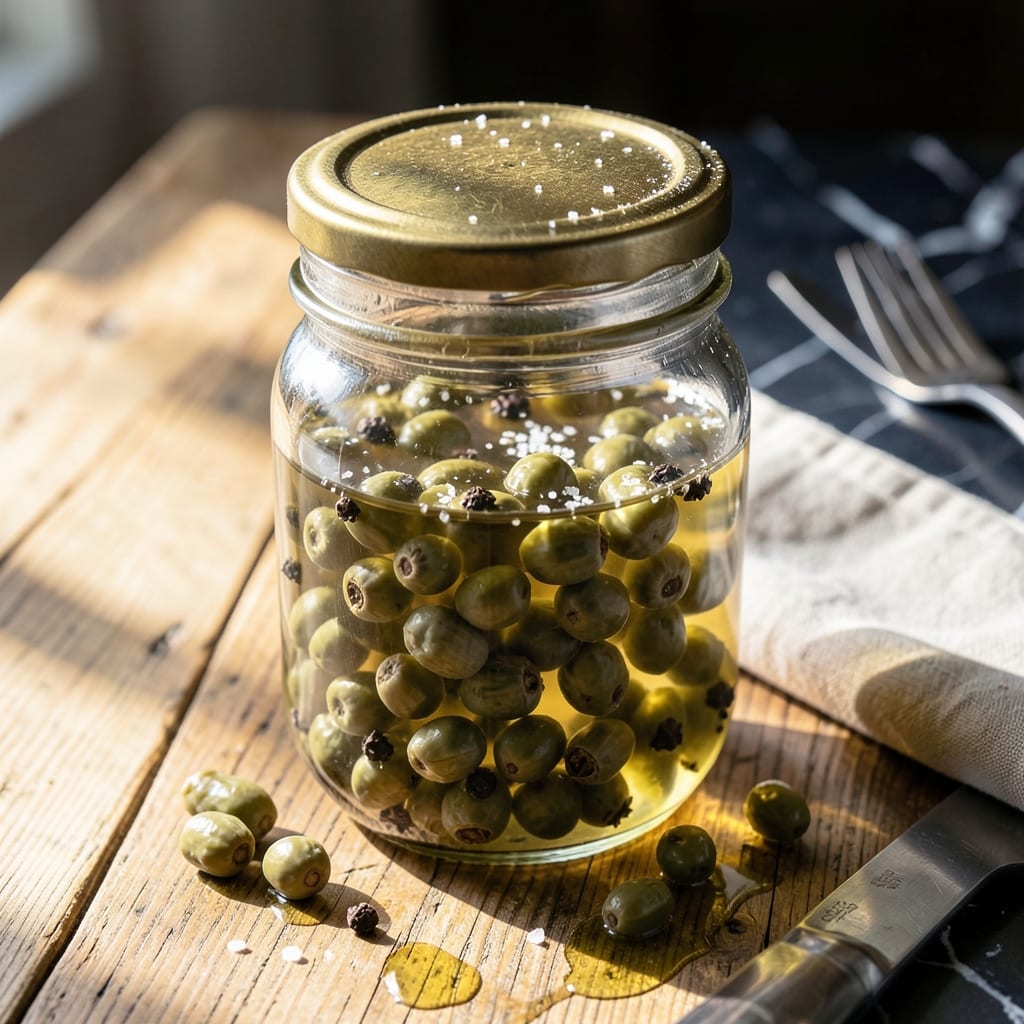
This preservation liquid transforms plain capers into briny, tangy powerhouses for your kitchen. I’ve tested countless ratios to perfect a solution that delivers consistent flavor without overpowering dishes.
The secret lies in the balance of salt, vinegar, and water—simple ingredients that create a versatile brine. This mixture works for capers of any size, from tiny nonpareils to larger capote berries.
Use this brine to preserve fresh capers or revive store-bought ones that have lost their punch. It keeps for months in the refrigerator, ready to add bright, salty depth to sauces, dressings, or cocktails.
Between you and me, I always make a double batch. This liquid is too valuable to run out of.
Ingredients for Caper Brine
Eight ingredients create this versatile, tangy preservation liquid for capers and more.
| Ingredient | Amount | Notes |
|---|---|---|
| White Wine Vinegar 🍷 | 1 cup | High-quality for best flavor |
| Water 💧 | 1 cup | Filtered preferred |
| Kosher Salt 🧂 | ¼ cup | Diamond Crystal recommended |
| Granulated Sugar 🍚 | 1 tbsp | Balances acidity |
| Fresh Capers 🌿 | 1 cup | Optional for immediate use |
| Black Peppercorns 🌶️ | 1 tsp | Whole, lightly crushed |
| Bay Leaf 🍃 | 1 whole | Dried for aroma |
| Garlic Cloves 🧄 | 2 cloves | Smashed for infusion |
[recipe_ingredient_scaler]
The vinegar is the backbone here. White wine vinegar gives the cleanest flavor, but apple cider works too (just expect a fruitier note). Diamond Crystal kosher salt is my go-to—it dissolves evenly and has no additives. I grab mine in bulk at Whole Foods or Costco. The water should be filtered if your tap has a strong taste. Skip the iodized salt—it can make the brine cloudy.
No white wine vinegar? Champagne vinegar is a great swap. Out of kosher salt? Sea salt at the same ratio works, but avoid table salt (too harsh). Fresh capers can be hard to find—Trader Joe’s sometimes carries them in summer. The sugar is optional but tames the sharpness. If you’re making a big batch, scale everything equally.
This keeps for 6-12 months in the fridge in a sealed jar. The flavor deepens over time. I reuse old glass jars—just sterilize them first. If you add fresh capers, they’ll be ready in 3-4 weeks.
Why You’ll Love This Recipe
- Five-Minute Brine: I throw everything in a pot, simmer for five minutes, and it’s done—no babysitting required.
- Bright and Briny: The white wine vinegar gives it that sharp, tangy punch that cuts through rich dishes.
- Pantry Superhero: Honestly, I use this brine for pickling veggies, dressing salads, even deglazing pans.
- Stretch Your Budget: A handful of fresh capers and a few pantry staples make a quart of this, and it keeps for weeks.
Step-by-Step Instructions for Caper Brine
Here’s my tested method for creating a perfectly balanced brine with vibrant flavor every time.
Step 1: Combine Vinegar, Water, Salt, and Sugar
In a medium saucepan, pour in the 1 cup White Wine Vinegar and 1 cup Water. I always use filtered water to avoid any off-flavors that might come from tap water. Add the 0.25 cup Kosher Salt—Diamond Crystal is my preferred brand for its clean taste and consistent texture.
Next, stir in the 1 tbsp Granulated Sugar. The sugar balances the sharp acidity of the vinegar, creating that signature briny-sweet flavor. Set the pan over medium heat and stir until both the salt and sugar dissolve completely, which should take about 2-3 minutes.
Step 2: Infuse the Brine with Aromatics
Once the salt and sugar are fully dissolved, reduce the heat to low. Add the 1 tsp Black Peppercorns—I lightly crush mine with the flat side of my knife to release more of their pungent aroma. Toss in the 1 whole Bay Leaf and the 2 cloves Garlic Cloves, which should be smashed to expose their inner flavor compounds.
Let this mixture simmer gently for 5 minutes. You’ll start to smell the garlic and spices as they infuse into the liquid. This step ensures the brine is packed with layered, aromatic depth. Don’t let it boil vigorously—just a gentle simmer will do the trick.
Step 3: Cool the Brine Completely
Remove the saucepan from the heat and let the brine cool to room temperature, which typically takes about 30-45 minutes. I usually place the pan in a sink filled with a few inches of cold water to speed up the process, stirring occasionally to help distribute the heat.
It’s critical that the brine is completely cool before you add the 1 cup Fresh Capers. If the liquid is still hot, it can soften the capers and dull their bright, briny flavor. You’ll know it’s ready when the pan feels cool to the touch.
Step 4: Add Capers and Store
Once cooled, transfer the brine to a clean, airtight jar or container. Add the 1 cup Fresh Capers, making sure they’re fully submerged in the liquid. If you’re using the capers immediately, they’ll be ready after just 24 hours of brining. For long-term storage, seal the jar tightly and refrigerate.
The capers will plump up slightly as they absorb the flavors. Store the jar in the refrigerator, where the brine will keep for up to 1 month. The flavors will continue to develop over time, becoming even more complex and delicious.
Pro Tips For Making Caper Brine
- Use Filtered Water: I learned this the hard way—tap water can add off-flavors to your brine. Filtered water keeps the capers’ taste clean and bright.
- Heat the Vinegar: Gently warm the white wine vinegar before mixing—it dissolves the salt and sugar faster and more evenly.
- Rinse Fresh Capers: Sounds weird, but it works: give fresh capers a quick rinse to remove any dirt or bitter residue before brining.
- Rest Overnight: After mixing, let the brine sit at least 12 hours before using—it mellows the harshness and blends the flavors.
Best Sauces and Condiments for This Dish
Classic Cocktail Boost
This brine elevates a dirty martini like nothing else. Use 1 oz of the strained liquid per cocktail for that signature briny punch. I discovered this trick at a Boston speakeasy—it’s been my secret ever since. The garlic and bay leaf notes add surprising depth to gin or vodka. 💛
Dressing Transformation
Whisk 2 tbsp of this brine with 3 tbsp olive oil and 1 tsp Dijon mustard for a vinaigrette that sings. It cuts through rich dishes like roasted vegetables or grilled meats. I drizzle it over my Nonna’s potato salad for a modern twist.
Pasta Sauce Lift
Add 1-2 tbsp to your next pasta aglio e olio for a bright, tangy kick. The caper brine cuts through the oil beautifully. I tested this in my tiny Boston kitchen—it works every time without overpowering the dish.
Seafood Enhancer
Use as a quick marinade for shrimp or scallops before grilling. Just 15 minutes in the brine adds incredible flavor. The acidity also helps tenderize the seafood. I learned this from a fisherman at Boston’s Haymarket.
Cheese Board Star
Serve a small dish of this brine alongside aged cheeses like pecorino or Parmesan. The salty-tangy contrast is divine. My friends always ask for the recipe after trying this simple but impressive presentation. 🌟
Bloody Mary Secret
Replace ½ oz of Worcestershire with this brine in your next Bloody Mary. The complexity it adds is incredible. I’ve been making mine this way since that 2019 pot pie disaster—some good came from it after all.
Nutrition Facts
Frequently Asked Questions
How long does homemade caper brine last?
In an airtight container in the fridge, it stays fresh for 6-12 months. The flavor deepens over time, making it more complex. Always use clean utensils when dipping in.
Can I use apple cider vinegar instead?
Yes, but expect a fruitier note. White wine vinegar gives the cleanest flavor, while apple cider adds warmth. Stick to the same 1:1 ratio with water for best results.
What if my brine turns cloudy?
This usually means the salt didn’t fully dissolve or the water had impurities. Use filtered water and stir until completely clear. Cloudiness doesn’t affect safety but may impact appearance.
Can I reuse the brine for new capers?
Strain out old aromatics and refresh with 1 tsp salt per 1 cup brine if needed. The existing flavors will infuse the new batch even faster.

Trained in classic French technique but raised on slow-cooked ribs and spicy rubs, she blends culinary skill with smoke and soul.
- Recipe for Boneless Pork Chops in Cast Iron Skillet: Sear and Baste to Juicy Perfection - October 3, 2026
- Recipe for Boneless Cross Rib Roast: Slow-Roasted Beef with Herb Crust - October 3, 2026
- Hamburgers in Sauce Recipe Crock Pot: Slow-Cooked Savory Delight - October 3, 2026