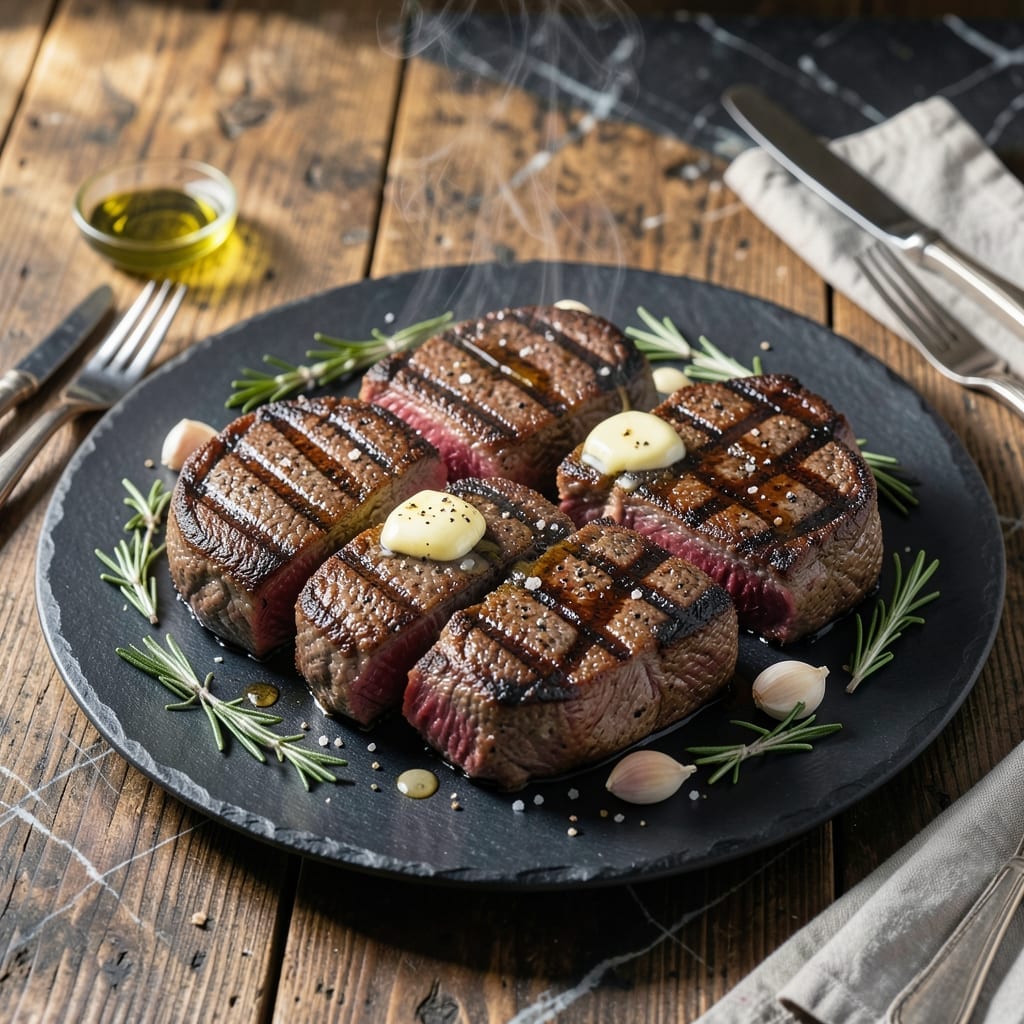
This method delivers the steakhouse-quality crust and buttery richness that defines Capital Grill’s signature steaks.
Mastering the high-heat sear and butter basting technique creates a perfectly charred exterior with juicy, tender meat inside.
Ingredients for Capital Grill Steak
Premium cuts and bold flavors create that signature steakhouse experience at home.
| Ingredient | Amount | Notes |
|---|---|---|
| Ribeye Steaks 🥩 | 4 whole | Bone-in, 1.5 inches thick |
| Kosher Salt 🧂 | 2 tbsp | Diamond Crystal preferred |
| Freshly Ground Black Pepper 🌶️ | 1 tbsp | Coarse grind for crust |
| Unsalted Butter 🧈 | 6 tbsp | European-style for richness |
| Garlic Cloves 🧄 | 4 cloves | Lightly crushed, peeled |
| Fresh Rosemary Sprigs 🌿 | 4 whole | Stems on for infusion |
| Fresh Thyme Sprigs 🍃 | 4 whole | Stems on for infusion |
| Olive Oil 🫒 | 2 tbsp | High smoke point variety |
| Canola Oil 🫒 | 2 tbsp | For high-heat searing |
| Shallot 🧅 | 1 whole | Minced for butter sauce |
| Red Wine 🍷 | ¼ cup | Dry variety for deglazing |
| Beef Stock 💧 | ½ cup | Low-sodium preferred |
[recipe_ingredient_scaler]
The ribeye is non-negotiable for Capital Grill-level marbling. Opt for USDA Prime from a reputable butcher—Snake River Farms or Crowd Cow deliver exceptional quality. Bone-in adds flavor and helps maintain even cooking. Look for steaks with vibrant red color and abundant fat streaking. Thickness matters: aim for at least 1.5 inches to achieve a proper crust without overcooking the center.
No ribeye? A New York strip works, though it lacks the fat cap’s richness. Substitute ghee for butter if avoiding dairy, but it won’t brown as deeply. Fresh herbs are ideal, but dried at one-third the quantity can suffice. For the wine, any bold dry red like Cabernet Sauvignon or Malbec works—whatever you’d drink. Skip pre-minced garlic; fresh cloves provide superior aroma.
Bring steaks to room temperature before cooking (about 45 minutes out of the fridge). Leftovers? Rare, but they’ll keep 3-4 days refrigerated. Reheat gently in a skillet with a touch of butter to revive. For maximum freshness, use herbs within 1 week of purchase.
Why You’ll Love This Recipe
- I’ll be real: cold ribeye slices make my next-day sandwiches taste like a million bucks.
- Five Ingredients Only: I love that this needs just ribeye, salt, pepper, butter, and garlic—no fancy pantry shopping required.
- Buttery Garlic Magic: The combo of melted butter and crushed garlic basting the steak creates a flavor that’s ridiculously good.
- Weeknight Fancy: This feels restaurant-worthy but takes me less time than ordering takeout. Yes, even on a Tuesday night.
Step-by-Step Instructions for Steakhouse Ribeye Steak
Master the Capital Grill technique with these precise steps for a perfect crust and rich butter-basted finish.
Step 1: Season and Temper the Ribeye Steaks
Pat the 4 whole Ribeye Steaks completely dry with paper towels—any surface moisture will steam the meat instead of searing it. Generously season all sides with the 2 tbsp Kosher Salt and 1 tbsp Freshly Ground Black Pepper, pressing the seasoning into the flesh to ensure it adheres.
Place the steaks on a wire rack set over a plate and let them sit at room temperature for 45-60 minutes. This step is critical for even cooking—the meat should no longer feel cold to the touch when ready.
Step 2: Sear the Steaks to Develop a Deep Crust
Heat a heavy skillet (cast iron preferred) over high heat until very hot, about 5 minutes. Add the 2 tbsp Canola Oil and 2 tbsp Olive Oil—this combination provides high smoke point and flavor. When the oil shimmers and just begins to smoke, carefully lay the ribeyes in the pan.
Sear undisturbed for 3-4 minutes per side until a deep, dark crust forms. Use tongs to flip—never fork, as it pierces the meat and releases juices. For the final 30 seconds on each side, add 2 tbsp Unsalted Butter, the 4 cloves Garlic Cloves, 4 whole Fresh Rosemary Sprigs, and 4 whole Fresh Thyme Sprigs to the pan. Tilt the skillet and baste the steaks continuously with the foaming butter.
Step 3: Finish in the Oven and Rest
Transfer the skillet to a preheated 400°F oven and cook for 4-6 minutes until the internal temperature reaches 125-130°F for medium-rare (adjust time for preferred doneness). The butter will brown and the herbs will become fragrant.
Remove the steaks to a cutting board, leaving the butter-herb mixture in the pan. Tent loosely with foil and let rest for 10 minutes—this allows the juices to redistribute and the temperature to rise 5-10°F (carryover cooking).
Step 4: Create the Red Wine Pan Sauce
Return the skillet to medium heat. Add the 1 whole Shallot (minced) and sauté for 1-2 minutes until softened. Deglaze with the 0.25 cup Red Wine, scraping up all browned bits with a wooden spoon. Let the wine reduce by half, about 2-3 minutes.
Add the 0.5 cup Beef Stock and the remaining 4 tbsp Unsalted Butter, one tablespoon at a time, whisking until emulsified. Simmer for 2-3 minutes until the sauce coats the back of a spoon. Strain through a fine-mesh sieve to remove solids, then drizzle over the rested steaks before serving.
Pro Tips For Making Capital Grill Steak
- Dry the Steaks: Pat the ribeyes thoroughly dry with paper towels before seasoning—I learned this the hard way after wondering why my crust never browned properly.
- Salt Like You Mean It: Use more kosher salt than you think, especially on a thick ribeye. It’s the thing that actually changes the outcome, not just the flavor.
- Rest Before Serving: Give the steaks a solid 5-10 minutes under foil after cooking—skipping this makes the juices run all over the plate, not the meat.
- Baste with Butter: Tilt the pan and spoon the melted butter, garlic, and pan juices over the steak repeatedly in the last minute—sounds fussy, but it works.
Best Sauces and Condiments for These Flavors
Classic Béarnaise Sauce
This rich, tarragon-infused sauce is my go-to for steakhouse elegance. Whisk 3 egg yolks with 1 tbsp white wine vinegar over a double boiler until thickened, then slowly incorporate ½ cup melted butter. Stir in 1 tbsp chopped fresh tarragon and a pinch of cayenne pepper. 💛
Red Wine Reduction
Use the leftover red wine from your pan sauce as a base. Simmer 1 cup wine with 1 cup beef stock until reduced by half. Add 1 tbsp cold butter at the end for gloss. The deep, concentrated flavors cut through the steak’s richness beautifully.
Creamy Horseradish
Mix ½ cup sour cream with 2 tbsp prepared horseradish and 1 tsp Dijon mustard. I like adding a splash of lemon juice for brightness. The sharp kick balances the fatty ribeye perfectly.
Blue Cheese Butter
Cream 4 tbsp softened butter with ¼ cup crumbled blue cheese and 1 tsp Worcestershire sauce. Roll into a log and chill. Slice a pat onto hot steaks for instant melty indulgence. 🔥
Chimichurri Sauce
Blend 1 cup fresh parsley, ¼ cup fresh oregano, 3 garlic cloves, ¼ cup red wine vinegar, and ½ cup olive oil. This Argentinian staple adds fresh, herby brightness to every bite.
Nutrition Facts
Frequently Asked Questions
What’s the best pan for searing?
A heavy cast iron skillet works best for even heat distribution and a perfect crust. Avoid nonstick pans as they can’t handle the high heat needed.
How can I tell when it’s done?
Use a meat thermometer: 125-130°F for medium-rare, 135°F for medium. The steak will continue cooking while resting, adding 5-10°F.
Can I use a different cut?
A New York strip works well, though it’s leaner. Avoid thin cuts as they’ll overcook before developing a good crust.
Why rest the steak?
Resting for 10 minutes lets juices redistribute, ensuring every bite is moist and flavorful. Skip it, and you’ll lose precious juices on the cutting board.

Trained in classic French technique but raised on slow-cooked ribs and spicy rubs, she blends culinary skill with smoke and soul.
- Recipe for Boneless Pork Chops in Cast Iron Skillet: Sear and Baste to Juicy Perfection - October 3, 2026
- Recipe for Boneless Cross Rib Roast: Slow-Roasted Beef with Herb Crust - October 3, 2026
- Hamburgers in Sauce Recipe Crock Pot: Slow-Cooked Savory Delight - October 3, 2026