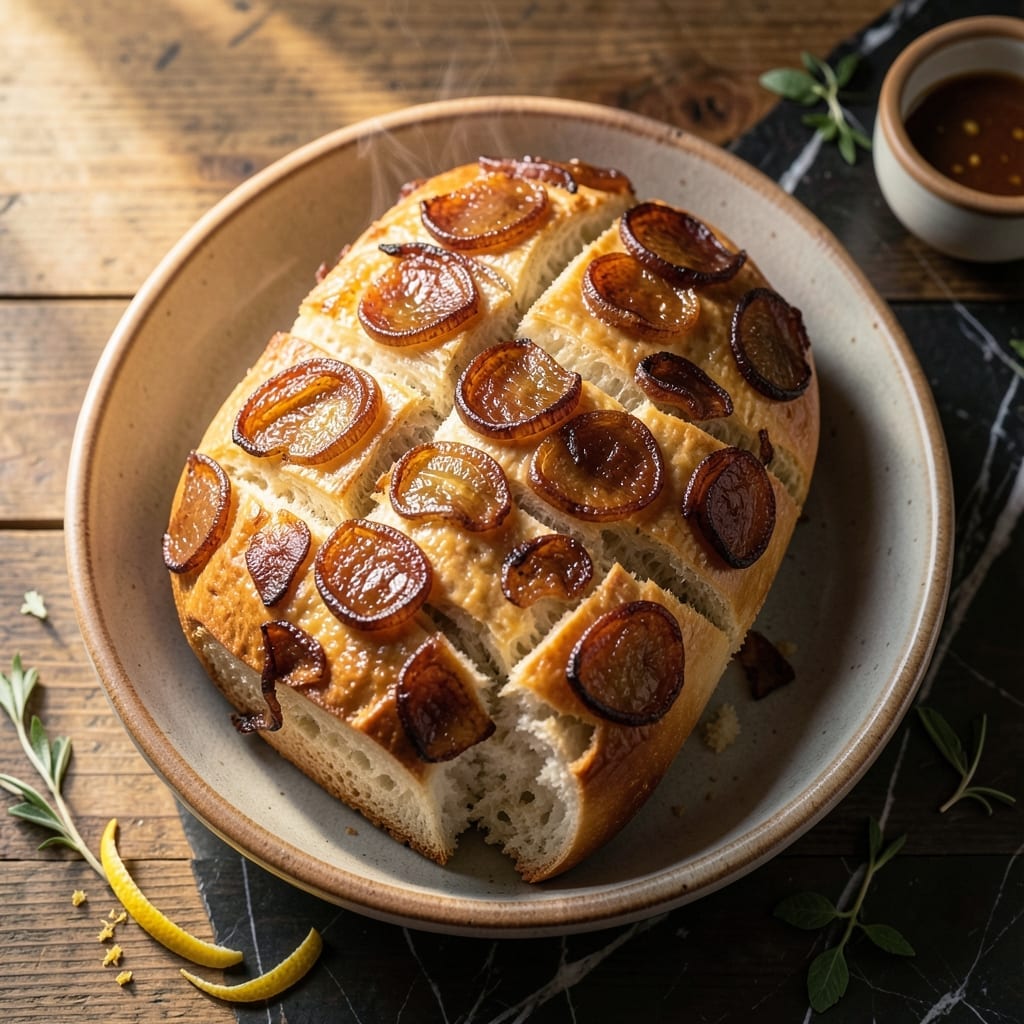
This bread transforms a simple loaf into something extraordinary with layers of buttery richness and deep caramelized onion flavor. The technique is precise yet approachable, yielding professional results every time.
I developed this version after years of perfecting the balance between sweet onions and flaky dough. The key is slow cooking the onions until they reach a jam-like consistency, then layering them generously between buttered dough.
What emerges from the oven is golden, flaky bread with a tender crumb and pockets of sweet, savory onion filling. The aroma alone makes it worth the effort, and the first bite confirms it’s special.
Serve warm for maximum impact. This creation will become a requested favorite at any gathering.
Ingredients for Capital Grille Onion Bread
Simple ingredients create showstopping bread with caramelized magic between every flaky layer.
| Ingredient | Amount | Notes |
|---|---|---|
| Sweet Onions 🧅 | 3 whole | Thinly sliced for caramelizing |
| Unsalted Butter 🧈 | 1 cup | Divided for dough and onions |
| All-Purpose Flour 🌾 | 4 cups | Plus extra for dusting |
| Active Dry Yeast 🍞 | 1 package | 2 1/4 tsp per packet |
| Granulated Sugar 🍚 | 2 tbsp | For activating yeast |
| Warm Water 💧 | 1 ¼ cups | 110-115°F for yeast |
| Salt 🧂 | 1 ½ tsp | Divided for dough and onions |
| Brown Sugar 🍯 | 1 tbsp | For caramelizing onions |
| Olive Oil 🫒 | 1 tbsp | For greasing bowl |
| Egg 🥚 | 1 whole | For egg wash |
| Black Pepper 🌶️ | ½ tsp | Freshly ground preferred |
| Dried Thyme 🍃 | ½ tsp | Optional for onion filling |
[recipe_ingredient_scaler]
The onions are everything here. Sweet onions like Vidalias or Walla Wallas caramelize beautifully—skip the red or white ones. Most grocery stores carry them year-round. I grab mine from Whole Foods when I want guaranteed quality, but any well-stocked produce section works. The butter? Plugra or Kerrygold if you’re feeling fancy, but store brand is fine too. Just don’t substitute margarine.
No sweet onions? Yellow onions with a pinch of sugar get you close. Out of brown sugar? White sugar plus a dash of molasses works. The yeast can be instant or active dry—just adjust the water temp accordingly. For the flour, bread flour gives a slightly chewier crumb, but all-purpose is what I usually use. It’s more forgiving for home bakers.
Dough rises best in a warm spot—75-80°F is ideal. Leftovers? Wrap tightly and reheat at 350°F for 10 minutes. Stays fresh for 2-3 days, but honestly, it never lasts that long. Freeze for up to 1 month if you must (though fresh is always better).
Why You’ll Love This Recipe
- Minimal Effort: I toss the dough together while the onions caramelize—no fancy techniques, just butter and patience doing the work.
- Sweet & Buttery: The onions melt into a golden jam, and that first bite with the crisp crust? Worth every minute of slow cooking.
- Party Pleaser: I bring this to potlucks and watch it disappear first—even the picky eaters go back for seconds.
- Budget Stretcher: A pound of onions and basic pantry staples make two loaves. Honestly, it’s my cheapest crowd-pleaser.
Step-by-Step Instructions for Onion Bread
This method delivers flaky layers and sweet, caramelized depth in every bite.
Step 1: Activate the Yeast and Start the Dough
In a small bowl, whisk together the 2 tbsp Granulated Sugar with the 1.25 cups Warm Water until dissolved. Sprinkle the 1 package Active Dry Yeast over the surface and let it sit undisturbed for 5-7 minutes until foamy—this confirms the yeast is alive and active.
In a large mixing bowl, combine the 4 cups All-Purpose Flour with 1 tsp Salt. Make a well in the center and pour in the yeast mixture along with the 1 tbsp Olive Oil. Stir with a wooden spoon until a shaggy dough forms. The texture will be sticky at first, but resist adding extra flour just yet.
Step 2: Knead and First Rise
Turn the dough onto a lightly floured surface and knead for 8-10 minutes until smooth and elastic. I add just enough extra flour to prevent sticking, but not so much that the dough becomes dry. You’ll know it’s ready when it springs back slowly when pressed with your finger.
Place the dough in a clean bowl lightly greased with the remaining olive oil, turning once to coat. Cover with a damp towel and let rise in a warm, draft-free spot for 1-1.5 hours, or until doubled in size. This first rise develops the gluten structure for those flaky layers.
Step 3: Caramelize the Onions
While the dough rises, thinly slice the 3 whole Sweet Onions. Melt 4 tbsp of the 1 cup Unsalted Butter in a large skillet over medium-low heat. Add the onions, 1 tbsp Brown Sugar, ½ tsp Salt, 0.5 tsp Black Pepper, and 0.5 tsp Dried Thyme.
Cook slowly for 30-40 minutes, stirring occasionally, until the onions turn a deep golden brown and sweet aroma fills the kitchen. If they start to stick, add a splash of water and lower the heat. Patience here pays off—low and slow is the secret to perfect caramelization.
Step 4: Assemble and Second Rise
Punch down the risen dough and roll it out on a floured surface into a 12×16-inch rectangle. Spread the remaining butter (softened) evenly over the dough, leaving a ½-inch border. Spoon the caramelized onions over the butter, spreading them to the edges.
Roll up the dough tightly from the long side, pinching the seam to seal. Place seam-side down on a baking sheet lined with parchment paper. Cover and let rise for another 45-60 minutes until puffy. This second rise ensures light, airy layers.
Step 5: Bake to Golden Perfection
Preheat the oven to 375°F. Beat the 1 whole Egg with 1 tbsp water and brush it over the surface of the risen loaf. With a sharp knife, make 3-4 diagonal slashes across the top to allow steam to escape.
Bake for 25-30 minutes until the bread is deep golden brown and sounds hollow when tapped on the bottom. Transfer to a wire rack and let cool for at least 20 minutes before slicing. The layers will be flaky, buttery, and packed with sweet, caramelized onion flavor in every bite.
Pro Tips For Making Capital Grille Onion Bread
- Proof the Yeast: Always activate your dry yeast in warm water (about 110°F) with a pinch of sugar first—I learned this the hard way after killing yeast with water that was too hot, leaving my bread dense and flat.
- Caramelize Low and Slow: Cook the sweet onions on medium-low heat for at least 40 minutes, stirring occasionally, to get that deep golden color and rich flavor; rushing it with high heat just burns them.
- Use Room-Temp Butter: Take your unsalted butter out of the fridge 30 minutes before mixing—cold butter doesn’t incorporate well into the dough, and you’ll end up with uneven texture.
- Don’t Over-Flour: Resist the urge to dump extra flour on your work surface when kneading; just use enough to prevent sticking, or your bread will turn out tough and dry.
Pro Cooking Tips for Perfect Results
Onion Caramelization
Low and slow wins here—cook onions over medium-low heat for 30-40 minutes. I stir every 5 minutes to prevent sticking. Adding 1 tbsp Brown Sugar early helps break down the onions faster. A splash of water deglazes the pan if needed. 🌡️
Dough Temperature Control
Yeast activates best in 110-115°F water—use a thermometer to check. Too hot kills the yeast, too cold slows activation. I learned this the hard way with a failed batch early in my baking days.
Layering Technique
Roll dough to 12×16 inches for even layers. Spread softened butter first, then onions—this prevents soggy dough. Leave a ½-inch border to seal edges tightly when rolling.
Rising Environment
Find a warm spot (75-80°F) for rising. I preheat my oven to 200°F, turn it off, then place dough inside. This creates the perfect proofing environment every time. 💡
Baking Precision
Bake at 375°F until deep golden—about 25-30 minutes. Rotate the pan halfway for even browning. The bread is done when it sounds hollow when tapped on the bottom.
Slicing Pro Tip
Let bread cool 20 minutes before slicing. Use a serrated knife for clean cuts through the flaky layers. This prevents the butter and onions from oozing out when serving.
Nutrition Facts
Frequently Asked Questions
Can I use a different type of onion?
Sweet onions work best, but yellow onions with a pinch of sugar can substitute. Avoid red or white onions as they lack the natural sweetness needed for proper caramelization.
How do I know when the onions are fully caramelized?
They’re ready when they turn deep golden brown and have a jam-like consistency. This takes 30-40 minutes over medium-low heat. Stir occasionally and add water if they start to stick.
Why did my bread turn out dense?
Likely the yeast wasn’t active or the dough didn’t rise long enough. Ensure water is 110-115°F for yeast activation, and let the dough double in size during both rises.
Can I make this ahead of time?
Yes! Prepare the dough and caramelized onions a day ahead. Store dough in the fridge and onions in an airtight container. Assemble and bake the next day for fresh results.

Trained in classic French technique but raised on slow-cooked ribs and spicy rubs, she blends culinary skill with smoke and soul.
- Recipe for Boneless Pork Chops in Cast Iron Skillet: Sear and Baste to Juicy Perfection - October 3, 2026
- Recipe for Boneless Cross Rib Roast: Slow-Roasted Beef with Herb Crust - October 3, 2026
- Hamburgers in Sauce Recipe Crock Pot: Slow-Cooked Savory Delight - October 3, 2026