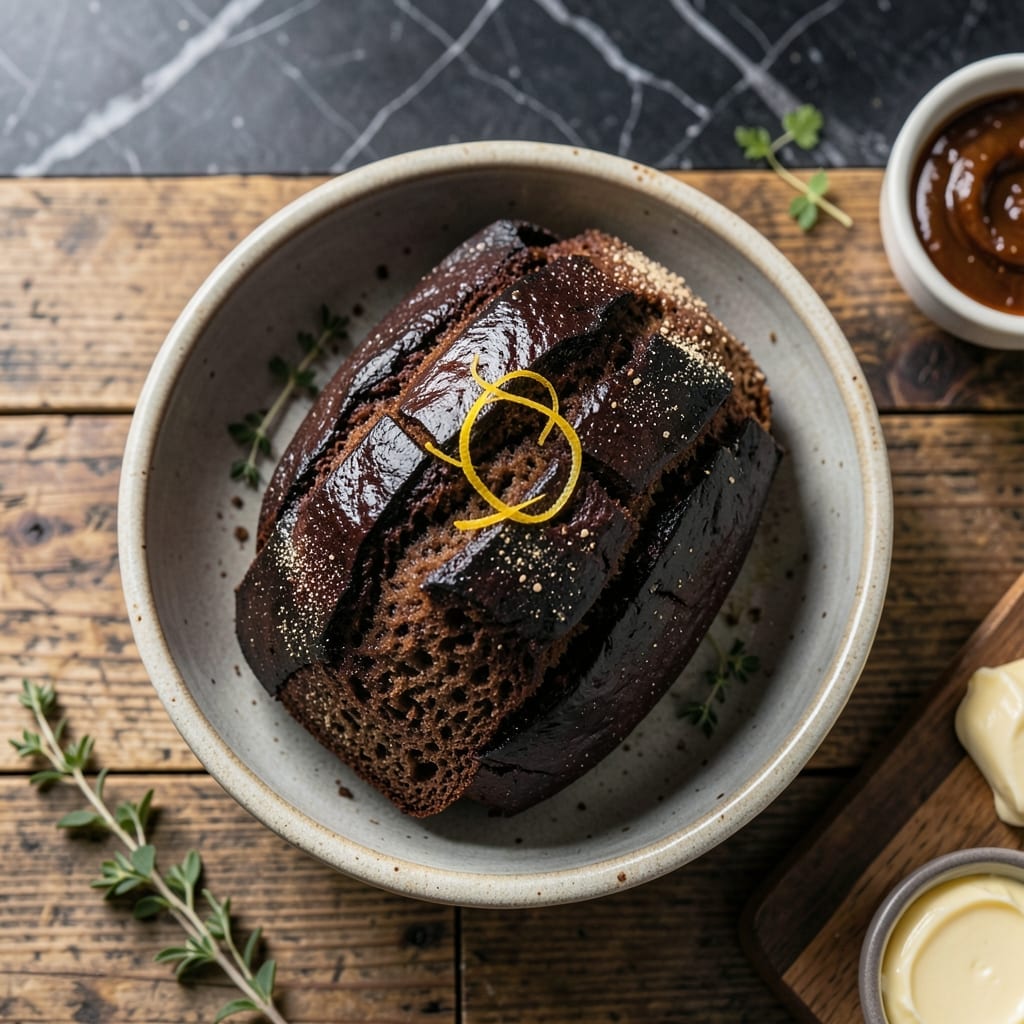
This pumpernickel bread delivers the signature dark, dense texture and rich molasses depth that defines Capital Grille’s version. The slow bake develops its characteristic complex flavors without the need for specialty equipment.
The recipe relies on a careful balance of rye flour, molasses, and cocoa powder to achieve that distinct dark color and slightly sweet taste. I’ve refined the hydration ratio to ensure the perfect dense yet moist crumb.
What emerges from the oven is a loaf with a deep mahogany crust and a soft, hearty interior. The molasses adds subtle sweetness that complements the earthy rye, while cocoa enhances the color and depth.
Serve warm with butter or as the base for hearty sandwiches. This recipe stays fresh for days and only improves with time.
Ingredients for Capital Grille Pumpernickel Bread
Dark rye, molasses, and cocoa create that signature deep, dense loaf everyone loves.
| Ingredient | Amount | Notes |
|---|---|---|
| Rye Flour 🌾 | 3 cups | Dark rye for authentic flavor |
| Bread Flour 🌾 | 1 cup | For structure and texture |
| Active Dry Yeast 🍞 | 2 ¼ tsp | One packet, proofed in warm water |
| Molasses 🍯 | ½ cup | Unsulphured for rich flavor |
| Unsweetened Cocoa Powder 🍫 | ¼ cup | Enhances color and depth |
| Warm Water 💧 | 1 ½ cups | 110-115°F for yeast activation |
| Salt 🧂 | 2 tsp | Fine sea salt preferred |
| Unsalted Butter 🧈 | 2 tbsp | Melted, for dough enrichment |
| Brown Sugar 🏝️ | 2 tbsp | Light or dark variety |
| Caraway Seeds 🌿 | 1 ½ tsp | Optional, for traditional flavor |
| Vegetable Oil 🫒 | 1 tbsp | For greasing bowl |
| Cornmeal 🌽 | 2 tbsp | For dusting baking surface |
[recipe_ingredient_scaler]
The rye flour is non-negotiable here. King Arthur or Bob’s Red Mill dark rye give you that authentic earthy depth. Molasses should be unsulphured—Brer Rabbit is widely available and reliable. Cocoa powder isn’t for sweetness but for that deep mahogany color, so Hershey’s Special Dark works perfectly. Yeast needs to be fresh; check the expiration date if you’re digging an old packet from the pantry.
No molasses? Honey or dark corn syrup at a 1:1 ratio will work in a pinch, though the flavor profile shifts slightly. Swap bread flour for all-purpose if needed, but the loaf may be slightly less chewy. Caraway seeds are traditional but optional—omit if you dislike the anise-like flavor. Butter can be replaced with vegetable oil, but the richness won’t be the same.
The dough rises slowly—give it 1.5 to 2 hours at room temperature. Baked loaves keep wrapped at room temperature for 3-4 days, or freeze for up to 3 months. Slice before freezing for easy toast-ready portions.
Why You’ll Love This Recipe
- No-Knead Magic: Most of the work is hands-off time while the yeast does its thing with the rye and bread flour.
- Deep, Rich Flavor: Molasses and cocoa powder give it that signature dark, slightly sweet depth I crave in every bite.
- Sandwich Star: Honestly, it turns even a simple turkey sandwich into something special.
- Budget Baker: A single batch makes two loaves, so I freeze one and still have fresh bread for a week.
Step-by-Step Instructions for Pumpernickel Bread
This method ensures a dense, moist loaf with the deep flavor characteristic of authentic pumpernickel.
Step 1: Activate the Yeast and Prepare Wet Ingredients
In a large mixing bowl, combine the 1.5 cups Warm Water with the 2 tbsp Brown Sugar and 2.25 tsp Active Dry Yeast. Stir gently and let sit for 5-7 minutes until the mixture becomes foamy and the yeast visibly activates.
This foaming action confirms your yeast is alive and ready to leaven the dough. Once activated, stir in the 0.5 cup Molasses and 2 tbsp Unsalted Butter until fully incorporated. The molasses will darken the mixture significantly—this is normal and contributes to the bread’s signature color.
Step 2: Combine Dry Ingredients and Form the Dough
In a separate bowl, whisk together the 3 cups Rye Flour, 1 cup Bread Flour, 2 tsp Salt, 0.25 cup Unsweetened Cocoa Powder, and 1.5 tsp Caraway Seeds until evenly distributed. The cocoa powder enhances the dark color without adding sweetness.
Gradually add the dry mixture to the wet ingredients, stirring with a wooden spoon until a shaggy dough forms. The dough will be sticky and dense—this is characteristic of rye bread. Don’t be tempted to add more flour; the high hydration is intentional for proper texture.
Step 3: Knead and First Rise
Turn the dough onto a lightly floured surface and knead for 8-10 minutes by hand. Rye dough requires more kneading than wheat dough to develop proper structure. You’ll notice the dough becomes smoother and more elastic as you work it, though it will remain tacky.
Lightly grease a large bowl with the 1 tbsp Vegetable Oil, then place the dough in the bowl, turning to coat all sides. Cover with a clean kitchen towel and let rise in a warm, draft-free place for 1 to 1.5 hours, or until doubled in size. Rye dough rises more slowly than wheat dough, so be patient.
Step 4: Shape, Second Rise, and Prepare for Baking
Punch down the risen dough to release air, then shape it into a round loaf. Place the loaf on a baking sheet dusted with the 2 tbsp Cornmeal, which prevents sticking and adds a subtle texture to the crust. Cover again and let rise for 45-60 minutes until puffed.
The second rise is shorter because we’ve already developed the gluten structure. While waiting, preheat your oven to 375°F. You’ll know the dough is ready when it springs back slowly when gently pressed with a finger, leaving a slight indentation.
Step 5: Bake to Perfection
Bake the loaf on the center rack for 35-40 minutes, or until the internal temperature reaches 200-205°F when measured with an instant-read thermometer. The crust should be dark and firm to the touch, and the loaf should sound hollow when tapped on the bottom.
Remove from the oven and let cool on a wire rack for at least 1 hour before slicing. This cooling period is crucial—it allows the crumb to set properly and the flavors to fully develop. The bread will continue to firm up as it cools, resulting in the dense, moist texture that defines authentic pumpernickel.
Pro Tips For Making Capital Grille Pumpernickel Bread
- Proof the Yeast: I learned this the hard way—always bloom your active dry yeast in warm water (110°F) with a pinch of sugar for 5-10 minutes before mixing. If it doesn’t foam, your bread won’t rise, and rye flour is too dense to fake it.
- Warm Your Molasses: Sounds weird, but it works: gently warm the molasses for 10-15 seconds in the microwave to thin it out. It blends into the dough evenly instead of clumping, and you avoid those bitter pockets of raw molasses.
- Don’t Skip the Cocoa: After burning three batches, I finally figured out that unsweetened cocoa powder isn’t just for color—it balances the molasses’ sweetness and deepens the flavor. Use a full 2 tablespoons, no substitutions.
- Let It Rest Overnight: My grandmother swore by this, and she was right: after kneading, let the dough rest in the fridge for 12-18 hours. The slow rise develops the rich, tangy depth that makes pumpernickel special.
Common Mistakes When Making This Recipe
Yeast Activation
Always check your yeast expiration date first. Old yeast won’t foam properly in the 5-7 minute activation window. I learned this the hard way when a batch failed to rise due to expired yeast.
Over-Kneading Dough
Rye dough should be tacky, not dry. Adding extra flour to reduce stickiness ruins the dense texture. Trust the process—8-10 minutes of kneading develops the gluten without toughening the bread. 💡
Rushing the Rise
Rye requires patience. Don’t rush the 1-1.5 hour first rise or 45-60 minute second rise. Cold kitchens? Place the bowl near a warm oven or use a proofing setting if available.
Incorrect Oven Temp
Baking at 375°F is crucial for that deep mahogany crust. Too low and you’ll get a pale loaf; too high and the outside burns before the inside cooks through. I always use an oven thermometer to verify.
Slicing Too Soon
Resist the urge to slice immediately. The 1 hour cooling period lets the crumb set and flavors meld. Cutting hot bread results in a gummy interior. This is non-negotiable for proper texture. ⏰
Skipping Cornmeal
The 2 tbsp cornmeal on your baking sheet isn’t just for show—it prevents sticking and adds that subtle crunch to the crust. I use fine-ground for even coverage without overpowering the bread’s flavor.
Nutrition Facts
Frequently Asked Questions
Why does the dough stay so sticky?
Rye flour absorbs liquid differently than wheat, so the dough remains tacky even after kneading. Resist adding more flour—this hydration is key for the dense, moist texture.
Can I make this without caraway seeds?
The seeds add traditional flavor, but omitting them won’t affect the texture. The molasses and cocoa still deliver that deep, rich taste.
How do I know when it’s fully baked?
Use an instant-read thermometer to check the center reaches 200-205°F. The loaf should sound hollow when tapped and have a firm, dark crust.

Trained in classic French technique but raised on slow-cooked ribs and spicy rubs, she blends culinary skill with smoke and soul.
- Recipe for Boneless Pork Chops in Cast Iron Skillet: Sear and Baste to Juicy Perfection - October 3, 2026
- Recipe for Boneless Cross Rib Roast: Slow-Roasted Beef with Herb Crust - October 3, 2026
- Hamburgers in Sauce Recipe Crock Pot: Slow-Cooked Savory Delight - October 3, 2026