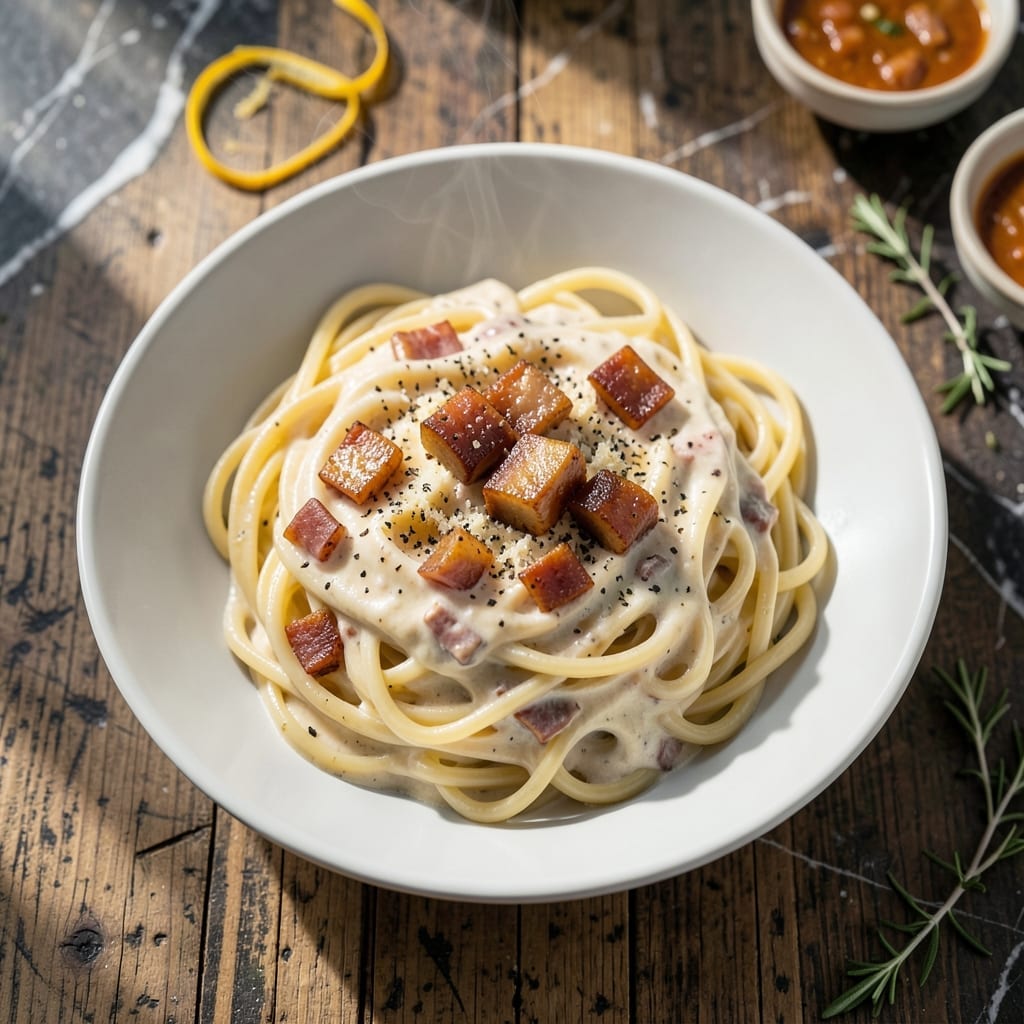
This version of the classic Roman pasta dish adds a silky twist while honoring tradition.
I developed this method to achieve the creamy texture true carbonara demands, using quality ingredients and precise technique.
Ingredients for Carbonara Recipe with Cream
Quality pasta, cured pork, and fresh cheese create this silky Roman classic.
| Ingredient | Amount | Notes |
|---|---|---|
| Spaghetti 🍝 | 1 lb | Dried, high-quality bronze-cut |
| Guanciale 🥓 | 6 oz | Diced, or substitute pancetta |
| Large Eggs 🥚 | 4 whole | Room temperature, separated |
| Pecorino Romano Cheese 🧀 | 1 cup | Freshly grated, plus extra for serving |
| Parmesan Cheese 🧀 | ½ cup | Freshly grated, aged 24 months |
| Heavy Cream 🥛 | ½ cup | Full-fat for silky texture |
| Black Pepper 🌶️ | 2 tsp | Freshly cracked, coarse grind |
| Sea Salt 🧂 | 1 ½ tsp | Fine grain, plus more for pasta water |
| Garlic Cloves 🧄 | 2 cloves | Lightly crushed, optional |
| Extra-Virgin Olive Oil 🫒 | 2 tbsp | For sautéing guanciale |
| Reserved Pasta Water 💧 | ¾ cup | Starchy, for adjusting consistency |
[recipe_ingredient_scaler]
The guanciale is non-negotiable for authenticity—Eataly or Italian specialty markets carry it, but pancetta from Whole Foods works in a pinch. Seek out bronze-cut spaghetti (De Cecco or Barilla) for proper sauce cling. Both cheeses must be freshly grated—pre-shredded contains anti-caking agents that disrupt the emulsion. Room-temperature eggs are critical for smooth integration into the hot pasta.
No guanciale? Thick-cut bacon is serviceable, though less complex. Swap Pecorino for all Parmesan if preferred, but the saltier Pecorino balances the cream. Half-and-half won’t achieve the same richness as heavy cream. For a lighter version, reduce cream to 1/4 cup, but texture will be less velvety. Garlic purists may omit it—traditional Roman carbonara often doesn’t include it.
This dish is best served immediately—carbonara waits for no one. Leftovers keep for 2 days but will thicken; loosen with reserved pasta water when reheating. Do not freeze; the cream and eggs separate unpleasantly. Guanciale can be pre-diced and stored in the fridge for 1 week.
Why You’ll Love This Recipe
- One Pot Wonder: I love that the pasta cooks while I crisp the guanciale—everything comes together in one pan.
- Rich Indulgence: Honestly, the cream makes it luxuriously smooth while the pecorino and parmesan add that sharp, salty bite.
- Weeknight Hero: Between us, it’s my go-to for busy evenings when I need something fast but still impressive.
- Budget Luxe: A little guanciale goes a long way, and the eggs and cheese make it feel way fancier than it is.
Step-by-Step Instructions for Carbonara With Cream
This traditional method with a silky twist delivers authentic Roman flavor with perfect consistency.
Step 1: Cook the Guanciale Until Crispy
Heat a large, deep skillet over medium heat and add the 2 tbsp extra-virgin olive oil. Once shimmering, add the 6 oz guanciale and cook for 8-10 minutes, stirring occasionally, until the fat renders out and the meat becomes golden and crispy.
Monitor the heat carefully to prevent burning. The guanciale should slowly crisp while releasing about ¼ cup of rendered fat. Remove from heat and set aside, leaving the rendered fat in the skillet—this forms the flavor foundation for your sauce.
Step 2: Prepare the Egg and Cheese Mixture
In a bowl, whisk together the 4 whole large eggs, 1 cup Pecorino Romano cheese, 0.5 cup Parmesan cheese, 0.5 cup heavy cream, and 2 tsp black pepper until smooth and well combined. The mixture should be thick and pale yellow, resembling a light custard.
I always use freshly grated cheese for the smoothest texture and most authentic flavor. The addition of heavy cream ensures an extra-silky sauce that clings beautifully to the pasta. Set this mixture aside while you cook the pasta.
Step 3: Cook Pasta in Salted Water
Bring a large pot of water to a rolling boil and add 1.5 tsp sea salt. Add the 1 lb spaghetti and cook until 1 minute shy of the package directions for al dente. You want the pasta slightly underdone as it will finish cooking in the sauce.
Before draining, reserve 0.75 cup of the starchy pasta water—this is crucial for creating the perfect sauce consistency. Drain the pasta but do not rinse it; the surface starch helps the sauce adhere to the strands.
Step 4: Combine Everything Off Heat
Remove the skillet with guanciale from heat and let it cool for 1 minute. Add the drained spaghetti and toss to coat in the rendered fat. Then add ½ cup of the reserved pasta water and toss vigorously for 30 seconds.
Now, add the egg and cheese mixture, tossing constantly for 1-2 minutes until it forms a creamy sauce. The pan should be off heat—if it’s too hot, you risk scrambling the eggs. The residual heat from the pasta and pan gently cooks the eggs into a silky sauce. If the sauce looks too thick, add more pasta water 1 tablespoon at a time until it reaches your desired consistency.
Step 5: Serve Immediately with Extra Cheese
Transfer the carbonara to warmed serving plates immediately. Top with additional Pecorino Romano cheese and black pepper. The sauce should cling to every strand of spaghetti with a glossy, creamy coating.
Each bite should deliver rich, salty guanciale, sharp Pecorino, peppery heat, and silky egg sauce. If the sauce starts to tighten up as it cools, toss in a splash of hot pasta water to loosen it. Serve at once for the best texture and flavor.
Pro Tips For Making Carbonara Recipe With Cream
- Temper the Eggs: Whisk the eggs with cream off the heat first, then slowly add a ladle of hot pasta water—about 1/4 cup at a time—to prevent scrambling. I learned this the hard way after ruining a batch with lumpy eggs.
- Use Guanciale Right: Dice the guanciale into 1/4-inch pieces and cook it on medium-low until crispy but not burnt. Sounds obvious, but I used to rush it and ended up with chewy bits instead of that perfect render.
- Skip the Cold Cheese: Take the Pecorino and Parmesan out of the fridge 30 minutes before grating. Cold cheese doesn’t melt as smoothly, and you’ll get a grainy sauce instead of a silky one.
- Save Some Water: Reserve at least 1 cup of starchy pasta water before draining—about 1/2 cup more than you think you’ll need. The cream thickens the sauce, so you’ll want extra to loosen it up if it gets too tight.
Common Mistakes When Making carbonara recipe with cream
Overcooking the Eggs
Never add the egg mixture to a hot skillet still on the burner. The residual heat from 8-10 minutes of cooking guanciale can scramble your eggs instantly. I always remove my pan from heat for 1 full minute before adding the pasta and eggs. This prevents a grainy texture. 🔥
Skipping Pasta Water
That starchy 0.75 cup reserved pasta water is your secret weapon for the perfect emulsion. Without it, your sauce may turn greasy or clump. I add ½ cup initially, then adjust with 1 tbsp at a time until the sauce clings beautifully to each strand.
Cold Egg Mixture
Room temperature eggs integrate smoothly into the hot pasta, while cold eggs can create a lumpy sauce. I always whisk my 4 eggs with the cheeses and cream 30 minutes before cooking. This small step makes a huge difference in texture.
Rinsing the Pasta
Rinsing removes the surface starch that helps the sauce adhere to your 1 lb spaghetti. After draining, simply shake off excess water. The starch in that water is what helps create that silky coating we all love. 💡
Using Pre-Shredded Cheese
Pre-shredded cheese contains anti-caking agents that prevent proper melting. For the creamiest sauce, I always use freshly grated Pecorino Romano and Parmesan. The extra 2 minutes of grating is worth the authentic flavor and texture.
Adding Cream Last
Mix your 0.5 cup heavy cream with the eggs and cheeses from the start. Adding cream separately can break the emulsion. This method ensures the cream integrates fully, creating that signature silky consistency throughout your dish.
Nutrition Facts
Frequently Asked Questions
Why add cream to carbonara?
Cream creates an extra-silky texture that clings beautifully to pasta. Traditional recipes rely on eggs and cheese alone, but the addition of 0.5 cup heavy cream ensures a richer, more consistent sauce that’s easier to achieve at home.
Can I use bacon instead of guanciale?
Yes, thick-cut bacon works in a pinch, though guanciale offers a more complex flavor. Cook 6 oz bacon until crispy for best results. Pancetta is another excellent substitute that’s closer to the original taste.
How do I prevent scrambled eggs in the sauce?
Remove the pan from heat before adding the egg mixture. The residual heat will gently cook the eggs into a creamy sauce without scrambling. Always let the pan cool for 1 minute first.
What pasta works best?
Bronze-cut spaghetti is ideal as its rough surface helps the sauce cling. Use 1 lb of high-quality dried pasta. Other long shapes like linguine or fettuccine also work well for this dish.

Trained in classic French technique but raised on slow-cooked ribs and spicy rubs, she blends culinary skill with smoke and soul.
- Recipe for Boneless Pork Chops in Cast Iron Skillet: Sear and Baste to Juicy Perfection - October 3, 2026
- Recipe for Boneless Cross Rib Roast: Slow-Roasted Beef with Herb Crust - October 3, 2026
- Hamburgers in Sauce Recipe Crock Pot: Slow-Cooked Savory Delight - October 3, 2026