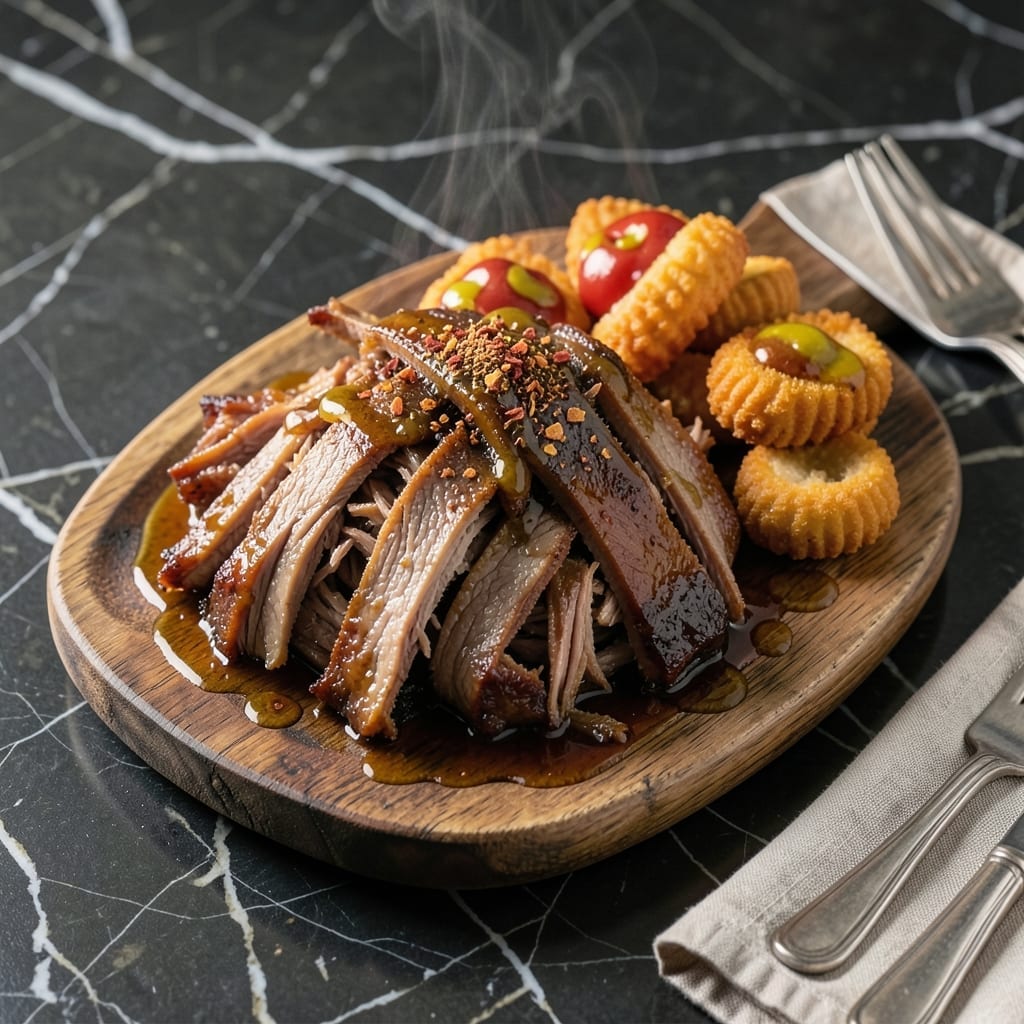
This vinegar-based barbecue delivers the authentic tender pull of Carolina tradition. The slow-cooked pork shoulder absorbs the tangy sauce, creating a perfect balance of smoky depth and bright acidity.
I developed this method after years of perfecting the balance between the vinegar tang and the pork’s natural richness. The result is a dish that stays true to its roots while delivering restaurant-quality flavor at home.
Ingredients for Carolina Pork Barbecue
Slow-cooked pork shoulder meets tangy vinegar sauce for authentic Carolina tradition at home.
| Ingredient | Amount | Notes |
|---|---|---|
| Pork Shoulder 🍖 | 4 lb | Bone-in, well-marbled preferred |
| Apple Cider Vinegar 🍏 | 2 cups | Raw, unfiltered for depth |
| White Vinegar 💧 | 1 cup | Distilled, for sharpness |
| Brown Sugar 🧈 | ½ cup | Light or dark variety |
| Ketchup 🍅 | ½ cup | High-quality for base depth |
| Yellow Mustard 🟡 | 2 tbsp | Prepared, for tangy base |
| Worcestershire Sauce 🫒 | 1 tbsp | Anchovy-free if preferred |
| Hot Sauce 🔥 | 1 tbsp | Adjust heat to preference |
| Garlic Powder 🧄 | 1 tbsp | Freshly ground for potency |
| Onion Powder 🧅 | 1 tbsp | Fine grind for even distribution |
| Kosher Salt 🧂 | 1 tbsp | Diamond Crystal preferred |
| Black Pepper 🌶️ | 1 tsp | Freshly cracked for best flavor |
| Crushed Red Pepper Flakes 🌶️ | ½ tsp | Adjust for desired heat level |
| Smoked Paprika 🌶️ | 1 tsp | For authentic smoky depth |
| Hamburger Buns 🍞 | 8 pieces | Soft, for serving |
[recipe_ingredient_scaler]
The pork shoulder is non-negotiable here. Bone-in, well-marbled pieces from Whole Foods or Costco yield the most tender results after long cooking. Avoid pre-cut pork—it lacks the connective tissue that breaks down into that signature pull. Look for pieces with visible fat streaking (marbling) for optimal moisture retention during the slow cook.
Need a vinegar swap? Red wine vinegar can replace half the apple cider vinegar for complexity. No Worcestershire? Soy sauce plus a dash of lemon juice mimics the umami. For sugar alternatives, molasses or honey (1:1 ratio) work, though molasses adds deeper color. The ketchup can be homemade, but Heinz or Hunts provide consistent quality and acidity balance.
This sauce keeps for 1 week refrigerated in an airtight container. The cooked pork stays tender for 4-5 days when stored with its juices. Freeze portions for up to 3 months—reheat gently to preserve the pull-apart texture. Always bring pork to room temperature before reheating.
Why You’ll Love This Recipe
- Set It and Forget: I toss the pork shoulder in the slow cooker with vinegar and sugar, then let it do its thing for hours—no babysitting required.
- Tangy Sweet Kick: That vinegar-sugar combo with ketchup gives it a bright, tangy flavor that’s pure Carolina perfection.
- Feeds a Hungry Crew: This makes enough for a weekend cookout or to meal prep lunches all week long.
- Budget Stretcher: Pork shoulder is cheap, and this recipe turns it into something everyone begs for seconds of.
Step-by-Step Instructions for Carolina Pork Barbecue
Master the slow-cooking process and vinegar-based sauce for authentic, tender results every time.
Step 1: Season and Slow-Cook the Pork Shoulder
Pat the 4 lb Pork Shoulder dry with paper towels, then rub it evenly with 1 tbsp Kosher Salt, 1 tsp Black Pepper, 1 tbsp Garlic Powder, 1 tbsp Onion Powder, 1 tsp Smoked Paprika, and 0.5 tsp Crushed Red Pepper Flakes. This spice blend builds the foundational flavor profile for the dish.
Place the seasoned pork in a slow cooker or Dutch oven. For slow cooker preparation, add 1 cup White Vinegar to the pot and cook on low heat for 8-10 hours until the meat shreds easily with a fork. The low and slow method ensures the collagen breaks down, yielding that signature pull-apart tenderness Carolina barbecue is known for.
Step 2: Prepare the Vinegar-Based Sauce
In a saucepan, combine 2 cups Apple Cider Vinegar, 0.5 cup Brown Sugar, 0.5 cup Ketchup, 2 tbsp Yellow Mustard, 1 tbsp Worcestershire Sauce, and 1 tbsp Hot Sauce. Bring to a gentle simmer over medium heat, stirring until the brown sugar fully dissolves.
Reduce heat to low and let the sauce simmer for 10-15 minutes until it thickens slightly. The sauce should be tangy with a subtle sweetness—this balance is what defines authentic Carolina barbecue. Taste and adjust seasoning if needed, though the original measurements should provide the perfect harmony.
Step 3: Shred and Combine
Once the pork is fork-tender, remove it from the slow cooker and transfer to a large bowl. Use two forks to shred the meat into bite-sized pieces, discarding any large fat chunks or bones. The texture should be stringy and moist, with the muscle fibers easily separating.
Pour about 1 cup of the cooking liquid from the slow cooker into the shredded pork to maintain moisture. Then, gradually add the prepared vinegar sauce, mixing gently to coat the meat evenly. Start with 1.5 cups of sauce and add more to taste, ensuring the pork is well-saturated but not swimming in liquid.
Step 4: Rest and Serve
Let the sauced pork rest for 10-15 minutes to allow the flavors to meld. This resting period lets the meat reabsorb some of the sauce, enhancing both moisture and taste.
Serve the Carolina pork barbecue on 8 pieces Hamburger Buns, generously spooning the meat onto each one. The buns should be soft enough to soak up the vinegar sauce without falling apart. For an authentic presentation, offer additional sauce on the side for those who prefer extra tang.
Pro Tips For Making Carolina Pork Barbecue
- Low and Slow Win: Cook that pork shoulder at 225°F for 8-10 hours—I learned this the hard way after pulling dry, tough meat from a rushed 300°F oven.
- Balance the Vinegars: Use a 2:1 ratio of apple cider vinegar to white vinegar for depth without harshness. My first batch tasted like a chemistry experiment.
- Shred at Peak Tenderness: Don’t pull the pork too early; wait until it collapses at the touch of a fork, around 195-200°F internal temp.
- Rest Before Saucing: Let the shredded pork rest 10 minutes before mixing with the vinegar-ketchup sauce—it soaks up flavor better than hot-off-the-smoker meat.
Common Mistakes When Making This Dish
Rushing the Cook
The most common mistake I see is pulling the pork too early. That 8-10 hour slow cook isn’t negotiable—collagen needs time to break down. I once tried 6 hours on high heat and ended up with tough, stringy meat. Patience is your best tool here. 🔥
Drowning the Pork
It’s tempting to add all the vinegar sauce at once, but this makes the meat soggy. Start with 1.5 cups of sauce, mix gently, then add more gradually. The pork should be moist but not swimming. I learned this the hard way at my first BBQ competition.
Skipping the Rest
After shredding and saucing, let the pork rest for 10-15 minutes. This allows the meat to reabsorb the flavors. Skipping this step means you’ll lose that perfect balance of tang and tenderness in every bite.
Wrong Vinegar Ratio
Using only apple cider vinegar makes the sauce too sweet. The combination of 2 cups apple cider and 1 cup white vinegar creates the authentic tang. I’ve experimented with different ratios, and this one always wins.
Over-Shredding
Shred the pork with forks, not a mixer or blades. You want those pencil-width strands that hold the sauce perfectly. Over-shredding turns it into a paste. Trust me, your guests will notice the difference.
Ignoring the Fat
Don’t trim all the fat off the pork shoulder before cooking. That marbling is what keeps the meat moist during the long cook. I leave about ¼ inch fat cap and let it render down naturally. The result is juicier, more flavorful barbecue.
Nutrition Facts
Frequently Asked Questions
What’s the best cut for this dish?
Use bone-in pork shoulder with good marbling. This cut stays moist during the long 8-10 hour cook and shreds beautifully. Avoid leaner cuts like tenderloin.
Can I make this in the oven?
Yes! Cook at 275°F in a Dutch oven with the lid on for 6-8 hours. Add 1 cup of liquid to prevent drying. Check doneness with a fork.
How do I store leftovers?
Keep in an airtight container with some juices for 4-5 days in the fridge. Freeze portions for up to 3 months. Reheat gently to maintain texture.
Why is my sauce too sweet?
You likely skipped the white vinegar. The blend of 2 cups apple cider and 1 cup white creates the perfect tangy balance. Adjust with more white vinegar.

Trained in classic French technique but raised on slow-cooked ribs and spicy rubs, she blends culinary skill with smoke and soul.
- Recipe for Boneless Pork Chops in Cast Iron Skillet: Sear and Baste to Juicy Perfection - October 3, 2026
- Recipe for Boneless Cross Rib Roast: Slow-Roasted Beef with Herb Crust - October 3, 2026
- Hamburgers in Sauce Recipe Crock Pot: Slow-Cooked Savory Delight - October 3, 2026