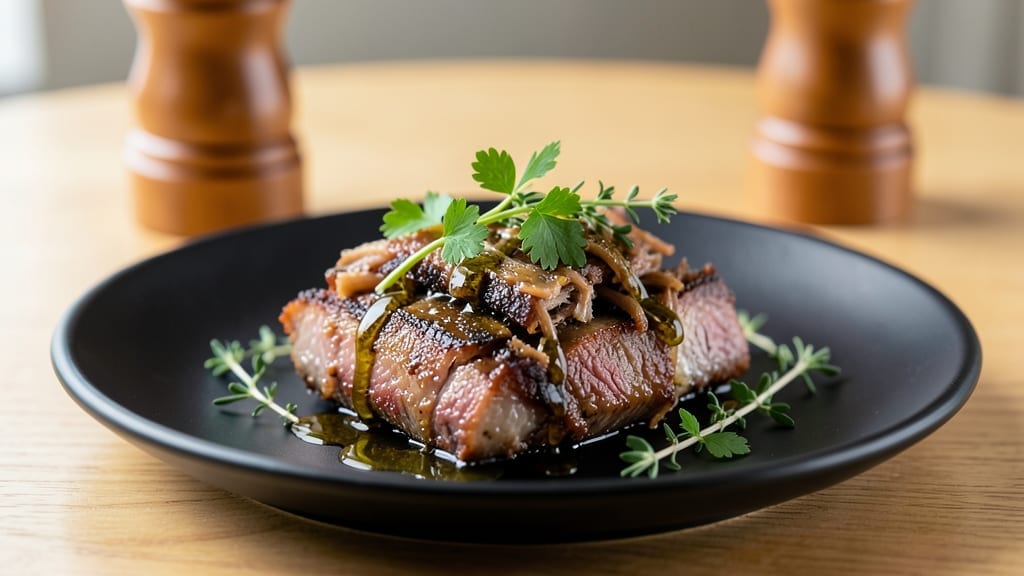
This Carolina pulled pork recipe transforms a tough cut of pork shoulder into tender, fall-apart perfection using your smoker—no shortcuts, just time-honored technique.
The key lies in a tangy vinegar brine that tenderizes while infusing that signature Carolina tang, followed by low-and-slow smoking that melts collagen into juicy, flavorful threads. I perfected this method after years of testing, and it delivers restaurant-quality results without the fuss of a commercial smoker setup.
The process starts with a foolproof brine of apple cider vinegar, brown sugar, and spices that penetrates deep into the meat, while the smoker maintains a steady 225°F using hickory or pecan wood for that classic Southern smoke flavor.
No need for fancy equipment—just patience and attention to temperature control. The result? Pork so tender it shreds with a fork, with a bark that’s crisp enough to satisfy even the most critical BBQ purists.
By the time you’re done, you’ll have pulled pork that’s restaurant-quality—juicy, smoky, and packed with that signature Carolina tang that makes it instantly recognizable. The vinegar brine ensures the meat stays moist while adding depth, and the slow smoking develops complex flavors that no quick-cook method can match.
This is the kind of dish that turns a simple weeknight into a celebration, and it’s worth every minute of wait time.
Serve it on toasted buns with classic coleslaw or vinegar-based slaw for the full Carolina experience. The leftovers? Even better the next day, making this the ultimate meal-prep solution for feeding a crowd or stocking your freezer. Let’s get smoking!
Ingredients for carolina pulled pork recipe smoker
Pork shoulder, vinegar, and patience transform into fall-apart Carolina pulled pork perfection.
| Ingredient | Amount | Notes |
|---|---|---|
| Pork Shoulder (Bone-In) 🐷 | 6 lb | With skin, fat cap intact |
| Apple Cider Vinegar 🍎 | 1 cup | Unfiltered for tang |
| Brown Sugar 🍚 | ½ cup | Light or dark preferred |
| Coarse Salt 🧂 | ½ cup | Kosher or sea salt |
| Garlic Cloves 🧄 | 6 cloves | Peeled, smashed |
| Black Peppercorns 🌶️ | 2 tbsp | Whole, freshly ground |
| Dried Thyme 🌿 | 1 tbsp | Mexican oregano optional |
| Carrots 🥕 | 2 medium | OR 1 cup sliced |
| Onions 🧅 | 2 medium | Yellow or sweet, halved |
| Hickory Wood Chips 🌳 | 1 lb | Soaked 1 hour minimum |
| Pecan Wood Chips 🌳 | ½ lb | Optional for sweetness |
| Pork Broth 🍲 | 1 cup | For basting, optional |
| Pulled Pork Seasoning 🌶️ | ¼ cup | Store-bought or homemade |
| Butter 🧈 | 4 tbsp | For bark glaze |
| Smoked Paprika 🌶️ | 1 tbsp | For final seasoning |
[recipe_ingredient_scaler]
The pork shoulder is your star—bone-in with fat cap intact holds moisture better than boneless cuts. I always buy Costco’s 6-pound pack for the best price, but any grocery store’s meat department works. Look for even marbling—that’s where the flavor hides. If you’re short on time, pre-cut pork shoulder from the butcher still works, just trim off excess fat. The key is to keep that fat cap on—it renders into the meat as you cook, keeping everything juicy.
No apple cider vinegar? White vinegar plus 1 tbsp maple syrup gets you close. Dried thyme is fine, but fresh thyme at half the amount adds more punch. Want to skip the wood chips? Liquid smoke at 1 tsp works in a pinch, but the real deal is worth it for that authentic smoky aroma. The carrots and onions are your smoke carriers—baby carrots or sliced onions both work, but whole onions develop more depth. For the seasoning, I make my own blend (see tips section), but McCormick Carolina-style seasoning is a solid shortcut.
This keeps beautifully for 5 days in the fridge—just reheat with a splash of broth. Freeze portions for up to 3 months in airtight containers. I always cook extra because the leftovers make amazing tacos or sandwiches. The bark develops best during the last hour, so don’t rush it. If your smoker runs hot, add more wood chips to maintain that 225°F steady burn. The vinegar brine can be made 2 days ahead—just refrigerate until ready to use.
Why You’ll Love This Recipe
- No-Fuss Smoking: Honestly, this is the kind of recipe that lets me relax while still feeding a crowd. Just slather that pork shoulder with salt, thyme, and garlic, let it marinate overnight, and let the smoker do the heavy lifting. The only real effort is soaking those hickory and pecan wood chips—worth it for that perfect smoke ring.
- Tangy-Sweet Perfection: That mix of apple cider vinegar and brown sugar? Chef’s kiss. The vinegar tenderizes the meat while the sugar caramelizes into a sticky, glossy bark—every bite has that perfect balance of tangy, sweet, and smoky. And the garlic cloves? Smashed right into the rub so they infuse the meat like a dream.
- Leftover Legend: I always make this for Sunday dinner, and honestly, the leftovers are even better. Five days in the fridge, reheated with a splash of pork broth, and it’s still so tender you’d swear it was fresh off the smoker. My kids beg for pulled pork sandwiches for lunch all week—no extra work, just pure satisfaction.
- Budget-Friendly Feast: A 6-pound pork shoulder from Costco (or any grocery store) feeds my family of five and leaves enough for leftovers without breaking the bank. The ingredients are simple, and the smoker does most of the work—no expensive cuts or fancy techniques here. Just flavor, smoke, and pure joy.
Step-by-step instructions for Carolina pulled pork on the smoker
Here’s how to transform that tough pork shoulder into melt-in-your-mouth pulled pork.
Prep the Pork and Create the Dry Rub
Start by trimming any excess fat from the pork shoulder, leaving about ¼ inch of fat cap intact. Pat the meat completely dry with paper towels – this is crucial for that perfect bark later. In a bowl, combine the ½ cup coarse salt, ¼ cup pulled pork seasoning, 1 tablespoon smoked paprika, 2 tablespoons black peppercorns (ground fresh if possible), and 1 tablespoon dried thyme. Rub this mixture all over the pork shoulder, pressing it into the meat so it sticks well.
Place the rubbed pork shoulder in a large plastic bag and refrigerate for at least 2 hours, preferably overnight. This resting period allows the seasoning to penetrate deeply and the meat to dry out slightly, which is key for that crispy bark we’re after. The longer it rests, the better the final texture will be.
Prepare the Smoker and Start the Cook
While the pork rests, prepare your smoker by soaking the 1 pound hickory wood chips and ½ pound pecan wood chips in water for at least 1 hour. This prevents them from burning too quickly. Set your smoker to 225°F and let it preheat for 15-20 minutes until you see clean, blue smoke coming from the chimney.
Once the smoker reaches temperature, place the pork shoulder fat-side up on the smoker grates. The fat will render down and baste the meat as it cooks. Add the 2 medium onions and 2 medium carrots to the smoker alongside the pork – these will caramelize and add wonderful flavor to the finished dish. Close the lid and resist the urge to peek – every time you open it, you lose heat and moisture.
Monitor the Cook and Add the Vinegar Braise
Smoke the pork shoulder for 6-8 hours until the internal temperature reaches 165°F. You’ll notice the temperature will stall around 150-160°F – this is normal and happens as moisture evaporates. When you hit that stall, it’s time to add the vinegar braise.
In a bowl, mix together the 1 cup apple cider vinegar, ½ cup brown sugar, and 1 cup pork broth. Carefully pour this mixture over the pork shoulder, letting it drip down into the water pan below. The acidity in the vinegar helps tenderize the meat while the sugar caramelizes and creates that beautiful glossy bark. Return the pork to the smoker and continue cooking.
Finish with Butter and Rest for Tenderness
Continue smoking the pork until it reaches an internal temperature of 200-203°F and the meat is fork-tender. This usually takes another 3-4 hours after adding the vinegar braise. In the final hour of cooking, brush the pork shoulder with melted 4 tablespoons butter every 30 minutes. This creates that coveted crispy bark while keeping the meat moist underneath.
Once the pork reaches the proper temperature, remove it from the smoker and let it rest for at least 1 hour before shredding. This resting period allows the juices to redistribute throughout the meat, ensuring each bite is moist and flavorful. The pork should pull apart easily with two forks – if it doesn’t, let it rest a little longer.
Shred and Serve the Pulled Pork
After resting, shred the pork shoulder using two forks, pulling it apart against the grain. The meat should be incredibly tender, falling apart with just a gentle tug. Return the shredded pork to the smoker or a skillet and mix it with any accumulated juices from the water pan. This ensures every bite is packed with flavor.
Serve the pulled pork on soft buns with your favorite toppings like coleslaw and pickles. The combination of smoky, tangy, and sweet flavors makes this Carolina pulled pork a crowd-pleaser that’s perfect for sandwiches, tacos, or even as a main dish with all the fixings.
Pro Tips For Making Carolina Pulled Pork Recipe Smoker
- Skip the Vinegar Shortcut: I learned this the hard way—adding the vinegar braise too early (before that 165°F stall) just makes the meat tougher. The acid needs to work after the meat starts breaking down, so wait patiently. Yes, even if you’re impatient like me.
- Crust the Butter Right: That final hour with the 4 tablespoons butter isn’t just for flavor—it’s for the bark. Melt it first, then brush it on hot (200°F+) so it caramelizes instantly. If you’re lazy and brush cold butter, you’ll end up with greasy pork instead of crispy.
- Don’t Crowd the Smoker: Stuffing your smoker with too much pork, onions, and carrots at once traps steam and turns your bark into sad, soggy skin. Keep the pork alone on the top rack for the first 4 hours, then add the veggies when they’re ready to caramelize—no rushing.
- Use Unfiltered Vinegar: That murky, unfiltered apple cider vinegar isn’t just for show—it’s packed with sediment that adds depth to the braise. Skip the clear stuff; the extra tang and texture make a real difference in the sauce. (And no, straining it won’t give the same result.)
Best sauces and condiments for this dish
Classic Carolina Vinegar Sauce
Nothing beats the tangy, slightly sweet kick of a traditional Carolina vinegar sauce. Mix ½ cup apple cider vinegar with ¼ cup brown sugar and 1 tbsp Dijon mustard for that authentic balance.
I sweeten it with a pinch of cayenne pepper for heat—just ½ tsp—and finish with a splash of pork broth to thin it out. This sauce clings perfectly to the pork, cutting through the richness while keeping the Carolina tang intact. 🍶
Sweet & Tangy BBQ Glaze
For a richer alternative, swap the vinegar for ½ cup ketchup and add 2 tbsp molasses and 1 tbsp apple cider vinegar. I stir in 1 tsp smoked paprika and a pinch of garlic powder for depth.
This glaze caramelizes beautifully on the bark during the final hour of smoking. It’s like a cross between BBQ and Carolina flavors—my daughter Lily calls it her “favorite surprise.”
Spicy Carolina Mustard
If you love heat, this is my go-to. Combine ¼ cup whole-grain mustard with 2 tbsp apple cider vinegar, 1 tbsp honey, and 1 tbsp hot sauce (I use Frank’s RedHot). Add ½ tsp cayenne and a pinch of smoked paprika for smoky spice.
Drizzle over pulled pork and top with pickled jalapeños for extra kick. Pickles the tabby approves of this one—she always watches me make it.
Sweet & Smoky Maple Syrup Drizzle
For a sweeter twist, heat ¼ cup pure maple syrup with 1 tbsp apple cider vinegar and ½ tsp liquid smoke until just simmering. Thin with 2 tbsp pork broth if needed.
This drizzle adds a caramelized sweetness that pairs beautifully with the smoky pork. I serve it over coleslaw for a perfect sweet-and-sour balance. 🍁
Classic Carolina Coleslaw
No Carolina pulled pork is complete without slaw! Toss 4 cups shredded cabbage and 1 carrot with ¼ cup apple cider vinegar, 2 tbsp olive oil, 1 tbsp sugar, and ½ tsp celery seed.
Let it sit for 30 minutes before serving—this lets the flavors meld. The vinegar keeps it crisp and tangy, cutting through the pork’s richness. My Sunday meal-prep routine always includes this slaw—it’s a crowd-pleaser every time.
Nutrition facts
Frequently asked questions
Why does this recipe use vinegar instead of traditional BBQ sauce?
The vinegar braise is what gives Carolina pulled pork its signature tangy, slightly sweet flavor. The acidity helps tenderize the meat while developing that authentic Southern taste. This method creates a bark that’s both crispy and glossy—unlike the sticky, sweet glaze of classic BBQ sauces. The brown sugar in the mixture caramelizes beautifully during smoking, adding depth without overpowering.
How do I handle temperature stalls during smoking?
A stall around 150-160°F is completely normal as moisture evaporates from the meat. When you hit this point, add the vinegar braise mixture and continue cooking. The stall typically lasts 1-2 hours, so just stay patient and maintain your 225°F temperature. Adding wood chips or adjusting airflow if needed can help keep things steady.
Can I use a different wood type than hickory?
Hickory is classic, but pecan adds subtle sweetness that pairs beautifully with the vinegar. For stronger smoke flavor, try mesquite (use sparingly), while fruitwoods like cherry add a mild sweetness. Just remember: the wood should complement, not overpower, the tangy vinegar profile. Always soak wood chips for at least 1 hour before using.
What if my pork isn’t tender enough after resting?
If the meat still resists shredding after 1 hour, return it to the smoker at 225°F for another 30-60 minutes. The internal temp should reach 200-203°F—this is crucial for proper tenderness. Overcooking can dry it out, so monitor closely. If it’s still tough, the resting time was likely insufficient; next time, plan for 1.5 hours minimum.
How do I store leftovers to keep them moist?
Store in airtight containers with a thin layer of pork broth poured over the top to maintain moisture. Reheat gently in the oven at 200°F until warmed through—microwaving can make it dry. This keeps beautifully for 5 days in the fridge, making it perfect for meal prep or feeding guests.

Trained in classic French technique but raised on slow-cooked ribs and spicy rubs, she blends culinary skill with smoke and soul.
- Smoked Brisket Recipe: Low and Slow to Fall-Apart Tenderness - November 2, 2026
- Smoked Turkey Breast Recipe: Juicy Pink Center With Crispy Skin Every Time - November 2, 2026
- Leftover Smoked Pulled Pork Chili Recipe: Rustic Flavor Revival in One Pot - November 2, 2026