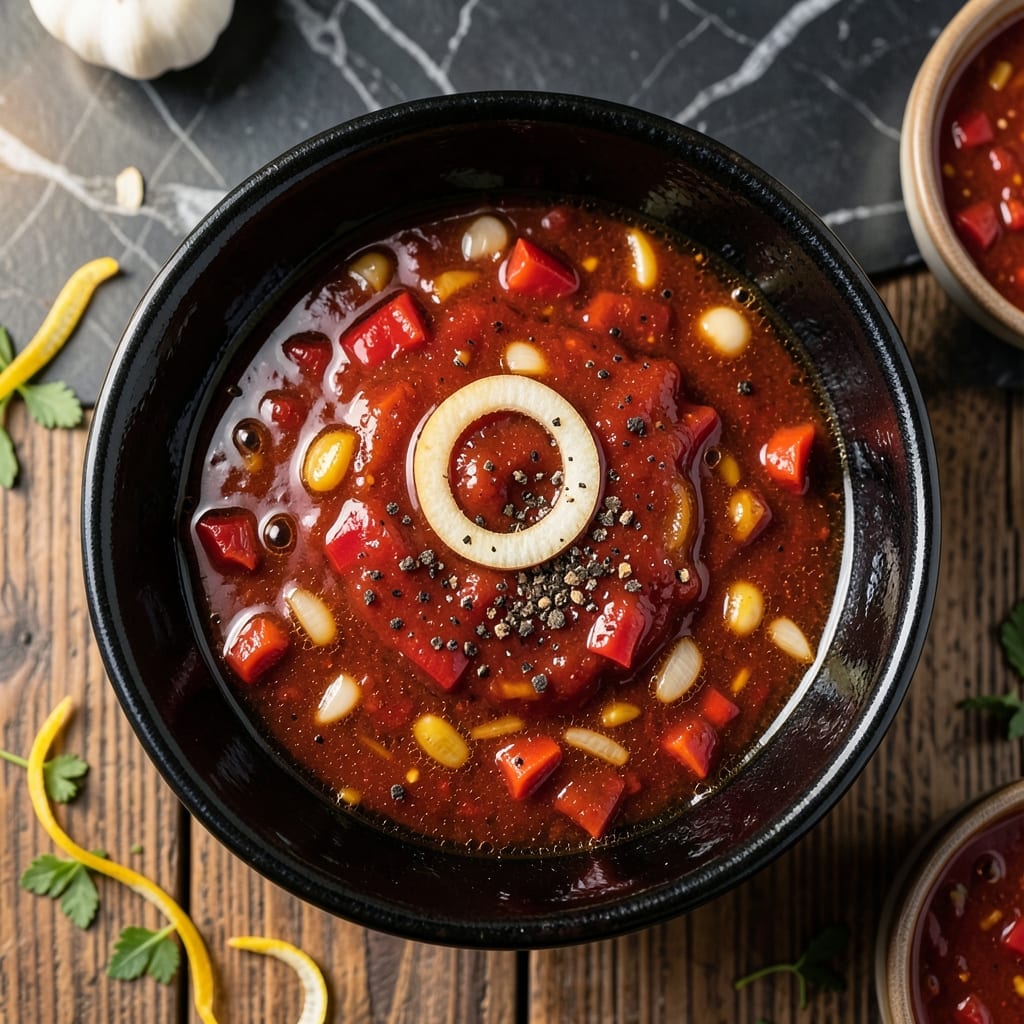
This fermented hot sauce harnesses the Carolina Reaper’s intense heat through natural processes. The fermentation deepens flavors while building complexity beyond raw pepper burns.
With proper safety measures and patience, you’ll create a bold, balanced sauce that transforms any dish. The method ensures both heat and layered taste development.
Ingredients for Carolina Reaper Hot Sauce Recipe Fermented
Nine ingredients transform into a complex, fiery sauce through natural fermentation processes.
| Ingredient | Amount | Notes |
|---|---|---|
| Carolina Reaper Peppers 🌶️ | 1 lb | Stems removed, wear gloves |
| Red Bell Peppers 🌶️ | ½ lb | Seeded, chopped for sweetness |
| Yellow Onion 🧅 | 1 whole | Roughly chopped for depth |
| Garlic Cloves 🧄 | 6 cloves | Peeled, smashed for pungency |
| Apple Cider Vinegar 🍏 | 2 cups | 5% acidity for tang |
| Distilled White Vinegar 🧃 | ½ cup | Balances sweetness of cider vinegar |
| Non-Iodized Salt 🧂 | 2 tbsp | Kosher or sea salt for brine |
| Filtered Water 💧 | 4 cups | Chlorine-free for fermentation |
| Brown Sugar 🍚 | 2 tbsp | Optional, balances heat with sweetness |
[recipe_ingredient_scaler]
The Carolina Reapers are non-negotiable for authentic heat. Source from reputable growers like PuckerButt Pepper Company or specialty produce sections at Whole Foods. Look for vibrant, unblemished pods—any softness or mold means they’re past prime. Always wear nitrile gloves when handling (latex won’t protect against capsaicin). The red bells add sweetness to balance the fire, while onion and garlic build the aromatic base.
No Reapers? Habaneros or ghost peppers work at a 1:1 ratio by weight, though heat levels will differ. White vinegar can replace cider vinegar if needed, but expect a sharper taste. For a milder sauce, reduce Reapers by half and add more bell peppers. The sugar is optional—omit entirely for a pure, sharp heat, or swap in agave for a vegan alternative to honey.
Fermented sauce keeps 12-18 months unopened in a cool, dark place. Once opened, refrigerate and use within 6 months. The flavor deepens with age, so resist the urge to adjust seasoning immediately after bottling. Always use clean, sterilized bottles to prevent contamination (mason jars work perfectly).
Why You’ll Love This Recipe
- Five Minute Ferment: Honestly, the hardest part is chopping the peppers—then it’s just a matter of letting time do the work.
- Smoky, Sweet Heat: That mix of Carolina Reaper fire, sweet red bell, and tangy apple cider vinegar? Ridiculously good on literally everything.
- Pantry Powerhouse: I keep a jar in the fridge and it lasts months—drizzle on eggs, stir into soups, or gift it to spice-loving friends.
- Budget Fire: A handful of peppers and vinegar stretch into a sauce that would cost twice as much at the store.
Step-by-Step Instructions for Fermented Carolina Reaper Hot Sauce
Master this fermentation process to develop complex heat and tang in your finished sauce.
Step 1: Prepare the Pepper and Vegetable Base
Wearing protective gloves, remove stems from the 1 lb Carolina Reaper Peppers. Seed and roughly chop the 0.5 lb Red Bell Peppers, 1 whole Yellow Onion, and 6 cloves Garlic Cloves. The peppers’ capsaicin can cause severe skin irritation, so handle with care.
Combine all chopped vegetables in a large mixing bowl. This base layer provides the foundation for both heat and sweetness in your final product.
Step 2: Create the Fermentation Brine
In a separate bowl, dissolve the 2 tbsp Non-Iodized Salt and 2 tbsp Brown Sugar in the 4 cups Filtered Water until fully incorporated. The salt inhibits harmful bacteria while allowing beneficial lactobacillus to thrive.
Pour this brine over the vegetable mixture, ensuring all pieces are fully submerged. The liquid should completely cover the solids to prevent mold growth during fermentation.
Step 3: Ferment for Optimal Flavor Development
Transfer the mixture to a clean, airtight fermentation vessel. I use a glass jar with a fermentation lock to allow gases to escape while keeping contaminants out. Store at room temperature, ideally between 68-75°F, for 7-10 days.
Check daily to ensure vegetables remain submerged, pressing down if needed. You’ll notice bubbling within 24-48 hours as fermentation begins. The mixture should develop a tangy aroma with visible effervescence.
Step 4: Blend and Strain the Fermented Mixture
After fermentation, transfer the contents to a blender. Add the 2 cups Apple Cider Vinegar and 0.5 cup Distilled White Vinegar. The apple cider vinegar contributes fruity depth while the white vinegar sharpens the overall acidity profile.
Blend until completely smooth, about 2-3 minutes. Strain through a fine-mesh sieve into a clean bowl, pressing with a spoon to extract all liquid. The resulting sauce should have a vibrant color and balanced aroma.
Step 5: Bottle and Store Your Hot Sauce
Pour the strained sauce into clean glass bottles with airtight lids. The sauce will continue to develop complexity over time. Store in the refrigerator for up to 6 months.
Let the sauce rest for at least 24 hours before first use to allow flavors to fully meld. The heat level will be intense but balanced by the natural sweetness of the fermented vegetables.
Pro Tips For Making Carolina Reaper Hot Sauce Recipe Fermented
- Use Gloves Always: Carolina Reapers will burn your skin—wear nitrile gloves when handling, even if you think you’re careful. I learned this the hard way after rubbing my eyes mid-chop.
- Ferment 5-7 Days: Let the pepper-onion-garlic mix ferment at room temp for at least 5 days, stirring daily. Any shorter and the flavor stays flat and one-dimensional.
- Balance with Bell Peppers: Use twice as many red bell peppers as Reapers to temper the heat without losing the fruity depth. Skip this and your sauce will be all pain, no flavor.
- Strain Twice: After blending, strain through a fine-mesh sieve, then again through cheesecloth for a smooth sauce. It adds 10 minutes but removes the gritty texture that ruins the finish.
Wine and Beer Pairings for This Recipe
Beer Pairings
The bold, fiery heat of a fermented Carolina Reaper hot sauce calls for beers that can stand up to its intensity while complementing its complex, fruity notes. A Double IPA with its robust hop bitterness and citrusy undertones can help balance the heat while enhancing the sauce’s tropical flavors. For a richer pairing, try a Smoked Porter—its deep, malty sweetness and smoky notes create a fascinating contrast with the sauce’s spiciness. If you prefer something lighter, a Belgian Tripel with its effervescence and fruity esters can cleanse the palate between fiery bites.
Wine Pairings
Wine lovers should reach for bottles with enough sweetness or acidity to tame the Carolina Reaper’s heat. A Riesling, particularly an off-dry or late-harvest style, offers a refreshing counterbalance with its honeyed stone fruit and crisp acidity. For red wine enthusiasts, a Zinfandel with its jammy berry flavors and peppery spice can hold its own against the sauce’s intensity. The wine’s bold fruitiness and slight sweetness make it a surprisingly harmonious match.
Non-Alcoholic Options
If you’re skipping alcohol, opt for beverages that soothe the palate while letting the sauce’s flavors shine. A ginger beer with its spicy kick and effervescence can complement the heat without overwhelming it. For a sweeter option, a mango nectar or pineapple juice enhances the sauce’s tropical undertones while providing a cooling contrast. These pairings ensure everyone can enjoy the fiery depth of your fermented creation! 🌶️
Nutrition Facts

Trained in classic French technique but raised on slow-cooked ribs and spicy rubs, she blends culinary skill with smoke and soul.
- Recipe for Boneless Pork Chops in Cast Iron Skillet: Sear and Baste to Juicy Perfection - October 3, 2026
- Recipe for Boneless Cross Rib Roast: Slow-Roasted Beef with Herb Crust - October 3, 2026
- Hamburgers in Sauce Recipe Crock Pot: Slow-Cooked Savory Delight - October 3, 2026