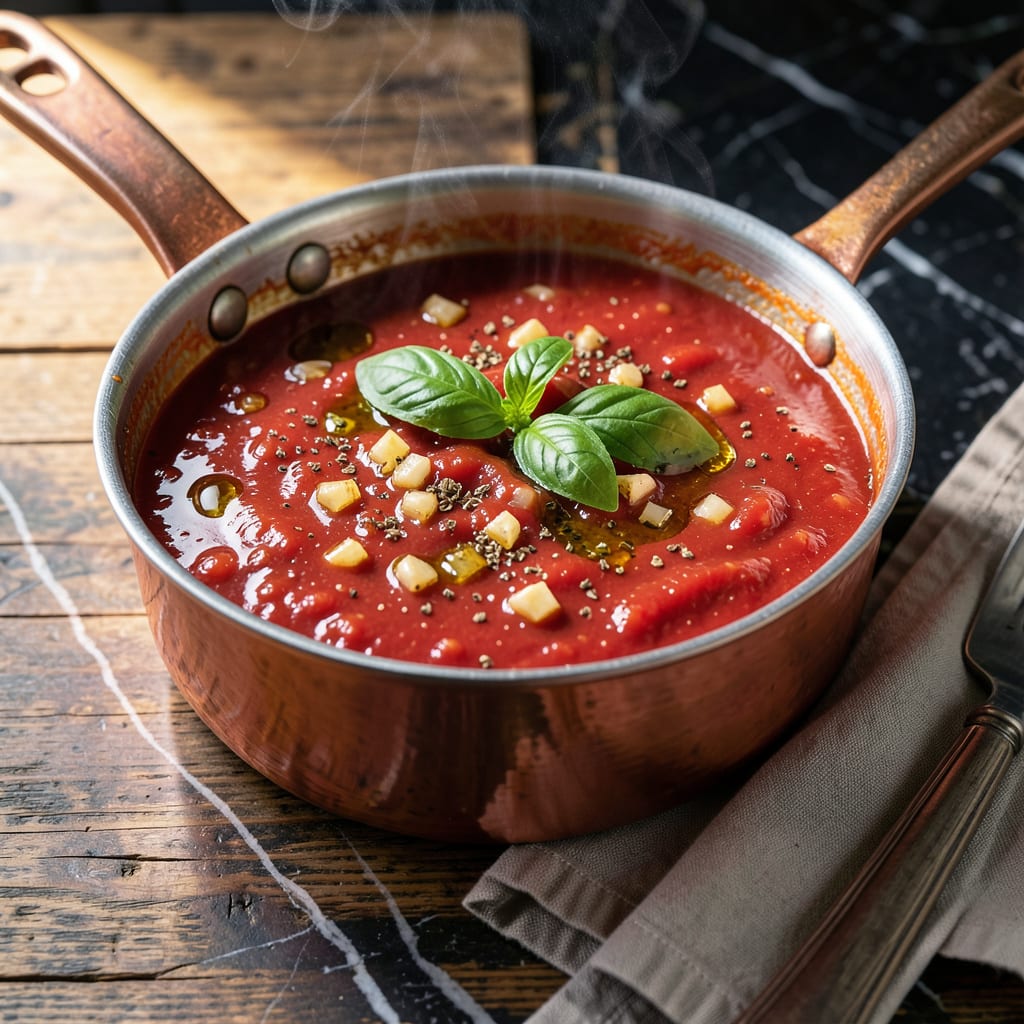
This marinara captures the spirit of Carrabba’s with a simple but authentic approach to Italian flavor. I developed it after years of trying to replicate that restaurant quality at home.
Using just a handful of quality ingredients and a slow simmer, this sauce delivers the rich, restaurant-style taste that elevates any pasta dish. The key is patience and the right balance of herbs.
Ingredients for Carrabba’s Marinara Sauce
Nine quality ingredients transform into restaurant-style marinara with authentic Italian character.
| Ingredient | Amount | Notes |
|---|---|---|
| San Marzano Whole Peeled Tomatoes 🍅 | 28 oz | Canned, crushed by hand |
| Extra-Virgin Olive Oil 🫒 | ¼ cup | High quality, fruity |
| Yellow Onion 🧅 | 1 whole | Finely diced |
| Garlic Cloves 🧄 | 6 cloves | Minced to paste consistency |
| Fresh Basil Leaves 🌿 | ½ cup | Packed, torn by hand |
| Dried Oregano 🍃 | 2 tsp | Mediterranean variety preferred |
| Red Pepper Flakes 🌶️ | ½ tsp | Adjust for heat preference |
| Sea Salt 🧂 | 1 ½ tsp | Fine grain, Diamond Crystal preferred |
| Black Pepper 🌶️ | 1 tsp | Freshly cracked |
| Granulated Sugar 🍬 | 1 tsp | Balances acidity |
[recipe_ingredient_scaler]
The tomatoes are non-negotiable—San Marzano from Italy deliver the sweet, low-acid base that defines authentic marinara. Eataly or Whole Foods carry them, but most supermarkets have a decent imported brand. Look for DOP certification on the can if you’re serious about quality. The olive oil should be something you’d happily drizzle on bread (I prefer California Olive Ranch for reliability).
No San Marzano tomatoes? Regular canned crushed tomatoes work in a pinch, though the flavor won’t be as bright. Fresh tomatoes are too watery for this—save them for bruschetta. For the herbs, dried basil at one-third the amount can substitute, but fresh is ideal. The sugar might seem odd, but it’s essential to balance the acidity (trust the process on this one).
This sauce actually improves overnight. Refrigerate in airtight container for up to 5 days, or freeze for 3 months. Portion into ice cube trays for easy single-serving use. Always bring to room temperature before reheating to preserve texture.
Why You’ll Love This Recipe
- One Pot Wonder: I toss everything in—San Marzanos, garlic, basil—and let it simmer while I set the table.
- Ridiculously Good: The sweetness of the onions and bright basil make this taste like the real Carrabba’s deal.
- Meal Prep Magic: I make a double batch on Sunday and use it for pasta, pizza, and dipping all week.
- Pantry Friendly: Honestly, I always have these canned tomatoes and garlic on hand, so dinner’s never far away.
Step-by-Step Instructions for Carrabba’s Marinara Sauce
Traditional methods ensure this sauce develops deep, complex flavor through slow simmering and proper technique.
Step 1: Prepare the Aromatic Base
Heat the 0.25 cup Extra-Virgin Olive Oil in a heavy-bottomed saucepan over medium-low heat. Add the finely diced Yellow Onion and cook for 8-10 minutes until translucent and soft, stirring occasionally to prevent browning.
The low heat coaxes out the onion’s natural sweetness without caramelization. This forms the flavor foundation for the sauce. Season with 1.5 tsp Sea Salt during cooking to help draw out moisture and soften the onions faster.
Step 2: Develop the Garlic and Spice Foundation
Add the 6 cloves Garlic Cloves (minced to a paste) to the onions along with 2 tsp Dried Oregano, 0.5 tsp Red Pepper Flakes, 1 tsp Black Pepper, and 1 tsp Granulated Sugar. Cook for 1-2 minutes until the garlic becomes fragrant but not browned.
Blooming the spices in the warm oil releases their essential oils, creating a more pronounced flavor. The sugar balances the acidity of the tomatoes, while the red pepper flakes add subtle heat characteristic of authentic Italian sauces.
Step 3: Incorporate and Break Down the Tomatoes
Add the 28 oz San Marzano Whole Peeled Tomatoes (crushed by hand) to the pot, including all their juices. Stir well to combine with the aromatic base. Use a wooden spoon to break apart any remaining whole tomatoes into rustic, chunky pieces.
San Marzano tomatoes are ideal for their sweet, low-acid flavor and meaty texture. The hand-crushing method preserves more texture than mechanical blending while still creating a cohesive sauce. Bring the mixture to a gentle simmer over medium heat.
Step 4: Simmer and Concentrate the Flavors
Reduce heat to low and maintain a gentle simmer, stirring occasionally. After 20 minutes, add the 0.5 cup Fresh Basil Leaves (torn by hand). Continue simmering for another 20-30 minutes until the sauce thickens and develops a deep, rich color.
The long simmer allows the flavors to meld and the sauce to reduce slightly. Fresh basil added late preserves its vibrant aroma and color. The sauce should coat the back of a spoon but still have a fluid consistency. Taste and adjust seasoning if needed.
For the most authentic result, allow the sauce to cool slightly before serving. This resting period lets the flavors fully harmonize, just as it would in a professional Italian kitchen.
Pro Tips For Making Carrabba’S Marinara Sauce
- Simmer Low and Slow: Keep the heat at a gentle bubble—too high and the San Marzano tomatoes will scorch, turning bitter. I learned this the hard way after ruining a batch by rushing it.
- Crush by Hand: Tear the San Marzano tomatoes with your hands instead of a blender for a rustic texture that clings to pasta better. It’s messy, but worth it.
- Sauté Onions Long Enough: Cook the yellow onions until they’re soft and translucent, about 8-10 minutes. Skipping this step leaves the sauce with a harsh, raw onion bite.
- Add Basil Last: Stir in fresh basil leaves at the very end—adding them too early turns them dark and muddy. It keeps the flavor bright and fresh.
Dietary Considerations for This carrabbas marinara sauce
Vegetarian Friendly
This marinara is naturally 100% plant-based, making it perfect for vegetarian and vegan diets. The rich tomato base provides substantial flavor without any animal products. I love that it satisfies everyone at the table regardless of dietary preferences.
Gluten-Free Naturally
With no wheat, barley, or rye ingredients, this sauce is inherently gluten-free. The only thing to watch is cross-contamination if you’re highly sensitive. I’ve served it to gluten-free friends without any concerns. 💪
Low-Calorie Option
A ½ cup serving contains roughly 70-80 calories, mostly from the olive oil. For a lighter version, reduce the oil to 2 tbsp—the flavor impact is minimal but the calories drop significantly. The tomatoes provide volume without excess calories.
Allergen Information
This recipe contains no dairy, eggs, nuts, soy, or fish. The primary potential allergen is nightshades (tomatoes), which some people need to avoid. Always check your spice blends for hidden allergens if using pre-mixed varieties.
Sugar Content Control
The 1 tsp sugar adds balance but can be omitted or replaced with 1 tsp honey if preferred. For a no-sugar version, add ½ tsp baking soda to neutralize acidity instead. I’ve made it all ways and still get rave reviews.
Sodium Awareness
With 1.5 tsp sea salt, you control the sodium content completely. For lower sodium, reduce to 1 tsp or use no-salt-added tomatoes. The long simmer concentrates flavors so you need less salt than you might expect. 🌟
Nutrition Facts
Frequently Asked Questions
Can I use regular canned tomatoes instead of San Marzano?
Yes, but expect a slightly more acidic flavor. San Marzano tomatoes are sweeter and less acidic, which is key for authentic taste. If substituting, add an extra ½ tsp sugar to balance the acidity.
How long can I store homemade marinara?
In an airtight container, it keeps in the fridge for up to 5 days or in the freezer for 3 months. For best results, cool completely before storing and reheat gently to preserve texture.
Why add sugar to marinara?
The 1 tsp sugar neutralizes the tomatoes’ natural acidity, creating a smoother, more balanced flavor. It’s a classic Italian trick—just enough to enhance, not sweeten.
Can I make this sauce in a slow cooker?
Sauté the onions and garlic first, then transfer everything to the slow cooker. Cook on low for 6-8 hours for the same rich, deep flavor with hands-off convenience.

Trained in classic French technique but raised on slow-cooked ribs and spicy rubs, she blends culinary skill with smoke and soul.
- Recipe for Boneless Pork Chops in Cast Iron Skillet: Sear and Baste to Juicy Perfection - October 3, 2026
- Recipe for Boneless Cross Rib Roast: Slow-Roasted Beef with Herb Crust - October 3, 2026
- Hamburgers in Sauce Recipe Crock Pot: Slow-Cooked Savory Delight - October 3, 2026