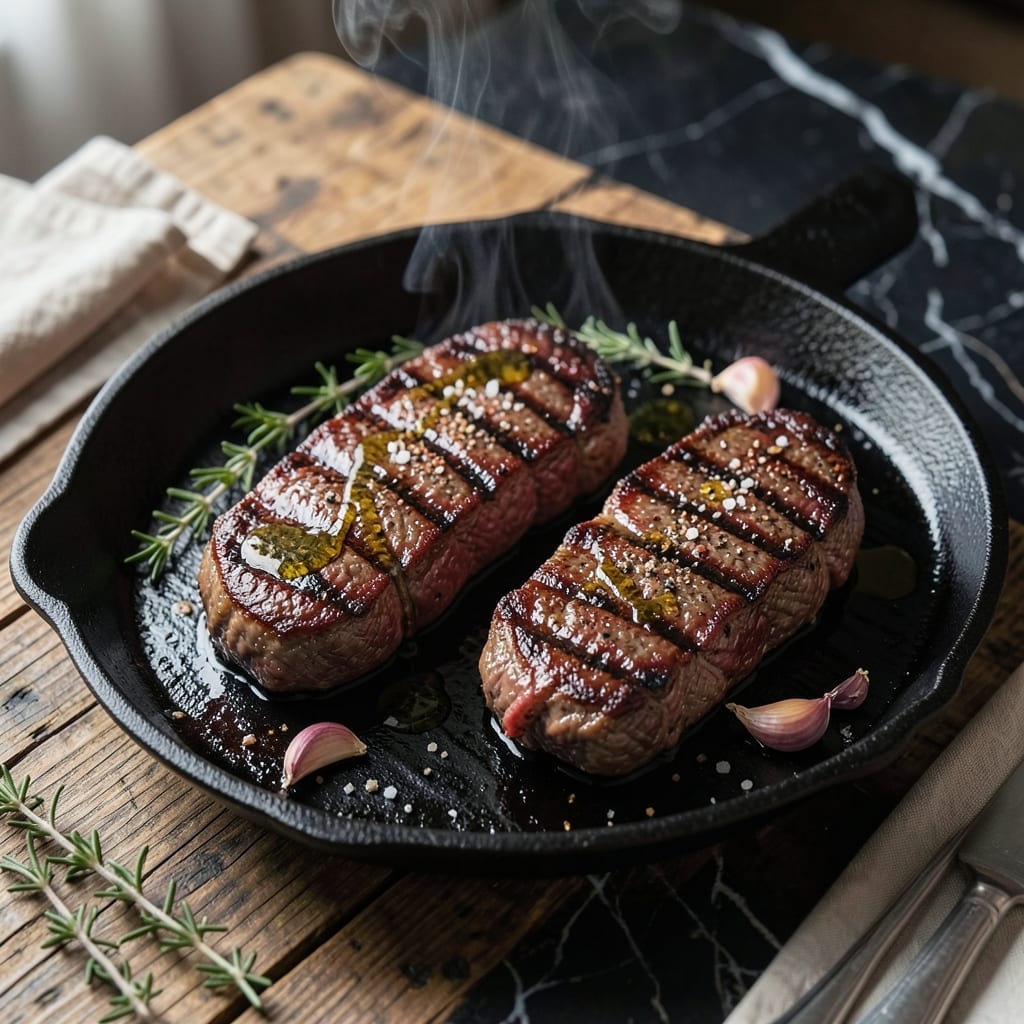
Achieving perfect steak on a cast iron grill is simpler than you think. A hot surface and proper timing create a juicy interior with a smoky crust.
This method delivers restaurant-quality results at home. The key is high heat, minimal flipping, and letting the steak rest before slicing.
Ingredients for Cast Iron Grill Steak
Thick ribeye steaks and a few pantry staples create a restaurant-quality meal at home.
| Ingredient | Amount | Notes |
|---|---|---|
| Ribeye Steaks 🥩 | 2 whole | 1.5 inches thick, bone-in or boneless |
| Kosher Salt 🧂 | 2 tsp | Diamond Crystal preferred for even seasoning |
| Freshly Ground Black Pepper 🌶️ | 1 ½ tsp | Coarse grind for texture |
| Garlic Powder 🧄 | 1 tsp | For depth of flavor |
| Onion Powder 🧅 | 1 tsp | Balances the seasoning blend |
| Smoked Paprika 🌶️ | ½ tsp | Enhances the smoky crust |
| High-Smoke-Point Oil 🫒 | 2 tbsp | Avocado or grapeseed oil recommended |
| Unsalted Butter 🧈 | 4 tbsp | For basting during cooking |
| Fresh Rosemary Sprigs 🌿 | 2 whole | Optional for aromatic basting |
| Fresh Thyme Sprigs 🍃 | 2 whole | Optional for aromatic basting |
| Garlic Cloves 🧄 | 2 cloves | Smashed, for basting |
[recipe_ingredient_scaler]
The steak is everything here. Ribeye with good marbling ensures that juicy interior promised—USDA Prime or Choice grades deliver the best results. Thickness of 1.5 inches is ideal for achieving both crust and even cooking. Source from a reputable butcher like Whole Foods or local specialty shops where they’ll cut to your specification. Bring steaks to room temperature before cooking for even heat distribution.
No ribeye? New York strip or filet mignon work well, though filet lacks marbling (add a pat of butter while cooking). Kosher salt brands vary—Diamond Crystal is the professional standard for its flake size and even distribution. For the oil, any high smoke point variety works; avocado oil is my go-to for its neutral flavor and 520°F smoke point.
Raw steaks keep 3-5 days in the fridge, but cook within 2 days for optimal freshness. Freeze steaks for up to 6-12 months in vacuum-sealed bags. Let them rest at room temperature 30-45 minutes before cooking for even doneness.
Why You’ll Love This Recipe
- One Pan Magic: I just season the ribeye, sear it in cast iron, and dinner’s ready—no grill, no fuss.
- Crust Worth Craving: That garlic and onion powder mix with the cast iron gives the steak this ridiculous crust I can’t stop thinking about.
- Date Night Ready: I’ve served this for anniversaries and random Tuesdays—always feels special with zero extra effort.
- Next-Day Sandwiches: Leftovers? Cold ribeye between bread with a little mayo is my secret lunch upgrade.
Step-by-Step Instructions for Cast Iron Grill Steak
Master the technique for a restaurant-quality sear and perfectly juicy interior every time.
Step 1: Season the Ribeye Steaks Generously
Pat the ribeye steaks completely dry with paper towels—this is critical for achieving a proper sear. I press firmly to remove all surface moisture, which would otherwise steam the meat instead of browning it.
Combine the kosher salt, freshly ground black pepper, garlic powder, onion powder, and smoked paprika. Rub this blend all over both steaks, pressing it into the meat so it adheres well. The smoked paprika will give your steak that signature smoky depth. Let the seasoned steaks sit at room temperature for 30-45 minutes before cooking.
Step 2: Preheat the Cast Iron Grill Pan
Place your cast iron grill pan over high heat and let it preheat for 5-7 minutes until it’s smoking hot. You’ll know it’s ready when a drop of water sizzles and evaporates instantly upon contact.
Add the high-smoke-point oil and swirl to coat the ridges of the grill pan evenly. The oil should shimmer but not smoke excessively. This creates the perfect surface for searing while preventing the steaks from sticking to the ridges.
Step 3: Sear the Steaks for a Perfect Crust
Carefully place the ribeye steaks on the grill pan. You should hear an immediate, aggressive sizzle—if not, your pan isn’t hot enough. Sear the first side undisturbed for 3-4 minutes until a deep brown crust forms and the steaks release easily from the pan.
Flip the steaks using tongs (never pierce with a fork) and sear the second side for another 3-4 minutes. For the signature grill marks, rotate the steaks 45 degrees halfway through cooking each side. Add the unsalted butter, fresh rosemary sprigs, fresh thyme sprigs, and garlic cloves to the pan during the last 2 minutes of searing.
Step 4: Baste and Finish to Perfection
Tilt the pan slightly and use a spoon to baste the steaks with the melted butter, rosemary, thyme, and garlic continuously for the final 1-2 minutes. This infuses the steaks with aromatic flavors and ensures even cooking.
For medium-rare, cook until the internal temperature reaches 125-130°F. The steaks should feel slightly firm to the touch but still yield when pressed. If you prefer medium, aim for 135-140°F.
Step 5: Rest and Serve
Transfer the steaks to a cutting board or warm plate and tent loosely with foil. Let them rest for 10 minutes—this allows the juices to redistribute throughout the meat, ensuring every bite is tender and flavorful.
Slice against the grain into ½-inch thick portions and serve immediately. The exterior should have a deep, smoky crust with distinct grill marks, while the interior remains juicy and pink. Spoon any remaining butter and herbs from the pan over the top for extra flavor.
Pro Tips For Making Cast Iron Grill Steak
- Crank the Heat: Get that cast iron screaming hot before the steak hits—at least 5 minutes on high. I learned this the hard way after too many pale, sad ribeyes.
- Pat the Steaks Dry: Blot the ribeyes with a paper towel right before seasoning. Wet meat steams instead of searing, and nobody wants a gray steak.
- Resist the Urge to Poke: Flip the steak once, maybe twice—no constant prodding. Every poke lets juices escape, and you’ll lose that perfect crust.
- Butter the Crust: In the last minute, toss a pat of butter with the garlic and onion powder into the pan and baste the steak. Sounds simple, but it adds a ridiculous amount of flavor.
Common Mistakes When Making This Dish
Cold Steak Mistake
Never cook steaks straight from the fridge. Cold meat seizes up and cooks unevenly, leaving you with a gray band just under the crust. I always pull my ribeyes out 30-45 minutes before cooking to ensure even heat distribution. 🌡️
Overcrowded Pan
Putting both steaks in the pan at once drops the temperature instantly, preventing that beautiful sear. Cook one at a time if your pan isn’t big enough. I learned this the hard way at my first local BBQ competition.
Constant Flipping
Flipping too often prevents crust formation. Let each side sear undisturbed for 3-4 minutes before turning. The steak will release naturally when it’s ready to flip.
Skipping the Rest
Cutting into your steak right after cooking causes all those precious juices to spill out. Always rest for 10 minutes tented with foil. This gives the muscle fibers time to reabsorb the juices.
Wrong Oil Choice
Using butter or low smoke point oils causes burning and bitter flavors. Stick with avocado or grapeseed oil—both handle 500°F+ beautifully. I keep a bottle of Chosen Foods avocado oil just for high-heat cooking.
Ignoring Thickness
Thin steaks overcook easily on cast iron. For perfect medium-rare, use 1.5-inch thick ribeyes. This gives you enough mass to develop a crust without overcooking the center. My butcher at the farmers market cuts them to this exact spec.
Nutrition Facts
Frequently Asked Questions
What’s the ideal temperature for medium-rare?
Use a meat thermometer and pull at 125-130°F for perfect medium-rare. The temperature will rise another 5°F while resting.
Can I use a regular skillet instead?
A regular skillet works, but you’ll miss the grill marks. Ensure it’s cast iron and get it screaming hot for a proper sear.
How do I know when to flip?
Wait until a deep brown crust forms and the steak releases easily, about 3-4 minutes per side. Don’t force it!
Why rest the steak after cooking?
Resting for 10 minutes lets juices redistribute. Skip this and you’ll lose flavor on the cutting board.

Trained in classic French technique but raised on slow-cooked ribs and spicy rubs, she blends culinary skill with smoke and soul.
- Recipe for Boneless Pork Chops in Cast Iron Skillet: Sear and Baste to Juicy Perfection - October 3, 2026
- Recipe for Boneless Cross Rib Roast: Slow-Roasted Beef with Herb Crust - October 3, 2026
- Hamburgers in Sauce Recipe Crock Pot: Slow-Cooked Savory Delight - October 3, 2026