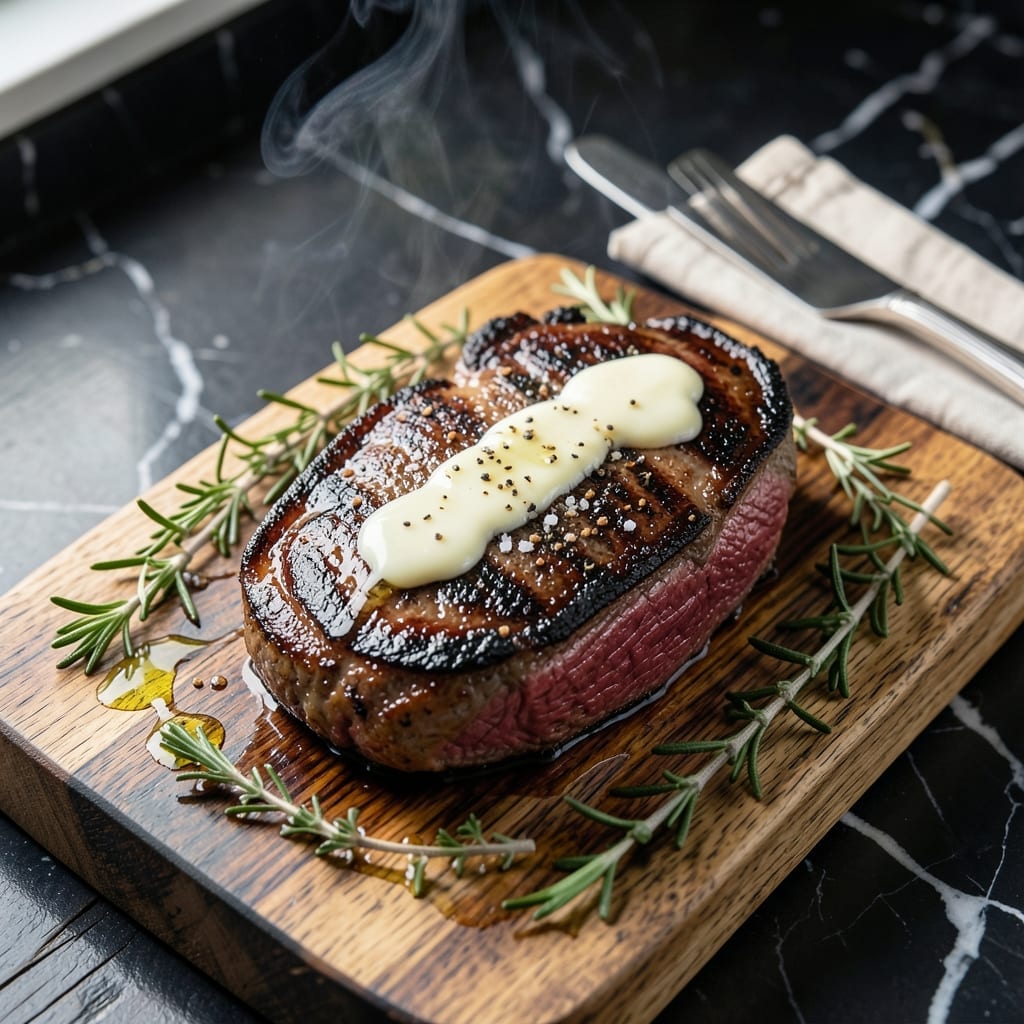
Nothing beats a perfectly seared rib eye straight from the cast iron. This method delivers tender, juicy steak with a deep crust every time.
I learned early that French technique matters—even with simple cast iron. High heat and herb butter make all the difference.
Ingredients for Cast Iron Rib Eye Steak
High-quality ingredients transform this dish into a restaurant-worthy experience every time.
| Ingredient | Amount | Notes |
|---|---|---|
| Rib Eye Steak 🥩 | 2 lb | Bone-in, 1.5 inches thick |
| Kosher Salt 🧂 | 1 ½ tbsp | Diamond Crystal preferred |
| Freshly Ground Black Pepper 🌶️ | 1 tbsp | Coarse grind recommended |
| Unsalted Butter 🧈 | 6 tbsp | European-style for richness |
| Fresh Rosemary Sprigs 🌿 | 4 whole | Stems intact for basting |
| Fresh Thyme Sprigs 🍃 | 4 whole | Stems intact for basting |
| Garlic Cloves 🧄 | 4 cloves | Lightly crushed, peeled |
| Extra-Virgin Olive Oil 🫒 | 2 tbsp | High smoke point preferred |
| Vegetable Oil 💧 | 1 tbsp | Neutral flavor, high smoke point |
| Shallot 🧅 | 1 whole | Minced for herb butter |
| Fresh Parsley 🌿 | ¼ cup | Chopped, for garnish |
| Red Wine Vinegar 🍷 | 1 tsp | For deglazing pan |
[recipe_ingredient_scaler]
The steak quality is paramount. USDA Prime rib eyes from a trusted butcher yield superior marbling and tenderness. Costco and Whole Foods offer excellent pre-cut options if a dedicated butcher isn’t accessible. Look for bright red color and abundant fat streaking—this ensures juiciness and flavor development during cooking.
No rib eye? A New York strip works nearly as well, though with slightly less marbling. For herb butter, dried herbs at half the quantity substitute adequately, but fresh provides superior aroma. Ghee can replace butter for a higher smoke point, though the flavor profile will differ slightly. The olive oil can be any neutral variety if extra-virgin isn’t available.
Uncooked steaks keep in the fridge for 3-4 days—vacuum-sealed is ideal. Herb butter can be made ahead and refrigerated for 1 week or frozen for 3 months. Leftovers reheat best in a cast iron pan over low heat to preserve tenderness.
Why You’ll Love This Recipe
- I’ll be real: the steak slices make next-day sandwiches taste even better than the original meal.
- One Pan Magic: I love that I only need a cast iron skillet and five ingredients—no fancy tools or complicated steps.
- Buttery Rosemary Bliss: That sizzle when the cold butter and rosemary hit the hot pan creates a flavor that’s rich and aromatic.
- Date Night Ready: Honestly, it feels fancy enough for a special dinner but comes together faster than ordering takeout.
Step-by-Step Instructions for Cast Iron Rib Eye Steak
Here is the proven method for achieving restaurant-quality results with perfect sear and ideal doneness.
Step 1: Season and Rest the Rib Eye
Pat the 2 lb rib eye steak thoroughly dry with paper towels to ensure a proper sear. Season generously on all sides with the 1.5 tbsp kosher salt and 1 tbsp freshly ground black pepper, pressing the seasoning into the surface for maximum adhesion.
Place the steak on a wire rack set over a plate and let it rest at room temperature for 45-60 minutes. This step is crucial for even cooking throughout the thick cut. The surface should develop a slightly tacky texture, indicating the salt has begun to penetrate.
Step 2: Preheat the Cast Iron Skillet
Place a heavy cast iron skillet over medium-high heat and add the 1 tbsp vegetable oil and 2 tbsp extra-virgin olive oil. Heat until the oil shimmers and just begins to smoke—this indicates the pan is at the optimal temperature for searing.
You’ll know it’s ready when a drop of water flicked onto the surface dances and evaporates immediately. The properly heated pan creates that coveted Maillard reaction, developing deep, complex flavors in the crust.
Step 3: Sear and Baste with Herb Butter
Carefully lay the steak in the hot pan, away from you to avoid splatter. Sear undisturbed for 3-4 minutes until a deep brown crust forms. Flip the steak and immediately add the 6 tbsp unsalted butter, 4 cloves garlic cloves, 4 whole fresh rosemary sprigs, and 4 whole fresh thyme sprigs to the pan.
Tilt the pan slightly and use a spoon to continuously baste the steak with the foaming herb butter for 2-3 minutes. The butter should turn a rich golden brown, and the garlic should become fragrant but not burnt. For medium-rare, aim for an internal temperature of 125-130°F.
Step 4: Rest and Prepare Herb Butter Garnish
Transfer the steak to a cutting board and let it rest for 10 minutes. Meanwhile, in the same skillet, add the 1 whole minced shallot and cook for 1 minute until softened. Remove from heat and stir in the 0.25 cup fresh parsley.
The resting period allows the muscle fibers to relax and juices to redistribute. The internal temperature will rise by 5-10°F during this time, reaching the ideal 130-135°F for perfect medium-rare doneness.
Step 5: Deglaze and Serve
Return the skillet to medium heat and add the 1 tsp red wine vinegar, scraping up any browned bits from the bottom. Drizzle this pan sauce over the sliced steak for an extra layer of flavor.
Slice the rib eye against the grain into ½-inch thick pieces. The exterior should boast a deep, dark crust while the interior remains juicy and pink. Serve immediately with the herb butter mixture spooned over the top for a finishing touch that elevates every bite.
Pro Tips For Making Cast Iron Rib Eye Steak
- Dry the Steak: Pat the rib eye bone-dry with paper towels before seasoning—any moisture will steam the surface instead of searing it. I learned this the hard way after wondering why my crust was always lackluster.
- Sear in Batches: If cooking more than one steak, resist the urge to crowd the cast iron. One at a time guarantees a proper crust without dropping the pan’s temperature.
- Use Room-Temp Butter: Take your unsalted butter out 30 minutes early so it melts evenly into the pan with the rosemary, instead of clumping up and burning.
- Let It Rest: Give the steak a solid 5-10 minutes under foil after cooking—it’ll reabsorb the juices and stay tender. Sounds weird, but it works.
Troubleshooting This Dish
Uneven Cooking
If your steak has a gray band between the crust and center, your pan wasn’t hot enough. Preheat the cast iron for 5-7 minutes until oil shimmers. Thick cuts need medium-high heat consistently. I always test with a water droplet—it should dance on the surface. 🌡️
Butter Burning
Blackened butter means your heat was too high. When basting, keep the pan at medium heat and tilt it to pool the butter. Use European-style butter for its higher smoke point. I learned this the hard way during my first coastal BBQ competition.
Sticking Steak
Meat sticking to the pan usually means it wasn’t dry enough before searing. Pat the 2 lb rib eye steak thoroughly with paper towels until bone-dry. Also, don’t move it for those first 3-4 minutes—let that crust form undisturbed.
Overcooked Edges
Bone-in rib eyes often cook unevenly near the bone. To compensate, start searing on the thicker side first, then flip. Use a thermometer to check temps in multiple spots. The bone conducts heat differently than the meat.
Weak Crust
For a deeper crust, don’t overcrowd the pan. Cook one steak at a time in your 12-inch cast iron. The Maillard reaction needs space to work its magic. I get my best results when the pan has room to breathe.
Resting Issues
Slicing too soon causes juices to pool on your cutting board. Always rest for the full 10 minutes, tented loosely with foil. The internal temp will rise to that perfect 130-135°F while the meat relaxes. 💡
Nutrition Facts
Frequently Asked Questions
Do I need to use bone-in rib eye?
Bone-in adds flavor but boneless works fine. Just adjust cooking time by 1-2 minutes per side since it cooks faster.
Can I use a different pan?
Stainless steel works, but cast iron retains heat better for even searing. Avoid nonstick—it won’t get hot enough for a proper crust.
How do I know when it’s done?
Use a meat thermometer: 125-130°F for medium-rare. The steak will continue cooking while resting, reaching 130-135°F in 10 minutes.
What if I don’t have fresh herbs?
Dried herbs work in a pinch—use half the amount. The flavor won’t be as bright, but it’ll still taste great.

Trained in classic French technique but raised on slow-cooked ribs and spicy rubs, she blends culinary skill with smoke and soul.
- Recipe for Boneless Pork Chops in Cast Iron Skillet: Sear and Baste to Juicy Perfection - October 3, 2026
- Recipe for Boneless Cross Rib Roast: Slow-Roasted Beef with Herb Crust - October 3, 2026
- Hamburgers in Sauce Recipe Crock Pot: Slow-Cooked Savory Delight - October 3, 2026