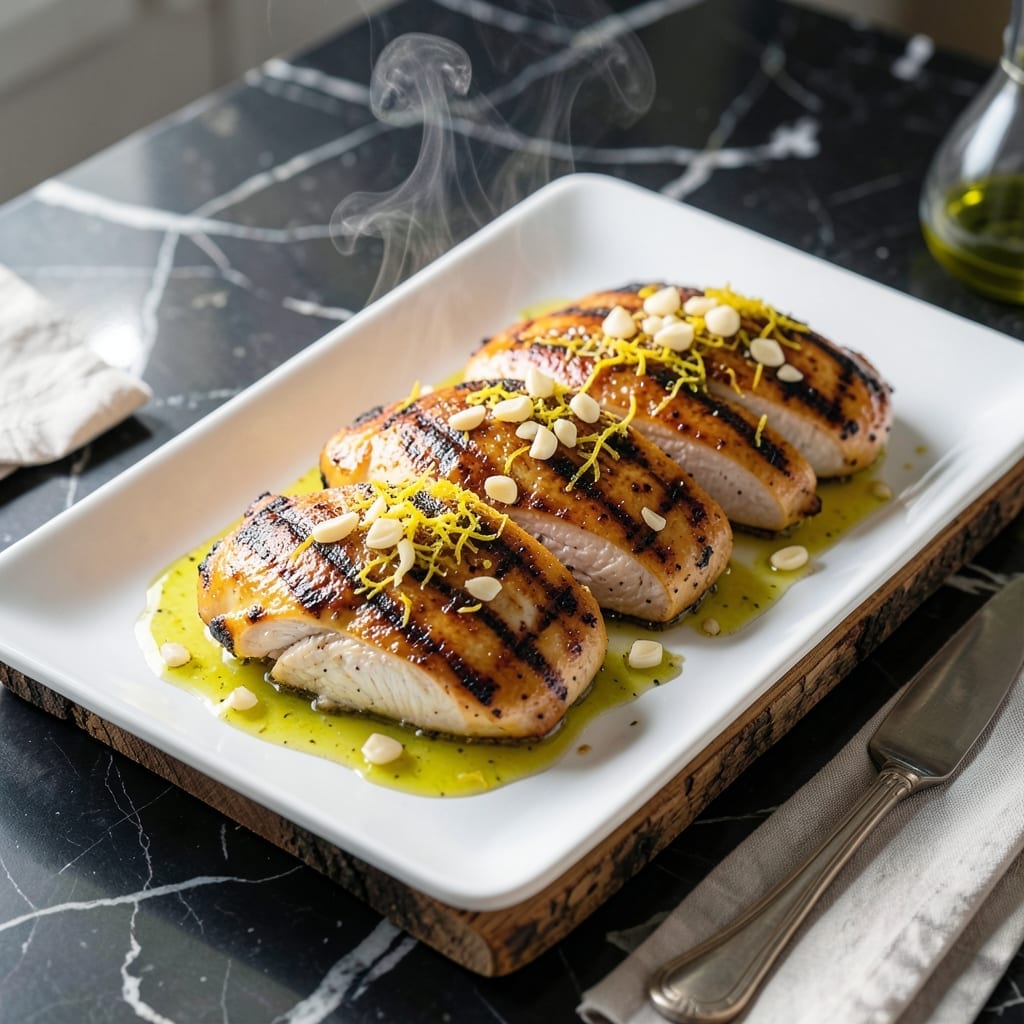
Cedar planks transform ordinary grilled chicken into a smoky, aromatic masterpiece. This method infuses the meat with a subtle woody essence that pairs beautifully with bright citrus.
The key is soaking the planks thoroughly before grilling to prevent burning. I’ve found that 1-2 hours in water creates the perfect moisture barrier while allowing the cedar’s natural oils to flavor the chicken.
What emerges from the grill is juicy, tender meat with a delicate cedar aroma and zesty lemon undertones. The technique delivers restaurant-quality results with minimal effort.
Perfect for summer cookouts or anytime you crave that smoky grill flavor. This approach never fails to impress.
Ingredients for Cedar Grilled Lemon Chicken
Untreated cedar planks plus fresh lemon and herbs create this smoky, citrus-infused dish.
| Ingredient | Amount | Notes |
|---|---|---|
| Untreated Cedar Planks 🪵 | 2 pieces | Food-grade, soaked 1-2 hours |
| Boneless Skinless Chicken Breasts 🍗 | 1 ½ lb | Pounded to even thickness |
| Extra-Virgin Olive Oil 🫒 | 3 tbsp | Divided for marinade and brushing |
| Fresh Lemon Juice 🍋 | ¼ cup | From 2-3 large lemons |
| Lemon Zest 🍋 | 2 tbsp | Finely grated from lemons |
| Garlic Cloves 🧄 | 4 cloves | Minced finely |
| Dried Oregano 🌿 | 1 tsp | Mediterranean variety preferred |
| Dried Thyme 🌿 | 1 tsp | Rubbed between fingers to release oils |
| Kosher Salt 🧂 | 1 ½ tsp | Diamond Crystal preferred |
| Freshly Ground Black Pepper 🌶️ | 1 tsp | Coarse grind for texture |
| Honey 🍯 | 1 tbsp | For balance in marinade |
| Dijon Mustard 🟡 | 1 tbsp | Smooth, not whole grain |
| Fresh Parsley 🌿 | ¼ cup | Chopped, for garnish |
[recipe_ingredient_scaler]
The cedar planks are non-negotiable for authentic flavor. Western red cedar is ideal—ensure they’re untreated and food-grade. Home Depot or Lowe’s often stock them in the lumber section. Soak for 1-2 hours minimum; overnight is even better. For the chicken, airline breasts (breast with rib meat attached) stay juiciest, but standard boneless-skinless works well if pounded evenly.
No cedar planks? Alder wood offers a milder alternative. Fresh herbs can replace dried at triple the amount. Maple syrup stands in for honey if avoiding bee products. For citrus, lime juice works though lemon’s brightness is classic. The Dijon mustard adds depth—whole grain mustard works but changes texture slightly.
Prep the planks and chicken ahead—marinate up to 24 hours. Cooked chicken keeps 3-4 days refrigerated or freezes for 3 months. Always soak planks fresh for each use; they don’t last through multiple grilling sessions.
Why You’ll Love This Recipe
- Minimal Effort: I soak the cedar planks while the grill heats—then it’s just chicken, olive oil, and lemon on wood.
- That Smoky Zing: The cedar smoke wraps around the bright lemon zest and juice for a taste that’s summer in one bite.
- Feeds the Crew: I’ve served this at backyard parties and packed leftovers for lunch the next day—always disappears.
- Budget Hero: Boneless breasts stay affordable, and one cedar plank does double duty for two meals.
Step-by-Step Instructions for Cedar Grilled Lemon Chicken
Master the technique for smoky, citrus-kissed chicken with these professional steps.
Step 1: Prepare Cedar Planks and Marinade
Soak the 2 pieces untreated cedar planks in water for 1-2 hours to prevent burning. While they soak, whisk together 3 tbsp extra-virgin olive oil, 0.25 cup fresh lemon juice, 2 tbsp lemon zest, 4 cloves minced garlic, 1 tsp dried oregano, 1 tsp dried thyme, 1.5 tsp kosher salt, 1 tsp freshly ground black pepper, 1 tbsp honey, and 1 tbsp Dijon mustard in a bowl.
The marinade should be emulsified with a vibrant citrus aroma. Rub between your fingers to release the thyme’s essential oils, enhancing the flavor profile. This blend tenderizes the chicken while infusing it with Mediterranean character.
Step 2: Marinate Chicken Breasts
Place the 1.5 lb boneless skinless chicken breasts in a resealable plastic bag or shallow dish. Pour all the marinade over the chicken, ensuring each piece is fully coated. Seal and refrigerate for at least 1 hour, or up to 4 hours for deeper flavor penetration.
Turn the chicken occasionally during marinating to ensure even distribution of the acid and oils. The citrus will begin breaking down the proteins, making the meat more receptive to the smoky cedar notes. Remove from refrigerator 30 minutes before grilling to allow even cooking.
Step 3: Grill Chicken on Prepared Cedar Planks
Preheat grill to medium-high heat (about 400°F). Remove the soaked cedar planks from water and pat dry. Place the planks directly on the grill grates and close the lid for 3-5 minutes until they begin to emit a light, fragrant smoke.
Arrange the marinated chicken breasts on the hot planks. Close the lid and grill for 6-8 minutes per side, or until the internal temperature reaches 165°F and the chicken exhibits distinct grill marks. The cedar will impart a subtle woodsy aroma while the citrus marinade caramelizes.
Step 4: Rest and Garnish
Transfer the chicken to a clean cutting board and let rest for 5 minutes. This allows the juices to redistribute throughout the meat, ensuring a moist, flavorful result. Tent loosely with foil to keep warm.
Slice the chicken against the grain into 1-inch thick pieces. Arrange on a serving platter and sprinkle with all the 0.25 cup chopped fresh parsley. The parsley adds a fresh, bright finish that complements the smoky citrus flavors. Serve immediately while the cedar aroma is most pronounced.
Pro Tips For Making Cedar Grilled Lemon Chicken
- Soak the Planks: Submerge those cedar planks in water for at least 2 hours—I learned this the hard way after my first batch of chicken tasted like a campfire instead of lemon and herbs.
- Pound the Chicken: Use a rolling pin or meat mallet to even out the thickness of the breasts to about ¾ inch, so they cook through without drying out the thinner edges.
- Oil the Chicken, Not the Plank: Brush the olive oil directly on the chicken, not the cedar, to prevent flare-ups and keep that smoky cedar flavor clean and balanced with the lemon.
- Zest Before Juicing: Always grate the lemon zest before cutting and juicing—it’s a pain to do after, and you’ll get way more of that bright, aromatic oil from the peel.
Wine and Beer Pairings for This cedar grilled lemon chicken
Crisp White Wines
A Sauvignon Blanc from New Zealand offers the perfect contrast with its zesty acidity and citrus notes that echo the lemon in this dish. I love how the grapefruit undertones complement the cedar smoke. Serve chilled at 45-50°F for best results. 🍷
Light Red Options
For red wine lovers, a Pinot Noir from Oregon provides earthy notes without overpowering the chicken. The Willamette Valley versions have bright acidity that cuts through the richness. Avoid heavy tannins that clash with the cedar.
Wheat Beers
A German Hefeweizen with its banana and clove esters pairs surprisingly well with the smoky citrus. The effervescence cleanses your palate between bites. I recommend Weihenstephaner for its authentic profile.
Craft IPA Pairings
Hazy New England IPAs work beautifully here—their juicy, citrus-forward hop profiles mirror the lemon. Look for 6-7% ABV versions with low bitterness. The haze adds a visual contrast to the golden chicken.
Non-Alcoholic Choice
For a zero-proof option, try a sparkling lemonade made with fresh lemon juice and soda water. The carbonation and citrus notes enhance the grilled flavors. Add a sprig of fresh thyme for an herbaceous touch.
Nutrition Facts
Frequently Asked Questions
How long should I soak the cedar planks?
Soak them for 1-2 hours minimum, though overnight is even better. This prevents burning and allows the wood to release its aromatic oils.
Can I use chicken thighs instead of breasts?
Yes! Bone-in, skin-on thighs work beautifully and stay juicier. Grill for 8-10 minutes per side until reaching 165°F internally. The skin will crisp up nicely on the cedar.
What if my planks catch fire?
Keep a spray bottle of water nearby. If flames appear, quickly mist them and close the grill lid to smother. Never leave the grill unattended during cooking.
Can I reuse cedar planks?
No, they’re single-use. The wood becomes porous after grilling and can harbor bacteria. New planks for each cook ensure best flavor and safety.

Trained in classic French technique but raised on slow-cooked ribs and spicy rubs, she blends culinary skill with smoke and soul.
- Recipe for Boneless Pork Chops in Cast Iron Skillet: Sear and Baste to Juicy Perfection - October 3, 2026
- Recipe for Boneless Cross Rib Roast: Slow-Roasted Beef with Herb Crust - October 3, 2026
- Hamburgers in Sauce Recipe Crock Pot: Slow-Cooked Savory Delight - October 3, 2026