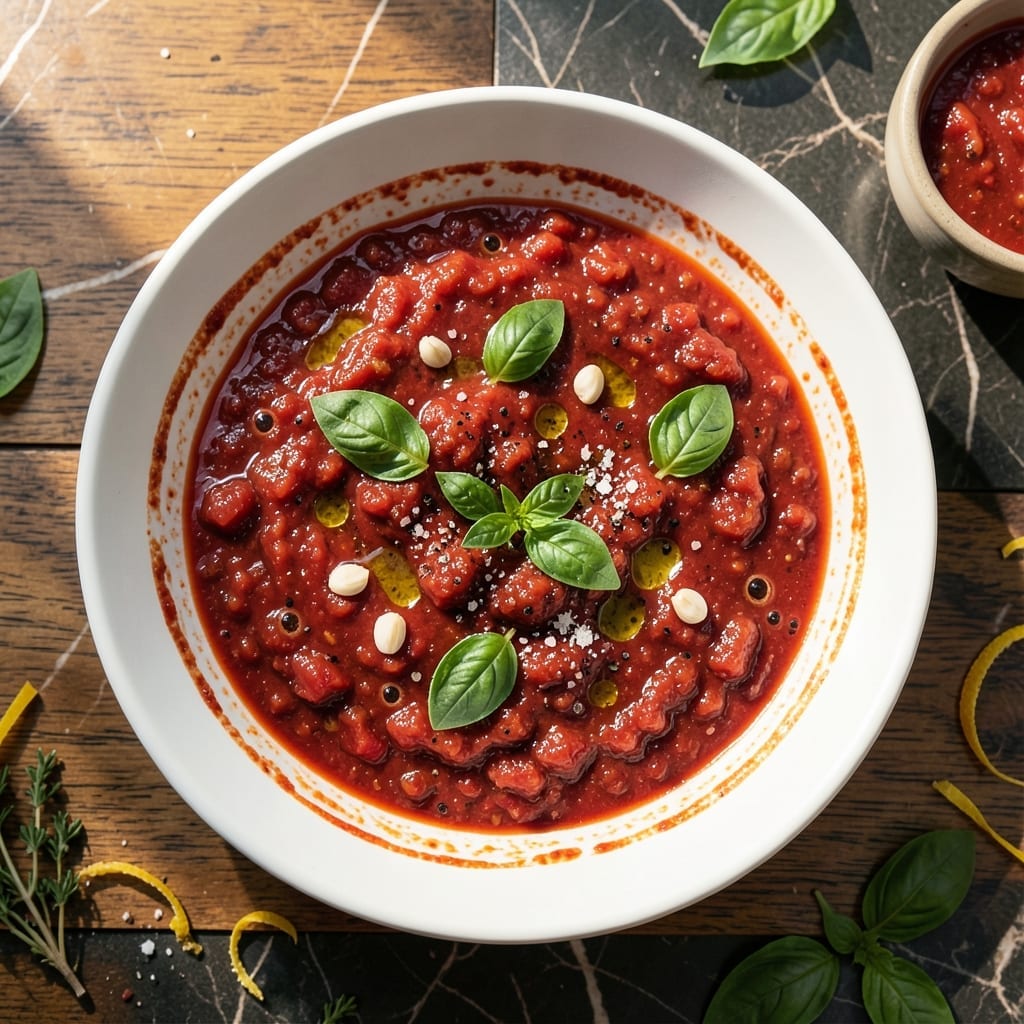
Crafting authentic pizza sauce at home transforms your homemade pies from good to extraordinary. This recipe captures the essence of Neapolitan tradition with simple, high-quality ingredients.
Using San Marzano tomatoes as the base provides the perfect balance of sweetness and acidity. A touch of olive oil and fresh basil enhances the sauce without overpowering the natural tomato flavor.
The result is a smooth, vibrant sauce that spreads effortlessly and bakes into a rich, flavorful layer. It’s the foundation every great pizza deserves, delivering true Italian character.
Make a batch to keep on hand for spontaneous pizza nights. This sauce keeps well, ensuring you can create restaurant-quality pies anytime.
Ingredients for Cento Pizza Sauce
Eight ingredients deliver that classic Neapolitan character for your homemade pies.
| Ingredient | Amount | Notes |
|---|---|---|
| San Marzano Whole Peeled Tomatoes 🍅 | 28 oz | Canned, drained with juice reserved |
| Extra-Virgin Olive Oil 🫒 | 2 tbsp | High-quality, fruity finish preferred |
| Fresh Basil Leaves 🌿 | ¼ cup | Loosely packed, torn by hand |
| Garlic Cloves 🧄 | 3 cloves | Minced or pressed |
| Sea Salt 🧂 | 1 tsp | Fine grain, Diamond Crystal preferred |
| Black Pepper 🌶️ | ¼ tsp | Freshly ground |
| Red Pepper Flakes 🌶️ | ½ tsp | Crushed, optional for heat |
| Dried Oregano 🍃 | 1 tsp | Mediterranean variety preferred |
[recipe_ingredient_scaler]
The tomatoes are non-negotiable here. Cento San Marzano tomatoes are the gold standard—grown in the volcanic soil of Italy, they offer unmatched sweetness and low acidity. Unlike generic canned tomatoes, these are consistency-controlled and DOP-certified. Whole Foods and Italian specialty stores usually carry them. If using another brand, look for the DOP label on the can.
No fresh basil? Dried basil at one-third the amount works, but add it during cooking, not after. Out of San Marzano? Regular canned tomatoes can substitute, but strain out excess liquid and add a pinch of sugar to balance acidity. For extra depth, a splash of vegan red wine (like Freixenet) simmered in works beautifully. The olive oil should be extra-virgin—this isn’t the place for neutral oils.
Sauce keeps 5 days refrigerated in an airtight container, or freeze for 6 months. For best results, portion into ice cube trays before freezing—perfect single-serving sizes for spontaneous pizza nights. Always let it come to room temperature before spreading on dough.
Why You’ll Love This Recipe
- Five-Minute Base: I dump everything in one pot—San Marzano tomatoes, olive oil, garlic—and it’s done before the oven heats up.
- Sunshine in a Jar: That first whiff of fresh basil and sweet tomatoes hits you like a summer afternoon in Naples.
- Freezer Bestie: I double the batch and freeze half for those nights when takeout starts looking tempting.
- Penny-Pincher Win: A can of San Marzano plus a handful of pantry staples costs less than a single store-bought jar.
Step-by-Step Instructions for Cento Pizza Sauce
Master the authentic Neapolitan technique with these precise, tested steps for your base.
Step 1: Prepare the San Marzano Tomatoes
Drain the 28 oz San Marzano Whole Peeled Tomatoes, reserving the juice in a separate bowl. I use my hands to gently crush each tomato over a large mixing bowl, breaking them into rough 1-inch pieces while catching any seeds.
The reserved juice will be added back gradually for texture control. This hand-crushing method preserves the tomato’s natural sweetness and creates the ideal chunky consistency that defines authentic Neapolitan sauce. Avoid using a food processor, as it can make the sauce too smooth and pasty.
Step 2: Sauté the Aromatics in Olive Oil
Heat the 2 tbsp Extra-Virgin Olive Oil in a heavy-bottomed saucepan over medium-low heat. Add the 3 cloves Garlic Cloves (minced or pressed) and cook for exactly 1 minute until fragrant but not browned.
Immediately add the 0.5 tsp Red Pepper Flakes and stir for 10 seconds to bloom the spice. The garlic should release its aroma without taking on color—this prevents bitterness. The oil should shimmer but not smoke; if it does, reduce heat immediately to maintain the delicate flavors.
Step 3: Simmer Tomatoes with Seasonings
Add the crushed San Marzano tomatoes to the pan along with 1 tsp Sea Salt, 0.25 tsp Black Pepper, and 1 tsp Dried Oregano. Stir to combine, then pour in ½ cup of the reserved tomato juice.
Increase heat to medium and bring to a gentle simmer. Reduce heat to low and cook uncovered for 20-25 minutes, stirring occasionally. The sauce should reduce by about one-third and develop a deep, concentrated flavor. The surface will appear slightly thickened with small bubbles breaking slowly.
Step 4: Finish with Fresh Basil
Remove the sauce from heat and stir in the 0.25 cup Fresh Basil Leaves (torn by hand). The residual heat will wilt the basil perfectly without cooking it, preserving its bright, aromatic qualities. Let the sauce stand for 10 minutes to allow the flavors to meld.
Taste and adjust seasoning if needed, though the balance should be perfect with the specified measurements. The basil should remain visible as vibrant green flecks throughout the sauce. For best results, use the sauce immediately while warm, as it will thicken slightly as it cools.
Pro Tips For Making Cento Pizza Sauce
- Crush by Hand: Skip the blender—squeeze the San Marzano tomatoes with your hands for a rustic texture that clings to dough better than any machine can. I learned this the hard way after ending up with watery sauce from over-processing.
- Bloom the Garlic: Heat the olive oil on low, then add minced garlic for just 30 seconds until fragrant—any longer and it turns bitter. Sounds simple, but I burned three batches before I got the timing right.
- Salt the Tomatoes: Drain the San Marzano tomatoes and sprinkle them with sea salt before crushing—this pulls out excess liquid and concentrates the flavor. My grandmother swore by this, and she was right.
- Add Basil Last: Stir in fresh basil leaves at the very end of cooking to preserve their bright, aromatic flavor. After ruining a few sauces with sad, overcooked basil, I now treat it like a garnish.
Serving Suggestions for Leftovers
Classic Margherita Pairing
Spread a thin layer of this sauce on fresh pizza dough, then top with fresh mozzarella and basil leaves. The simplicity lets the sauce shine as the star. Bake at 475°F for 12-15 minutes for a perfect Neapolitan crust. 💛
White Pizza Alternative
Use this sauce as a base for a white pizza by mixing it with ricotta cheese before spreading. Add sliced garlic, spinach, and Parmesan for a creamy, flavorful twist. The acidity cuts through the richness beautifully.
Dipping Bread
Warm the sauce gently and serve in a small bowl alongside crusty Italian bread or garlic knots. Add a drizzle of olive oil and a sprinkle of Parmesan for an instant appetizer. Honestly, I could eat this with a spoon.
Pasta Transformation
Simmer the sauce for an extra 5-10 minutes to thicken, then toss with al dente spaghetti. Finish with fresh basil and grated Pecorino Romano. The flavors work just as well on pasta as they do on pizza.
Flatbread Variety
Spread on store-bought naan or flatbread with goat cheese and roasted vegetables. Bake at 400°F for 8-10 minutes for a quick, gourmet meal. I love this for busy weeknights when I’m foraging for something fast.
Grilled Cheese Upgrade
Use as a dipping sauce for mozzarella sticks or spread inside a grilled cheese sandwich with provolone. The acidity balances the richness of the melted cheese perfectly. A real game-changer for simple comfort food. 🔥
Nutrition Facts
Frequently Asked Questions
Can I use regular canned tomatoes?
Yes, but strain excess liquid and add a pinch of sugar to balance acidity. San Marzano tomatoes are preferred for their sweetness and low acidity.
How long does the sauce keep?
Store in an airtight container for up to 5 days refrigerated or freeze for 6 months. Portion before freezing for easy use.
Why add fresh basil at the end?
Adding basil last preserves its bright, aromatic qualities. Cooking it too long dulls the flavor and color.
Can I make this sauce smoother?
Use an immersion blender after cooking for a smoother texture. For authenticity, hand-crushing is recommended.

Trained in classic French technique but raised on slow-cooked ribs and spicy rubs, she blends culinary skill with smoke and soul.
- Recipe for Boneless Pork Chops in Cast Iron Skillet: Sear and Baste to Juicy Perfection - October 3, 2026
- Recipe for Boneless Cross Rib Roast: Slow-Roasted Beef with Herb Crust - October 3, 2026
- Hamburgers in Sauce Recipe Crock Pot: Slow-Cooked Savory Delight - October 3, 2026