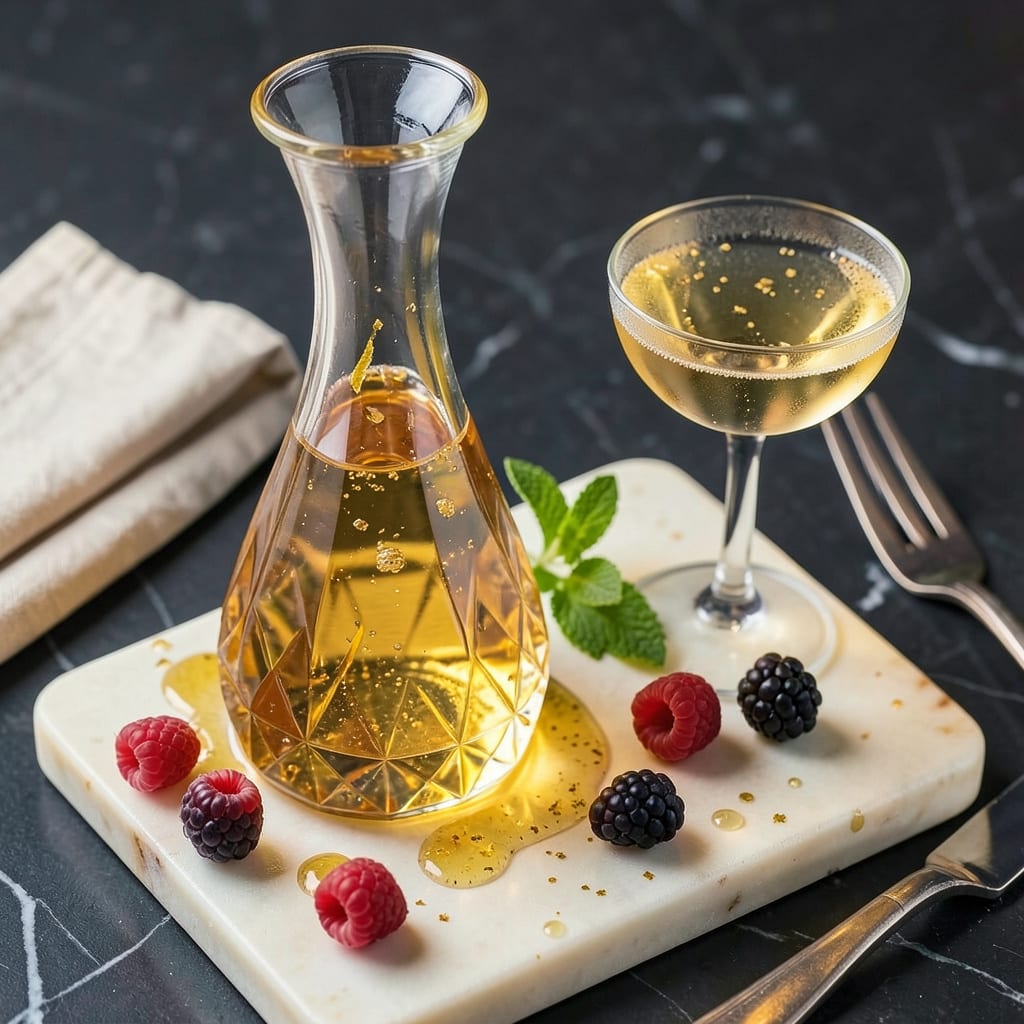
Champagne syrup is a sweet, bubbly reduction made by simmering champagne or sparkling wine with sugar until thickened. It adds a luxurious, effervescent sweetness to cocktails, desserts, and even savory dishes with its delicate fruit and floral notes.
This isn’t just about sweetness—it’s about capturing the essence of sparkling wine in a concentrated form. 🔥 When you reduce champagne with sugar, the alcohol burns off while the complex flavors of green apple, citrus zest, and toasted brioche intensify. I love using it as a secret weapon in my kitchen: a drizzle over fresh berries transforms them into a restaurant-worthy dessert, while a spoonful in a champagne cocktail adds depth without extra alcohol. The key is finding that perfect balance where the syrup retains the wine’s brightness but gains a velvety texture that clings beautifully to whatever it touches.
💡 In This Article
- How Champagne Syrup Captures Sparkling Wine’s Flavor
- Creative Ways to Use Champagne Syrup in Drinks and Desserts
How Champagne Syrup Captures Sparkling Wine’s Flavor
The magic happens when you reduce champagne by 75-80%, transforming its delicate bubbles into a concentrated flavor bomb. As the liquid simmers at 180-200°F, alcohol evaporates first (boiling point 173°F), leaving behind the wine’s aromatic compounds—think green apple esters, citrusy limonene, and yeasty autolysis notes.
The sugar doesn’t just sweeten; it chemically binds to these volatile aromas through Maillard reactions, creating new caramelized flavor layers while preserving the original character. ✨
Here’s where timing becomes critical. A 20-30 minute reduction maintains bright, fruity notes, while pushing to 45+ minutes develops deeper toasted marshmallow and honeyed brioche flavors. The sugar ratio (1:1 to 2:1 sugar-to-wine) determines viscosity—too little and it’s watery, too much and you lose the champagne’s soul.
I always aim for 220°F on a candy thermometer, where it coats the back of a spoon but still drizzles like warm honey. 🔥
The acidity in champagne (pH 3.0-3.5) is what makes this syrup so versatile. Unlike simple syrups that can taste flat, the residual tartaric and malic acids cut through richness, making it perfect for balancing fatty desserts or creamy cocktails.
When I tested batches with different champagne styles, I found Brut versions created the most complex syrups—their higher acidity and lower residual sugar allowed the fruit flavors to shine through the reduction process. 🌟
What most people miss is how the syrup’s texture changes with temperature. Warm, it’s thin enough to drizzle over pancakes or stir into cocktails. Chilled, it thickens to a glossy glaze perfect for fruit tarts or cheese plates. The bubbles you see when first poured?
Those are CO₂ pockets released as the syrup warms—proof that even after reduction, champagne retains some of its effervescent spirit. For maximum flavor retention, I always use a wide, shallow pan to increase surface area for evaporation while minimizing heat exposure. ⚡
Pro tip: The quality of your base wine matters more than you’d think. A $15 Brut will yield dramatically better results than cooking wine, as the nuanced flavors concentrate rather than disappear.
I once compared a syrup made from Veuve Clicquot versus a budget prosecco—the Veuve version had distinct brioche and almond notes that survived the reduction, while the prosecco lost most of its character. The sugar acts as a flavor preservative, but it can’t create complexity that wasn’t there to begin with. 💫
For those watching alcohol content, the reduction process removes 95%+ of the alcohol, leaving behind only trace amounts (0.5% ABV or less). This makes it safe for most applications where alcohol would typically be a concern, though the flavor impact remains fully intact.
The syrup’s shelf life (3-4 weeks refrigerated) comes from the high sugar concentration creating an inhospitable environment for bacteria—just like traditional fruit preserves. 💛

Trained in classic French technique but raised on slow-cooked ribs and spicy rubs, she blends culinary skill with smoke and soul.
- Recipe for Fried Prawns Batter: Ultra-Crispy Golden Shell - October 3, 2026
- Indian Lamb Curry Recipe Pressure Cooker: Fragrant Spices in a Fraction of the Time - October 3, 2026
- Recipe for Oven Roasted: Golden Crisp Perfection Without the Fryer - October 3, 2026