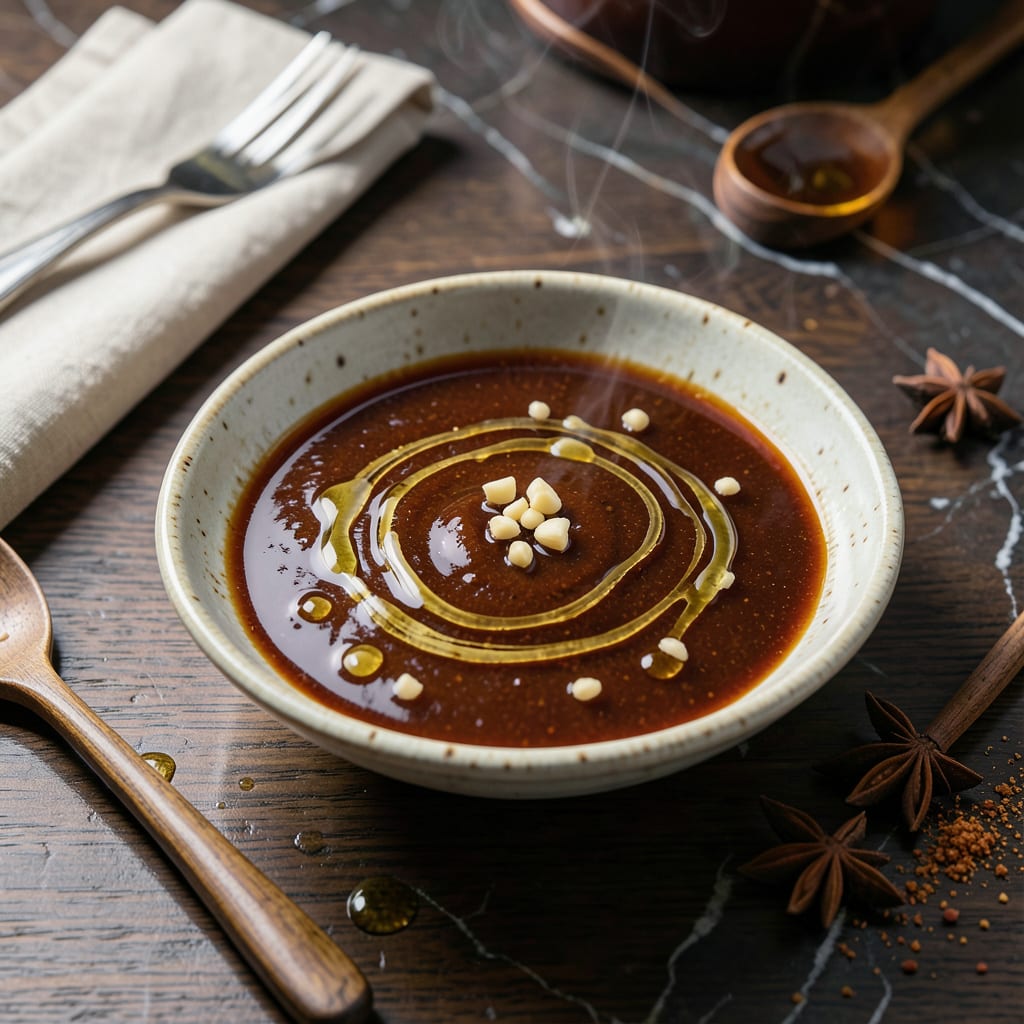
This Cantonese-inspired glaze transforms any dish with its signature sweet and smoky depth. I developed this version to capture the authentic char siu flavor using simple pantry staples.
With just 10 minutes of simmering, this sauce delivers restaurant-quality results. Use it for glazing pork, chicken, or even as a bold stir-fry finisher.
Ingredients for Char Siu Bbq Sauce
Ten pantry staples create this bold Cantonese-inspired glaze with authentic char siu flavor.
| Ingredient | Amount | Notes |
|---|---|---|
| Hoisin Sauce 🫒 | ½ cup | High-quality for depth of flavor |
| Honey 🍯 | ¼ cup | Substitute maple syrup if needed |
| Light Soy Sauce 🫒 | 3 tbsp | Low-sodium preferred for balance |
| Dark Soy Sauce 🫒 | 1 tbsp | For color and richness |
| Chinese Five-Spice Powder 🌿 | 1 tsp | Freshly ground if possible |
| Garlic Cloves 🧄 | 3 cloves | Minced finely for even distribution |
| Fresh Ginger 🌿 | 1 tbsp | Grated, peeled first |
| Rice Vinegar 💧 | 1 tbsp | Balances sweetness with acidity |
| Sesame Oil 🫒 | 1 tsp | Toasted variety for aroma |
| Red Fermented Bean Curd 🧀 | 1 piece | Optional but traditional (1-inch cube) |
[recipeingredientscaler]
The hoisin sauce is non-negotiable—Koon Chun or Lee Kum Kee are the gold standard. Most Asian markets carry both, but Whole Foods or Amazon work too. Look for the thicker, darker versions (not the watered-down stuff). The five-spice powder makes or breaks the flavor, so if yours is dusty and old, Penzeys or a bulk spice shop is worth the trip for freshness.
No hoisin? Miso paste mixed with a touch of molasses gets you surprisingly close. Out of five-spice? Equal parts cinnamon, cloves, fennel, star anise, and pepper works in a pinch. The honey can be swapped for agave or brown sugar—just dissolve the sugar first. And if red fermented bean curd sounds too exotic, skip it. The sauce will still shine.
This keeps 2 weeks in the fridge (that fermented bean curd acts as a preservative) or 3 months frozen. I like to make a double batch—half for now, half for later. The flavors actually deepen after a day or two, so don’t stress about using it immediately.
Why You’ll Love This Recipe
- 5-Minute Mix: I just dump everything in a saucepan and let it simmer—no chopping, no fuss.
- Sweet-Savory Bomb: The honey and five-spice create that sticky, caramelized char siu flavor I crave.
- Freezer’s Best Friend: I double the batch and freeze half for next week’s stir-fry or glaze.
- Pantry Staples: Hoisin, soy sauces, and honey are always in my cupboard, so I’m never without it.
Step-by-Step Instructions for Char Siu BBQ Sauce
This sauce comes together quickly with the right technique and attention to detail.
Step 1: Bloom the Aromatics in Oil
Heat a small saucepan over medium-low heat. Add the 1 tsp sesame oil and let it warm for 30 seconds until fragrant but not smoking. I always use toasted sesame oil here—it adds that authentic nutty depth that defines good char siu.
Add the 3 cloves garlic cloves (minced) and 1 tbsp fresh ginger (grated). Sauté for 1-2 minutes until the raw edge softens and the kitchen fills with their aroma. Don’t let them brown—you want the flavors to mellow, not become bitter. This base is your flavor foundation.
Step 2: Combine the Liquid Components
Pour in the 0.5 cup hoisin sauce, 0.25 cup honey, 3 tbsp light soy sauce, 1 tbsp dark soy sauce, and 1 tbsp rice vinegar. Stir well to combine with the aromatics. The hoisin brings that signature sweet-savory depth, while the dark soy adds color and richness.
If using the 1 piece red fermented bean curd, crumble it into the pan now. This optional but traditional ingredient adds a subtle umami complexity that’s hard to replicate. Let the mixture come to a gentle simmer—you’ll see small bubbles forming at the edges.
Step 3: Season and Simmer to Perfection
Stir in the 1 tsp Chinese five-spice powder. This is where the magic happens—the warm, fragrant blend of star anise, cinnamon, and clove that makes char siu unmistakable. I recommend freshly ground if possible, as the flavors are more vibrant.
Reduce the heat to low and let the sauce simmer for 8-10 minutes, stirring occasionally. You’re aiming for a glossy, slightly thick consistency that coats the back of a spoon. The sauce should reduce by about 10-15%—watch for it to darken slightly and become more concentrated.
Taste and adjust the balance if needed. If it’s too sweet, a splash more rice vinegar will brighten it. Too salty? A drizzle of honey will round it out. This sauce is forgiving, but getting the balance right is key.
Step 4: Cool and Store for Optimal Flavor
Remove the sauce from heat and let it cool to room temperature. As it cools, it will thicken slightly more. I always let it sit for 10 minutes before using—this allows the flavors to meld and deepen.
The sauce will keep in an airtight container in the refrigerator for up to 1 week. For longer storage, it freezes beautifully for up to 3 months. Just give it a good stir before using, as the spices may settle.
Pro Tips For Making Char Siu Bbq Sauce
- Simmer Low and Slow: Cook the sauce on medium-low heat for at least 10 minutes—any hotter and the honey will burn before the flavors meld properly.
- Bloom the Five-Spice: Toast the Chinese five-spice powder in the pan for 15-20 seconds before adding liquids; it wakes up the aromatics in a way that raw spice just can’t.
- Balance the Soy Sauces: Use equal parts light and dark soy sauce—skip the dark and your sauce will lack depth, use only dark and it’ll taste flat and one-dimensional.
- Strain for Smoothness: After cooking, run the sauce through a fine-mesh strainer to remove any undissolved spice bits—sounds fussy, but it gives that restaurant-quality gloss.
Essential Equipment for Perfect Results
Small Saucepan
A 2-3 quart heavy-bottomed saucepan is ideal for this sauce. I prefer All-Clad stainless steel for even heat distribution. Avoid nonstick—you want the fond to develop for maximum flavor. Honestly, my vintage copper one gets the best results.
Wooden Spoon
Use a flat wooden spoon for stirring and scraping the bottom. It won’t scratch your pan and helps monitor consistency. I’ve had my olive wood spoon for 10 years—it’s my go-to for sauces like this. The sauce sticks just enough to tell you it’s thickening properly.
Fine Mesh Strainer
Optional but helpful if you want ultra-smooth sauce. I only use it when making large batches for competitions. A Chinois strainer from RSVP works perfectly. Press the solids gently—don’t force it or you’ll get bitter flavors. 💡
Glass Jars
Store your finished sauce in clean 8-12 oz mason jars. The glass won’t absorb odors and lets you see the beautiful color. I label mine with the date—this sauce darkens as it ages, so it’s good to track freshness.
Measuring Cups
Accurate measurements matter here. I use OXO Good Grips angled measuring cups for the liquids. The hoisin especially can be thick, so the angled design helps get precise amounts. A 1 tbsp measure is essential for the soy sauces.
Microplane Grater
For the ginger, a Microplane gives you the finest texture without fibers. I also use it for the garlic when I’m feeling fancy. It’s one of those tools that makes prep faster and more consistent. Worth every penny for sauces like this.
Nutrition Facts

Trained in classic French technique but raised on slow-cooked ribs and spicy rubs, she blends culinary skill with smoke and soul.
- Recipe for Boneless Pork Chops in Cast Iron Skillet: Sear and Baste to Juicy Perfection - October 3, 2026
- Recipe for Boneless Cross Rib Roast: Slow-Roasted Beef with Herb Crust - October 3, 2026
- Hamburgers in Sauce Recipe Crock Pot: Slow-Cooked Savory Delight - October 3, 2026