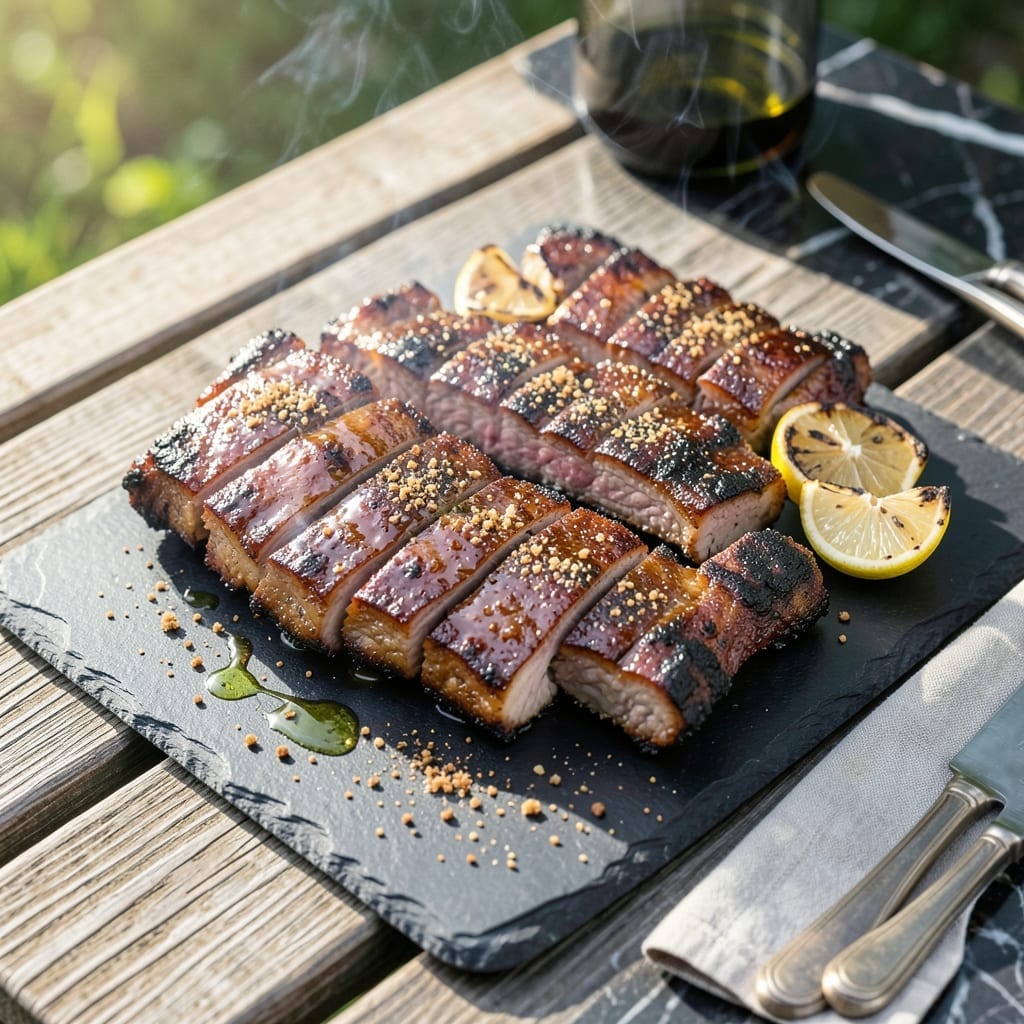
There’s nothing like the aroma of pork ribs slow-cooking over charcoal to evoke memories of backyard gatherings. This method delivers tender, smoky results every time, blending tradition with precision.
I’ve refined this technique through years of pitmaster experience, ensuring the meat pulls cleanly from the bone while maintaining a perfect crust. The charcoal imparts a depth of flavor that gas grills simply can’t match.
The secret lies in patience and temperature control. Low, steady heat allows the collagen to break down gradually, creating that signature fall-off-the-bone texture without drying out the meat.
Serve these ribs with classic sides like coleslaw and cornbread for a meal that feels like a celebration of smoke and fire. Here’s how to achieve it.
Ingredients for Charcoal Grilled Pork Ribs
Pork ribs, charcoal, and a handcrafted rub create that signature smoky tenderness everyone craves.
| Ingredient | Amount | Notes |
|---|---|---|
| Pork Baby Back Ribs 🐖 | 3 lb | Full rack, membrane removed |
| Charcoal Briquettes ⚫ | 8 lb | Lump charcoal preferred for flavor |
| Kosher Salt 🧂 | 2 tbsp | Diamond Crystal for even seasoning |
| Light Brown Sugar 🍚 | ½ cup | For dry rub sweetness |
| Smoked Paprika 🌶️ | 2 tbsp | Sweet or hot variety |
| Garlic Powder 🧄 | 1 tbsp | Freshly ground if possible |
| Onion Powder 🧅 | 1 tbsp | Fine ground texture |
| Ground Black Pepper 🌶️ | 1 tbsp | Coarsely ground for texture |
| Cayenne Pepper 🔥 | ½ tsp | Adjust for heat preference |
| Apple Cider Vinegar 🍏 | ½ cup | For spritzing during cooking |
| Mustard 🟡 | ¼ cup | Yellow or Dijon for binder |
| Wood Chunks 🪵 | 4 pieces | Hickory or applewood for smoke |
| Barbecue Sauce 🫕 | 1 cup | For glazing final product |
[recipe_ingredient_scaler]
The ribs are everything here. Baby back ribs offer the perfect meat-to-bone ratio for even cooking. Source from a reputable butcher like Whole Foods or Local Pig—look for racks with consistent marbling and no bruising. The membrane must be removed (use a paper towel for grip) to allow the rub to penetrate. Kingsford briquettes are reliable, but lump charcoal from Jealous Devil adds superior flavor.
No apple cider vinegar? White wine vinegar works at a 1:1 ratio. Out of brown sugar? Raw turbinado sugar adds a nice crunch but may alter color slightly. For the wood, cherry or pecan are excellent hickory alternatives. The barbecue sauce can be store-bought—Stubs or Sweet Baby Ray’s are pitmaster-approved. If using a gas grill (not ideal), add wood chips in a smoker box for some smoke flavor.
Store uncooked ribs in the fridge for up to 3 days or freeze for 3 months. Charcoal and wood chunks keep indefinitely in a dry place. The dry rub can be pre-mixed and stored in an airtight container for up to 6 months—perfect for spontaneous cookouts.
Why You’ll Love This Recipe
- Set It and Forget: I toss the ribs on the grill with charcoal briquettes, season with salt and sugar, and let the smoke do the work.
- Smoky Sweet Crust: That brown sugar and smoked paprika rub caramelizes into a sticky, finger-licking glaze you just can’t resist.
- Crowd Pleaser: Honestly, I’ve served these at backyard BBQs and casual weeknight dinners—everyone always asks for the recipe.
- Budget Friendly Feast: A slab of baby back ribs feeds four for less than takeout, and leftovers taste even better the next day.
Step-by-Step Instructions for Charcoal Grilled Pork Ribs
Master the technique that transforms simple ingredients into tender, smoky ribs every time.
Step 1: Prepare and Season the Ribs
Begin by patting the 3 lb Pork Baby Back Ribs completely dry with paper towels. This ensures the dry rub adheres properly and promotes even browning. With the membrane already removed, you can focus on achieving maximum flavor penetration.
In a bowl, combine the 2 tbsp Kosher Salt, 0.5 cup Light Brown Sugar, 2 tbsp Smoked Paprika, 1 tbsp Garlic Powder, 1 tbsp Onion Powder, 1 tbsp Ground Black Pepper, and 0.5 tsp Cayenne Pepper. Apply this rub generously to all sides of the ribs, pressing it into the meat. Let the seasoned ribs rest at room temperature for 30 minutes while you prepare the grill.
Step 2: Set Up the Charcoal Grill for Indirect Heat
Arrange 8 lb Charcoal Briquettes in a two-zone fire in your grill. Bank the coals to one side, leaving the other side empty for indirect cooking. Add 4 pieces Wood Chunks to the coals for smoke flavor. Maintain a grill temperature of 250-275°F throughout the cooking process.
Place a disposable aluminum pan filled with water on the indirect side of the grill. This helps maintain moisture and stabilizes the temperature. You’ll know the grill is ready when the wood chunks begin to smolder and produce a steady stream of thin, blue smoke.
Step 3: Smoke the Ribs Low and Slow
Position the ribs bone-side down on the indirect heat side of the grill, away from the coals. Cover the grill and cook for 2.5-3 hours, maintaining the temperature between 250-275°F. Every 45-60 minutes, spritz the ribs with 0.5 cup Apple Cider Vinegar to keep them moist and enhance flavor development.
After 2 hours, check the ribs for doneness. They should have a deep reddish-brown color and the meat should begin to pull back from the bones. If using a thermometer, the internal temperature should reach about 195-203°F for perfect tenderness.
Step 4: Glaze and Finish
During the last 30 minutes of cooking, brush the ribs with a mixture of 0.25 cup Mustard and 1 cup Barbecue Sauce. The mustard helps the sauce adhere to the meat while adding a subtle tang. Continue cooking, covered, until the sauce has caramelized and the ribs are tender enough to pull apart with a fork.
For the final touch, move the ribs to the direct heat side of the grill for 2-3 minutes per side to set the sauce and develop a slight char. This step enhances both the flavor and appearance of your finished ribs.
Step 5: Rest and Serve
Remove the ribs from the grill and let them rest for 10-15 minutes before slicing. This allows the juices to redistribute throughout the meat, ensuring each bite is moist and flavorful.
Slice the ribs between the bones and serve immediately. The meat should pull cleanly from the bone with minimal resistance, delivering the promised fall-off-the-bone tenderness. The exterior should have a beautiful mahogany color with a slightly sticky, caramelized sauce coating.
Pro Tips For Making Charcoal Grilled Pork Ribs
- Preheat the Coals: Spread the charcoal briquettes in a two-zone fire—pile them on one side for high heat, leave the other empty for indirect cooking. I learned this the hard way after burning the outside of my ribs while the inside stayed raw.
- Trim the Membrane: Peel off that tough silver skin on the bone side of the ribs before seasoning. It’s a pain, but it makes the ribs more tender and lets the dry rub actually penetrate.
- Skip the Boiling: Resist the urge to parboil the ribs first—it washes away flavor and leaves them mushy. Just season them well and let the charcoal do the work.
- Rest Before Serving: Pull the ribs off the grill and let them rest under foil for 10 minutes. Sounds weird, but it lets the juices redistribute so they don’t all spill out when you cut into them.
Health Benefits of charcoal grilled pork ribs
Rich Protein Source
Pork ribs deliver 25-30g of protein per 3-ounce serving, supporting muscle repair and growth. This high-quality protein contains all nine essential amino acids your body can’t produce on its own. As a pitmaster, I appreciate how this dish fuels those long cookout days. 💪
Iron and Zinc Boost
You’ll get about 10% of your daily iron needs from a serving of ribs, which helps prevent fatigue and supports immune function. The zinc content—roughly 3mg per serving—promotes wound healing and maintains your sense of taste and smell.
B Vitamin Complex
Ribs are packed with B vitamins, especially B12, which supports nerve function and red blood cell production. A 3-ounce serving provides nearly 20% of your daily B12 requirement. I notice my energy levels stay steady after enjoying this meal.
Collagen Benefits
The slow cooking process breaks down collagen into gelatin, which supports joint health and skin elasticity. This natural process creates that signature tenderness while providing nutritional benefits you won’t get from faster cooking methods.
Essential Minerals
Beyond iron and zinc, ribs contain phosphorus for bone health and selenium as a powerful antioxidant. A serving provides about 15% of your daily phosphorus needs, which works with calcium to maintain strong bones. 🥩
Energy from Healthy Fats
The marbling in pork ribs provides monounsaturated fats that support heart health when consumed in moderation. These healthy fats help your body absorb fat-soluble vitamins like A, D, E, and K from other foods in your meal.
Nutrition Facts
Frequently Asked Questions
What’s the ideal cooking temperature?
Maintain 250-275°F throughout the process. Use a grill thermometer to monitor, as this low, steady heat ensures tender meat without drying it out.
How do I know when they’re done?
The ribs should reach an internal temperature of 195-203°F. The meat will pull back from the bones and bend easily when lifted with tongs.
Can I use a different type of wood?
Hickory or applewood are classic, but cherry or pecan work beautifully too. Each imparts a unique flavor profile to complement the pork.
Why do I need to spritz with vinegar?
Spritzing with apple cider vinegar every 45-60 minutes keeps the ribs moist during the long cook and adds a subtle tang to balance the richness.

Trained in classic French technique but raised on slow-cooked ribs and spicy rubs, she blends culinary skill with smoke and soul.
- Recipe for Boneless Pork Chops in Cast Iron Skillet: Sear and Baste to Juicy Perfection - October 3, 2026
- Recipe for Boneless Cross Rib Roast: Slow-Roasted Beef with Herb Crust - October 3, 2026
- Hamburgers in Sauce Recipe Crock Pot: Slow-Cooked Savory Delight - October 3, 2026