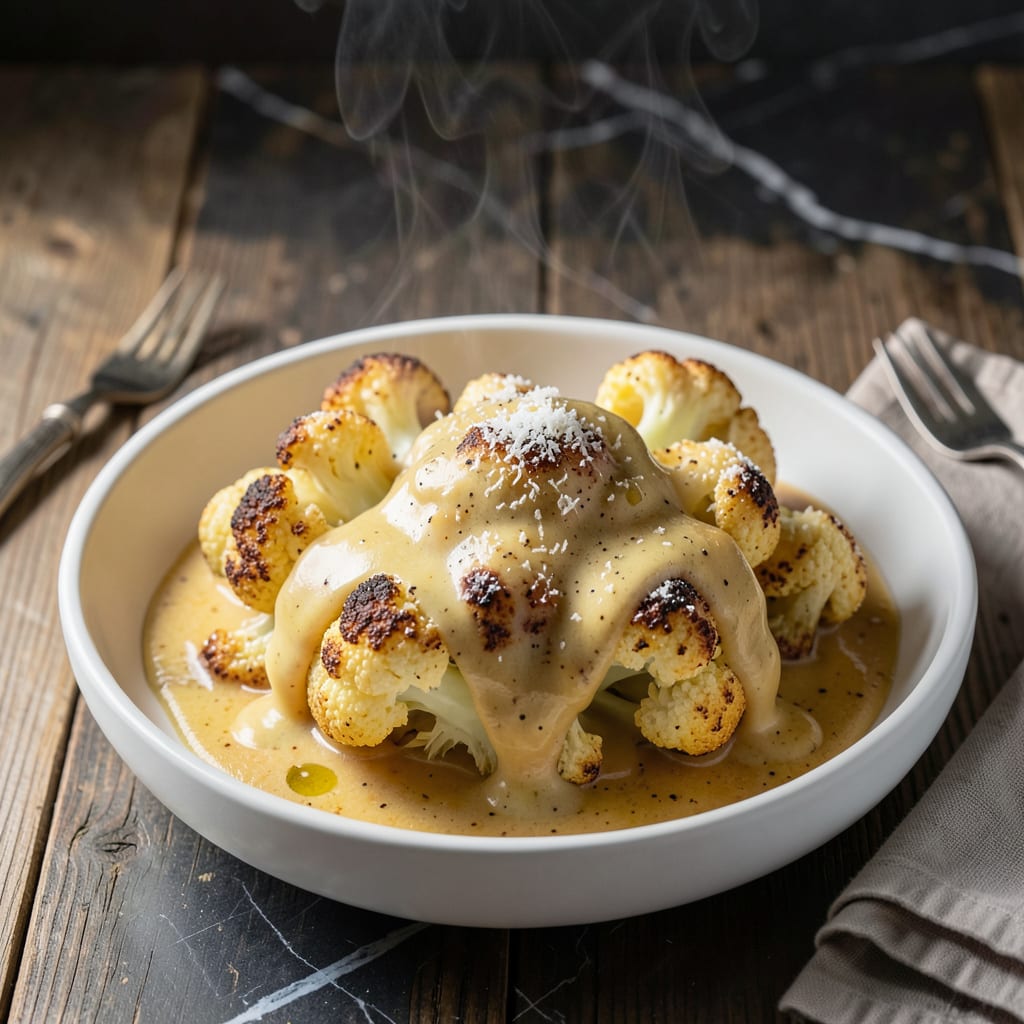
This sauce transforms ordinary vegetables into something extraordinary with its velvety texture and bold cheddar flavor. The sharp cheese bite cuts through the richness, creating a perfect balance.
It comes together in 15 minutes with simple ingredients, making it ideal for elevating steamed cauliflower or other dishes. The smooth consistency clings beautifully to every floret.
Ingredients for Cheddar Cheese Sauce Recipe for Cauliflower
Nine ingredients transform into a velvety, sharp cheddar sauce that clings perfectly to cauliflower.
| Ingredient | Amount | Notes |
|---|---|---|
| Unsalted Butter 🧈 | 4 tbsp | For smooth roux base |
| All-Purpose Flour 🌾 | 4 tbsp | Creates velvety texture |
| Whole Milk 🥛 | 2 cups | Full-fat for creaminess |
| Sharp Cheddar Cheese 🧀 | 8 oz | Freshly grated preferred |
| Dijon Mustard 🟡 | 1 tsp | Balances richness with tang |
| Worcestershire Sauce 💧 | 1 tsp | Vegetarian version required |
| Garlic Powder 🧄 | ½ tsp | Enhances savory depth |
| Onion Powder 🧅 | ½ tsp | Complements cheddar flavor |
| Salt 🧂 | ½ tsp | Adjust to taste |
| Ground Black Pepper 🌶️ | ¼ tsp | Freshly ground preferred |
[recipeingredientscaler]
The cheese selection is paramount for optimal flavor. Sharp cheddar from a block (not pre-shredded) melts smoothly and delivers that bold bite promised in the title. Cabot or Tillamook are excellent choices at most grocery stores. Whole milk is non-negotiable—its fat content creates the velvety texture mentioned in the introduction. For the roux, European-style butter adds richness but standard unsalted works fine.
Need to adjust? Half-and-half can replace milk in a pinch (use 1.5 cups), though the sauce will be slightly thinner. Colby-Jack cheese works but lacks sharpness—add an extra 1 oz of cheddar to compensate. For the Worcestershire sauce, Annie’s vegetarian version is widely available. The mustard can be yellow mustard at double the quantity, though Dijon provides better complexity.
This sauce keeps 3-4 days refrigerated in an airtight container. Reheat gently with a splash of milk to restore creaminess. Freezing is possible but may cause separation—stir vigorously when reheating. For best results, use within 2 days for peak texture and flavor.
Why You’ll Love This Recipe
- One-Pot Wonder: I melt the butter, whisk in the flour, and pour in the milk—all in the same saucepan. Honestly, cleanup is just one bowl and a spoon.
- Sharp & Creamy: That sharp cheddar paired with the Dijon mustard gives it a tangy kick that clings perfectly to every floret.
- Weeknight Hero: I’ve served this over roasted cauliflower, steamed broccoli, even baked potatoes. Between us, it’s my secret to making veggies disappear.
- Budget Stretcher: A block of sharp cheddar and milk go a long way—this sauce thickens up rich and covers a whole head of cauliflower without breaking the bank.
Step-by-Step Instructions for Cheddar Cheese Sauce for Cauliflower
Master the technique for a silky, lump-free sauce that clings perfectly to every floret.
Step 1: Create the Roux Base
Melt the 4 tbsp unsalted butter in a heavy saucepan over medium heat. As it melts, it should foam slightly but not brown—this indicates the water has evaporated and you’re ready for the next step.
Whisk in the 4 tbsp all-purpose flour all at once. Cook the mixture for 1-2 minutes, stirring constantly, until it forms a smooth paste and turns a pale golden color. This roux will thicken the sauce and eliminate any raw flour taste.
The mixture should bubble gently and develop a nutty aroma. If it darkens too quickly, reduce the heat slightly—you want a blonde roux, not a brown one, for this particular application.
Step 2: Gradually Incorporate the Milk
Slowly pour in the 2 cups whole milk, about ¼ cup at a time, whisking vigorously after each addition until smooth. This gradual incorporation prevents lumps from forming and ensures a velvety texture.
Once all the milk is added, increase the heat to medium-high and bring the mixture to a gentle simmer. Cook for 3-4 minutes, stirring frequently, until the sauce thickens enough to coat the back of a spoon.
Watch for the sauce to transform from a thin liquid to a creamy consistency that leaves a clear path when you run your finger through it on the spoon. This is your visual cue that it’s properly thickened.
Step 3: Add Flavor Enhancers
Reduce heat to low and stir in the 1 tsp Dijon mustard, 1 tsp Worcestershire sauce, 0.5 tsp garlic powder, 0.5 tsp onion powder, 0.5 tsp salt, and 0.25 tsp ground black pepper.
Allow the mixture to cook for 1-2 minutes to meld the flavors. The mustard and Worcestershire add depth and balance the richness of the cheese, while the garlic and onion powders enhance the savory profile without overpowering.
Taste and adjust the seasoning if needed, but remember the cheese will add its own saltiness in the next step.
Step 4: Incorporate the Cheese
Remove the saucepan from heat. Gradually add the 8 oz sharp cheddar cheese, a handful at a time, whisking until each addition is completely melted and smooth before adding more. This prevents the sauce from becoming stringy or grainy.
Return the pan to low heat if needed to help melt the cheese, but don’t let it boil—high heat can cause the sauce to separate. Continue until all the cheese is incorporated and the sauce is perfectly smooth.
The finished sauce should be thick enough to coat the back of a spoon but still pourable. If it’s too thick, whisk in a splash of warm milk to reach your desired consistency.
Pro Tips For Making Cheddar Cheese Sauce Recipe For Cauliflower
- Melt Butter Low: Keep the heat on medium-low when melting the butter for the roux—I learned this the hard way after burning two batches. Too hot, and the flour will taste raw or burnt.
- Shred Your Own Cheese: Skip the pre-shredded stuff; it’s coated in anti-caking agents that make the sauce grainy. Freshly grated sharp cheddar melts smoothly and actually changes the outcome.
- Temper the Milk: Warm the whole milk slightly before adding it to the roux—about 1 minute in the microwave. Cold milk can shock the mixture and leave you with a lumpy, stubborn sauce.
- Add Mustard Last: Stir in the Dijon mustard after the cheese is fully melted. Adding it earlier can make the sauce split, and nobody wants a broken cheese sauce on their cauliflower.
Wine and Beer Pairings for This cheddar cheese sauce recipe for cauliflower
Beer Pairings
A rich cheddar cheese sauce for cauliflower calls for beers that can cut through the creaminess while complementing its sharp, tangy notes. Try a West Coast IPA like Sierra Nevada Torpedo—its citrusy, piney hops balance the richness of the cheese. For a smoother option, a Brown Ale such as Newcastle Brown Ale offers caramel and nutty undertones that pair beautifully with the sauce’s depth.
Wine Pairings
When it comes to wine, a bold Chardonnay with buttery oak notes, like Kendall-Jackson Vintner’s Reserve, enhances the sauce’s creamy texture. For a sharper contrast, opt for a crisp Sauvignon Blanc such as Kim Crawford, where the zesty acidity and herbal hints refresh the palate between bites.
Non-Alcoholic Options
If you prefer non-alcoholic pairings, a sparkling apple cider like Martinelli’s Gold brings effervescence and sweetness to balance the cheese’s saltiness. Alternatively, a chilled hibiscus iced tea offers a tart, floral contrast that complements the dish’s richness without overpowering it.
Nutrition Facts

Trained in classic French technique but raised on slow-cooked ribs and spicy rubs, she blends culinary skill with smoke and soul.
- Recipe for Boneless Pork Chops in Cast Iron Skillet: Sear and Baste to Juicy Perfection - October 3, 2026
- Recipe for Boneless Cross Rib Roast: Slow-Roasted Beef with Herb Crust - October 3, 2026
- Hamburgers in Sauce Recipe Crock Pot: Slow-Cooked Savory Delight - October 3, 2026