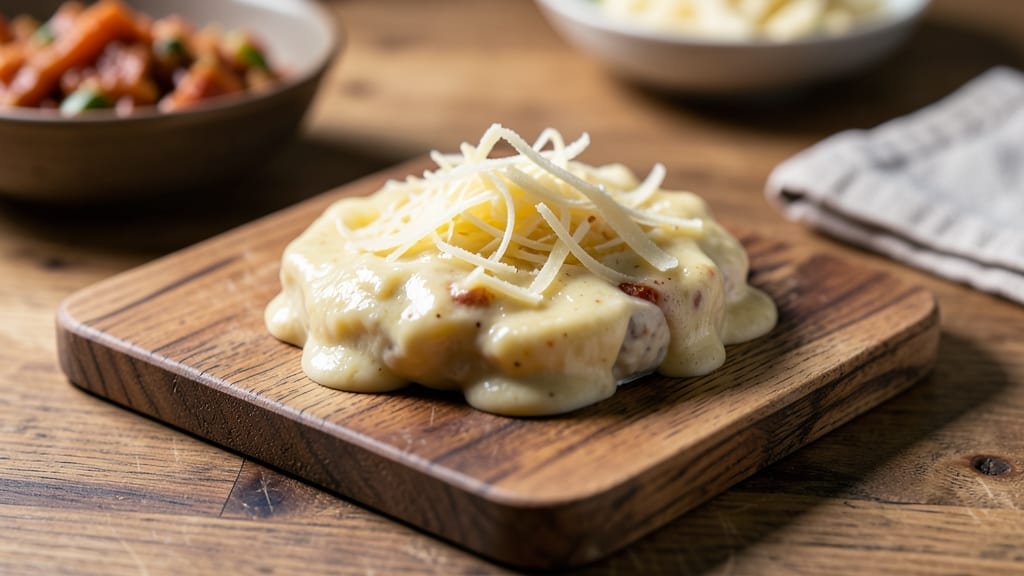
A cheese marinade recipe transforms tough cuts into melt-in-your-mouth perfection while adding layers of rich, savory depth. This isn’t your typical acidic marinade—it relies on carefully selected cheeses to tenderize proteins while infusing them with umami and caramelized flavor.
The technique is surprisingly simple yet professional enough to elevate restaurant-quality dishes at home.
The secret lies in balancing sharp cheeses like Parmesan with creamy varieties such as cream cheese, creating a marinade that both breaks down muscle fibers and forms a flavorful crust.
I developed this method after years of experimenting with cheese-based preparations, and it consistently delivers results that rival traditional acid-based marinades—without the risk of over-tenderizing delicate proteins.
What makes this marinade truly special is its versatility. Use it on chicken, beef, or even tofu, and you’ll achieve a surface that’s both tender and encased in a golden, melty cheese glaze.
The process is straightforward: combine the ingredients, let the protein soak for the recommended time, then sear or bake to develop that irresistible crust.
Perfect for weeknight dinners or special occasions, this cheese marinade turns simple proteins into showstopping centerpieces. The best part? You can make it ahead and store it for up to five days, making it a go-to solution for busy cooks who still want restaurant-quality results.
Ingredients for cheese marinade
A blend of bold cheeses and aromatic accents creates a marinade that tenderizes while adding irresistible depth.
| Ingredient | Amount | Notes |
|---|---|---|
| Parmesan Cheese 🧀 | 1 cup | Freshly grated from block for maximum flavor |
| Cream Cheese 🧈 | 8 oz | Full-fat for best texture and richness |
| Sharp White Cheddar 🧀 | ½ cup | Shredded, sharp variety preferred |
| Extra-Virgin Olive Oil 🫒 | ½ cup | High-quality, fruity variety |
| Garlic Cloves 🧄 | 4 cloves | Freshly minced for potent flavor |
| Dijon Mustard 🍯 | 1 tbsp | For depth and slight tang |
| Worcestershire Sauce 🥫 | 1 tbsp | For umami complexity |
| Dry White Wine 🍷 | ¼ cup | Subtle acidity balance |
| Fresh Thyme Leaves 🌿 | ¼ cup | Chopped, for aromatic brightness |
| Salt 🧂 | 1 ½ tsp | Diamond Crystal kosher preferred |
| Black Pepper 🌶️ | ½ tsp | Freshly cracked for heat |
| Honey 🍯 | 1 tbsp | For subtle caramelization |
| Butter 🧈 | 2 tbsp | Unsalted, melted for richness |
[recipe_ingredient_scaler]
The cheeses are the stars here—Parmesan brings sharp umami, cream cheese adds creaminess, and sharp white cheddar gives that signature tang. Whole Foods or specialty cheese shops have the best selection, but your regular grocery store’s deli counter works too. Look for aged Parmigiano-Reggiano (not the pre-grated stuff) and full-fat cream cheese—the difference is noticeable. For the wine, any dry white like Sauvignon Blanc or Pinot Grigio works. If you’re avoiding alcohol, use extra white wine vinegar at half the amount, but the texture won’t be quite as luscious.
No sharp cheddar? Pepper jack works in a pinch, though it’ll add a bit more heat. Subbing cream cheese? Ricotta or mascarpone keeps things creamy, but expect a slightly lighter texture. The garlic can be roasted for a milder flavor if you’re sensitive to its bite. Trader Joe’s has pre-minced garlic in tubes—convenient and no waste. For the thyme, fresh is ideal, but dried thyme at one-third the amount gets you close. The honey adds just enough caramel notes to balance the sharpness, but if you’re avoiding sugar, maple syrup works 1:1. The butter is key—don’t skip it, even if you’re watching calories.
This marinade keeps beautifully for 5 days in the fridge, sealed in an airtight container. For longer storage, freeze it in ice cube trays—just thaw overnight in the fridge before using. The texture changes slightly after freezing (it gets thicker), but the flavor stays intact. I like to make a big batch and freeze portions for when I’m craving that restaurant-quality cheese crust without the fuss. Works on chicken thighs, beef steaks, or even tofu—just adjust the marinating time based on the protein.
Why You’ll Love This Recipe
- No-Fuss Cheese Magic: I’ll never go back to plain marinades after this. Just whisk together cream cheese, sharp cheddar, and parmesan—no fancy gadgets needed—and you’ve got a velvety base that turns even the toughest steak into something melt-in-your-mouth. The double boiler step is the only “fancy” part, but it’s worth it for that silky texture.
- Flavor Bomb: The combo of garlic, thyme, and that just-right tang from the Dijon mustard? Chef’s kiss. The dry white wine cuts through the richness of the cheeses, while the honey adds a caramelized depth that makes every bite sing. It’s like a gourmet shortcut.
- Weeknight Hero: This marinade works for chicken, pork chops, or even veggie skewers—just let it sit for 4 hours (or overnight for maximum tenderness). It’s my go-to when I’m craving something special but don’t have hours to spend. Plus, it’s foolproof enough that I’ve made it with my teenager watching.
- Leftovers? Yes, Please: Five days in the fridge, and it still tastes as good as fresh? Sign me up. I double the batch for the week, use half on Monday, save half for Wednesday’s protein, and still have enough for a quick Tuesday night stir-fry. Budget-friendly and zero waste.
Step-by-step instructions for cheese marinade recipe
This bold marinade blends rich cheeses with aromatic elements to transform tough proteins into tender masterpieces.
Create the Cheese Base
In a medium heatproof bowl, combine the 8 oz cream cheese, ½ cup sharp white cheddar, and 1 cup parmesan cheese. Use a whisk to break up any clumps until you achieve a smooth, creamy texture. Here’s the thing—this is where the magic starts. The cream cheese provides that luxurious, velvety foundation while the sharp cheddar and parmesan deliver deep, savory complexity.
Add the ½ cup extra-virgin olive oil and 1 tbsp honey to the cheese mixture. Whisk vigorously until fully incorporated. The olive oil helps emulsify the cheeses while the honey adds a subtle caramel note that balances the saltiness. You’ll notice the mixture become slightly thicker as the ingredients meld together. This is your flavor anchor—everything else will build upon this rich base.
Build Flavor Layers
Incorporate the 4 minced garlic cloves, 1 tbsp dijon mustard, 1 tbsp worcestershire sauce, and ¼ cup chopped fresh thyme leaves. Stir well to distribute these aromatic elements evenly throughout the cheese mixture. The garlic and thyme will infuse their bright, herbal notes while the mustard and Worcestershire add depth and umami complexity.
Now add the ¼ cup dry white wine and 1½ tsp salt. The wine introduces a subtle acidity that cuts through the richness while the salt enhances all the flavors. Stir until completely combined—you should see a glossy, thick marinade that coats the back of a spoon. This is the moment that matters: all these ingredients need to marry together before they work their magic on your protein.
Finish and Emulsify
Place the bowl over a saucepan of simmering water (double boiler method) and gently heat the mixture, stirring constantly with a whisk. Once it reaches 160°F, remove from heat and let it cool slightly. This gentle heating helps emulsify the mixture and ensures all flavors are fully integrated.
Finally, stir in the 2 tbsp melted butter and ½ tsp black pepper. The butter adds richness while the pepper provides a final layer of heat. Let the marinade cool completely to room temperature before using. This cooling period allows the flavors to settle and ensures maximum penetration when you apply it to your protein. The result should be a thick, velvety marinade that’s ready to transform any cut of meat.
Pro Tips For Making Cheese Marinade
- Grate Parmesan Fresh: Skip the pre-shredded stuff—it’s full of anti-caking agents that ruin texture. Use a microplane or box grater on a block of Parmesan right before mixing. The finer, fresher shards blend smoother and pack more umami punch. (Yes, even if you’re impatient like me.)
- Whisk Like You Mean It: The double boiler step isn’t just for looks—it’s where the marinade goes from “meh” to “chef’s kiss.” Stir constantly with a whisk, not a spoon, to break up any cheese lumps and emulsify the oil properly. I learned this the hard way when my first batch split like a bad emulsion.
- Salt in Stages: Don’t dump all 1½ tsp salt at once. Add half when you mix the cheeses, then the rest after the wine—this lets the flavors meld without overpowering. The wine’s acidity needs time to balance, and rushing it makes the marinade taste flat.
- Chill Before Using: Let the marinade sit at room temp for at least 30 minutes after cooling, then refrigerate. Cold marinades cling better to proteins and penetrate more evenly. I used to skip this, and my steaks would either soak up too much (mushy) or barely absorb anything (dry). Trust the process.
Make-ahead tips for this dish
Prep Ahead for Maximum Flavor
I always make this marinade the night before I plan to cook, letting it sit overnight in the fridge. The flavors deepen and meld beautifully during this time—almost like an overnight marinade for your protein.
Just transfer the fully cooled marinade to an airtight container with a tight-sealing lid, like Pyrex or Stasher bags, to prevent air exposure. This ensures your marinade stays fresh and ready to use when you’re. 💡
Portion Control for Busy Weeks
Divide your marinade into 4-ounce portions using silicone molds or ice cube trays before freezing. Wrap each portion tightly in parchment paper and place in a labeled freezer bag. When you’re ready to use, thaw overnight in the fridge—this prevents temperature shocks that can break down the emulsion.
I keep a few frozen portions handy for spontaneous weeknight meals. ❄️
Protein Prep Strategy
For chicken breasts or pork chops, marinate the proteins for 4-6 hours in the fridge after prepping the marinade. Tougher cuts like beef short ribs benefit from an 8-12 hour soak.
I like to prep my proteins the morning of cooking—just store them in a sealed container with the marinade in the fridge. This way, you can focus on other tasks while your protein tenderizes perfectly. 🍗
Sauce Storage for Leftovers
If you have leftover marinade after cooking, let it cool completely before storing. The unused portion keeps for 5 days in the fridge, making it perfect for future meals. I often use it as a dipping sauce or drizzle over grilled vegetables.
For longer storage, freeze in 1-tablespoon portions—these are ideal for quick flavor boosts to soups or roasted dishes. 🥄
Freezing Marinade Tips
When freezing, leave 1 inch of headspace in your container to account for expansion. I use Glasslock containers for freezing as they’re more durable than plastic. Label each container with the date and contents—this marinade works best within 3 months for optimal texture.
Thaw in the fridge overnight before using, never at room temperature. 💫
Nutrition facts
Frequently asked questions
Why does this cheese marinade work better than acidic marinades?
Unlike citrus or vinegar-based marinades, this cheese blend tenderizes proteins through enzymatic action from the cheeses while creating a protective, flavorful crust. The 160°F gentle heating step emulsifies the fats, ensuring even distribution of flavors. This method works especially well for delicate proteins like chicken or fish, avoiding the risk of over-tenderizing. The result is a balanced texture with rich, savory depth instead of a sour aftertaste.
Can I use this marinade on vegetables or tofu?
While it’s designed for proteins, the cheese marinade works beautifully on grilled vegetables like eggplant or bell peppers for a cheesy, caramelized crust. For tofu, marinate for 2-3 hours and bake or air-fry until golden—the cheese creates a crispy exterior. The extra-virgin olive oil and honey also make it a great glaze for roasted veggies.
What’s the best way to prevent the marinade from separating?
The key is gentle handling—never overmix after adding the ¼ cup dry white wine, and avoid high heat. If separation occurs, whisk vigorously while placing the bowl over simmering water (double boiler) until 160°F is reached. For storage, fill containers to the top to minimize air exposure, and refrigerate immediately after use. The 2 tbsp melted butter at the end also helps stabilize the emulsion.
How do I adjust the marinade for spicy preferences?
Start by adding ¼ tsp cayenne pepper or ½ tsp chili flakes to the base mixture. For a smoky kick, swap ½ tsp smoked paprika for some of the salt. If you’re using sharp cheddar, opt for a milder variety like mild cheddar to balance the heat. Always taste before applying to proteins—you can always add more spice later!

Trained in classic French technique but raised on slow-cooked ribs and spicy rubs, she blends culinary skill with smoke and soul.
- Smoked Beef Ribs Recipe: Fall-Apart Tenderness with Smoky Depth - November 4, 2026
- Dry Rub Wings Recipe: Smoky-Spiced Crunch Without the Mess - November 4, 2026
- Corned Brisket Slow Cooker Recipe: Fall-Apart Tender With Smoky Depth - November 4, 2026