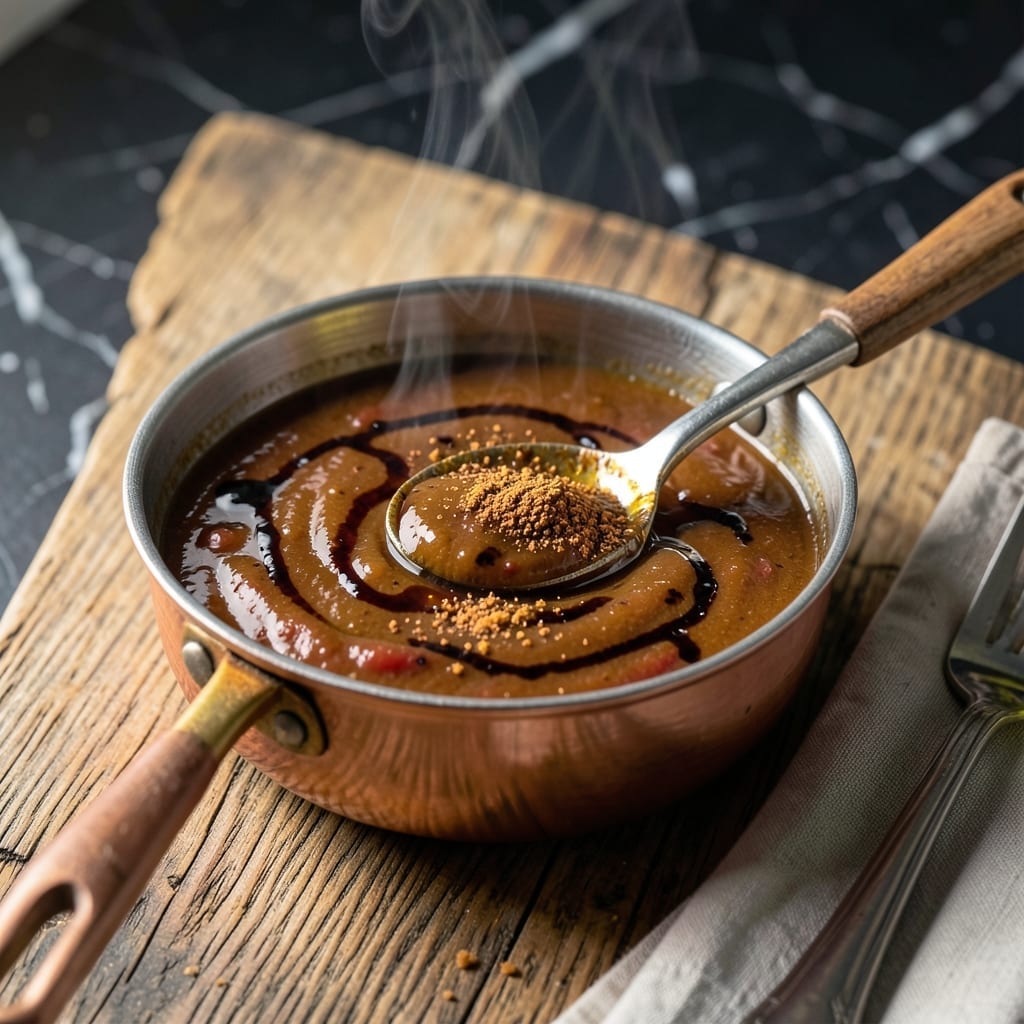
This sauce transforms ordinary barbecue into something extraordinary with its bold smoky depth and balanced sweetness. My French training meets pitmaster instincts here.
No shortcuts—just slow-simmered ingredients building layers of flavor that cling to every brushstroke. Perfect for ribs, chicken, or as a dipping sauce.
Ingredients for Chef Ramsay Barbecue Sauce
Ten ingredients build that signature smoky-sweet complexity you expect from a chef’s sauce.
| Ingredient | Amount | Notes |
|---|---|---|
| Ketchup 🍅 | 2 cups | High-quality, no high-fructose corn syrup |
| Apple Cider Vinegar 🍏 | ½ cup | Raw, unfiltered preferred |
| Dark Brown Sugar 🍚 | ½ cup | Packed for rich molasses flavor |
| Molasses 🍯 | ¼ cup | Unsulphured for cleaner taste |
| Worcestershire Sauce 🫒 | 2 tbsp | Anchovy-free if vegetarian |
| Smoked Paprika 🌶️ | 2 tbsp | Spanish variety for authentic smoke |
| Garlic Powder 🧄 | 1 tbsp | Not granulated for even dispersion |
| Onion Powder 🧅 | 1 tbsp | Freshly ground if possible |
| Dijon Mustard 🟡 | 2 tbsp | Smooth, no seeds |
| Liquid Smoke 🔥 | 1 tsp | Hickory flavor preferred |
[recipe_ingredient_scaler]
The molasses and brown sugar create the backbone—look for organic or artisanal brands at Whole Foods or specialty grocers for deeper flavor. Smoked paprika should be Spanish-style for authentic smokiness; Penzeys carries an excellent version. Avoid ketchups with high-fructose corn syrup; Sir Kensington’s or Primal Kitchen offer cleaner options that won’t overpower the blend.
No molasses? Substitute with half the amount of honey plus a teaspoon of blackstrap for depth (though this changes the profile slightly). Swap smoked paprika for chipotle powder at half the quantity if you want heat. The Worcestershire can be replaced with coconut aminos for a vegetarian version. Liquid smoke is potent—never exceed 1 teaspoon or it’ll dominate.
This sauce keeps 2 weeks in the fridge in a sealed jar. For longer storage, freeze in ice cube trays (up to 3 months). The flavors meld and improve after 24 hours, so make it a day ahead if possible.
Why You’ll Love This Recipe
- 5-Minute Mix: I just dump everything in one pot—ketchup, vinegar, the works—and let it simmer while I prep the rest of dinner.
- Smoky Sweet Kick: The molasses and brown sugar give it that deep, caramelized flavor with a tangy vinegar bite I can’t get enough of.
- Grill Night Hero: I slather it on ribs, brush it on burgers, even stir it into pulled pork—honestly, it works on everything.
- Makes a Mason Jar: One batch fills a jar and keeps in the fridge for weeks, so I always have it ready for last-minute cookouts.
Step-by-Step Instructions for Chef Ramsay Barbecue Sauce
This method delivers restaurant-quality depth with precise technique and balanced flavors.
Step 1: Combine the Wet Foundation
In a medium saucepan, whisk together the 2 cups Ketchup, 0.5 cup Apple Cider Vinegar, and 0.5 cup Dark Brown Sugar until smooth. I use a flat-bottom whisk for this—it ensures the brown sugar breaks up completely without lumps.
The vinegar will look separated at first, but as you whisk, it will incorporate fully into the ketchup base. This combination creates the perfect sweet-tangy foundation that defines great barbecue sauce. Heat the mixture over medium-low heat to begin the development process.
Step 2: Incorporate the Depth Ingredients
Add the 0.25 cup Molasses, 2 tbsp Worcestershire Sauce, and 2 tbsp Dijon Mustard to the saucepan. Stir well to combine, making sure to scrape the bottom of the pan to prevent any sugar from sticking or burning.
The molasses will make the mixture look darker immediately—that’s the rich, deep color you’re after. The Worcestershire adds umami complexity that balances the sweetness, while the Dijon mustard provides a subtle sharpness. Maintain the medium-low heat and stir occasionally.
Step 3: Build the Spice Profile
Sprinkle in the 2 tbsp Smoked Paprika, 1 tbsp Garlic Powder, and 1 tbsp Onion Powder. I add these while stirring constantly to prevent clumping—the paprika especially can form small clusters if not incorporated immediately.
Watch as the sauce transforms into a deep, reddish-brown color with visible spice flecks. The smoked paprika is the star here, delivering that signature barbecue aroma. At this point, add the 1 tsp Liquid Smoke—this is what gives the sauce its authentic, wood-fired character.
Step 4: Simmer to Perfection
Reduce the heat to low and let the sauce simmer uncovered for 15-20 minutes. You’ll notice the mixture thicken slightly and develop a glossy sheen. Stir every 3-4 minutes to prevent sticking, especially as it reduces.
The sauce should coat the back of a spoon when it’s ready, with a consistency that’s thick but still pourable. Taste and adjust the balance if needed—though with these precise measurements, you shouldn’t need to. The flavors will have melded into that bold, smoky depth characteristic of professional barbecue sauces.
Remove from heat and let cool to room temperature. The sauce will thicken further as it cools, reaching its ideal consistency for brushing on meats or using as a dipping sauce.
Pro Tips For Making Chef Ramsay Barbecue Sauce
- Simmer Low and Slow: Keep the heat at medium-low and let it bubble gently for 15-20 minutes—any higher and the sugars in the molasses and brown sugar will burn, turning your sauce bitter.
- Bloom the Sugar: Dissolve the dark brown sugar completely in the warm vinegar and ketchup mix before adding other ingredients; I learned this the hard way after ending up with grainy sauce.
- Skip the Cheap Vinegar: Use raw, unfiltered apple cider vinegar—it’s cloudy and costs a bit more, but the depth of flavor actually changes the outcome compared to the clear stuff.
- Taste Before Bottling: After the sauce cools slightly, give it a taste and adjust with a pinch of salt or extra splash of vinegar—sounds obvious, but I skip this when I’m lazy and always regret it.
Perfect Pairings for These Flavors
With Smoked Meats
This sauce shines on pork ribs or pulled pork—brush it on during the last 30 minutes of smoking. I learned this timing trick at local BBQ competitions: too early and the sugars burn. The molasses caramelizes beautifully over hickory-smoked meat. 🔥
Grilled Chicken
For chicken thighs or drumsticks, glaze them with sauce in the final 5-10 minutes of grilling. The vinegar tenderizes while the brown sugar creates a sticky crust. My French training taught me to balance sweetness with acidity here.
Burgers and Dogs
Slather on beef burgers or brats during the last 2 minutes of cooking. The sauce’s thickness clings perfectly without sliding off. I prefer this over ketchup—it adds complexity that elevates simple backyard cookouts.
Dipping and Sides
Use as a dip for crispy fries or onion rings—the smoky depth pairs with the saltiness. For a twist, mix 2 tbsp sauce into ½ cup mayo for a quick sandwich spread. This was my go-to after foraging wild herbs.
Leftovers Boost
Transform shredded chicken or pulled pork leftovers by simmering in ¼ cup sauce with 2 tbsp water for 5 minutes. The sauce revives dry proteins instantly. I ride my vintage motorcycle to clear my head after perfecting this trick.
Nutrition Facts
Frequently Asked Questions
Can I make this sauce ahead of time?
The flavors deepen after 24 hours in the fridge. Store in an airtight container for up to 2 weeks.
What if I don’t have liquid smoke?
Skip it entirely or use ½ tsp chipotle powder for smokiness. Avoid overdoing substitutes—they can overpower the sauce.
How do I fix sauce that’s too sweet?
Balance with 1 tbsp apple cider vinegar or a pinch of salt. Stir well and taste before adjusting further.
Can I freeze leftover sauce?
Yes! Portion into ice cube trays and freeze for up to 3 months. Thaw in the fridge overnight.

Trained in classic French technique but raised on slow-cooked ribs and spicy rubs, she blends culinary skill with smoke and soul.
- Recipe for Boneless Pork Chops in Cast Iron Skillet: Sear and Baste to Juicy Perfection - October 3, 2026
- Recipe for Boneless Cross Rib Roast: Slow-Roasted Beef with Herb Crust - October 3, 2026
- Hamburgers in Sauce Recipe Crock Pot: Slow-Cooked Savory Delight - October 3, 2026