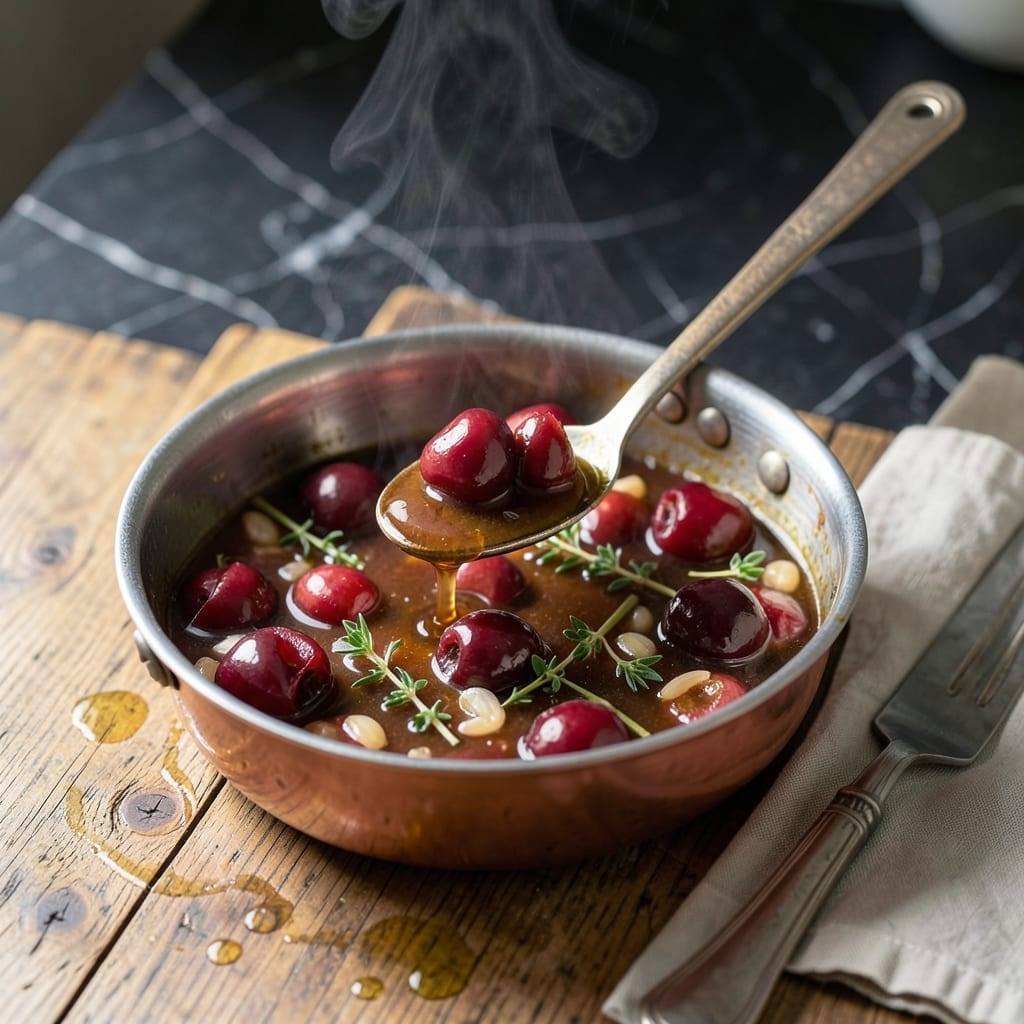
This cherry gastrique delivers a perfect balance of sweet and tart, elevated by rich red wine reduction. I developed this sauce to add depth to duck and cheese plates, but it works beautifully with desserts too.
The process is straightforward: reduce cherries, wine, and vinegar until syrupy, then finish with a touch of sugar. The result is a glossy, complex glaze that transforms simple dishes into restaurant-worthy creations.
What makes this sauce special is its versatility. Drizzle it over roasted meats, pair it with aged cheeses, or spoon it onto vanilla ice cream for an unexpected twist.
Store in an airtight container for up to two weeks. This recipe yields about 1 cup of gastrique, enough for multiple uses.
Ingredients for Cherry Gastrique
Eight ingredients transform into a glossy, restaurant-worthy sweet-tart glaze with red wine depth.
| Ingredient | Amount | Notes |
|---|---|---|
| Fresh or Frozen Cherries 🍒 | 2 cups | Pitted, fresh preferred for bright flavor |
| Red Wine 🍷 | 1 cup | Dry variety like Cabernet Sauvignon |
| Red Wine Vinegar 💧 | ¼ cup | Balances sweetness with acidity |
| Granulated Sugar 🍚 | ¼ cup | Adjust to taste for sweetness |
| Shallot 🧅 | 1 whole | Finely minced for depth |
| Fresh Thyme Sprigs 🌿 | 2 piece | Or 1 tsp dried thyme |
| Black Peppercorns 🌶️ | ¼ tsp | Freshly cracked for best flavor |
| Salt 🧂 | ¼ tsp | Fine sea salt preferred |
[recipe_ingredient_scaler]
The cherries are key here—fresh Bing or Rainier from your local farmers market deliver the brightest flavor, but frozen works in a pinch (just thaw and drain first). For the wine, any dry red like Merlot or Pinot Noir adds the right depth. Trader Joe’s or Whole Foods have solid affordable options. The shallot should be firm and dry, not sprouting.
No red wine? Unsweetened cranberry juice with a splash of apple cider vinegar mimics the depth. Out of fresh thyme? Dried at one-third the amount works fine. For sugar, agave or maple syrup can substitute, but may slightly alter the texture. The vinegar can be sherry or balsamic for a different nuance.
This keeps beautifully for 2 weeks in an airtight container in the fridge. Freeze in ice cube trays for up to 6 months (thaw before using). The flavor actually deepens as it rests, so making it a day ahead is ideal.
Why You’ll Love This Recipe
- One Pot Wonder: I toss in cherries, shallots, and wine, then let the stove do the work—hardly any cleanup.
- Sweet-Tart Magic: The red wine vinegar cuts through the sugar, making every bite bright and balanced.
- Dinner Party Hero: It pairs with duck, pork, or even cheese plates, so I always keep a jar ready.
- Budget Stretch: Frozen cherries work just as well, and a little goes a long way on leftovers.
Step-by-Step Instructions for Cherry Gastrique
This refined technique transforms simple ingredients into a glossy, complex sauce with perfect balance.
Step 1: Prepare and Simmer the Base
Combine the 2 cups Fresh or Frozen Cherries, 1 cup Red Wine, 0.25 cup Red Wine Vinegar, 0.25 cup Granulated Sugar, minced Shallot, 2 piece Fresh Thyme Sprigs, 0.25 tsp Black Peppercorns, and 0.25 tsp Salt in a medium saucepan. I find a heavy-bottomed pan works best for even heat distribution.
Bring the mixture to a boil over medium-high heat, then reduce to a lively simmer. The cherries will begin to burst and release their juices after about 5 minutes. Stir occasionally to prevent sticking and ensure the sugar fully dissolves.
Step 2: Reduce to Syrupy Consistency
Continue simmering for 15-20 minutes, stirring more frequently as the mixture thickens. You’ll notice the liquid level drop significantly and the cherries break down completely. The mixture should reduce by about half and take on a jam-like appearance.
Watch for the sauce to coat the back of a wooden spoon with a thin, syrupy film. If it reduces too quickly or starts to stick, lower the heat slightly. This stage develops the deep, concentrated flavors that define a proper gastrique.
Step 3: Strain for Silky Smoothness
Remove the saucepan from heat and let the mixture cool for 2-3 minutes. This brief rest allows the solids to settle, making straining more effective. I find a fine-mesh sieve works best for achieving that signature smooth texture.
Press the mixture through the sieve with a wooden spoon or silicone spatula, extracting all the liquid and soft fruit while leaving behind the thyme stems and peppercorns. Discard the solids – your focus is now on that beautiful, deep red liquid.
Step 4: Final Reduction to Glaze
Return the strained liquid to the saucepan and place over medium-low heat. Simmer for an additional 5-8 minutes until the gastrique reaches your desired consistency. For a thin glaze, aim for a syrup that lightly coats a spoon. For a thicker sauce, cook until it’s viscous enough to drizzle slowly.
The finished gastrique should have a glossy sheen and a balance of sweet and tart flavors with the wine’s depth coming through. It will thicken slightly more as it cools. Taste and adjust seasoning if needed, though the initial measurements typically yield perfect balance.
Pro Tips For Making Cherry Gastrique
- Reduce Low and Slow: Cook the mixture at a gentle simmer rather than a rolling boil—this keeps the cherries from breaking down too much while the sauce thickens evenly.
- Pit the Cherries: Always remove pits from fresh cherries first; I learned this the hard way after cracking a tooth on one hiding in the sauce.
- Balance the Acid: Taste as you go and adjust the sugar if the red wine vinegar tastes too sharp—frozen cherries often need a touch more sweetness.
- Strain for Smoothness: For a silky texture, press the cooked mixture through a fine-mesh sieve before serving—it’s worth the extra minute.
Best Sauces and Condiments for These Flavors
Duck Pairings
This sauce was born for roasted duck. Drizzle 2 tbsp over each sliced duck breast just before serving. The sweetness cuts through the richness beautifully. I love it with Peking duck or magret de canard from my local butcher. 💫
Cheese Board Star
Pair with aged cheeses like Gouda or blue cheese on your charcuterie board. Offer 1-2 tbsp per guest for dipping. The contrast of sweet, tart, and salty flavors is addictive. I forage wild thyme to garnish the plate.
Dessert Twist
Spoon over vanilla ice cream or cheesecake for a sophisticated finish. Try 1 tsp per scoop. The warmth of the sauce slightly melts the ice cream, creating a perfect bite. My coastal rides inspired this sweet application.
Grill Enhancer
Brush on grilled pork chops or chicken during the last 2 minutes of cooking. The heat caramelizes the sugars, creating a glossy glaze. Works especially well with my spicy rubs from local BBQ competitions.
Nutrition Facts
Frequently Asked Questions
Can I use frozen cherries instead of fresh?
Yes, frozen cherries work perfectly. Thaw and drain them first to avoid excess liquid. The flavor will be just as vibrant, though fresh may offer slightly brighter notes.
How long does homemade gastrique keep?
Store in an airtight container in the fridge for up to 2 weeks. For longer storage, freeze in ice cube trays for up to 6 months. Thaw before using.
What can I substitute for red wine?
Try unsweetened cranberry juice with a splash of apple cider vinegar. For depth, a dry white wine with extra sugar also works.
Why did my gastrique turn out too thin?
Simmer it longer to reduce further. If it thickens too much, thin with 1 tsp water at a time. Patience is key for the perfect consistency.

Trained in classic French technique but raised on slow-cooked ribs and spicy rubs, she blends culinary skill with smoke and soul.
- Meat and Potato Recipe Ideas: Savory Pairings for Hearty Meals - October 3, 2026
- Recipe for Fried Prawns Batter: Ultra-Crispy Golden Shell - October 3, 2026
- Indian Lamb Curry Recipe Pressure Cooker: Fragrant Spices in a Fraction of the Time - October 3, 2026