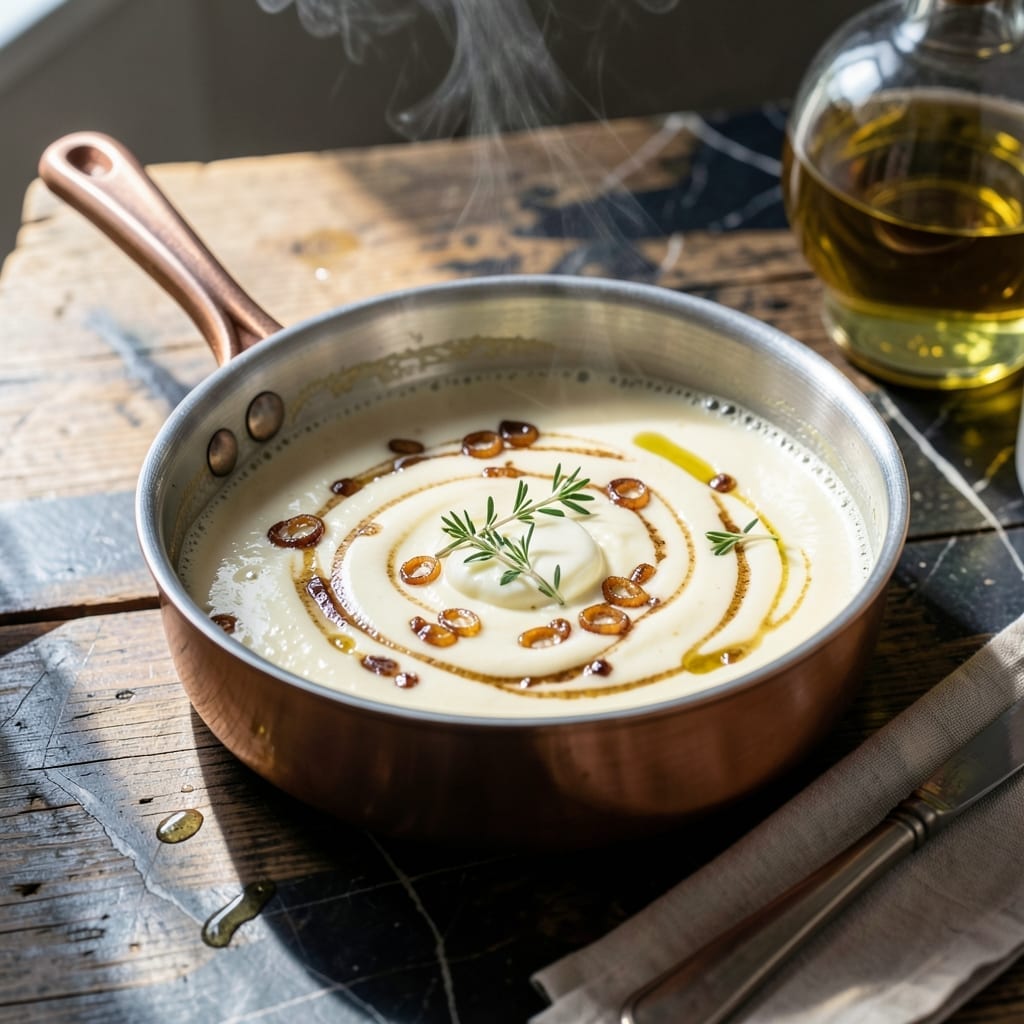
This French-style pan reduction transforms simple ingredients into a silky, sophisticated sauce with minimal effort. I developed this method after years of perfecting my French technique.
Perfect for elevating chicken, seafood, or pasta, it delivers restaurant-quality results with a fraction of the work. The wine reduces to a velvety consistency that coats beautifully.
Ingredients for White Wine Sauce
Ten ingredients create this French-inspired pan sauce with restaurant-quality finesse and depth.
| Ingredient | Amount | Notes |
|---|---|---|
| Dry White Wine 🍷 | 1 ½ cups | Sauvignon Blanc or Pinot Grigio preferred |
| Shallots 🧅 | 2 whole | Finely minced for delicate flavor |
| Unsalted Butter 🧈 | ½ cup | Cubed, cold for finishing |
| Heavy Cream 🥛 | ½ cup | Full-fat for velvety texture |
| Garlic Cloves 🧄 | 2 cloves | Minced to release aromatic oils |
| Fresh Thyme 🌿 | 1 tbsp | Leaves stripped from stems |
| Dijon Mustard 🟡 | 1 tsp | Smooth, no seeds for consistency |
| Lemon Juice 🍋 | 1 tbsp | Freshly squeezed for brightness |
| Kosher Salt 🧂 | ½ tsp | Diamond Crystal preferred for balance |
| White Pepper ⚪ | ¼ tsp | Freshly ground for subtle heat |
[recipe_ingredient_scaler]
The wine selection is critical here. Sauvignon Blanc or Pinot Grigio offer the right acidity and fruit notes to balance the reduction. Avoid oaky Chardonnays—they can overpower the sauce. Trader Joe’s and Whole Foods have reliable options under $15. For the shallots, look for firm bulbs with dry, papery skins. The butter must be unsalted to control seasoning precisely. Plugrá or Kerrygold are professional-grade choices.
No white wine? Substitute dry vermouth for similar acidity. Shallots can be replaced with finely diced yellow onion at double the quantity. The cream is non-negotiable for that silky finish, but full-fat coconut milk works in a pinch for a dairy-free version. For the thyme, dried thyme at one-third the amount is acceptable, though fresh delivers superior aroma.
This sauce holds beautifully for 2-3 days refrigerated in an airtight container. Reheat gently over low to preserve the velvety texture. For longer storage, freeze in ice cube trays for up to 3 months. The butter may separate when thawed—simply whisk to re-emulsify before serving.
Why You’ll Love This Recipe
- Five Ingredient Magic: I love that this comes together with just dry white wine, shallots, butter, cream, and garlic—no fancy shopping required.
- Deep, Rich Flavor: The white wine reduces into this tangy base that pairs so well with the creamy, garlicky finish.
- Pairs With Everything: I’ve drizzled it over chicken, fish, even pasta—it’s my go-to for turning simple dishes into restaurant-worthy meals.
- Stays Fresh: Honestly, it keeps beautifully in the fridge for days, so I can make a big batch and use it all week long.
Step-by-Step Instructions for French-Style Pan Reduction
Master this classic technique for a velvety, restaurant-quality sauce with balanced depth and brightness.
Step 1: Sauté Aromatics in Butter
Melt 0.5 cup Unsalted Butter in a heavy saucepan over medium heat. When the foaming subsides, add the 2 whole Shallots (finely minced) and cook for 3-4 minutes until translucent and just beginning to caramelize around the edges.
Add the 2 cloves Garlic Cloves (minced) and 1 tbsp Fresh Thyme leaves, stirring constantly for 30 seconds until fragrant. Be careful not to let the garlic brown—this ensures a sweet, aromatic base without bitterness.
Step 2: Deglaze with Wine and Reduce
Pour in the 1.5 cups Dry White Wine and stir to release any browned bits from the bottom of the pan. Increase heat to medium-high and let the mixture simmer vigorously for 8-10 minutes until reduced by about two-thirds.
You’ll know it’s ready when the liquid has a syrupy consistency and the alcohol smell has mostly dissipated. This reduction concentrates the wine’s acidity and fruit notes, creating the sauce’s backbone.
Step 3: Emulsify with Cream and Mustard
Reduce heat to low and whisk in the 0.5 cup Heavy Cream and 1 tsp Dijon Mustard. Simmer for 3-4 minutes until the sauce thickens slightly and coats the back of a spoon.
The mustard acts as an emulsifier, binding the butter and cream into a stable, glossy sauce. Keep the heat gentle to prevent curdling—this is non-negotiable for a smooth finish.
Season with 0.5 tsp Kosher Salt and 0.25 tsp White Pepper, then stir in the 1 tbsp Lemon Juice for brightness.
Step 4: Finish and Strain
Remove from heat and let the sauce sit for 1 minute to settle. For an ultra-smooth texture, strain through a fine-mesh sieve, pressing gently on the shallots and thyme to extract maximum flavor.
Taste and adjust seasoning if needed. The sauce should have a balanced acidity from the wine and lemon, with a subtle creaminess that doesn’t overpower. Serve immediately over proteins or vegetables, as it thickens further as it cools.
Pro Tips For Making White Wine Sauce
- Reduce the Wine: Cook the wine down by at least half before adding cream—this burns off the alcohol and concentrates the flavor, or your sauce will taste thin and boozy.
- Fine Dice the Shallots: I learned this the hard way—chop shallots super fine so they melt into the sauce instead of floating around like sad little bits.
- Use Cold Butter: Add the butter cold and in small cubes at the end, stirring constantly; it emulsifies smoothly into the sauce instead of separating.
- Skip Cheap Wine: After ruining a batch with cooking wine, I now use a dry white I’d actually drink—it makes a real difference in the final taste.
Pro Cooking Tips for Perfect Results
Wine Selection Matters
For the best results, choose a dry white wine like Sauvignon Blanc or Pinot Grigio. Their crisp acidity balances the richness beautifully. I often grab a $12 bottle from Trader Joe’s—it’s affordable and reliable for cooking. 🍷
Low and Slow Reduction
After deglazing, maintain a gentle simmer to reduce the wine properly. If it boils too hard, the alcohol evaporates too quickly, leaving harsh flavors. 8-10 minutes at medium-high heat is the sweet spot for a syrupy consistency.
Emulsify Like a Pro
When adding the heavy cream and Dijon mustard, whisk constantly over low heat. This creates a stable emulsion, giving your sauce that silky texture. The mustard acts as a natural stabilizer, so don’t skip it!
Strain for Perfection
For a velvety finish, strain the sauce through a fine-mesh sieve. Press the shallots and thyme gently to extract all their flavor. This step removes any texture, leaving a perfectly smooth sauce every time.
Season Gradually
Add the kosher salt and white pepper in stages. Taste after each addition—it’s easier to add more than to fix an over-seasoned sauce. The lemon juice at the end brightens all the flavors. 💡
Avoid Common Pitfalls
Never let the sauce boil after adding cream, or it may curdle. If it thickens too much, thin it with a splash of warm water or wine. This sauce holds beautifully for 2-3 days refrigerated, so make extra!
Nutrition Facts
Frequently Asked Questions
Can I use cooking wine instead of regular?
Avoid cooking wine—it’s often salty and lower quality. Use a dry white wine you’d actually drink for best flavor.
Why did my sauce separate?
It likely got too hot after adding cream. Reheat gently on low heat while whisking to re-emulsify.
How do I adjust the thickness?
Too thick? Thin with warm water or wine. Too thin? Simmer 2-3 minutes longer.
What pairs best with this sauce?
Try it over chicken, scallops, or pasta. Its bright acidity cuts through rich dishes beautifully.

Trained in classic French technique but raised on slow-cooked ribs and spicy rubs, she blends culinary skill with smoke and soul.
- Recipe for Boneless Pork Chops in Cast Iron Skillet: Sear and Baste to Juicy Perfection - October 3, 2026
- Recipe for Boneless Cross Rib Roast: Slow-Roasted Beef with Herb Crust - October 3, 2026
- Hamburgers in Sauce Recipe Crock Pot: Slow-Cooked Savory Delight - October 3, 2026