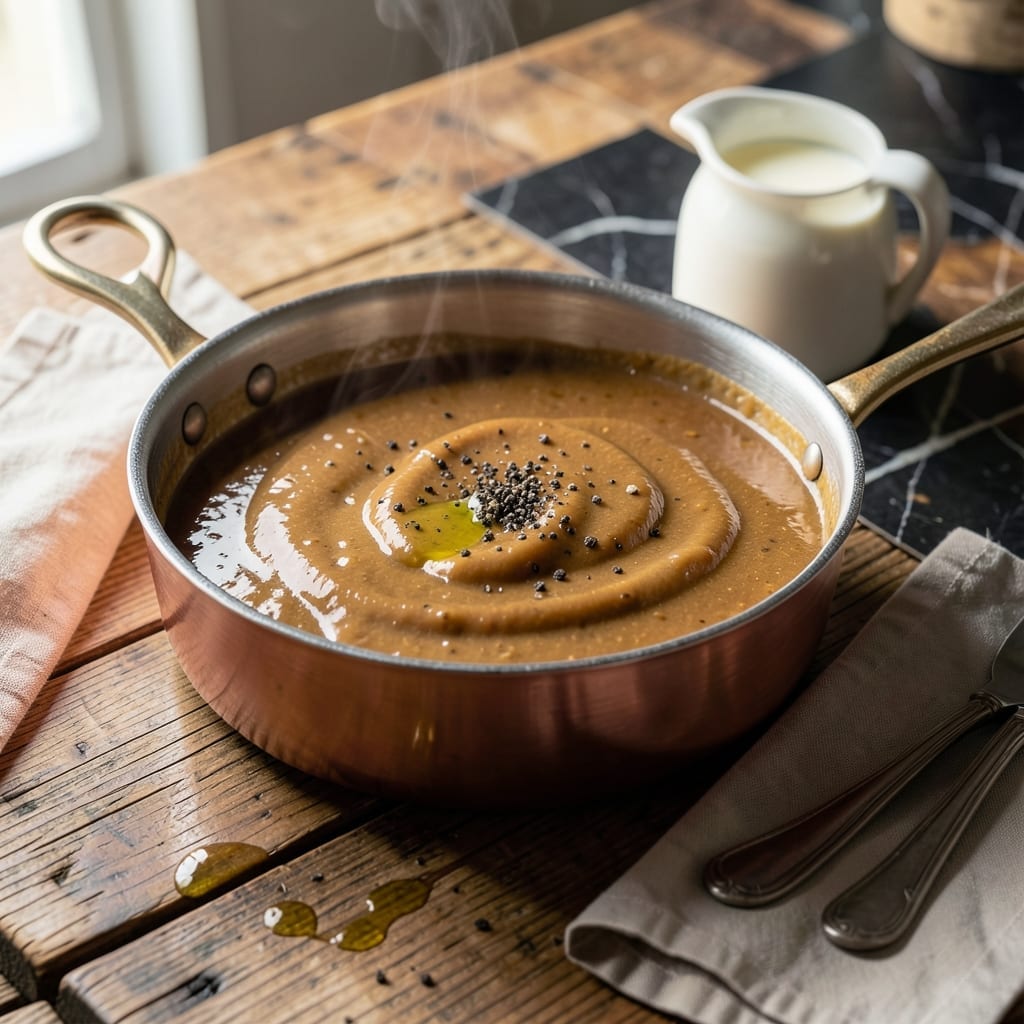
This rich, savory gravy elevates any meal with its deep, comforting flavor. A foolproof method ensures smooth results every time.
Using chicken bouillon as the base creates a concentrated, homemade taste that outshines store-bought versions. Perfect for drizzling over mashed potatoes, biscuits, or roasted chicken.
Ingredients for Chicken Gravy Recipe with Chicken Bouillon
Ten ingredients transform into this rich, velvety sauce with minimal effort and maximum flavor.
| Ingredient | Amount | Notes |
|---|---|---|
| Unsalted Butter 🧈 | ½ cup | For making the roux base |
| All-Purpose Flour 🌾 | ½ cup | Creates the gravy thickness |
| Chicken Bouillon Granules 🍗 | 2 tbsp | Concentrated flavor foundation |
| Hot Water 💧 | 2 cups | Dissolves bouillon completely |
| Whole Milk 🥛 | 1 cup | Adds creamy richness |
| Black Pepper 🌶️ | 1 tsp | Freshly ground preferred |
| Garlic Powder 🧄 | ½ tsp | Enhances savory depth |
| Onion Powder 🧅 | ½ tsp | Balances the flavor profile |
| Worcestershire Sauce 🍶 | 1 tsp | Adds umami complexity |
| Dried Thyme 🌿 | ¼ tsp | Subtle earthy note |
[recipe_ingredient_scaler]
For the bouillon, Knorr or Better Than Bouillon brands deliver consistent, robust flavor that defines this gravy. Use the granules rather than cubes for easier measurement and quicker dissolving. The butter should be high-quality—Land O’Lakes or Plugrá work well for a smooth, stable roux. Whole milk adds richness, but avoid ultra-pasteurized varieties as they can curdle under heat.
Need a dairy-free version? Olive oil replaces the butter at a 1:1 ratio, and unsweetened almond milk works instead of whole milk. No bouillon? Substitute chicken stock reduced by half to concentrate the flavor. For a darker gravy, swap 1 tablespoon of flour for cornstarch—just whisk it in with the butter first.
Gravy thickens as it cools, so thin with a splash of milk or water when reheating. Store in an airtight container in the fridge for up to 5 days or freeze for 3 months. Reheat gently to avoid separation.
Why You’ll Love This Recipe
- One Pot Wonder: I melt the butter, whisk in flour, and the bouillon does the rest—no fancy techniques, just a smooth gravy in minutes.
- Rich & Savory: The chicken bouillon granules pack so much depth into every bite, and the milk balances it with a creamy finish.
- Meal Stretcher: I double the batch and drizzle it over mashed potatoes, biscuits, or even roasted veggies for days.
- Pantry MVP: All I need are shelf-stable basics—no last-minute grocery runs, and it costs pennies per serving.
Step-by-Step Instructions for Chicken Gravy With Chicken Bouillon
Master the roux-based technique for a velvety, deeply savory sauce that elevates any dish.
Step 1: Create a Perfect Roux Base
Melt the 0.5 cup unsalted butter in a heavy-bottomed saucepan over medium heat. I use a light-colored pan so I can monitor the color change accurately. The butter should foam but not brown—this takes about 2-3 minutes.
Whisk in the 0.5 cup all-purpose flour immediately and vigorously. The mixture will thicken and turn into a smooth paste. Continue whisking constantly for 2-3 minutes until the roux reaches a light golden color. This cooking time removes the raw flour taste and builds the foundation for a rich gravy.
Step 2: Build Flavor With Bouillon and Seasonings
Gradually whisk in the 2 cups hot water combined with 2 tbsp chicken bouillon granules. The hot water helps dissolve the bouillon completely, ensuring no gritty texture in your finished gravy. Pour slowly while whisking to prevent lumps from forming.
Add the 1 tsp black pepper, 0.5 tsp garlic powder, 0.5 tsp onion powder, 1 tsp Worcestershire sauce, and 0.25 tsp dried thyme. Stir well to distribute the seasonings evenly. Bring the mixture to a gentle simmer over medium heat.
Step 3: Achieve Ideal Consistency With Milk
Slowly pour in the 1 cup whole milk while whisking continuously. The milk adds creamy richness to balance the deep savory flavors. Reduce the heat to medium-low and let the gravy simmer for 5-7 minutes, stirring occasionally.
Watch for the gravy to thicken enough to coat the back of a spoon. If it becomes too thick, add a splash of hot water to reach your desired consistency. The final texture should be smooth and velvety, with no visible lumps or separation.
Step 4: Finish and Adjust Seasoning
Taste and adjust the seasoning if needed. The gravy should have a rich, well-rounded flavor with no raw flour taste. If the bouillon flavor seems too concentrated, a pinch of sugar can help balance it, though this recipe typically doesn’t require it.
Remove from heat and let it sit for 1-2 minutes before serving. This brief rest allows the gravy to reach its final thickness. Serve hot over mashed potatoes, biscuits, or roasted chicken for a comforting, homemade touch.
Pro Tips For Making Chicken Gravy Recipe With Chicken Bouillon
- Cook the Roux Longer: I learned this the hard way—give your butter and flour mix a full 2-3 minutes on medium heat until it turns a light golden brown. It removes the raw flour taste and deepens the flavor.
- Bloom the Bouillon: Dissolve the chicken bouillon granules in the hot water first and let it sit for 2 minutes. This ensures even distribution and prevents grainy bits in your gravy.
- Temper the Milk: Sounds weird, but it works: warm the whole milk slightly before adding it to the roux to prevent curdling. Cold milk can shock the mixture and create lumps.
- Thin Gradually: Add the bouillon water in small splashes while whisking constantly. After burning three batches, I finally figured out that dumping it all at once creates clumps.
Troubleshooting This Dish
Lumpy Gravy
If your gravy has lumps, whisk vigorously to break them up. For stubborn lumps, use an immersion blender for 10-15 seconds until smooth. I always keep one handy for this exact reason. Prevention is key—whisk constantly when adding liquid to your roux. 💡
Too Thin
If the gravy is too thin, mix 1 tbsp cornstarch with 1 tbsp cold water to create a slurry. Whisk this into the gravy and simmer for 2-3 minutes until thickened. Avoid adding dry cornstarch directly, as it will clump.
Too Thick
Thin with hot water or milk, 1 tbsp at a time, whisking between additions. Gravy thickens as it cools, so let it sit for 2 minutes before deciding to add more liquid. I often find it reaches the perfect consistency after resting briefly.
Gravy Separates
If the gravy separates or looks greasy, whisk in 1 tbsp cold milk to re-emulsify. This usually brings it back together. To prevent separation, avoid boiling vigorously—keep it at a gentle simmer. Low and slow is the way to go. ✨
Bouillon Grit
If you taste undissolved bouillon, strain the gravy through a fine-mesh sieve. For prevention, ensure your water is hot before adding bouillon granules. I like Knorr because it dissolves smoothly every time.
Bland Flavor
Boost flavor with ½ tsp salt or an extra ½ tsp garlic powder. Taste as you go—sometimes the bouillon needs a little help. Freshly cracked black pepper can also add a nice kick to wake up the flavors.
Nutrition Facts
Frequently Asked Questions
Can I use chicken broth instead of bouillon?
Yes, but reduce it by half first to concentrate the flavor. Use 1 cup reduced broth instead of 2 tbsp bouillon + 2 cups water. This maintains the same intensity in your gravy.
How do I fix gravy that’s too salty?
Add 1 cup milk or water gradually while tasting. You can also stir in 1 peeled, boiled potato for 10 minutes to absorb excess salt, then remove it.
Can I make this gravy dairy-free?
Replace butter with olive oil and use unsweetened almond milk. The texture remains smooth, though the flavor will be slightly less rich.
Why does my gravy turn out lumpy?
The most common cause is adding liquid too quickly to the roux. Whisk constantly and pour liquids slowly in a thin stream. For existing lumps, blend with an immersion blender for 10-15 seconds.

Trained in classic French technique but raised on slow-cooked ribs and spicy rubs, she blends culinary skill with smoke and soul.
- Recipe for Boneless Pork Chops in Cast Iron Skillet: Sear and Baste to Juicy Perfection - October 3, 2026
- Recipe for Boneless Cross Rib Roast: Slow-Roasted Beef with Herb Crust - October 3, 2026
- Hamburgers in Sauce Recipe Crock Pot: Slow-Cooked Savory Delight - October 3, 2026