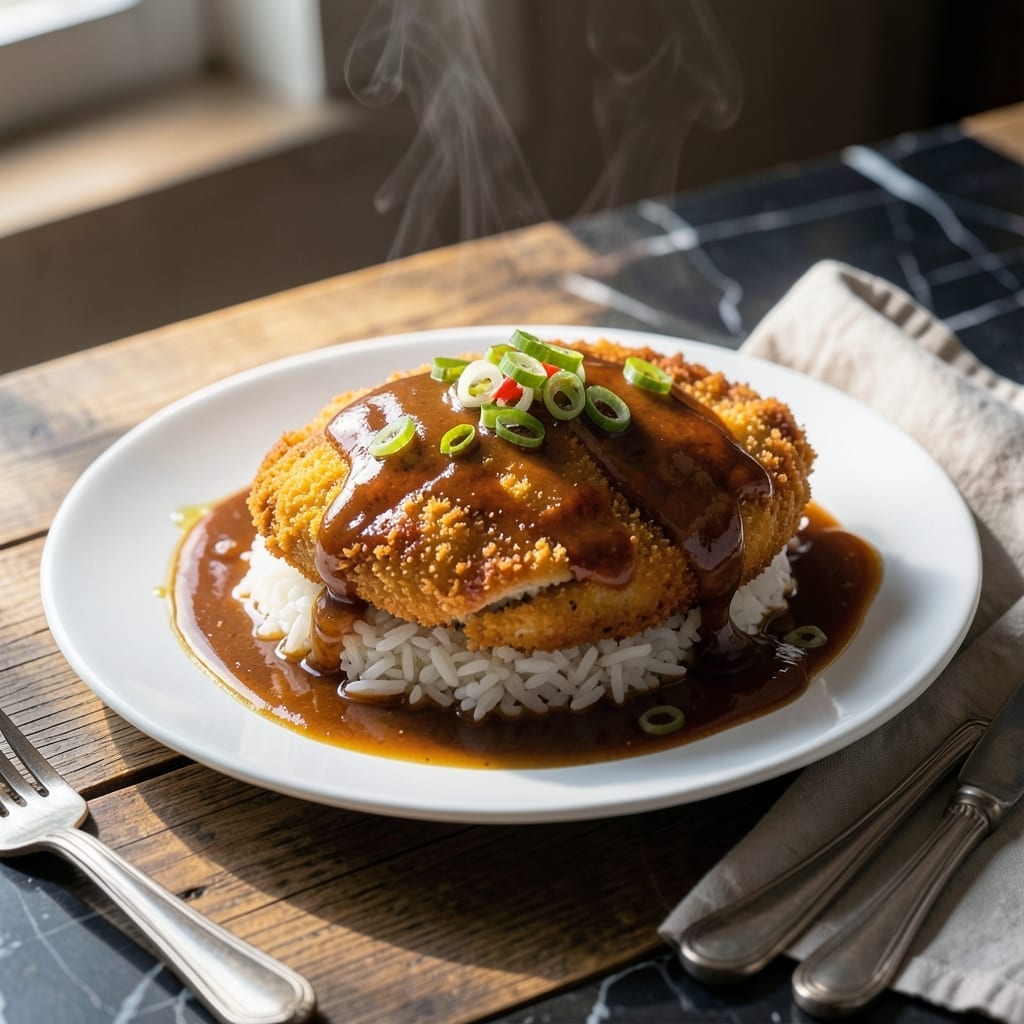
This sauce transforms ordinary fried chicken into a restaurant-quality Japanese masterpiece. The perfect balance of sweet and savory makes it irresistible over crispy cutlets and rice.
I developed this version after years of testing to capture the authentic taste of Tokyo-style katsudon. The secret lies in the precise ratio of soy sauce, mirin, and sugar, creating a glossy glaze that clings beautifully.
What you get is a rich, caramelized sauce that enhances without overpowering. It thickens slightly as it simmers, coating each piece with deep umami flavor.
Make a batch ahead—it keeps well and elevates countless dishes beyond just katsudon. Here’s how to perfect it every time.
Ingredients for Chicken Katsudon Sauce
Nine simple ingredients create this rich, glossy Japanese sauce with deep umami flavor.
| Ingredient | Amount | Notes |
|---|---|---|
| Soy Sauce 🥢 | ½ cup | Japanese variety preferred for authenticity |
| Mirin 🍶 | ¼ cup | Sweet cooking rice wine, not aji-mirin |
| Granulated Sugar 🍚 | 2 tbsp | White sugar for traditional taste |
| Dashi Stock 🍲 | ½ cup | Traditional Japanese stock base |
| Worcestershire Sauce 🍶 | 1 tsp | Adds depth to umami profile |
| Garlic Cloves 🧄 | 2 cloves | Minced finely for even distribution |
| Fresh Ginger 🌿 | 1 tbsp | Grated for maximum flavor extraction |
| Cornstarch 🌾 | 1 tsp | Mixed with water for slurry |
| Water 💧 | 1 tbsp | For cornstarch slurry |
[recipe_ingredient_scaler]
The soy sauce and mirin are non-negotiable here. Kikkoman soy sauce is easy to find at any supermarket, but Japanese markets carry a wider selection. Mirin can be tricky—look for hon-mirin (the real stuff) not aji-mirin (sweeter, cheaper version). Dashi stock is the backbone of that authentic flavor; instant dashi granules work just fine if you’re not making it from scratch.
No mirin? Dry sherry plus a pinch of sugar gets you close, but the flavor won’t be identical. Out of dashi? Chicken or vegetable stock works in a pinch (though not vegan). The Worcestershire adds complexity—use a Japanese brand like Bull-Dog for the most authentic taste. Fresh ginger is worth the effort, but ground ginger at half the amount can substitute if needed.
This sauce keeps beautifully. Store in an airtight container in the fridge for up to 1 week, or freeze for 3 months. The flavor actually deepens overnight, so make it ahead if you can. Perfect for drizzling over chicken, rice, or even as a dipping sauce for tempura.
Why You’ll Love This Recipe
- Five-Minute Sauce: I can simmer this while the chicken fries—just soy, mirin, sugar, dashi, and a splash of Worcestershire.
- Umami Bomb: That first hit of dashi and soy with the sweet mirin? Honestly, it’s why I make this weekly.
- Freezer Friendly: Leftovers keep beautifully, so I double the batch and freeze for next time.
- Budget Stretcher: A few pantry staples transform cheap chicken into a restaurant-worthy meal.
Step-by-Step Instructions for Chicken Katsudon Sauce
This authentic method delivers the perfect balance of sweet and savory flavors every time.
Step 1: Bloom the Aromatics
In a medium saucepan, combine the 0.5 cup Soy Sauce, 0.25 cup Mirin, 2 tbsp Granulated Sugar, and 0.5 cup Dashi Stock. Place over medium heat and stir until the sugar fully dissolves—this takes about 2-3 minutes.
Add the 2 cloves Garlic Cloves (minced) and 1 tbsp Fresh Ginger (grated). I always let these simmer for 3-4 minutes until the mixture becomes fragrant and the garlic turns slightly translucent. This step builds the aromatic foundation that defines authentic katsudon sauce.
Step 2: Deepen the Umami Profile
Stir in the 1 tsp Worcestershire Sauce and let the mixture simmer for another 2 minutes. The Worcestershire adds a subtle complexity that complements the soy and dashi beautifully. Watch for small bubbles to form at the edges—this indicates the sauce is at the right temperature.
You’ll notice the color darken slightly as the flavors meld together. I’ve found this is the perfect moment to taste and adjust seasoning if needed, though the ingredients should already be perfectly balanced. The sauce should smell rich and inviting at this stage.
Step 3: Thicken to Glaze Consistency
In a small bowl, whisk together the 1 tsp Cornstarch and 1 tbsp Water until smooth. This slurry is what will transform your liquid sauce into the perfect glaze consistency. Pour it into the saucepan while stirring constantly.
Continue cooking for 1-2 minutes until the sauce thickens enough to coat the back of a spoon. It should have a glossy sheen and ribbon-like consistency when drizzled. Don’t let it boil vigorously—gentle simmering prevents the cornstarch from breaking down.
Step 4: Finish and Cool Slightly
Remove the sauce from heat and let it cool for 5 minutes. The sauce will thicken slightly more as it cools, reaching the ideal consistency for drizzling over crispy chicken cutlets in your katsudon.
This brief resting period allows the flavors to fully harmonize. I always give it a final stir before using to ensure the ginger and garlic are evenly distributed throughout the sauce. The finished product should be smooth, glossy, and deeply aromatic with a perfect sweet-savory balance.
Pro Tips For Making Chicken Katsudon Sauce
- Simmer, Don’t Boil: Keep the sauce at a gentle simmer—boiling it hard will make the mirin and sugar reduce too fast, leaving you with a syrupy, bitter mess.
- Bloom the Sugar: Sprinkle the granulated sugar into the warm dashi first and stir until dissolved before adding the rest. I learned this the hard way after ending up with grainy sauce clinging to my pan.
- Skip the Salt: Soy sauce already brings plenty of salt, so resist the urge to add more. Taste first, adjust later—this is the thing that matters most for balance.
- Rest the Sauce: Let the finished sauce sit for 5 minutes off the heat. Sounds weird, but it works—the flavors meld and the consistency evens out.
Common Mistakes When Making Perfect Results
Over-Sweetening the Sauce
One of the most common pitfalls is adding too much sugar to balance the soy sauce. Stick to the recipe’s 2 tbsp Granulated Sugar—mirin already provides sweetness, and extra sugar can make the sauce cloying. I learned this the hard way with my first few batches.
Skipping the Slurry
Some cooks try to thicken the sauce by reducing it for too long, but this can make it overly salty. Always use the cornstarch slurry (1 tsp Cornstarch + 1 tbsp Water) to achieve that perfect glossy consistency without altering the flavor.
Boiling the Sauce
Vigorous boiling can break down the cornstarch and make the sauce thin. Keep it at a gentle simmer, especially after adding the slurry. You’ll see the perfect ribbon-like consistency at medium heat.
Using the Wrong Mirin
Aji-mirin isn’t a true substitute for hon-mirin. The real stuff has deeper flavor and less sweetness. If you must substitute, use dry sherry plus a pinch of sugar, but expect a slightly different taste. 💡
Neglecting the Aromatics
Don’t rush the garlic and ginger simmering step. They need 3-4 minutes to fully infuse the sauce. Skipping this shortchanges the depth of flavor that makes katsudon sauce special.
Overcooking After Thickening
Once the sauce coats the back of a spoon, remove it from heat immediately. Continued cooking can make it too thick or cause the cornstarch to separate. It will set perfectly as it cools.
Nutrition Facts
Frequently Asked Questions
Can I substitute regular soy sauce?
Yes, but use low-sodium to control saltiness. Japanese soy sauce has a more balanced flavor, but standard works in a pinch. The sauce may taste slightly sharper.
How long does the sauce keep?
Store in an airtight container in the fridge for up to 1 week. For longer storage, freeze for up to 3 months. The flavor deepens after a day.
Why is my sauce too thin?
You likely skipped the cornstarch slurry or didn’t simmer long enough. Reheat gently and add another 1/2 tsp cornstarch mixed with 1 tsp water.
Can I make it without dashi?
Use chicken or vegetable stock instead. The flavor won’t be identical, but it’ll still be tasty. For extra depth, add a pinch of MSG.

Trained in classic French technique but raised on slow-cooked ribs and spicy rubs, she blends culinary skill with smoke and soul.
- Recipe for Boneless Pork Chops in Cast Iron Skillet: Sear and Baste to Juicy Perfection - October 3, 2026
- Recipe for Boneless Cross Rib Roast: Slow-Roasted Beef with Herb Crust - October 3, 2026
- Hamburgers in Sauce Recipe Crock Pot: Slow-Cooked Savory Delight - October 3, 2026