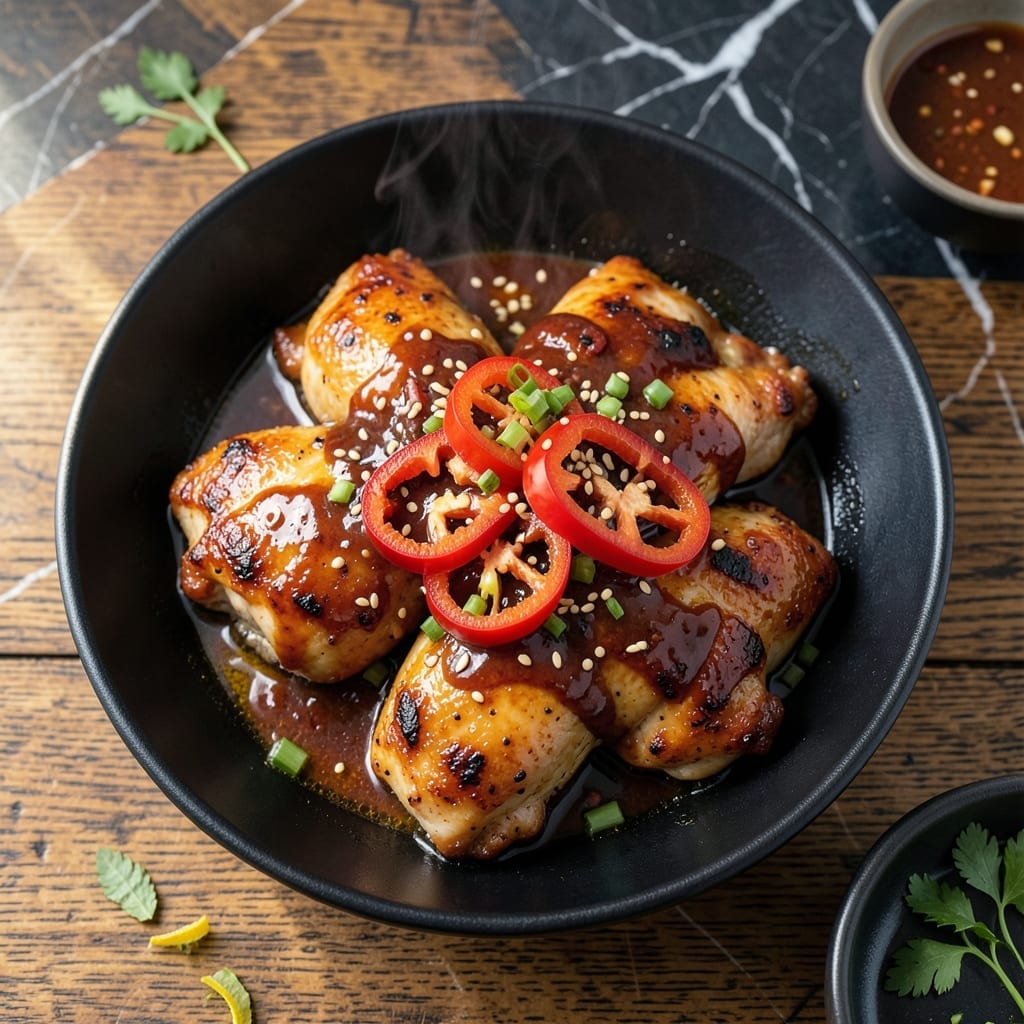
This chicken dish brings the bold flavors of Korean barbecue to your backyard grill. A sweet and smoky marinade transforms simple ingredients into a restaurant-worthy meal.
I’ve perfected this method to ensure tender, caramelized chicken every time. The key lies in the balance of soy, garlic, and a touch of heat for depth.
Ingredients for Chicken Korean Barbecue
Transform simple chicken with bold Korean barbecue flavors using these essential ingredients.
| Ingredient | Amount | Notes |
|---|---|---|
| Boneless Skinless Chicken Thighs 🍗 | 2 lb | Trimmed of excess fat |
| Low-Sodium Soy Sauce 🥄 | ½ cup | Kikkoman or Yamasa preferred |
| Brown Sugar 🍚 | ⅓ cup | Packed, light or dark |
| Garlic Cloves 🧄 | 6 cloves | Minced finely for marinade |
| Fresh Ginger Root 🌿 | 1 tbsp | Grated, peeled first |
| Gochujang 🌶️ | 2 tbsp | Korean chili paste essential |
| Sesame Oil 🫒 | 2 tbsp | Toasted for depth of flavor |
| Rice Vinegar 🍶 | 2 tbsp | Unseasoned variety preferred |
| Toasted Sesame Seeds 🌰 | 2 tbsp | For garnish, plus extra |
| Green Onions 🧅 | 4 whole | Thinly sliced for topping |
| Vegetable Oil 🫒 | 1 tbsp | For grill prevention sticking |
| Black Pepper 🌶️ | 1 tsp | Freshly ground preferred |
[recipe_ingredient_scaler]
The chicken thighs are non-negotiable—bone-in works too but boneless cooks faster and absorbs more marinade. Costco or Whole Foods have quality options, but any supermarket brand is fine. Look for thighs with good marbling (those white streaks of fat) for maximum tenderness. The soy sauce should be low-sodium to control the salt level, and Kikkoman or Yamasa are reliable brands available at most grocery stores.
No gochujang? Sriracha plus a teaspoon of miso paste gets you close, though the flavor won’t be identical. Brown sugar can be swapped for honey or maple syrup at a 1:1 ratio. If you’re out of rice vinegar, apple cider vinegar at half the quantity works—just taste before adding all. The sesame oil is key for authenticity, but perilla oil (available at Korean markets) can substitute in a pinch.
Marinate the chicken for at least 4 hours or overnight for best results. Leftovers keep in the fridge for 3-4 days and reheat well. The marinade itself can be prepped 2 days ahead—just give it a stir before using. Always store sesame oil in a cool, dark place to prevent it from going rancid.
Why You’ll Love This Recipe
- One Pan Wonder: I toss everything in a bowl, let it marinate while I prep rice, and cook it all in one pan—minimal cleanup, maximum flavor.
- Sweet & Savory Bomb: That combo of brown sugar caramelizing with soy sauce and garlic? It’s the reason I make this every other week.
- Weeknight Lifesaver: Between us, this is my go-to when I need dinner on the table fast but still want something that tastes like I slaved over it.
- Budget-Friendly Feast: Chicken thighs are cheap, and this recipe stretches them into a meal that feels fancy. Honestly, my wallet and taste buds both thank me.
Step-by-Step Instructions for Chicken Korean Barbecue
Master the technique for achieving perfectly caramelized, flavorful results with this method.
Step 1: Prepare the Marinade Base
In a medium bowl, whisk together the 0.5 cup Low-Sodium Soy Sauce, 0.33 cup Brown Sugar, 2 tbsp Gochujang, 2 tbsp Sesame Oil, and 2 tbsp Rice Vinegar until the brown sugar fully dissolves. The mixture should appear glossy with no visible sugar granules.
Add the 6 cloves Garlic Cloves (minced finely) and 1 tbsp Fresh Ginger Root (grated) to the bowl. Stir thoroughly to distribute the aromatics evenly. This base will infuse the boneless skinless chicken thighs with deep, complex flavors during marinating.
Step 2: Marinate the Chicken Thoroughly
Place the 2 lb Boneless Skinless Chicken Thighs in a large resealable plastic bag or shallow dish. Pour the marinade over the chicken, ensuring all pieces are fully coated. Massage the marinade into the meat for 1-2 minutes to maximize absorption.
Seal the bag or cover the dish and refrigerate for at least 4 hours, though overnight marinating yields the most tender and flavorful results. The chicken should take on a slightly reddish hue from the gochujang as it marinated.
Step 3: Grill to Caramelized Perfection
Preheat your grill or grill pan to medium-high heat. Lightly brush the grates with the 1 tbsp Vegetable Oil to prevent sticking. Remove the chicken from the marinade (reserve the marinade) and season with 1 tsp Black Pepper.
Grill the chicken for 5-6 minutes per side, basting occasionally with the reserved marinade, until the internal temperature reaches 165°F and the edges develop a deep, sticky caramelization. The sugar in the marinade should create a glossy, slightly charred exterior.
Step 4: Rest and Garnish for Serving
Transfer the grilled chicken to a clean cutting board and let it rest for 5 minutes. This allows the juices to redistribute, ensuring each piece remains moist and tender when sliced.
Slice the chicken into thin strips against the grain. Arrange on a serving platter and sprinkle with the 2 tbsp Toasted Sesame Seeds and thinly sliced 4 whole Green Onions. The sesame seeds should adhere to the sticky glaze, and the green onions add a fresh, crisp contrast.
Pro Tips For Making Chicken Korean Barbecue
- Score the Thighs: Cut shallow slits into the chicken thighs before marinating—this lets the soy, garlic, and ginger penetrate deeper, and the brown sugar caramelizes better in those grooves.
- Bloom the Aromatics: Sauté the minced garlic and grated ginger in a little oil for 30 seconds before adding them to the marinade. I learned this the hard way—raw garlic can overpower the dish, but blooming mellows it out.
- Don’t Overcrowd the Pan: Cook the chicken in batches if needed. Steaming from too many pieces in the pan at once turns the crust soggy instead of sticky and charred.
- Rest Before Slicing: Give the cooked thighs a solid 5 minutes under foil before slicing. It keeps the juices inside where they belong—otherwise, all that flavor ends up on the cutting board.
Wine and Beer Pairings for These Flavors
Light Beer Pairings
A crisp Korean lager like Hite or OB Beer complements the smoky-sweet flavors beautifully. The light body cuts through the richness while the mild carbonation refreshes your palate between bites. 🍺
Wheat Beer Options
Try a German-style hefeweizen such as Weihenstephaner—its banana and clove notes contrast nicely with the gochujang’s heat. The slightly sweet finish balances the dish’s savory depth without overwhelming it.
White Wine Choices
An off-dry Riesling from Washington state works wonderfully here. The slight sweetness tames the spice while the acidity cleanses your palate. Look for Chateau Ste. Michelle as a reliable option.
Red Wine Alternatives
For red wine lovers, a lightly chilled Beaujolais offers bright red fruit flavors that pair well with the caramelized chicken. The low tannins won’t clash with the dish’s bold marinade. 🍷
Non-Alcoholic Pairing
A sparkling yuzu soda or Korean barley tea provides refreshing contrast to the smoky-sweet flavors. The citrus notes in yuzu soda particularly enhance the dish’s complexity.
Nutrition Facts
Frequently Asked Questions
Can I use chicken breasts instead of thighs?
Yes, but they dry out faster. Reduce grilling to 4-5 minutes per side and brining helps. Thighs stay juicier due to higher fat content.
How long can I store the marinade?
Refrigerate in an airtight container for up to 3 days. Discard any marinade that touched raw chicken. The flavors deepen overnight.
What if my glaze burns on the grill?
Lower the heat to medium and move chicken to a cooler spot. Baste less frequently to prevent charring. Clean grates between batches.
Can I bake this instead of grilling?
Use 400°F for 20-25 minutes, flipping halfway. Broil for 2 minutes at the end for char. Line the pan with foil for easy cleanup.

Trained in classic French technique but raised on slow-cooked ribs and spicy rubs, she blends culinary skill with smoke and soul.
- Recipe for Boneless Pork Chops in Cast Iron Skillet: Sear and Baste to Juicy Perfection - October 3, 2026
- Recipe for Boneless Cross Rib Roast: Slow-Roasted Beef with Herb Crust - October 3, 2026
- Hamburgers in Sauce Recipe Crock Pot: Slow-Cooked Savory Delight - October 3, 2026