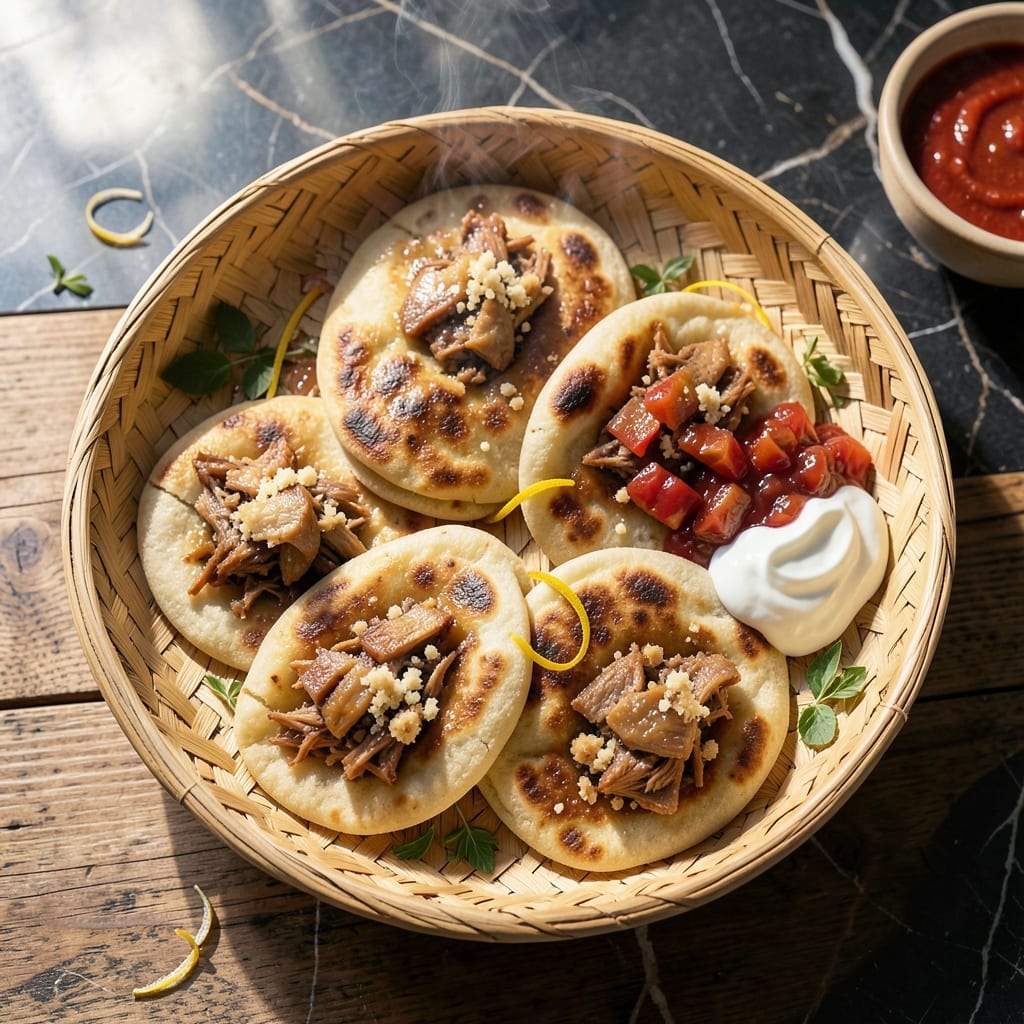
This traditional Salvadoran dish brings the vibrant street food experience to your kitchen. I first tasted pupusas at a local market and was immediately hooked on their crispy exterior and gooey, flavorful filling.
The secret lies in the masa dough, which must be soft and pliable to encase the chicken and cheese filling. Proper stuffing technique ensures the filling stays contained while cooking, creating that signature burst of flavor with each bite.
Cooked on a hot griddle until golden and slightly blistered, these pupusas develop a satisfying crispness outside while remaining tender inside. The melted cheese combines with the seasoned chicken for a rich, comforting filling.
Serve with curtido and salsa roja for the authentic experience. This recipe captures the essence of Salvadoran street food with professional results.
Ingredients for Chicken Pupusa
Authentic Salvadoran flavors start with masa, chicken, and cheese for the perfect pupusa experience.
| Ingredient | Amount | Notes |
|---|---|---|
| Masa Harina 🌾 | 2 cups | Plus extra for dusting |
| Warm Water 💧 | 1 ½ cups | Divided, for dough consistency |
| Salt 🧂 | 1 tsp | Fine sea salt preferred |
| Boneless Skinless Chicken Thighs 🍗 | 1 lb | Diced into small pieces |
| Queso Fresco 🧀 | 1 ½ cups | Crumbled, for filling |
| Onion 🧅 | ½ whole | Finely diced, for chicken filling |
| Garlic Cloves 🧄 | 3 cloves | Minced, for seasoning |
| Ground Cumin 🌿 | 1 tsp | Toasted for depth |
| Ground Achote 🌶️ | ½ tsp | For authentic color and flavor |
| Vegetable Oil 🫒 | ¼ cup | For cooking pupusas |
| Green Cabbage 🥬 | 2 cups | Thinly shredded, for curtido |
| Carrot 🥕 | 1 whole | Julienned, for curtido |
| White Vinegar 💧 | ½ cup | For pickling curtido |
| Dried Oregano 🍃 | 1 tsp | Mexican oregano if available |
| Red Bell Pepper 🌶️ | 2 whole | For salsa roja, optional |
[recipe_ingredient_scaler]
The masa harina is non-negotiable—Maseca is the gold standard, available at Latin markets or the international aisle of most supermarkets. Its fine, consistent texture ensures the dough holds together while remaining tender. For the chicken, thighs stay juicier than breasts during cooking. Queso fresco is traditional, but feta works in a pinch if you’re stuck (just reduce the salt).
No masa harina? Fresh masa from a tortilleria is even better if you can find it—just skip the water. Swap chicken for chorizo or black beans for variation. Queso fresco can be replaced with mozzarella or Oaxaca cheese, though the texture will differ slightly. The achiote gives the authentic color, but a pinch of paprika works if you’re out.
Pupusas keep warm in a 200°F oven for up to 30 minutes while you finish the batch. Curtido improves with time—make it a day ahead if possible. Leftovers reheat well in a skillet, but they’re best fresh. Dough can be prepped 1 day ahead and refrigerated.
Why You’ll Love This Recipe
- One Bowl Magic: I mix the masa, water, and salt in a single bowl—no fancy tools, just my hands and five minutes.
- Melted Cheese Bliss: That gooey queso fresco center oozing out with each bite? Pure comfort in every mouthful.
- Weeknight Hero: I prep the chicken filling ahead, so assembly is a breeze even on busy evenings.
- Stretches Further: One batch makes a dozen pupusas, and leftovers reheat beautifully for lunch the next day.
Step-by-Step Instructions for Chicken Pupusas
Master the technique for perfectly formed pupusas with a crisp exterior and rich, cheesy filling.
Step 1: Prepare the Dough
In a large bowl, combine the 2 cups Masa Harina with the 1 tsp Salt. Gradually add 1.5 cups Warm Water, mixing with your hands until a soft, pliable dough forms. The texture should resemble Play-Doh—smooth and slightly tacky but not sticky.
If the dough feels too dry, add 1 tablespoon of the reserved Warm Water at a time. Conversely, if it sticks to your hands, dust lightly with additional Masa Harina. Knead for 2-3 minutes until uniform. Cover with a damp towel to prevent drying while you prepare the filling.
Step 2: Cook the Chicken Filling
Heat 1 tablespoon of the 0.25 cup Vegetable Oil in a skillet over medium heat. Add the 0.5 whole Onion (finely diced) and sauté for 3 minutes until translucent. Stir in the 1 lb Boneless Skinless Chicken Thighs (diced) and cook for 6-8 minutes until no longer pink.
Add the 3 cloves Garlic Cloves (minced), 1 tsp Ground Cumin, and 0.5 tsp Ground Achote. Cook for an additional 2 minutes until fragrant. Remove from heat and let cool slightly before mixing in 1 cup of the 1.5 cups Queso Fresco (crumbled). The filling should be moist but not wet.
Step 3: Shape and Fill the Pupusas
Divide the dough into 8 equal portions (about 2.5 ounces each) and roll each into a ball. Using your palms, flatten each ball into a ¼-inch thick disc, approximately 4 inches in diameter. Keep unused dough covered to prevent drying.
Place 1 heaping tablespoon of the chicken and queso fresco filling in the center of each disc. Fold the edges inward to enclose the filling completely, then gently flatten back into a ½-inch thick disc. Seal any cracks by pinching the dough together—this prevents the filling from leaking during cooking.
Step 4: Cook the Pupusas to Perfection
Heat 2 tablespoons of the remaining Vegetable Oil in a nonstick skillet over medium heat. Once shimmering, add as many pupusas as fit without crowding. Cook for 4-5 minutes per side until golden brown and a crisp crust forms.
Press down gently with a spatula during cooking to ensure even contact with the pan. The pupusas are done when the exterior is crisp and the internal temperature reaches 165°F. Transfer to a paper towel-lined plate to drain excess oil while you cook the remaining batch, adding more oil as needed.
Step 5: Prepare the Curtido
In a bowl, combine the 2 cups Green Cabbage (thinly shredded), 1 whole Carrot (julienned), 0.5 cup White Vinegar, and 1 tsp Dried Oregano. Toss well and let marinate for at least 20 minutes before serving.
The curtido should be tangy and slightly crunchy, providing a fresh contrast to the rich pupusas. Serve the pupusas hot with a generous portion of curtido and additional crumbled Queso Fresco on the side.
Pro Tips For Making Chicken Pupusa
- Precook the Chicken: Poach or simmer the chicken thighs in salted water until fully cooked, then shred finely—I learned this the hard way after biting into undercooked filling.
- Hydrate the Masa: Let the masa harina and warm water mixture rest for 10-15 minutes before shaping; it makes a real difference in texture and prevents cracking.
- Skip Dry Queso: Use fresh queso fresco and crumble it yourself—pre-shredded or dry cheese turns the filling grainy and ruins the melt.
- Press Firmly: When forming the pupusas, press the edges tightly to seal the filling completely, or they’ll burst open while cooking—yes, even if you’re impatient like me.
Regional Styles of This Recipe
El Salvador Original
Authentic pupusas in El Salvador use quesillo (local cheese) and often include loroco (edible flower buds) for a distinctive flavor. The dough is slightly thicker—about ½ inch—and cooked on a comal (clay griddle) over open flame. I love the smoky char this method imparts.
Honduran Variation
In Honduras, pupusas are thinner and often larger, sometimes stuffed with pork or beans instead of chicken. They’re typically served with a spicy tomato sauce rather than curtido. The masa gets mixed with a bit of lard for extra richness.
Guatemalan Style
Guatemala’s pupusas de arroz use rice flour instead of corn masa, creating a different texture. The fillings include cheese and chicharrón (fried pork skin), and they’re often thicker. I find the rice version has a slightly crispier exterior. 🌟
Nicaraguan Take
Nicaraguans call them nacatamales when steamed in banana leaves, though the griddle-cooked version resembles pupusas. Common fillings include potatoes and bell peppers with the meat. The banana leaf imparts a subtle earthy aroma.
US Adaptations
Stateside versions often use mozzarella or cheddar for easier melting. Some food trucks add fusion twists like buffalo chicken or barbecue pulled pork. I’ve seen creative versions with spinach and feta that still respect the traditional form.
Coastal Twist
Along the Pacific coast of El Salvador, seafood pupusas with shrimp or fish appear on menus. The filling gets a squeeze of lime and fresh cilantro before sealing. This version reminds me of my coastal rides foraging for wild herbs. 💛
Nutrition Facts
Frequently Asked Questions
What if my dough cracks when shaping?
If cracks appear, the dough may be too dry. Dip your fingers in water and gently smooth the cracks. Keep unused dough covered with a damp towel to prevent drying.
Can I bake pupusas instead of pan-frying?
Yes, bake at 375°F for 20-25 minutes on a lightly oiled tray. They won’t be as crispy but will still cook through. Flip halfway for even browning.
Why is my filling leaking out?
This usually means the dough was too thin or not sealed properly. Use ¼-inch thick discs and pinch edges tightly. Avoid overfilling—1 heaping tablespoon per pupusa is ideal.
How do I store leftovers?
Cool completely, then refrigerate in an airtight container for up to 3 days. Reheat in a skillet over medium heat until crispy.

Trained in classic French technique but raised on slow-cooked ribs and spicy rubs, she blends culinary skill with smoke and soul.
- Recipe for Boneless Pork Chops in Cast Iron Skillet: Sear and Baste to Juicy Perfection - October 3, 2026
- Recipe for Boneless Cross Rib Roast: Slow-Roasted Beef with Herb Crust - October 3, 2026
- Hamburgers in Sauce Recipe Crock Pot: Slow-Cooked Savory Delight - October 3, 2026