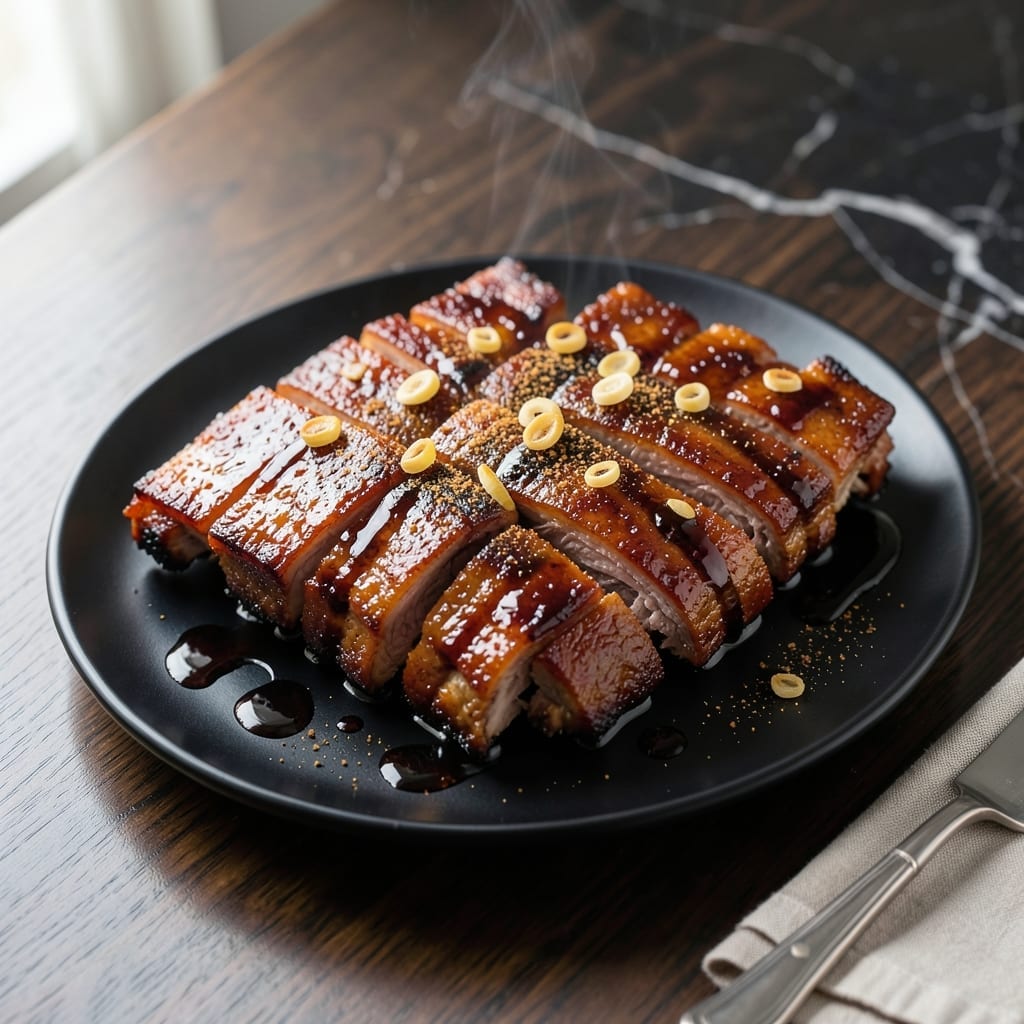
This recipe captures the essence of traditional char siu with a sticky-sweet glaze that caramelizes beautifully. I’ve refined the technique to balance bold flavors with tender meat.
Using simple ingredients and a marinade that infuses every bite, these ribs achieve restaurant-quality results at home. The secret lies in the glaze and precise cooking time.
Ingredients for Chinese Barbecue Pork Ribs
These bold ingredients deliver that signature sticky-sweet char siu flavor with ease.
| Ingredient | Amount | Notes |
|---|---|---|
| Pork Baby Back Ribs 🍖 | 2 lb | Cut into individual ribs |
| Hoisin Sauce 🫒 | ½ cup | High-quality for depth |
| Honey 🍯 | ¼ cup | Balances sweetness and stickiness |
| Soy Sauce 🫒 | 3 tbsp | Low-sodium preferred |
| Chinese Five Spice Powder 🌶️ | 1 tsp | Essential for authentic flavor |
| Garlic Cloves 🧄 | 4 cloves | Minced finely for marinade |
| Fresh Ginger 🌿 | 1 tbsp | Grated for zing |
| Brown Sugar 🍚 | 2 tbsp | Light or dark works |
| Rice Vinegar 🍯 | 1 tbsp | Adds tangy brightness |
| Sesame Oil 🫒 | 1 tsp | Toasted for aroma |
| Red Fermented Bean Curd 🧀 | 1 piece | Optional but traditional |
| Shaoxing Wine 🍷 | 2 tbsp | Dry sherry substitute works |
[recipe_ingredient_scaler]
The ribs are the foundation—baby back ribs give the best texture and flavor absorption. For the hoisin, Koon Chun or Lee Kum Kee are top-tier brands available at most Asian grocery stores or well-stocked supermarkets. Chinese five spice is non-negotiable; look for fresh, fragrant batches at Penzeys or specialty spice shops. The red fermented bean curd (nam yue) adds depth but can be skipped if unavailable.
No hoisin? Mix soy sauce, peanut butter, and a touch of sugar for a quick substitute. Shaoxing wine can be replaced with dry sherry or apple juice plus a splash of vinegar. Brown sugar can be swapped for coconut sugar or maple syrup at a 1:1 ratio. For a gluten-free version, use tamari instead of soy sauce. Fresh ginger is ideal, but ground ginger at one-third the amount works in a pinch.
Marinated ribs keep in the fridge for up to 24 hours before cooking. The glaze can be made 2 days ahead and stored in an airtight container. Leftover ribs reheat well in the oven at 350°F for 10-15 minutes. Always discard used marinade—it’s raw meat contaminated.
Why You’ll Love This Recipe
- One Pan Wonder: I just mix hoisin, honey, and soy sauce, slap it on the ribs, and let the oven do the work.
- Sweet-Savory Magic: That sticky glaze with five spice? Honestly, I could drink it with a spoon.
- Crowd Pleaser: Between us, even my picky nephew goes back for seconds at BBQs.
- Lunch for Days: The leftovers make the best quick sandwiches—I’ll be real, sometimes I double the batch on purpose.
Step-by-Step Instructions for Chinese Barbecue Pork Ribs
Master the technique for tender ribs with a glossy char siu glaze that caramelizes beautifully.
Step 1: Prepare and Marinate the Ribs
Pat the 2 lb Pork Baby Back Ribs dry with paper towels after cutting into individual ribs. This ensures the marinade adheres properly and promotes even browning during cooking.
In a large bowl, combine 0.5 cup Hoisin Sauce, 0.25 cup Honey, 3 tbsp Soy Sauce, 1 tsp Chinese Five Spice Powder, 4 cloves minced Garlic Cloves, 1 tbsp grated Fresh Ginger, 2 tbsp Brown Sugar, 1 tbsp Rice Vinegar, 1 tsp Sesame Oil, 1 piece crumbled Red Fermented Bean Curd, and 2 tbsp Shaoxing Wine. Whisk until the Brown Sugar fully dissolves and the mixture is smooth.
Add the ribs to the marinade, ensuring each piece is fully coated. Cover and refrigerate for at least 4 hours, or preferably overnight. This extended marinating time allows the flavors to penetrate deeply into the meat.
Step 2: Preheat and Prepare for Cooking
Remove the ribs from the refrigerator 30 minutes before cooking to allow them to come to room temperature. This ensures even cooking throughout. Preheat your oven to 375°F.
Line a baking sheet with heavy-duty aluminum foil for easy cleanup. Arrange a wire rack on top of the baking sheet to elevate the ribs, allowing heat to circulate evenly and promoting caramelization on all sides.
Step 3: Bake the Ribs to Tenderness
Place the marinated ribs on the wire rack, spacing them apart so they don’t touch. Reserve the remaining marinade for basting. Bake in the preheated oven for 25 minutes.
After 25 minutes, flip the ribs and baste generously with the reserved marinade. Return to the oven and bake for another 20-25 minutes, or until the ribs are tender and the edges begin to caramelize. The Honey and Brown Sugar in the glaze will create a sticky, glossy coating.
Step 4: Broil for a Caramelized Finish
Switch the oven to broil on high heat. Move the oven rack to the upper third of the oven, about 6 inches from the broiler element. Broil the ribs for 3-5 minutes, watching closely to prevent burning.
The high heat will cause the glaze to bubble and deepen in color, forming a beautiful charred crust. Flip the ribs once during broiling to ensure both sides develop an even, sticky caramelization. The ribs are done when the edges are deep amber and slightly charred.
Step 5: Rest and Serve
Transfer the ribs to a serving platter and let them rest for 5-10 minutes. This allows the juices to redistribute, ensuring the meat remains moist and flavorful.
Serve the ribs warm, garnished with sesame seeds or sliced green onions if desired. The glaze should be thick, sticky, and deeply flavorful, with a balance of sweet, savory, and umami notes from the Hoisin Sauce, Soy Sauce, and aromatic spices.
Pro Tips For Making Chinese Barbecue Pork Ribs
- Parboil First: I learned this the hard way—give the ribs a quick 10-minute boil before marinating to remove impurities and help the hoisin-honey glaze cling better.
- Balance the Five Spice: Chinese five spice can overpower, so start with 1 teaspoon for 2 lbs of ribs, then adjust; I used to go heavy and ended up with ribs that tasted like a candle shop.
- Watch the Honey: Honey burns fast, so brush it on only during the last 10 minutes of grilling or broiling to avoid bitter, charred spots.
- Rest Before Slicing: After cooking, tent the ribs with foil for 8-10 minutes—it keeps the juices from running all over the cutting board when you slice them.
Dietary Considerations for This chinese barbecue pork ribs
Gluten-Free Option
Swap the regular soy sauce for tamari to eliminate gluten while keeping that rich umami depth. I always check labels—San-J Tamari is my trusted brand. Also ensure your hoisin sauce is gluten-free, as some contain wheat. 💡
Lower Sugar Approach
Reduce the brown sugar to 1 tbsp and replace the honey with sugar-free maple syrup. The glaze will still caramelize, just with less sweetness. I’ve found the flavor remains complex with these adjustments.
Dairy-Free by Default
This recipe is naturally dairy-free, as all traditional char siu ingredients avoid milk products. The red fermented bean curd adds creaminess without dairy, and the marinade relies on plant-based components like hoisin and soy sauce.
Nut Allergy Note
Most hoisin sauces are nut-free, but always verify the label. I recommend Koon Chun hoisin—it’s peanut-free and widely available. Skip any garnishes with nuts, like crushed peanuts sometimes used in fusion versions.
Paleo Adaptations
Use coconut aminos instead of soy sauce and swap honey for pure maple syrup. Replace brown sugar with coconut sugar. The flavor profile shifts slightly but stays delicious and authentic.
Vegetarian Alternative
While not traditional, you can use extra-firm tofu or seitan marinated in the same glaze. Press the tofu well first to absorb flavors better. I’ve had great results with this at local BBQ competitions. 🌱
Nutrition Facts
Frequently Asked Questions
Can I use spare ribs instead of baby back ribs?
Yes, spare ribs work but have more connective tissue. Cook them 10-15 minutes longer and trim excess fat for best texture. Baby backs stay more tender.
Why did my glaze burn during broiling?
High sugar content caramelizes quickly. Keep ribs 6 inches from broiler and watch closely. Baste only once during broiling to prevent burning.
How can I make the ribs extra tender?
Marinate overnight and add 1 tbsp baking soda to the mixture. This raises the meat’s pH for maximum tenderness without altering flavor.
What’s the best way to reheat leftovers?
Wrap in foil and warm at 350°F for 10-15 minutes. Microwaving makes ribs soggy—avoid it for best texture.

Trained in classic French technique but raised on slow-cooked ribs and spicy rubs, she blends culinary skill with smoke and soul.
- Recipe for Boneless Pork Chops in Cast Iron Skillet: Sear and Baste to Juicy Perfection - October 3, 2026
- Recipe for Boneless Cross Rib Roast: Slow-Roasted Beef with Herb Crust - October 3, 2026
- Hamburgers in Sauce Recipe Crock Pot: Slow-Cooked Savory Delight - October 3, 2026