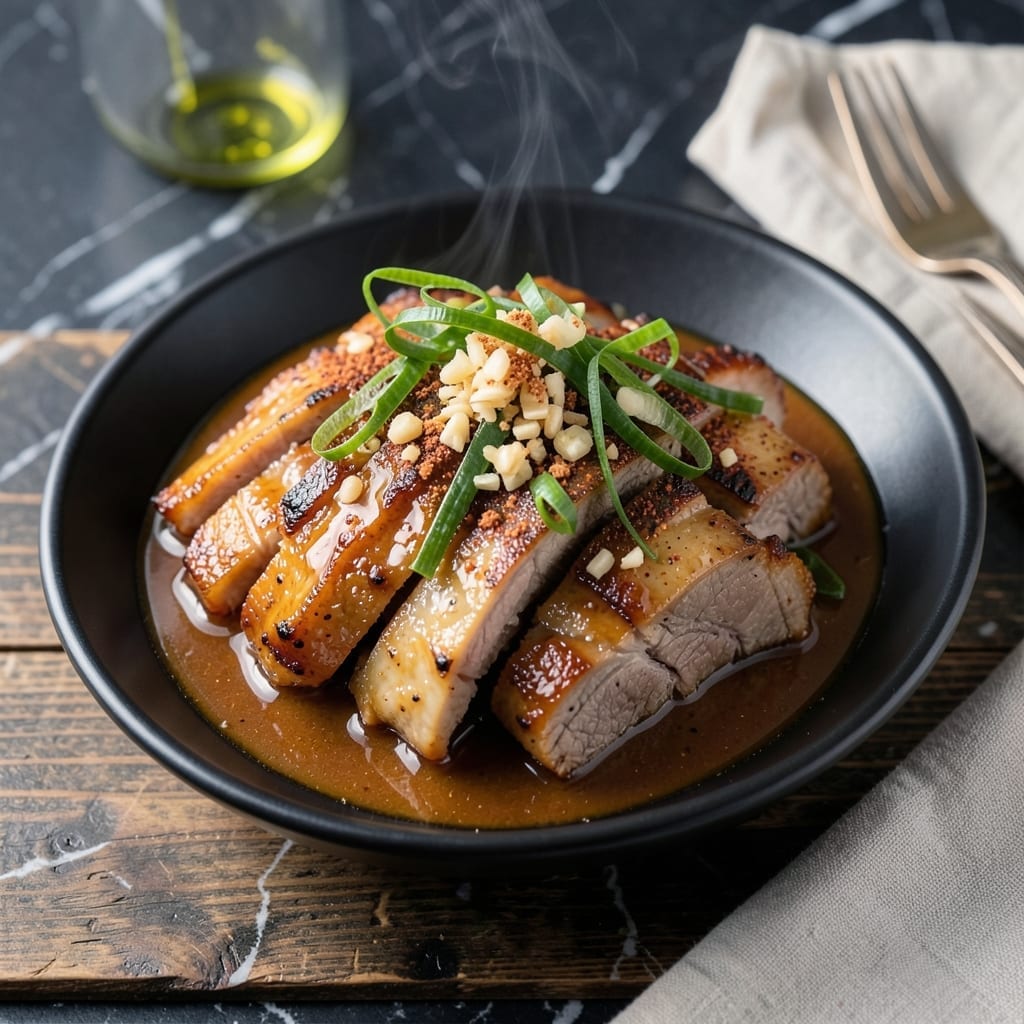
This char siu glaze transforms ordinary pork into an irresistible sweet and sticky masterpiece. The balance of sweet, salty, and umami creates a sauce that’s versatile beyond just pork applications.
With simple pantry staples and 10 minutes of prep, you’ll have a restaurant-quality glaze ready for grilling, roasting, or dipping. The secret lies in reducing the sauce to the perfect consistency for maximum flavor impact.
Ingredients for Chinese Barbecue Pork Sauce
Nine ingredients. Ten minutes. Restaurant-quality char siu glaze at home.
| Ingredient | Amount | Notes |
|---|---|---|
| Hoisin Sauce 🥫 | ½ cup | High-quality for depth of flavor |
| Honey 🍯 | ⅓ cup | Warm for easier mixing |
| Soy Sauce 🫒 | ¼ cup | Low-sodium preferred |
| Chinese Five-Spice Powder 🌿 | 1 tsp | Freshly ground if possible |
| Garlic Cloves 🧄 | 3 cloves | Minced for even distribution |
| Fresh Ginger 🌱 | 1 tbsp | Finely grated or minced |
| Rice Vinegar 🫗 | 1 tbsp | Balances sweetness |
| Red Food Coloring 🎨 | ½ tsp | Optional for traditional color |
| Sesame Oil 🫒 | 1 tsp | Toasted for aroma |
[recipe_ingredient_scaler]
Hoisin sauce is your flavor base here. Koon Chun or Lee Kum Kee are the gold standard brands—look for them in the Asian aisle at Whole Foods or any well-stocked supermarket. The five-spice powder loses potency fast, so grab it from Penzeys or a bulk bin (small amounts, use it up quick). Fresh ginger and garlic are non-negotiable—they add that bright, aromatic layer that dried just can’t replicate.
No hoisin? Mix soy sauce with a little molasses and peanut butter in a pinch. No honey? Maple syrup or agave swaps in 1:1. Five-spice missing? Combine cinnamon, star anise, fennel, cloves, and pepper (equal parts) for a DIY version. The rice vinegar can be apple cider in a bind, but it’ll taste slightly different. Skip the food coloring if you’re not into additives.
This glaze keeps 1 week in the fridge in an airtight jar. It thickens as it chills, so warm slightly before using. Freezes beautifully for 3 months—portion into ice cube trays for easy single-use amounts. Always give it a stir before brushing on.
Why You’ll Love This Recipe
- 5-Minute Mix: I just dump hoisin, honey, soy, and five-spice into one bowl—no chopping beyond a couple of garlic cloves.
- Sticky, Sweet Heat: The honey caramelizes with the soy and hoisin for that glossy, finger-licking glaze.
- Slathers on Everything: I’ve used it on ribs, tofu, and even roasted carrots—honestly, it’s my weeknight secret weapon.
- Doubles as Marinade: Make a big batch and it keeps for a week, so I can marinate pork one night and baste chicken the next.
Step-by-Step Instructions for Chinese Barbecue Pork Sauce
This method ensures a balanced, glossy glaze with just the right sweet-savory depth.
Step 1: Toast the Aromatics
Heat a small saucepan over medium-low heat. Add the 1 tsp Sesame Oil and swirl to coat the bottom. Immediately add the 3 cloves Garlic Cloves and 1 tbsp Fresh Ginger, stirring constantly for 30-45 seconds until fragrant but not browned.
This step blooms the aromatics, releasing their essential oils into the sesame oil base. The moment the garlic turns opaque and the ginger sizzles softly, you’ve hit the sweet spot. Don’t let them color—burnt garlic adds bitterness that will throw off the entire sauce.
Step 2: Combine the Liquid Base
Pour in the 0.5 cup Hoisin Sauce, 0.33 cup Honey, 0.25 cup Soy Sauce, and 1 tbsp Rice Vinegar. Stir well with a silicone spatula, scraping up any browned bits from the bottom of the pan.
The hoisin provides the deep, umami backbone, while the honey adds sweetness and viscosity. The soy sauce enhances the savory notes, and the rice vinegar cuts through the richness with a subtle tang. Stir until the honey fully dissolves into the mixture—this can take 1-2 minutes if your honey was thick.
Step 3: Season and Simmer
Sprinkle in the 1 tsp Chinese Five-Spice Powder and 0.5 tsp Red Food Coloring (if using). Whisk vigorously to incorporate the spice evenly and distribute the color. Increase the heat to medium and bring the mixture to a gentle simmer.
Once simmering, reduce the heat to low and let it cook for 8-10 minutes, stirring occasionally. The sauce will thicken slightly and become glossy. The five-spice powder should be fully dissolved, with no visible specks remaining. Watch for the sauce to coat the back of a spoon—that’s your visual cue it’s ready.
Step 4: Adjust and Finish
Remove the sauce from heat and let it cool for 5 minutes. The texture will thicken further as it cools. Taste and adjust the balance if needed—though with these proportions, it should hit the perfect sweet-savory harmony.
Transfer to a clean jar or bowl. The finished glaze should be thick enough to cling to a spoon but still pourable. Use it immediately for basting meats during cooking, or store it in the refrigerator for up to 1 week. For best results, bring it to room temperature before using.
Pro Tips For Making Chinese Barbecue Pork Sauce
- Simmer Low and Slow: Cook the sauce on medium-low heat for 8-10 minutes—any higher and the honey can burn, leaving a bitter taste instead of that sweet, sticky glaze.
- Bloom the Spices: Toast the five-spice powder in the pan for 10-15 seconds before adding liquids to wake up its flavors—I learned this the hard way after wondering why my sauce tasted flat.
- Mince Garlic Fine: Chop the garlic into tiny pieces so it melts into the sauce rather than leaving noticeable chunks, which can overpower a bite.
- Thin with Water: If the sauce thickens too much while reducing, stir in 1-2 tablespoons of warm water to loosen it—this keeps it brushable for basting without diluting the flavor.
Dietary Considerations for These Flavors
Gluten-Free Option
To make this glaze gluten-free, swap the soy sauce for tamari—I recommend San-J brand for its rich flavor. Also, check your hoisin sauce label; Kikkoman Gluten-Free Hoisin works perfectly. The rest of the ingredients are naturally gluten-free. 💪
Vegan Adaptation
Replace the honey with maple syrup or agave in a 1:1 ratio. For extra depth, add 1 tbsp molasses. All other ingredients are plant-based, so no further changes are needed. The flavor stays remarkably close to the original.
Reducing Sugar
Cut the honey by half and add 2 tbsp sugar-free maple syrup for a lower-sugar version. You can also boost the five-spice powder to 1½ tsp to compensate for reduced sweetness with more aromatic complexity.
Allergen Notes
This glaze contains soy (from soy sauce and hoisin) and sesame (from sesame oil). For soy-free, use coconut aminos instead of soy sauce. For sesame-free, substitute with avocado oil—it won’t add the same nutty note but keeps the dish safe.
Low-Sodium Option
Use low-sodium soy sauce and reduce the amount to 2 tbsp. Balance the flavor by increasing the rice vinegar to 1½ tbsp for brightness. Taste as you go—you can always add a pinch of salt at the end if needed. 💡
Nut-Free Confirmation
This recipe is naturally nut-free, but always double-check your hoisin sauce label, as some brands may process in facilities with nuts. Stick to trusted brands like Lee Kum Kee for guaranteed nut-free production.
Nutrition Facts
Frequently Asked Questions
Can I use this glaze on chicken or tofu?
This versatile sauce works beautifully on chicken, tofu, or even vegetables. Brush it on during the last 5-10 minutes of cooking to prevent burning. The flavors complement most proteins perfectly.
Why did my sauce turn out too thin?
It likely needs more reduction time. Simmer uncovered for an extra 3-5 minutes to thicken. Remember it continues thickening as it cools. Avoid high heat—low and slow prevents scorching.
How do I fix overly salty glaze?
Balance it with sweetness. Stir in additional 1-2 tbsp honey or a splash of rice vinegar to counteract the salt. Taste and adjust gradually.
Can I make this without hoisin sauce?
Yes! Mix 3 tbsp soy sauce, 1 tbsp molasses, and 1 tsp peanut butter as a substitute. The flavor won’t be identical but still delicious.

Trained in classic French technique but raised on slow-cooked ribs and spicy rubs, she blends culinary skill with smoke and soul.
- Recipe for Boneless Pork Chops in Cast Iron Skillet: Sear and Baste to Juicy Perfection - October 3, 2026
- Recipe for Boneless Cross Rib Roast: Slow-Roasted Beef with Herb Crust - October 3, 2026
- Hamburgers in Sauce Recipe Crock Pot: Slow-Cooked Savory Delight - October 3, 2026