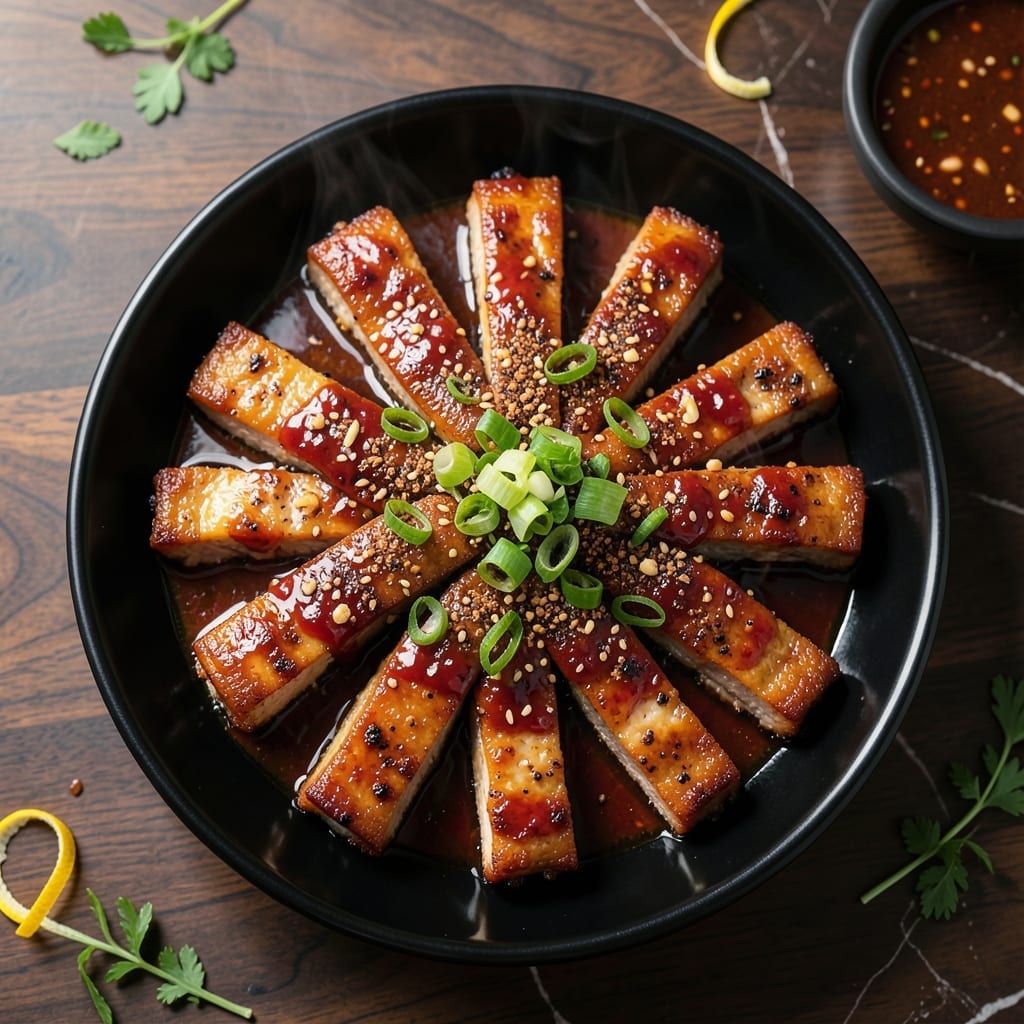
This recipe transforms spare ribs into tender, flavorful masterpieces with a sticky glaze that clings to every bite.
Drawing from my pitmaster roots and French training, I’ve perfected a method that ensures fall-off-the-bone meat with caramelized edges.
Ingredients for Chinese Barbecue Pork Spare Ribs
Transform spare ribs with these bold, authentic ingredients for restaurant-quality results at home.
| Ingredient | Amount | Notes |
|---|---|---|
| Pork Spare Ribs 🐖 | 3 lb | Full rack, membrane removed |
| Hoisin Sauce 🥫 | ¾ cup | High-quality for depth |
| Soy Sauce 🥫 | ½ cup | Low-sodium preferred |
| Honey 🍯 | ½ cup | Balances sticky glaze |
| Chinese Five-Spice Powder 🌿 | 1 tbsp | Essential for authenticity |
| Garlic Cloves 🧄 | 6 cloves | Minced for maximum flavor |
| Fresh Ginger 🌿 | 2 tbsp | Grated, peeled first |
| Rice Vinegar 🍶 | 3 tbsp | Adds necessary tang |
| Brown Sugar 🍚 | ½ cup | Packed, for caramelization |
| Sesame Oil 🫒 | 1 tbsp | Toasted, for aroma |
| Green Onions 🧅 | 4 whole | Thinly sliced for garnish |
| Red Pepper Flakes 🌶️ | ½ tsp | Adjust to heat preference |
| Kosher Salt 🧂 | 1 tbsp | For seasoning ribs |
| Black Pepper 🌶️ | 1 tsp | Freshly ground preferred |
[recipe_ingredient_scaler]
The spare ribs are non-negotiable—look for full racks with good marbling at Costco or your local butcher. The membrane must be removed (it prevents the rub from penetrating). For the hoisin and soy sauces, Kikkoman or Lee Kum Kee are reliable brands. Chinese five-spice powder can be found at Asian markets or the international aisle of most supermarkets.
No hoisin? Substitute with oyster sauce plus a touch of peanut butter for similar depth. Out of rice vinegar? Apple cider vinegar at the same amount works. Fresh ginger is ideal but ground ginger at one-quarter the amount can be used. The honey can be replaced with maple syrup, though the flavor profile will shift slightly.
The glaze can be made 2 days ahead and stored in the fridge. Ribs are best cooked fresh but leftovers keep for 3-4 days refrigerated. For longer storage, freeze the cooked ribs without sauce for up to 3 months.
Why You’ll Love This Recipe
- I’ll be real: it tastes even better the next day tucked into a steamed bun or over noodles.
- Five-Minute Marinade: I mix hoisin, soy, honey, and five-spice in one bowl—no chopping, no fuss.
- StickySweet Perfection: That glossy glaze from the honey and hoisin? Ridiculously good with a hint of warmth from the five-spice.
- Weeknight Hero: Between us, it’s my go-to for busy Tuesdays—pairs with rice and veggies in under an hour.
Step-by-Step Instructions for Chinese Barbecue Pork Spare Ribs
Master the technique for tender meat and a glossy, caramelized glaze with these precise steps.
Step 1: Season and Par-Cook the Ribs
Pat the 3 lb Pork Spare Ribs dry with paper towels to ensure the seasoning adheres properly. Rub them evenly with 1 tbsp Kosher Salt and 1 tsp Black Pepper on all sides. This step enhances flavor penetration and prepares the surface for the marinade.
Arrange the ribs in a large pot and cover with cold water. Bring to a boil, then reduce heat to medium-low and simmer for 30 minutes. This par-cooking step removes impurities and ensures the ribs remain tender during the final cooking process. Drain and let cool slightly.
Step 2: Prepare the Barbecue Glaze
In a bowl, whisk together the 0.75 cup Hoisin Sauce, 0.5 cup Soy Sauce, 0.5 cup Honey, 3 tbsp Rice Vinegar, 0.5 cup Brown Sugar, 1 tbsp Sesame Oil, and 0.5 tsp Red Pepper Flakes until smooth. The hoisin and soy sauces provide depth, while the honey and brown sugar create the signature sticky texture.
Add the 6 cloves Garlic Cloves (minced) and 2 tbsp Fresh Ginger (grated) to the mixture. Stir thoroughly to distribute the aromatics evenly. The combination of garlic and ginger forms the aromatic backbone of the glaze, balancing the sweetness with a subtle spicy note.
Step 3: Marinate and Roast the Ribs
Place the par-cooked ribs in a large resealable bag or shallow dish. Pour the glaze over the ribs, ensuring they are fully coated. Marinate for at least 2 hours in the refrigerator, or preferably overnight. The longer marinating time allows the flavors to penetrate deeply into the meat.
Preheat your oven to 375°F. Arrange the ribs on a wire rack set over a foil-lined baking sheet. Roast for 25-30 minutes, basting with the remaining marinade every 10 minutes until the ribs are glossy and caramelized. The glaze should thicken and adhere to the ribs, creating a sticky, shiny finish.
Step 4: Finish and Garnish
Increase the oven temperature to 425°F and roast for an additional 5-10 minutes to achieve a deep, mahogany color and caramelized edges. Watch closely to prevent burning, as the sugars in the glaze can char quickly.
Remove the ribs from the oven and let them rest for 5 minutes. Thinly slice the 4 whole Green Onions and sprinkle them over the ribs as a fresh, vibrant garnish. The green onions add a crisp texture and mild onion flavor that complements the richness of the dish. Serve immediately while the glaze is still sticky and glossy.
Pro Tips For Making Chinese Barbecue Pork Spare Ribs
- Dry the Ribs: Pat the spare ribs completely dry before marinating—excess moisture prevents the hoisin and honey from sticking properly, and I learned this the hard way after my first batch slid right off the rack.
- Marinate Overnight: Give the ribs at least 8 hours in the hoisin-soy-honey mix, but overnight actually changes the outcome. The five-spice needs time to work its way into the meat.
- Skip Boiling the Sauce: Resist the urge to thin the marinade with water or boil it down first—hoisin and honey are already thick and will caramelize beautifully as-is under the broiler.
- Broil, Don’t Grill: After baking, a quick 3-4 minutes under the broiler gives that sticky, charred finish without the hassle of managing grill flare-ups from the honey.
Wine and Beer Pairings for This Dish
White Wine Pairings
An off-dry German Riesling with its honeyed notes mirrors the glaze’s sweetness while cutting through the richness. I love Dr. Loosen Blue Slate for its crisp acidity. The subtle stone fruit flavors complement the pork beautifully. 🍷
Red Wine Options
A light-bodied Pinot Noir from Oregon’s Willamette Valley offers red fruit notes that won’t overpower the ribs. Domaine Drouhin is my go-to. Serve slightly chilled for best results with this dish.
Beer Pairings
A crisp Asian lager like Sapporo or Asahi cleanses your palate between sticky bites. The light body and subtle sweetness harmonize perfectly with the hoisin and honey glaze. 🍺
Craft Beer Alternatives
For craft lovers, a Belgian witbier with citrus and coriander notes works wonderfully. Try Hoegaarden or St. Bernardus Wit. The spice elements echo the five-spice in your glaze.
Non-Alcoholic Options
Sparkling lychee tea or ginger beer offer refreshing alternatives. The ginger beer’s spiciness cuts through the sweetness, while lychee tea enhances the Asian profile. The bubbles cleanse your palate.
Nutrition Facts
Frequently Asked Questions
Can I use baby back ribs instead?
Yes, but adjust cooking time to 20-25 minutes at 375°F. Baby backs are leaner and cook faster than spare ribs. Keep an eye on the glaze to prevent burning.
Why par-cook the ribs first?
This removes impurities and ensures tenderness. Skipping this step may result in tougher meat. The 30-minute simmer is key for fall-off-the-bone texture.
How do I fix a glaze that’s too thin?
Simmer it in a saucepan for 5-10 minutes to reduce. Add a cornstarch slurry if needed. The glaze should coat the back of a spoon thickly.
Can I grill instead of roast?
Use indirect heat at 350-375°F and baste frequently. Move ribs to direct heat at the end for charring.

Trained in classic French technique but raised on slow-cooked ribs and spicy rubs, she blends culinary skill with smoke and soul.
- Recipe for Boneless Pork Chops in Cast Iron Skillet: Sear and Baste to Juicy Perfection - October 3, 2026
- Recipe for Boneless Cross Rib Roast: Slow-Roasted Beef with Herb Crust - October 3, 2026
- Hamburgers in Sauce Recipe Crock Pot: Slow-Cooked Savory Delight - October 3, 2026