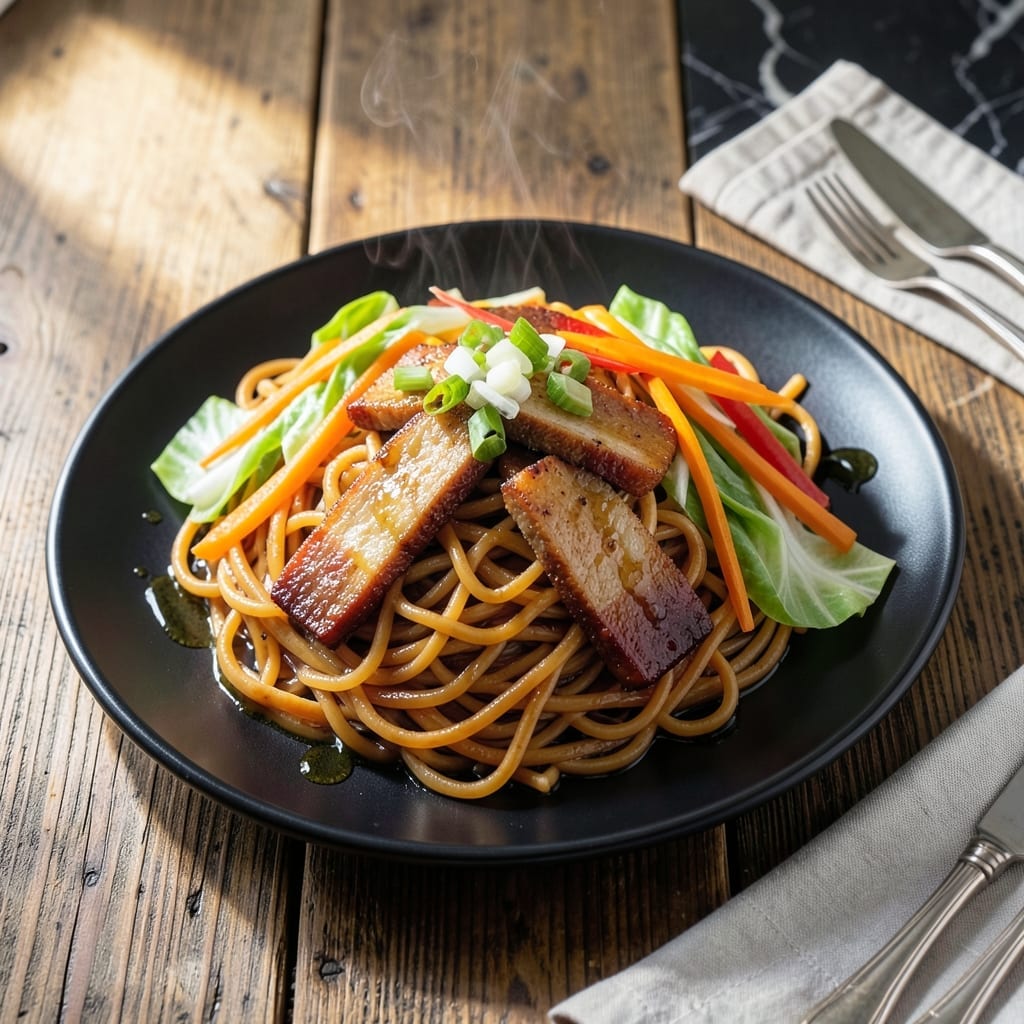
This dish brings together sweet char siu and tender lo mein in a wok-tossed masterpiece. I developed this method to balance smoky pork with fresh vegetables and springy noodles.
The secret lies in pre-cooking the pork and noodles separately before combining them in a hot wok. This ensures every bite delivers that signature restaurant-quality texture and flavor.
Ingredients for Chinese Bbq Pork Lo Mein
Sweet pork, springy noodles, and crisp vegetables create this wok-tossed classic at home.
| Ingredient | Amount | Notes |
|---|---|---|
| Char Siu (Chinese BBQ Pork) 🥩 | ¾ lb | Pre-cooked, thinly sliced |
| Dried Lo Mein Noodles 🍜 | 8 oz | Or fresh egg noodles |
| Napa Cabbage 🥬 | 2 cups | Thinly shredded |
| Carrots 🥕 | 1 whole | Julienned for texture |
| Bell Peppers 🌶️ | 2 whole | Red and green, sliced thin |
| Green Onions 🧅 | 4 whole | White and green parts separated |
| Garlic Cloves 🧄 | 4 cloves | Minced finely |
| Fresh Ginger Root 🌿 | 1 tbsp | Grated or minced |
| Light Soy Sauce 🫒 | 3 tbsp | Low-sodium preferred |
| Dark Soy Sauce 🫒 | 1 tbsp | For color depth |
| Oyster Sauce 🫒 | 2 tbsp | Or vegetarian oyster sauce |
| Sesame Oil 🫒 | 1 tsp | Toasted for aroma |
| Shaoxing Wine 🍶 | 2 tbsp | Or dry sherry substitute |
| Sugar 🍚 | 1 tsp | Balances savory flavors |
| Neutral Cooking Oil 🫒 | 3 tbsp | For stir-frying |
[recipe_ingredient_scaler]
The char siu is non-negotiable here. Chinese BBQ pork from a reputable Asian market delivers authentic smoky-sweet flavor that pre-made grocery store versions can’t match. Look for pieces with a glossy, caramelized exterior—this indicates proper charring. If making from scratch, allow 24 hours for marinating. For noodles, fresh lo mein from the refrigerated section beats dried every time, but dried works in a pinch (soak in hot water 10 minutes before cooking).
No Shaoxing wine? Dry sherry at a 1:1 ratio works well. For a vegetarian twist, vegetarian oyster sauce (made from mushrooms) substitutes beautifully. Can’t find Napa cabbage? Regular green cabbage in a pinch, though it’s slightly less tender. The bell peppers can be any color—red adds sweetness, green brings a pleasant bitterness. Skip the sugar if your char siu is particularly sweet.
Pre-cooked char siu keeps in the fridge for 4-5 days or freezes for 2 months. Fresh noodles should be used within 2 days of purchase. The dish itself tastes even better the next day as flavors meld—store leftovers airtight in the fridge for up to 3 days.
Why You’ll Love This Recipe
- 20-Minute Meal: I kid you not—once the noodles are soaked, this comes together faster than takeout.
- Char Siu Magic: That sticky-sweet pork with the chewy noodles? Every bite tastes like my favorite restaurant dish.
- Feeds the Crew: One batch serves four hungry people, and it’s just as good reheated the next day.
- Pantry Hero: Between the long-life noodles and those leftover veggies, I’m clearing out the fridge and calling it dinner.
Step-by-Step Instructions for Chinese BBQ Pork Lo Mein
This wok-tossed dish comes together quickly with proper prep and high heat.
Step 1: Prepare the Noodles and Vegetables
Cook the 8 oz Dried Lo Mein Noodles according to package instructions until al dente. Drain and rinse under cold water to stop the cooking process. Toss with 1 tablespoon of the Neutral Cooking Oil to prevent sticking.
While the noodles cook, thinly shred the 2 cups Napa Cabbage, julienne the 1 whole Carrots, and slice the 2 whole Bell Peppers into thin strips. Separate the white and green parts of the 4 whole Green Onions and set aside.
Step 2: Stir-Fry the Aromatics and Char Siu
Heat 2 tablespoons of the Neutral Cooking Oil in a wok or large skillet over high heat until shimmering. Add the minced 4 cloves Garlic Cloves and grated 1 tbsp Fresh Ginger Root, stir-frying for 30 seconds until fragrant.
Add the thinly sliced 0.75 lb Char Siu and stir-fry for 1-2 minutes until the edges begin to caramelize. This enhances the sweet, smoky flavor of the pork. Remove the Char Siu from the wok and set aside.
Step 3: Cook the Vegetables and Combine
In the same wok, add the remaining 1 tablespoon Neutral Cooking Oil and heat over high heat. Add the shredded Napa Cabbage, julienned Carrots, and sliced Bell Peppers. Stir-fry for 3-4 minutes until the vegetables are tender-crisp.
Return the Char Siu to the wok. Add the cooked noodles, 3 tbsp Light Soy Sauce, 1 tbsp Dark Soy Sauce, 2 tbsp Oyster Sauce, 2 tbsp Shaoxing Wine, 1 tsp Sugar, and the white parts of the Green Onions. Toss everything together for 2-3 minutes until well coated and heated through.
Step 4: Finish and Serve
Drizzle the 1 tsp Sesame Oil over the lo mein and toss to combine. The sesame oil adds a nutty aroma that ties all the flavors together. Garnish with the green parts of the Green Onions for a fresh, vibrant finish.
Serve immediately while hot. The noodles should be glossy and well-coated with sauce, the vegetables tender but still vibrant, and the Char Siu warm and flavorful. This dish is best enjoyed fresh, straight from the wok.
Pro Tips For Making Chinese Bbq Pork Lo Mein
- Parboil the Noodles: Boil the dried lo mein noodles for just 2-3 minutes—enough to soften but not fully cook—then drain and toss with a little oil to prevent sticking. I learned this the hard way after ending up with mushy noodles that turned to paste in the wok.
- Slice Char Siu Thin: Cut the char siu into paper-thin slices against the grain so it stays tender and distributes evenly through the dish. Sounds tedious, but it makes a real difference in every bite.
- Skip the Soggy Veggies: Stir-fry the napa cabbage, carrots, and bell peppers separately first, then set aside—this keeps them crisp and prevents them from releasing too much water into the noodles. After burning three batches, I finally figured out this was the issue.
- Use the Pork Fat: Render a little fat from the char siu in the wok before adding other ingredients—it adds depth to the flavor. My grandmother swore by this, and she was right.
Troubleshooting This Dish
Noodles Too Sticky
If your noodles clump together, you likely skipped rinsing after boiling. Always rinse with cold water immediately after draining, then toss with 1 tbsp Neutral Cooking Oil. This prevents sticking and maintains that perfect springy texture. 💡
Soggy Vegetables
Overcrowding the wok steams rather than stir-fries. Cook vegetables in 2 batches if needed, using high heat the entire time. The cabbage and carrots should retain a slight crunch. I learned this the hard way at my first local BBQ competition.
Sauce Too Thin
If your sauce pools at the bottom, you may have added too much Shaoxing Wine. Simmer uncovered for 1-2 minutes to reduce. Alternatively, mix 1 tsp cornstarch with water and stir in to thicken instantly.
Pork Too Tough
Pre-cooked char siu can dry out if overcooked. Only stir-fry it for 1-2 minutes to warm through. Slice it thinly against the grain before adding to ensure tenderness in every bite.
Bland Flavor
If your dish lacks depth, you might need more Dark Soy Sauce for color and richness. Add an extra ½ tbsp at the end. Also, don’t skip the Sesame Oil—it adds that essential nutty finish.
Wok Not Hot Enough
If ingredients steam instead of searing, your wok isn’t hot enough. Heat it until the oil just begins to smoke before adding aromatics. A properly heated wok will give you that signature wok hei flavor. 🔥
Nutrition Facts

Trained in classic French technique but raised on slow-cooked ribs and spicy rubs, she blends culinary skill with smoke and soul.
- Recipe for Boneless Pork Chops in Cast Iron Skillet: Sear and Baste to Juicy Perfection - October 3, 2026
- Recipe for Boneless Cross Rib Roast: Slow-Roasted Beef with Herb Crust - October 3, 2026
- Hamburgers in Sauce Recipe Crock Pot: Slow-Cooked Savory Delight - October 3, 2026