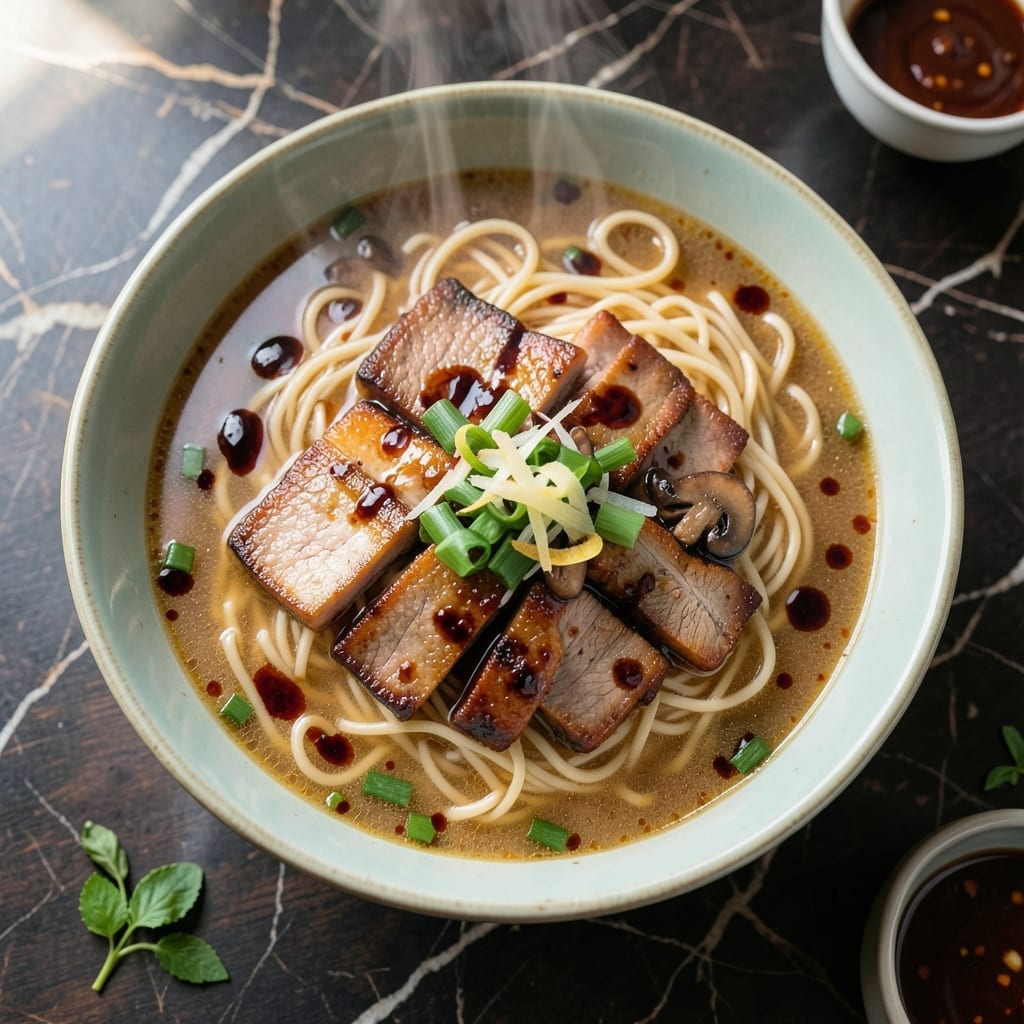
This soup brings together tender char siu and a rich, umami-packed broth for a bowl that’s deeply satisfying. The pork marries perfectly with the noodles, creating a balance of sweet, savory, and aromatic flavors.
I’ve refined this recipe to ensure the broth stays light yet flavorful, while the char siu remains juicy and caramelized. It’s a dish that feels restaurant-worthy but is entirely achievable at home.
Ingredients for Chinese Bbq Pork Noodle Soup
Rich broth, tender pork, and silky noodles come together for authentic flavor in every bowl.
| Ingredient | Amount | Notes |
|---|---|---|
| Char Siu Pork 🍖 | 1 lb | Pre-cooked, thinly sliced |
| Dried Egg Noodles 🍜 | 8 oz | Or fresh egg noodles |
| Chicken Stock 🍗 | 8 cups | Low-sodium preferred |
| Soy Sauce 🫕 | 3 tbsp | Dark soy for depth |
| Oyster Sauce 🦪 | 2 tbsp | Vegan oyster if needed |
| Hoisin Sauce 🥫 | 1 tbsp | For sweet-savory balance |
| Sesame Oil 🫒 | 1 tsp | Toasted for aroma |
| Garlic Cloves 🧄 | 4 cloves | Minced finely |
| Fresh Ginger 🌿 | 1 tbsp | Grated or minced |
| Green Onions 🧅 | 4 whole | Thinly sliced for garnish |
| Dried Shiitake Mushrooms 🍄 | 4 whole | Rehydrated for broth |
| Star Anise Pods ⭐ | 2 whole | Lightly toasted |
| Cinnamon Stick 🌰 | 1 whole | For warm spice note |
| White Pepper 🧂 | ½ tsp | Ground for subtle heat |
| Shaoxing Wine 🍷 | 2 tbsp | Or dry sherry substitute |
[recipe_ingredient_scaler]
The char siu is non-negotiable here. Look for pre-made at an Asian grocery store—saves hours of marinating and roasting. If making from scratch, use pork shoulder for the best texture. Whole Foods sometimes carries it pre-cooked, but call ahead. The dried shiitake mushrooms add umami depth—rehydrate them in the stock for maximum flavor extraction. Star anise and cinnamon should be whole, not ground, to avoid bitterness.
No char siu? Substitute with roasted pork tenderloin glazed with hoisin and soy. For a vegetarian twist, mushroom-stem char siu (available at specialty stores) works surprisingly well. Shaoxing wine can be swapped for dry sherry or mirin. If you can’t find dried egg noodles, udon or ramen noodles hold up nicely. Always use low-sodium stock so you can control the seasoning.
Broth can be made 2 days ahead and reheated. Store cooked noodles separately to prevent sogginess. Leftovers keep 3-4 days refrigerated, but the pork is best fresh. Freeze broth alone for up to 3 months—noodles and pork don’t freeze well.
Why You’ll Love This Recipe
- One-Pot Wonder: I just dump everything in and let the chicken stock and oyster sauce do their magic.
- Crave-Worthy Depth: That first slurp of char siu with the soy-kissed broth had me making it twice last week.
- Weeknight Savior: Between us, it’s my Tuesday night shortcut when I need dinner fast but still want restaurant flavor.
- Stretches Further: Leftovers taste even better the next day, and the pork goes further than I expected.
Step-by-Step Instructions for Chinese BBQ Pork Noodle Soup
Master the balance of aromatic broth and tender noodles with this professional method.
Step 1: Infuse the Broth with Aromatics
In a large pot, combine the 8 cups Chicken Stock, 4 whole Dried Shiitake Mushrooms, 2 whole Star Anise Pods, 1 whole Cinnamon Stick, 4 cloves Garlic Cloves, 1 tbsp Fresh Ginger, 3 tbsp Soy Sauce, 2 tbsp Oyster Sauce, 1 tbsp Hoisin Sauce, 2 tbsp Shaoxing Wine, and 0.5 tsp White Pepper.
Bring to a boil over medium-high heat, then reduce to a gentle simmer. The broth should develop a deep amber color and fragrant aroma as the spices release their essential oils. Simmer for 20-25 minutes to allow the flavors to meld completely.
Step 2: Prepare the Noodles
While the broth simmers, cook the 8 oz Dried Egg Noodles according to package instructions in a separate pot of boiling salted water until al dente.
Drain immediately and rinse under cold water to stop the cooking process. This prevents them from becoming mushy when added to the hot broth. Toss with 1 tsp Sesame Oil to prevent sticking and add a layer of nutty aroma.
Step 3: Slice and Warm the Char Siu
Thinly slice the 1 lb Char Siu Pork against the grain into bite-sized pieces. The pre-cooked pork only needs to be warmed through in the broth to maintain its tender texture.
Add the sliced pork to the simmering broth and let it heat for 2-3 minutes until just warmed. Overcooking at this stage will make the pork tough, so monitor closely.
Step 4: Assemble and Garnish
Divide the cooked noodles among four serving bowls. Ladle the hot broth with pork and aromatics over the noodles, ensuring each bowl gets an even distribution of the Dried Shiitake Mushrooms and spices.
Garnish each bowl with thinly sliced 4 whole Green Onions for a fresh, crisp contrast. Serve immediately while the broth is at its most aromatic and the noodles retain their perfect texture.
Pro Tips For Making Chinese Bbq Pork Noodle Soup
- Pre-cook the noodles: Boil the dried egg noodles for just 1-2 minutes before adding to the soup, so they finish cooking in the broth without turning mushy. I learned this the hard way after serving a pot of overcooked noodles.
- Sear the Char Siu: Quickly pan-sear the Char Siu pork slices for 30 seconds per side before adding to the soup—it deepens the flavor and keeps them from getting soggy.
- Warm the stock: Start with hot chicken stock, not cold, or you’ll spend ages waiting for the soup to come back to a simmer after adding the noodles and pork.
- Balance the sauces: Mix 1 part oyster sauce to 2 parts soy sauce for the seasoning base—this ratio keeps the flavor rich but not overpowering. My grandmother swore by this, and she was right.
Regional Styles of This chinese bbq pork noodle soup
Cantonese Tradition
This version stays true to its roots with a clear, aromatic broth. The Cantonese approach uses star anise and cinnamon for warmth, with char siu providing that signature sweet-glazed flavor. I love how the pork’s caramelized edges infuse the broth with depth. 💛
Sichuan Spicy Kick
For heat lovers, add 1 tbsp Sichuan peppercorns and 1-2 dried chili peppers to the broth. The numbing spice of Sichuan peppercorns pairs wonderfully with the pork’s sweetness. Finish with a drizzle of chili oil for extra fire.
Taiwanese Street Style
In Taiwan, you’ll often find this soup with thicker, chewier noodles. I use udon noodles to replicate that texture. The broth is slightly sweeter, so I add an extra 1 tsp hoisin sauce to balance the flavors.
Northern Chinese Hearty
Northern versions use wider noodles and often include bok choy or napa cabbage for heartiness. The broth is darker, achieved by adding 1 tbsp dark soy sauce during simmering. It’s comfort in a bowl.
Fujian Seafood Twist
Coastal Fujian adds dried scallops or shrimp to the broth for umami depth. I soak 4 dried scallops in warm water first, then add them to the simmering broth. The result is a briny, complex flavor.
This variation reminds me of my coastal rides, where seafood is always part of the culinary landscape.
Nutrition Facts

Trained in classic French technique but raised on slow-cooked ribs and spicy rubs, she blends culinary skill with smoke and soul.
- Recipe for Boneless Pork Chops in Cast Iron Skillet: Sear and Baste to Juicy Perfection - October 3, 2026
- Recipe for Boneless Cross Rib Roast: Slow-Roasted Beef with Herb Crust - October 3, 2026
- Hamburgers in Sauce Recipe Crock Pot: Slow-Cooked Savory Delight - October 3, 2026