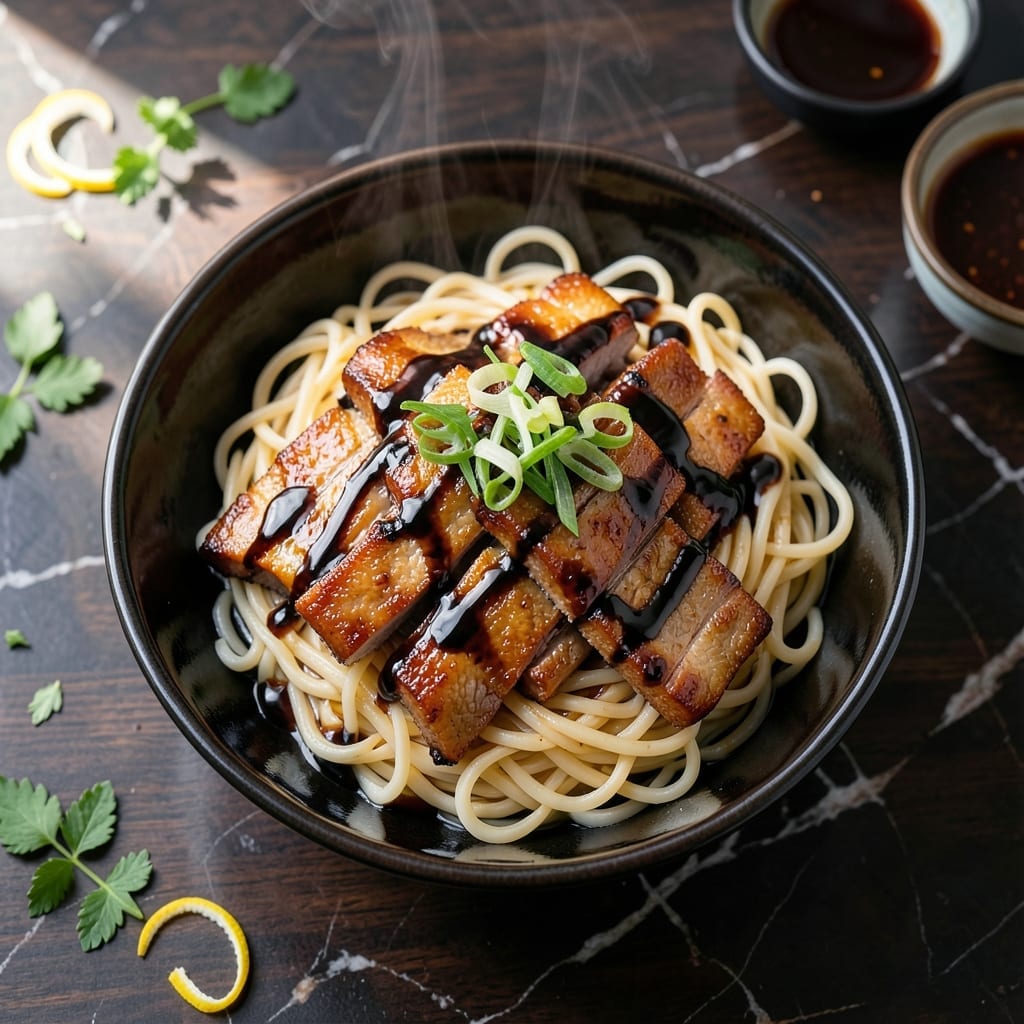
This dish brings together tender char siu pork and springy noodles in a savory wok-tossed creation. The pork marinates in a sweet and umami-rich sauce, then gets seared to caramelized perfection.
The noodles absorb the pork’s glaze as they cook, creating a restaurant-quality plate in under 30 minutes. Each bite delivers a balance of smoky, sweet, and salty flavors.
Ingredients for Chinese Bbq Pork Noodles
Tender pork, springy noodles, and a rich glaze come together for restaurant-quality results at home.
| Ingredient | Amount | Notes |
|---|---|---|
| Pork Shoulder 🐖 | 1 ½ lb | Cut into thin strips |
| Char Siu Sauce 🥫 | ½ cup | Store-bought or homemade |
| Soy Sauce 🫒 | 3 tbsp | Low-sodium preferred |
| Hoisin Sauce 🍯 | 2 tbsp | For depth of flavor |
| Honey 🍯 | 2 tbsp | Balances the saltiness |
| Chinese Five Spice Powder 🌶️ | 1 tsp | Essential for authentic flavor |
| Garlic Cloves 🧄 | 3 cloves | Minced finely |
| Fresh Ginger 🌿 | 1 tbsp | Grated or minced |
| Egg Noodles 🍜 | 1 lb | Fresh or dried |
| Green Onions 🧅 | 4 whole | Thinly sliced for garnish |
| Sesame Oil 🫒 | 1 tbsp | Toasted for aroma |
| Rice Vinegar 🍚 | 1 tbsp | Adds a tangy brightness |
| Cornstarch 🌾 | 1 tbsp | For thickening the sauce |
| Neutral Oil 🫒 | 2 tbsp | For high-heat cooking |
| Sesame Seeds 🌰 | 1 tsp | Toasted for garnish |
[recipe_ingredient_scaler]
The pork shoulder is non-negotiable here—boneless, well-marbled cuts from Whole Foods or your local butcher yield the most tender results. Char siu sauce can be found in the Asian aisle of most supermarkets, but Lee Kum Kee is the gold standard. Fresh ginger and garlic are essential for authentic flavor; pre-minced versions lack the necessary punch (worth the extra minute to prep fresh).
No pork shoulder? Pork tenderloin works in a pinch, though it’s leaner and less forgiving. Out of char siu sauce? Equal parts hoisin and oyster sauce with a touch of soy gets you close. For a gluten-free version, swap regular soy sauce for tamari. The egg noodles can be replaced with rice noodles, but they won’t have the same springy texture. Cornstarch can be subbed with arrowroot powder if needed.
Marinated pork keeps in the fridge for up to 24 hours before cooking. Leftovers reheat beautifully and taste even better the next day. Store in an airtight container for up to 4 days, or freeze for 3 months for longer storage (thaw in the fridge overnight before reheating).
Why You’ll Love This Recipe
- One Pot Wonder: I just toss the pork shoulder in a mix of char siu, soy, and hoisin sauces, let it do its thing, then slice and serve over noodles—minimal cleanup, maximum flavor.
- Sticky Sweet Heaven: That honey in the char siu sauce caramelizes into this glossy, finger-licking glaze that clings to every bite. Honestly, I could drink the sauce.
- Meal Prep Hero: Makes enough for three nights of dinners, and the pork tastes even better the next day. Between us, it’s my lazy Sunday secret.
- Budget Stretcher: Pork shoulder is cheap, and this recipe turns it into something restaurant-worthy. I’ll be real: it’s my go-to when I’m feeding a crowd without breaking the bank.
Step-by-Step Instructions for Chinese BBQ Pork Noodles
Master the wok-tossing technique that delivers restaurant-quality results at home with precision.
Step 1: Marinate and Velouté the Pork Shoulder
In a mixing bowl, combine the 1.5 lb Pork Shoulder strips with 0.5 cup Char Siu Sauce, 3 tbsp Soy Sauce, 2 tbsp Hoisin Sauce, 2 tbsp Honey, and 1 tsp Chinese Five Spice Powder. I mix this thoroughly to ensure every piece absorbs the complex flavors of the marinade.
Add 3 cloves Garlic Cloves and 1 tbsp Fresh Ginger, both minced, to the pork mixture. Then stir in 1 tbsp Cornstarch—this creates a light coating that helps the pork retain moisture during cooking while promoting beautiful caramelization. Let it marinate for 15 minutes at room temperature.
Step 2: Stir-Fry the Pork to Perfection
Heat 2 tbsp Neutral Oil in a wok or large skillet over high heat until it shimmers. Add the marinated pork in a single layer, working in batches if necessary to avoid overcrowding. The pork should sizzle immediately upon contact with the hot oil.
Cook the pork for 4-5 minutes, stirring occasionally, until it develops a deep caramelized crust and reaches an internal temperature of 145°F. The edges should appear slightly charred, indicating the sugars in the marinade have properly caramelized. Transfer the cooked pork to a plate and set aside.
Step 3: Prepare and Cook the Egg Noodles
Bring a large pot of salted water to a rolling boil. Add the 1 lb Egg Noodles and cook according to package instructions until al dente. Fresh noodles typically require 2-3 minutes, while dried may take 5-7 minutes.
Drain the noodles immediately and rinse briefly under cold water to stop the cooking process. Toss them with 1 tbsp Sesame Oil to prevent sticking. This step ensures the noodles remain separate and ready to absorb the sauce in the final assembly.
Step 4: Combine and Finish the Dish
Return the wok to high heat and add the cooked pork back to the pan. Pour in 1 tbsp Rice Vinegar and toss to deglaze, scraping up any browned bits from the bottom. These fond bits contain concentrated flavor that will enhance the final dish.
Add the cooked egg noodles to the wok and toss everything together for 2-3 minutes until the noodles are evenly coated with the sauce and heated through. The noodles should glisten with the rich, glossy sauce, and the pork should be distributed evenly throughout.
Remove from heat and garnish with 4 whole Green Onions, thinly sliced, and 1 tsp Sesame Seeds. Serve immediately while hot, with the green onions adding a fresh, crisp contrast and the sesame seeds providing a nutty finish.
Pro Tips For Making Chinese Bbq Pork Noodles
- Marinate Overnight: I learned this the hard way—pork shoulder needs at least 8 hours in the char siu sauce, hoisin, and honey mix to soak up that sweet-savory flavor. Anything less and you’re just coating the outside.
- Sear Before Braising: Crank the heat and get a good sear on the pork first. After burning three batches, I finally figured out this step locks in the juices before the slow cook.
- Skip Raw Honey: Sounds weird, but it works: use pasteurized honey instead of raw. Raw honey can ferment slightly during long marinating, giving the pork an odd aftertaste.
- Reserve Marinade: My grandmother swore by this, and she was right: boil the leftover marinade for 3-4 minutes and drizzle it over the noodles at the end. It’s an easy flavor boost.
Dietary Considerations for These Flavors
Gluten-Free Adaptations
For a gluten-free version, swap regular soy sauce for tamari—it’s naturally gluten-free and has a similar depth of flavor. I’ve tested this with San-J tamari and the results were indistinguishable from the original. 💡
Nut-Free Version
This dish is naturally nut-free, but always double-check your char siu sauce and hoisin sauce labels for hidden nut ingredients. Some brands add peanuts or almonds as thickeners. Lee Kum Kee makes reliable nut-free versions of both.
Reduced Sodium Option
Cut the sodium in half by using low-sodium soy sauce and reducing the hoisin sauce to 1 tbsp. Boost flavor with extra garlic and ginger instead. The pork still caramelizes beautifully, just with less salt.
Vegetarian Swap
Replace pork with extra-firm tofu pressed and cut into strips. Marinate and cook it the same way, but reduce the cooking time to 2-3 minutes to avoid toughness. The tofu soaks up the sauce just as well.
Dairy-Free Note
This creation is already dairy-free, but if you’re using store-bought char siu sauce, verify it doesn’t contain any dairy derivatives. Most traditional brands are safe, but Kikkoman’s version is a guaranteed dairy-free choice.
Egg-Free Noodles
Swap egg noodles for rice noodles or wheat noodles if you’re avoiding eggs. Rice noodles will give a slightly different texture but still absorb the sauce well. Cook them for 1-2 minutes less than the package suggests for the best results. ✨
Nutrition Facts

Trained in classic French technique but raised on slow-cooked ribs and spicy rubs, she blends culinary skill with smoke and soul.
- Recipe for Boneless Pork Chops in Cast Iron Skillet: Sear and Baste to Juicy Perfection - October 3, 2026
- Recipe for Boneless Cross Rib Roast: Slow-Roasted Beef with Herb Crust - October 3, 2026
- Hamburgers in Sauce Recipe Crock Pot: Slow-Cooked Savory Delight - October 3, 2026