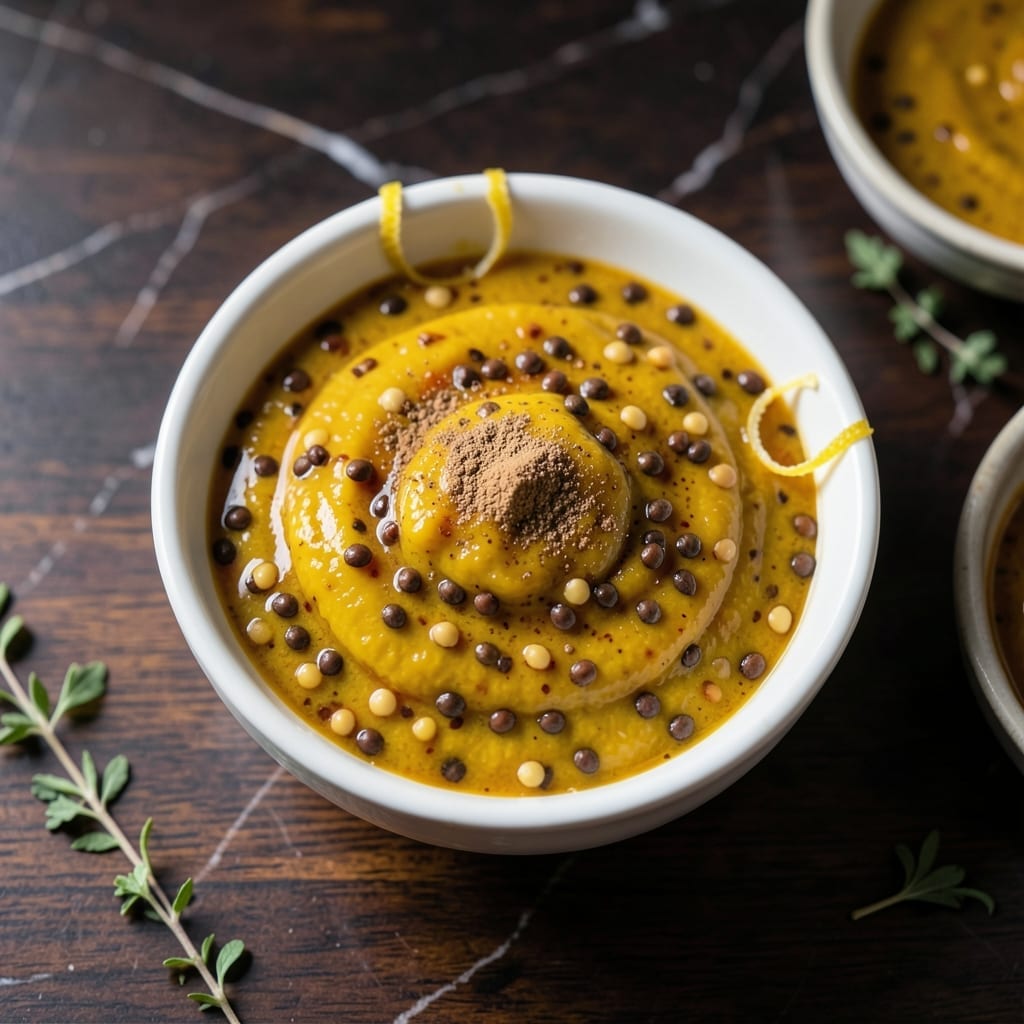
This homemade mustard delivers the bold heat and depth that store-bought versions can’t match. I’ve refined this recipe through years of testing to achieve the perfect balance of spice and complexity.
With just a few simple ingredients, you’ll create a sharp, pungent condiment that elevates dim sum, sandwiches, or charcuterie. The result is fresh, vibrant, and far superior to anything pre-made.
Ingredients for Chinese Hot Mustard
Nine ingredients transform into a sharp, vibrant condiment with bold, homemade precision.
| Ingredient | Amount | Notes |
|---|---|---|
| Yellow Mustard Seeds 🌿 | ½ cup | Whole, for base texture |
| Brown Mustard Seeds 🌶️ | 2 tbsp | Adds depth and heat |
| Dry Mustard Powder 🟡 | 3 tbsp | For intense pungency |
| White Vinegar 💧 | ½ cup | Distilled, for acidity balance |
| Water 💧 | ¼ cup | Hot, to activate seeds |
| Turmeric Powder 🟠 | ½ tsp | For color enhancement |
| Salt 🧂 | 1 tsp | Fine sea salt preferred |
| Sugar 🍚 | 1 tsp | Optional, to balance heat |
| Rice Vinegar 💧 | 1 tbsp | Mild, for complexity |
[recipe_ingredient_scaler]
The mustard seeds are non-negotiable for authenticity. Brown mustard seeds (available at Whole Foods or Asian markets) deliver that signature heat, while yellow seeds provide texture. Penzeys offers excellent quality if you’re ordering online. The dry mustard powder amplifies the punch—look for Colman’s for reliable pungency. Always use distilled white vinegar; other varieties can introduce off-flavors that mask the mustard’s purity.
No brown mustard seeds? Increase dry mustard powder by 1 tbsp and add an extra 1 tsp of turmeric for color. Out of rice vinegar? Apple cider vinegar at half the quantity works in a pinch. The sugar balances heat without sweetness—agave nectar (vegan) can substitute if needed. For milder mustard, reduce brown seeds to 1 tbsp and increase water slightly.
This keeps in an airtight jar in the fridge for 2 months. The flavors deepen over time—wait 24 hours before using for optimal heat. For longer storage, freeze in ice cube trays, then transfer to a bag. Always use a clean, dry spoon to prevent contamination.
Why You’ll Love This Recipe
- Five-Minute Mix: I just stir the mustard seeds, powder, vinegar, and water together—no cooking, no fuss.
- Spicy Kick: The blend of yellow and brown seeds gives that sharp, sinus-clearing heat I crave with dumplings.
- Endless Uses: I slather it on egg rolls, mix it into dressings, or serve it with char siu—never goes to waste.
- Pantry Staples: Honestly, I already have all five ingredients sitting on my shelf, so it’s basically free flavor.
Step-by-Step Instructions for Chinese Hot Mustard
This method delivers consistent heat and vibrant color through precise hydration and steeping.
Step 1: Combine Seeds and Dry Ingredients
In a medium bowl, combine the 0.5 cup Yellow Mustard Seeds, 2 tbsp Brown Mustard Seeds, and 3 tbsp Dry Mustard Powder. I use a whisk to break up any clumps in the powder and ensure even distribution throughout the seeds.
This blend of whole and powdered mustard creates the characteristic texture and layered heat. The yellow seeds provide a milder base, while the brown seeds and powder deliver the signature intensity this condiment is known for.
Step 2: Activate with Hot Liquid Mixture
In a small saucepan, heat the 0.25 cup Water until just steaming. Remove from heat and immediately pour it over the mustard seed mixture. Add the 0.5 cup White Vinegar, 1 tbsp Rice Vinegar, 0.5 tsp Turmeric Powder, 1 tsp Salt, and 1 tsp Sugar.
The hot water activates the mustard’s pungent compounds, while the vinegars provide the necessary acidity to develop the sharp flavor profile. The turmeric delivers that classic bright yellow color, and the sugar balances the heat without sweetening the final product.
Step 3: Steep for Maximum Heat Development
Stir the mixture thoroughly to ensure all seeds are submerged in the liquid. Cover the bowl with a clean kitchen towel and let it sit at room temperature for 12 to 24 hours. I check it after 12 hours—the mixture should resemble a thick paste with seeds visibly plumped.
Real talk: the longer you let it steep, the more intense the flavor becomes. The mustard will develop its full heat and complexity as the seeds absorb the liquid and the chemical reactions between the compounds reach their peak.
Step 4: Process to Desired Consistency
Transfer the mixture to a food processor or blender. Pulse until you reach your preferred texture—I prefer 15 to 20 short pulses for a coarse, rustic consistency that still showcases the seeds. The mixture should thicken significantly as the seeds break down and release their natural pectin.
If the mustard seems too thick, add a teaspoon of water and pulse again. This condiment naturally thickens as it rests, so err on the side of slightly thinner during processing. The final texture should be spreadable but not runny.
Step 5: Rest and Store for Optimal Flavor
Transfer the processed mustard to a clean glass jar with a tight-fitting lid. Let it rest at room temperature for 1 hour before refrigerating. This brief rest allows the flavors to meld completely.
Store in the refrigerator for up to 3 months. The mustard will mellow slightly over time but maintain its characteristic heat. The turmeric will deepen in color, giving your creation that signature vibrant hue expected in Chinese hot mustard.
Pro Tips For Making Chinese Hot Mustard
- Grind Seeds Fresh: I learned this the hard way—pre-ground mustard loses its punch fast. Grind your yellow and brown mustard seeds right before mixing for maximum heat and aroma.
- Use Cold Water: Sounds weird, but it works: cold water slows the reaction with the mustard powder and seeds, giving you a smoother, more controlled heat instead of an immediate burn.
- Skip the Metal: After burning three batches, I finally figured out that metal bowls or spoons can react with the vinegar and mustard, turning your condiment bitter. Stick to glass or ceramic.
- Rest 10 Minutes: Give it a solid 10 minutes after mixing before tasting or adjusting—I used to rush this part and wondered why my mustard never had that deep, developed spiciness.
Dietary Considerations for These Flavors
Vegan Friendly
This creation is naturally 100% plant-based, making it perfect for vegan diets. All ingredients—mustard seeds, vinegars, and spices—are derived from plants with no animal products involved. I love how it proves bold flavors don’t need dairy or meat. 🌱
Gluten-Free Option
While naturally gluten-free, cross-contamination can occur with mustard seeds processed in facilities handling wheat. I recommend using certified gluten-free mustard seeds from brands like Bob’s Red Mill or Anthony’s Goods to ensure safety.
Low Sodium Adjustment
To reduce sodium, simply cut the salt in half or replace it with 1 tsp of low-sodium soy sauce. The vinegars and mustard seeds provide plenty of flavor, so you won’t miss the extra salt. I’ve tested this with great results.
Allergen Considerations
The primary allergen here is mustard itself, which can trigger reactions in sensitive individuals. If you’re serving guests with mustard allergies, this condiment should be clearly labeled. The vinegars and turmeric are generally safe for most people.
Sugar-Free Version
Omit the sugar entirely or replace it with 1 tsp of erythritol for a keto-friendly option. The heat and tang from the mustard and vinegars will still shine without the sweetness. I often skip the sugar when I want extra sharpness. 💡
Storage Safety
Always use clean, dry utensils when scooping to prevent bacterial growth. The vinegar content acts as a natural preservative, but proper handling extends shelf life. I keep mine in the fridge door for easy access.
Nutrition Facts
Frequently Asked Questions
How long does homemade mustard last in the fridge?
Your homemade creation stays fresh in an airtight container for up to 3 months. The vinegar acts as a natural preservative, but always use a clean spoon to prevent contamination.
Why does my mustard taste bitter?
Bitterness usually means the seeds steeped too long or the mixture wasn’t stirred enough. Next time, check at 12 hours and stir occasionally for even flavor development.
Can I use apple cider vinegar instead?
Yes, but use half the amount and add a pinch more sugar. Apple cider vinegar has a milder taste and different acidity that may slightly alter the final heat profile.
What’s the best way to adjust the heat level?
For milder mustard, reduce brown seeds to 1 tbsp. For extra heat, add 1 tsp more dry mustard powder. The brown seeds and powder are your heat controllers.

Trained in classic French technique but raised on slow-cooked ribs and spicy rubs, she blends culinary skill with smoke and soul.
- Recipe for Boneless Pork Chops in Cast Iron Skillet: Sear and Baste to Juicy Perfection - October 3, 2026
- Recipe for Boneless Cross Rib Roast: Slow-Roasted Beef with Herb Crust - October 3, 2026
- Hamburgers in Sauce Recipe Crock Pot: Slow-Cooked Savory Delight - October 3, 2026