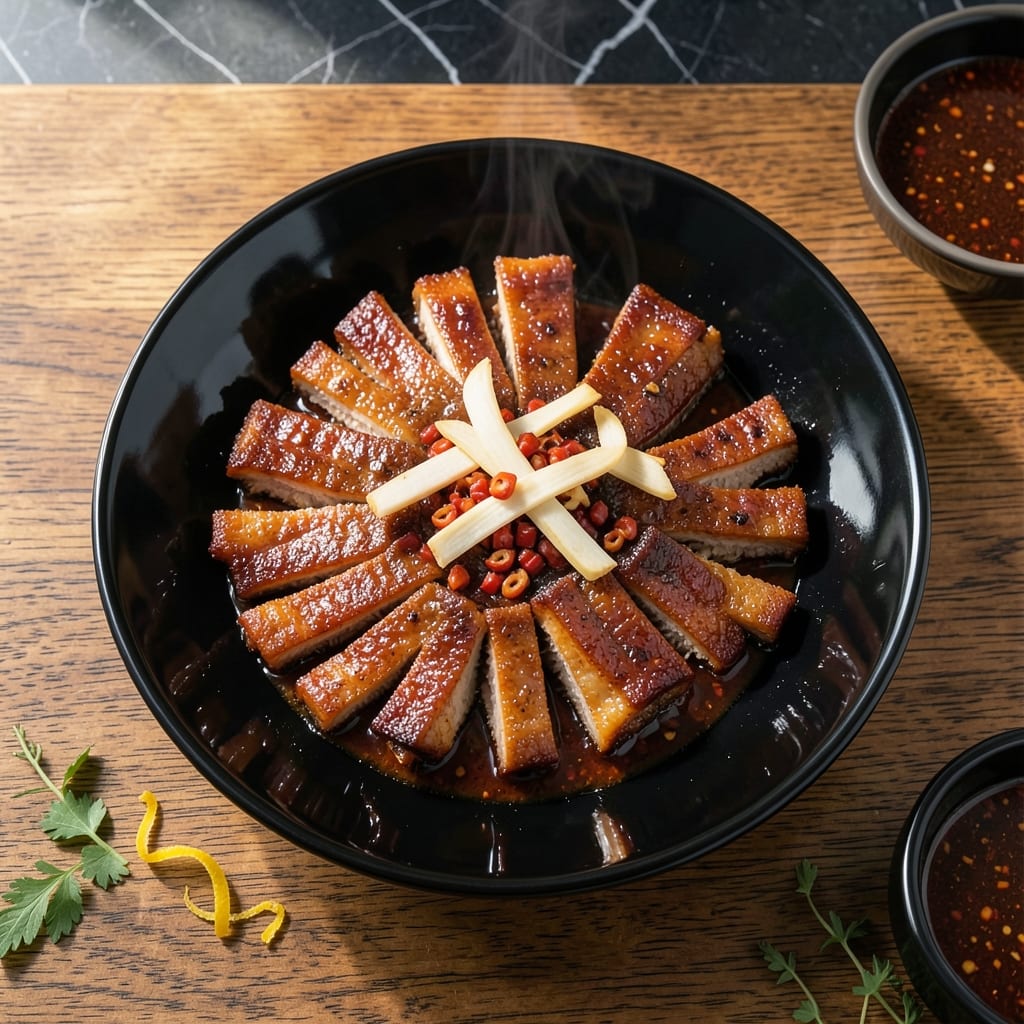
This oven-baked version transforms pork spare ribs into tender, fall-off-the-bone perfection with a signature sticky char siu glaze. I developed this method after years of experimenting with traditional Chinese techniques adapted for home kitchens.
The secret lies in a two-step process: first marinating the ribs in a blend of soy sauce, honey, and five-spice powder, then finishing with a high-heat oven roast. This creates caramelized edges while keeping the meat juicy and flavorful throughout.
You’ll achieve that authentic sweet-savory balance with restaurant-quality results in your own kitchen. The glaze thickens beautifully under the broiler, forming a glossy coating that’s irresistible.
Serve with steamed rice and stir-fried vegetables for a complete meal that’s sure to impress. This technique delivers consistent, delicious results every time.
Ingredients for Chinese Pork Spare Ribs Recipe Oven
Transform your kitchen into a Cantonese restaurant with these bold, authentic ingredients.
| Ingredient | Amount | Notes |
|---|---|---|
| Pork Spare Ribs 🍖 | 2 ½ lb | Cut into individual ribs |
| Soy Sauce 🫒 | ½ cup | Low-sodium preferred |
| Honey 🍯 | ⅓ cup | For glaze sweetness |
| Five-Spice Powder 🌿 | 2 tsp | Authentic Chinese blend |
| Garlic Cloves 🧄 | 4 cloves | Minced finely |
| Fresh Ginger 🌱 | 1 tbsp | Grated or minced |
| Hoisin Sauce 🫒 | ¼ cup | For depth of flavor |
| Chinese Rice Wine 🍷 | 2 tbsp | Shaoxing wine preferred |
| Brown Sugar 🍚 | ¼ cup | Packed, for caramelization |
| Sesame Oil 🫒 | 1 tsp | Toasted, for aroma |
| Green Onions 🧅 | 4 whole | Thinly sliced for garnish |
| Kosher Salt 🧂 | 1 tsp | Adjust to taste |
| Black Pepper 🌶️ | ½ tsp | Freshly ground |
| Red Food Coloring 🎨 | ½ tsp | Optional for authentic color |
[recipe_ingredient_scaler]
The ribs are everything here—look for meaty spare ribs with good marbling at your butcher or Asian grocery store. Avoid pre-cut ribs if possible, as whole racks let you control the size. The five-spice powder should be fresh and fragrant; old spice blends lose their punch. I always grab mine from Penzeys or a well-stocked bulk section. For the rice wine, Shaoxing is ideal, but dry sherry works in a pinch (just skip the salt if it’s salty).
No honey? Maple syrup or agave can substitute, but the flavor profile shifts slightly. Five-spice missing? Mix cinnamon, cloves, fennel, star anise, and pepper in equal parts. Out of hoisin? Oyster sauce plus a touch of sugar gets you close. The brown sugar can be light or dark—dark adds a molasses note. And if you’re skipping the food coloring (totally fine), the ribs will still taste amazing, just less vibrant.
Marinate the ribs overnight for maximum flavor penetration—12-24 hours is ideal. The glaze keeps in the fridge for 3-4 days if you want to make it ahead. Leftovers? They reheat beautifully, though the glaze may thicken further (a splash of water loosens it right up).
Why You’ll Love This Recipe
- Hands-Off Cooking: I just mix the soy sauce, honey, and five-spice with the ribs, pop them in the oven, and let the heat do the work.
- Sticky Sweet Heat: The honey caramelizes with the soy and garlic into this ridiculous glaze that clings to every bite.
- Feeds a Hungry Table: I make a double batch for game day and it’s always the first thing to disappear.
- Leftovers for Days: Honestly, they taste even better the next day—toss them into fried rice or eat cold straight from the fridge.
Step-by-Step Instructions for Chinese Pork Spare Ribs Oven
Here is the foolproof method for achieving sticky, caramelized char siu ribs right in your home kitchen.
Step 1: Prepare and Season the Ribs
Cut the 2.5 lb Pork Spare Ribs into individual ribs if not already prepped. Pat them completely dry with paper towels—this is crucial for the marinade to adhere properly. Place the ribs in a large bowl and season with 1 tsp Kosher Salt and 0.5 tsp Black Pepper, ensuring all sides are evenly coated.
In a separate bowl, combine 0.5 cup Soy Sauce, 0.33 cup Honey, 2 tsp Five-Spice Powder, 4 cloves minced Garlic Cloves, 1 tbsp Fresh Ginger, 0.25 cup Hoisin Sauce, 2 tbsp Chinese Rice Wine, 0.25 cup Brown Sugar, and 0.5 tsp Red Food Coloring. Whisk until the mixture is smooth and the brown sugar dissolves completely.
Step 2: Marinate for Maximum Flavor
Pour the marinade over the ribs in the bowl, ensuring each piece is fully coated. Let the ribs marinate at room temperature for 30 minutes, occasionally turning them to ensure even distribution. I’ve found this step is essential for deep flavor penetration.
After the initial marinade, cover the bowl and refrigerate for at least 4 hours, or ideally overnight. The longer the ribs marinate, the more tender and flavorful they become. This waiting time allows the Five-Spice Powder and Hoisin Sauce to infuse the meat with their signature savory-sweet notes.
Step 3: Roast the Ribs to Perfection
Preheat your oven to 375°F. Line a baking sheet with aluminum foil and place a wire rack on top. Arrange the ribs on the rack, leaving a little space between each piece for even cooking. Reserve the leftover marinade for basting later.
Roast the ribs for 25 minutes, then flip and baste with the reserved marinade. Continue roasting for another 20-25 minutes, basting occasionally, until the ribs are deeply caramelized and reach an internal temperature of 195-200°F. The edges should be slightly charred, creating that authentic char siu appearance.
Step 4: Finish with Sesame Oil and Garnish
Remove the ribs from the oven and transfer them to a serving platter. Drizzle with 1 tsp Sesame Oil while still hot—this adds a nutty aroma that complements the sweet and savory flavors beautifully. Toss to coat evenly.
Sprinkle with thinly sliced 4 whole Green Onions for a fresh, vibrant finish. Let the ribs rest for 5 minutes before serving. The glaze should be sticky and glossy, clinging to each rib, and the meat should be tender enough to pull away from the bone with minimal effort.
Pro Tips For Making Chinese Pork Spare Ribs Recipe Oven
- Parboil First: I learned this the hard way—blanch the ribs in boiling water for 3-5 minutes before baking to remove impurities and guarantee tender meat.
- Score the Meat: Make shallow cuts between the bones on the spare ribs so the soy-honey glaze penetrates deeper and flavors every bite.
- Skip the Overcrowding: After burning three batches, I finally figured out to leave space between ribs on the tray so they crisp instead of steam.
- Glaze Late: Brush the honey-soy mix only in the last 10 minutes of baking to prevent burning—your ribs will caramelize perfectly without bitterness.
Regional Styles of These Flavors
Cantonese Char Siu
The classic Cantonese version uses a red fermented bean curd in the marinade for its distinctive color and umami depth. I add 1 tbsp nam yue (red fermented tofu) to the glaze for authenticity. The ribs are traditionally skewered and roasted over charcoal, but your oven works beautifully. 🌟
Sichuan Spicy Ribs
For a fiery twist, I blend 2 tbsp Sichuan peppercorns and 1 tbsp chili oil into the marinade. The numbing heat of Sichuan peppercorns pairs perfectly with the sweet glaze. Serve with cool cucumber slices to balance the spice.
Taiwanese Sweet Glaze
Taiwanese versions often include pineapple juice in the marinade for extra tenderness. I use ½ cup pineapple juice and reduce it with the other glaze ingredients. The result is a slightly tangier, fruitier rib that’s incredibly popular at night markets.
Shanghai Braised Style
Shanghai-style ribs are braised rather than roasted. I adapt this by adding 1 cup soy sauce, ½ cup Shaoxing wine, and 2 cups water to the baking dish. Cover with foil and bake at 325°F for 2 hours for fall-apart tenderness. 💫
Hainanese Coconut Ribs
In Hainan, coconut milk adds richness to the marinade. I mix 1 cup coconut milk with the other wet ingredients before marinating. The ribs develop a subtle tropical sweetness that pairs wonderfully with jasmine rice.
Nutrition Facts
Frequently Asked Questions
What’s the best oven temperature for tender ribs?
Start at 375°F for even cooking, then finish under the broiler for 2-3 minutes to caramelize the glaze. This two-step method ensures tender meat with a sticky exterior.
Can I use baby back ribs instead of spare ribs?
Yes, but reduce cooking time by 5-10 minutes since baby backs cook faster. Spare ribs have more fat and connective tissue, making them ideal for this style.
How do I prevent the glaze from burning?
Baste frequently and keep an eye on them after 40 minutes. If the glaze darkens too quickly, tent with foil and lower the temperature slightly.
Should I boil the ribs first for extra tenderness?
It’s optional but helpful. Parboiling for 10 minutes removes impurities and jumpstarts tenderness. Pat them completely dry before marinating for best results.

Trained in classic French technique but raised on slow-cooked ribs and spicy rubs, she blends culinary skill with smoke and soul.
- Recipe for Boneless Pork Chops in Cast Iron Skillet: Sear and Baste to Juicy Perfection - October 3, 2026
- Recipe for Boneless Cross Rib Roast: Slow-Roasted Beef with Herb Crust - October 3, 2026
- Hamburgers in Sauce Recipe Crock Pot: Slow-Cooked Savory Delight - October 3, 2026