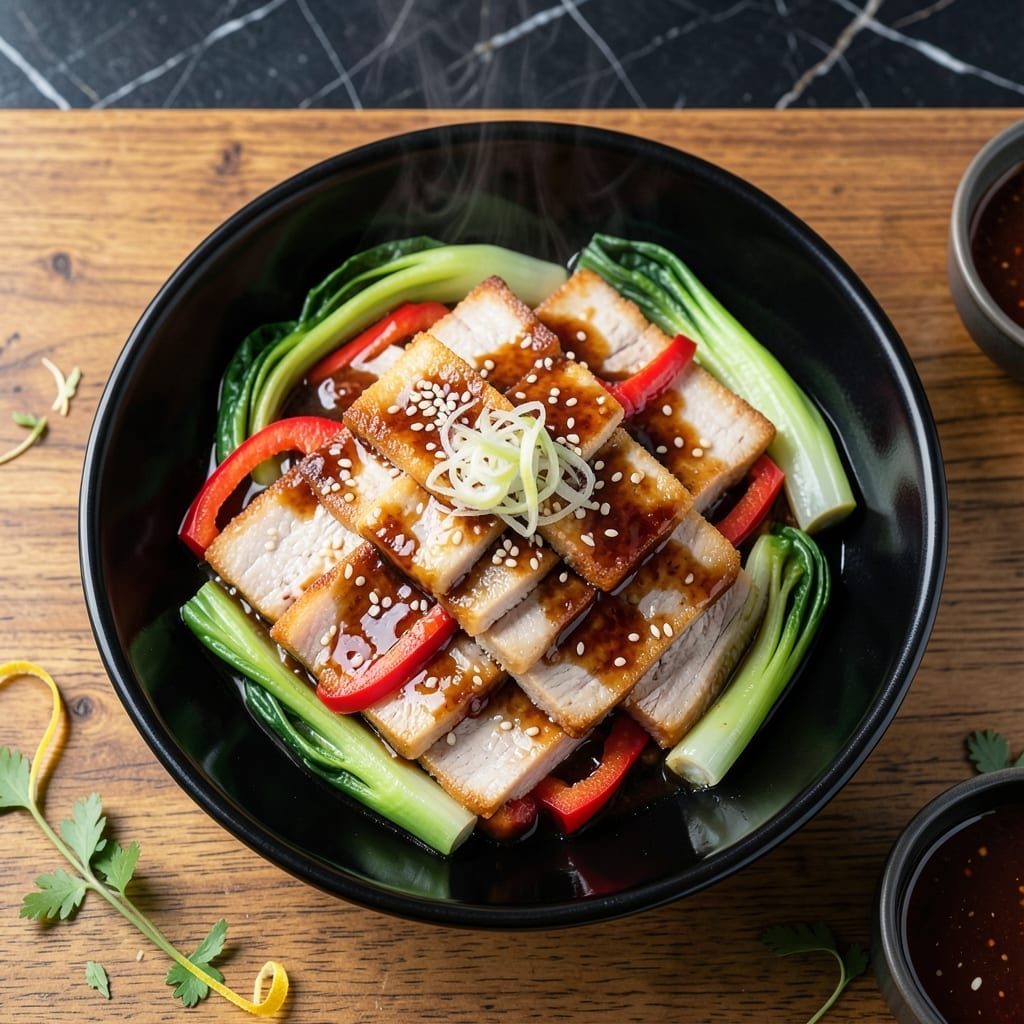
This recipe delivers velvety tender pork strips with a restaurant-quality finish that’s surprisingly simple to achieve at home.
The secret lies in a quick marinade using cornstarch and soy sauce, which locks in moisture while creating a silky texture. High-heat stir-frying ensures a caramelized crust with juicy interiors.
Each bite offers a balance of savory depth from hoisin and oyster sauce, with just the right amount of sweetness to round out the flavors.
Serve these over steamed rice or alongside stir-fried vegetables for a complete meal that tastes like takeout, only better.
Ingredients for Chinese Pork Strips
Velvety pork strips require a careful balance of marinade ingredients and high-heat cooking for that signature texture.
| Ingredient | Amount | Notes |
|---|---|---|
| Pork Shoulder 🥩 | 1 ½ lb | Cut into thin strips against grain |
| Cornstarch 🌾 | 2 tbsp | For velvety texture coating |
| Soy Sauce 🫒 | 3 tbsp | Low-sodium preferred for balance |
| Hoison Sauce 🍯 | 2 tbsp | Thick, aromatic variety |
| Oyster Sauce 🍶 | 2 tbsp | Essential for umami depth |
| Brown Sugar 🏝️ | 1 tbsp | Light or dark acceptable |
| Garlic Cloves 🧄 | 4 cloves | Minced for maximum flavor |
| Fresh Ginger 🌿 | 1 tbsp | Finely grated or minced |
| Rice Vinegar 🍚 | 1 tbsp | Balances rich flavors |
| Sesame Oil 🫒 | 1 tsp | Toasted variety for aroma |
| Neutral Oil 💧 | 3 tbsp | For high-heat stir-frying |
| Green Onions 🧅 | 3 whole | Thinly sliced for garnish |
| Dry Sherry 🍷 | 1 tbsp | Or substitute Shaoxing wine |
| Red Pepper Flakes 🌶️ | ½ tsp | Adjust for heat preference |
| Steamed Rice 🍚 | 4 cups | For serving alongside |
[recipe_ingredient_scaler]
The pork shoulder is non-negotiable for optimal texture—look for well-marbled cuts at Whole Foods or Asian markets, which often carry pre-sliced options. Fresh ginger and garlic should be plump and aromatic; avoid any with dry, shriveled skins. For the sauces, Kikkoman soy sauce and Lee Kum Kee hoisin are professional-grade choices that deliver consistent results.
No pork shoulder? Pork tenderloin works at a 1:1 ratio but may be slightly less tender. Substitute vegetable oil for sesame if that’s all you have (though flavor will be less complex). For gluten-free, tamari replaces soy sauce and cornstarch with arrowroot. The dry sherry can be omitted, but add 1 tsp sugar to compensate for lost depth.
Marinated pork keeps 24 hours in the fridge—ideal for prep ahead. Sauces store 6 months unopened, 1 month opened and refrigerated. Cooked strips reheat best in a dry skillet over medium heat to restore crispness.
Why You’ll Love This Recipe
- One Pan Wonder: I toss everything in a bowl, coat the pork, and let the pan do the work—minimal cleanup, maximum flavor.
- Umami Bomb: The trio of soy, hoisin, and oyster sauce hits that sweet-savory spot I crave every single time.
- Feeds a Crowd: I stretch one batch into rice bowls, noodles, or lettuce wraps—honestly, it never gets old.
- Budget Hero: Pork shoulder stays cheap, and a little goes a long way with these bold sauces.
Step-by-Step Instructions for Chinese Pork Strips
Achieve restaurant-quality texture with this proven wok technique and precise ingredient balance.
Step 1: Velvet the Pork Shoulder Strips
Cut the 1.5 lb pork shoulder into thin strips against the grain for maximum tenderness. Place the strips in a bowl and add 2 tbsp cornstarch, 1 tbsp dry sherry, and 1 tbsp soy sauce. Mix thoroughly until each piece is evenly coated with a thin, milky layer.
This velveting technique creates a protective barrier that locks in moisture during high-heat cooking. Let the mixture sit for 10 minutes while you prepare the remaining ingredients—the cornstarch will absorb some liquid, forming a slightly sticky coating that’s essential for that signature velvety texture.
Step 2: Create the Aromatic Sauce Base
In a small bowl, combine the remaining 2 tbsp soy sauce, 2 tbsp hoison sauce, 2 tbsp oyster sauce, 1 tbsp brown sugar, 1 tbsp rice vinegar, and 0.5 tsp red pepper flakes. Whisk until the brown sugar fully dissolves and the mixture becomes smooth and glossy.
Mince the 4 cloves garlic cloves and finely grate the 1 tbsp fresh ginger. Thinly slice the 3 whole green onions, separating the white and green parts. Having these aromatics ready ensures you can work quickly once the cooking begins—stir-frying moves fast and there’s no time to prep mid-process.
Step 3: Stir-Fry with Precision
Heat 2 tbsp neutral oil in a wok or large skillet over high heat until it shimmers. Add the velveted pork strips in a single layer, working in batches if necessary to avoid crowding. Let them sear undisturbed for 1-2 minutes until the edges turn opaque and lightly browned.
Add the minced garlic and grated ginger to the pan and stir-fry for 30 seconds until fragrant. Pour in the sauce mixture and toss everything together. The sauce should bubble and thicken slightly, coating each piece of pork with a glossy sheen. Cook for an additional 2-3 minutes until the pork is fully cooked through.
Step 4: Finish and Serve
Remove the pan from heat and stir in the 1 tsp sesame oil. The residual heat will bloom the sesame oil’s aroma without burning it. Toss in the sliced green onions, reserving some of the green parts for garnish if desired.
Serve immediately over the 4 cups steamed rice, spooning any remaining sauce from the pan over the top. The pork should be tender with a slight bounce, coated in a rich, umami-packed sauce that clings to each piece. Garnish with additional green onion slices for a pop of color and freshness.
Pro Tips For Making Chinese Pork Strips
- Velvet the Pork: Toss the pork strips in a mix of 1 tbsp cornstarch and 1 tbsp water before cooking—it keeps them absurdly tender. I learned this the hard way after serving chewy pork to guests once too often.
- Hot Pan, Fast Cook: Get your wok or pan screaming hot before adding the pork, then sear in small batches. After burning three batches, I finally figured out that crowding the pan steams the meat instead of browning it.
- Marinate 15 Minutes: Give the pork at least 15 minutes in the soy-hoisin-oyster mix before cooking. Sounds weird, but it works—short enough to not slow you down, long enough to actually change the flavor.
- Thin Slice Against Grain: Cut the pork shoulder into ¼-inch strips against the grain for maximum tenderness. My grandmother swore by this, and she was right: it makes a real difference in every bite.
Health Benefits of This chinese pork strips
Protein Powerhouse
Pork shoulder delivers high-quality protein—about 35 grams per serving—with all essential amino acids your body needs for muscle repair. The velveting technique preserves these nutrients while creating that signature tender texture. I always feel energized after enjoying this dish. 💪
Iron Boost
This recipe provides a significant dose of heme iron, the most easily absorbed form, from the pork. A 4-ounce serving offers about 15% of your daily iron needs, which is crucial for oxygen transport and energy levels.
B Vitamin Complex
Pork is rich in B vitamins, especially B12, thiamine, and niacin. These support metabolism and nervous system health. The garlic and ginger in this dish also contribute small amounts of these essential nutrients.
Low-Fat Protein
While pork shoulder has some fat, the velveting process with cornstarch creates a protective layer that reduces oil absorption during cooking. This results in a dish that’s lower in saturated fat than you might expect.
Antioxidant Benefits
The ginger and garlic in this creation are packed with antioxidants that help combat inflammation. Fresh ginger contains gingerol, a powerful compound with anti-inflammatory properties. I love how these ingredients do double duty for flavor and health. ✨
Balanced Nutrition
When served with steamed rice and vegetables, this becomes a complete meal with complex carbs, protein, and fiber. The combination keeps you full longer and provides sustained energy throughout your day.
Nutrition Facts
Frequently Asked Questions
What’s the best cut for velvety pork strips?
Pork shoulder is ideal for its marbling and tenderness. Pork tenderloin works too but may be slightly less juicy. Always cut against the grain for maximum tenderness.
Why does the recipe use cornstarch?
Cornstarch creates a protective coating that locks in moisture during high-heat cooking. This velveting technique gives the pork its signature silky texture and prevents dryness.
Can I make this gluten-free?
Yes! Substitute tamari for soy sauce and ensure your hoisin and oyster sauces are gluten-free. Arrowroot can replace cornstarch if needed.
What if my pork turns out tough?
This usually happens from overcooking or skipping the velveting step. Cook in batches to avoid crowding the pan, and remove from heat as soon as the pork is just cooked through.

Trained in classic French technique but raised on slow-cooked ribs and spicy rubs, she blends culinary skill with smoke and soul.
- Recipe for Boneless Pork Chops in Cast Iron Skillet: Sear and Baste to Juicy Perfection - October 3, 2026
- Recipe for Boneless Cross Rib Roast: Slow-Roasted Beef with Herb Crust - October 3, 2026
- Hamburgers in Sauce Recipe Crock Pot: Slow-Cooked Savory Delight - October 3, 2026