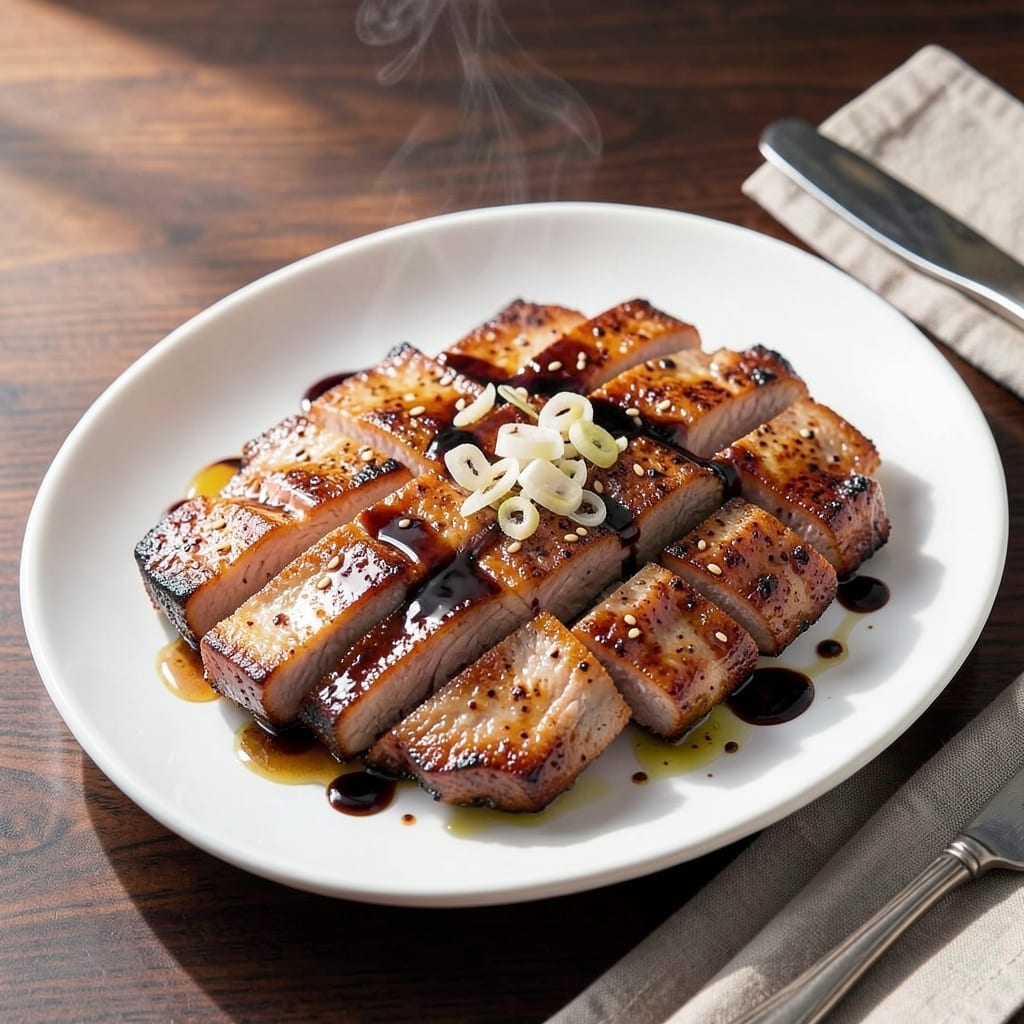
This char siu recipe delivers the authentic sweet-savory flavor of Chinese barbecue with a foolproof home method. I developed this approach after years of studying traditional techniques and adapting them for the home kitchen.
The marinade combines honey, hoisin, and five-spice powder for that signature sticky glaze and complex taste. A two-step cooking process first tenderizes the pork, then creates the characteristic caramelized crust.
What results is tender, juicy pork with a glossy red exterior that’s perfect for rice, noodles, or buns. The aroma alone will transport you to a bustling Cantonese roast meat shop.
This method requires no special equipment, just patience and attention to detail. The flavors develop depth as the pork cooks, rewarding your care with every bite.
Ingredients for Chinese Style Barbecued Pork
Authentic Cantonese flavors start with these carefully selected traditional ingredients for perfect char siu.
| Ingredient | Amount | Notes |
|---|---|---|
| Pork Shoulder 🥩 | 2 lb | Boneless, cut into strips |
| Hoisin Sauce 🫒 | ½ cup | High quality for depth |
| Honey 🍯 | ⅓ cup | For sticky glaze texture |
| Soy Sauce 🫒 | 3 tbsp | Low sodium preferred |
| Chinese Five-Spice Powder 🌿 | 1 ½ tsp | Essential for authentic flavor |
| Garlic Cloves 🧄 | 4 cloves | Minced for marinade |
| Fresh Ginger 🌿 | 1 tbsp | Finely grated |
| Brown Sugar 🧂 | 3 tbsp | Light or dark variety |
| Shaoxing Wine 🍶 | 2 tbsp | Dry sherry as substitute |
| Red Fermented Bean Curd 🧀 | 1 piece | Mashed for color |
| Sesame Oil 🫒 | 1 tsp | Toasted variety preferred |
| Oyster Sauce 🫒 | 2 tbsp | Vegetarian oyster sauce optional |
| Green Onions 🧅 | 4 whole | Thinly sliced for garnish |
[recipe_ingredient_scaler]
The pork shoulder is non-negotiable for authentic texture—look for well-marbled cuts at Asian markets or Whole Foods. The hoisin sauce should be Kikkoman or Lee Kum Kee for proper depth. Five-spice powder loses potency quickly, so buy from Penzeys or bulk bins and use within six months. Red fermented bean curd adds the signature color; find it in the refrigerated section at H Mart or other Asian grocers.
No Shaoxing wine? Dry sherry works in a pinch. Missing five-spice? Combine cinnamon, star anise, fennel, cloves, and pepper at equal parts. Oyster sauce can be swapped for vegetarian oyster sauce or soy sauce. The honey can be replaced with agave or maple syrup, though the flavor profile will shift slightly. For the pork, shoulder is ideal, but pork butt works too.
Marinate the pork for at least 12 hours (overnight is best). Cooked char siu keeps in the fridge for 4-5 days or freezes beautifully for 3 months. The flavors intensify after resting, making leftovers even more delicious the next day.
Why You’ll Love This Recipe
- Hands-Off Cooking: I just mix the hoisin, honey, and soy, slather it on the pork shoulder, and let the oven do the work.
- Sticky Sweet Heat: That five-spice powder gives it this warm depth, while the honey caramelizes into this glossy, finger-licking glaze.
- Meal Prep Hero: I make a big batch on Sunday—toss it in fried rice, bao buns, or straight from the fridge for a midnight snack.
- Leftovers Level Up: Honestly, it tastes even better the next day, and the pork freezes beautifully for those I-don’t-want-to-cook nights.
Step-by-Step Instructions for Chinese Style Barbecued Pork
Master the technique for achieving that signature char siu gloss and tender interior.
Step 1: Prepare the Pork and Marinade Base
Cut the 2 lb Pork Shoulder into strips approximately 1 inch thick and 4 inches long. This size ensures even marinating and cooking. Pat the pork dry with paper towels to help the marinade adhere better.
In a large bowl, combine the 0.5 cup Hoisin Sauce, 0.33 cup Honey, 3 tbsp Soy Sauce, 3 tbsp Brown Sugar, 2 tbsp Shaoxing Wine, and 2 tbsp Oyster Sauce. Whisk until the mixture is smooth and the brown sugar fully dissolves.
Step 2: Infuse with Aromatics and Spices
Mince the 4 cloves Garlic Cloves and finely grate the 1 tbsp Fresh Ginger. Mash the 1 piece Red Fermented Bean Curd into a paste—this adds depth and the characteristic red hue. Add these to the marinade along with the 1.5 tsp Chinese Five-Spice Powder.
Stir in the 1 tsp Sesame Oil, which enhances the aroma. The marinade should now be fragrant with a balance of sweet, salty, and umami notes. Submerge the pork strips in the marinade, ensuring each piece is fully coated. Cover and refrigerate for at least 4 hours, or preferably overnight for maximum flavor penetration.
Step 3: Roast to Perfection
Preheat your oven to 375°F. Line a baking sheet with foil and place a wire rack on top to allow air circulation. Remove the pork from the marinade, reserving the marinade for basting. Arrange the pork strips on the wire rack, leaving space between each piece.
Roast for 20 minutes, then brush the pork with the reserved marinade. Increase the oven temperature to 425°F and roast for another 10-15 minutes, basting once more, until the pork reaches an internal temperature of 195°F and the edges are caramelized and sticky.
Step 4: Rest and Garnish
Remove the pork from the oven and let it rest for 10 minutes. This allows the juices to redistribute, ensuring the meat remains tender. Thinly slice the 4 whole Green Onions for garnish.
Slice the pork into ¼-inch thick pieces and arrange on a serving platter. Drizzle any remaining marinade from the pan over the top and sprinkle with the sliced green onions. The pork should have a glossy, caramelized exterior with a slightly sticky texture, ready to be served over rice or noodles.
Pro Tips For Making Chinese Style Barbecued Pork
- Score the Fat: Cut 1/4-inch deep slits in the pork shoulder fat cap before marinating—this lets the hoisin and five-spice penetrate deeper and renders the fat more evenly.
- Balance the Sweetness: I learned this the hard way—reduce the honey by half if your hoisin sauce is particularly sweet, or the glaze will burn before the pork cooks through.
- Low and Slow First: Start the pork at 300°F for 1.5 hours before finishing under the broiler—this keeps the inside juicy while still getting that sticky char.
- Rest Before Slicing: Tent the pork with foil and let it rest 15 minutes after cooking, or all those flavorful juices will end up on the cutting board instead of in the meat.
Serving Suggestions for This Recipe
Over Rice Classics
Serve thin slices over steamed jasmine rice with a drizzle of the cooking juices. The rice soaks up that sticky glaze beautifully. I always use a rice cooker for perfect texture—1:1 rice-to-water ratio works every time.
Bao Bun Delight
Pile slices into soft steamed bao buns with quick-pickled cucumbers and cilantro. The contrast of textures is incredible. Look for pre-made buns at Asian markets or the freezer section of H Mart.
Noodle Pairings
Toss with egg noodles or rice noodles for a quick stir-fry. Add bok choy and shitake mushrooms for a complete meal. The pork’s sweetness balances the earthy mushrooms perfectly.
Fresh Garnishes
Always garnish with thinly sliced green onions and a sprinkle of white sesame seeds. The freshness cuts through the richness. I also love adding cucumber ribbons for crunch. 💛
Family Style Platter
Arrange slices on a large platter with steamed rice, stir-fried greens, and extra sauce. Let everyone build their own bowls. This is how we serve it at family gatherings—interactive and fun for all ages.
Leftovers Magic
Use cold slices in fried rice the next day—the caramelized edges crisp up beautifully. Or chop for char siu bao filling. The flavors deepen overnight, making leftovers even more delicious. ⚡
Nutrition Facts
Frequently Asked Questions
What cut of pork works best?
Use pork shoulder or pork butt for the most tender, juicy results. These cuts have enough fat marbling to stay moist during cooking. Avoid lean cuts like tenderloin—they can dry out.
Can I make this without five-spice powder?
Yes! Mix 1/4 tsp each of cinnamon, star anise, fennel, cloves, and pepper. This DIY blend works in a pinch, though the flavor may be slightly less complex.
How do I get the signature red color?
Red fermented bean curd is the traditional ingredient for that vibrant hue. Mash 1 piece into your marinade. For a substitute, add 1 tsp red food coloring to the hoisin mixture.
What’s the best way to store leftovers?
Store in an airtight container in the fridge for up to 5 days. For longer storage, freeze for 3 months. Reheat gently to preserve the sticky glaze.

Trained in classic French technique but raised on slow-cooked ribs and spicy rubs, she blends culinary skill with smoke and soul.
- Recipe for Boneless Pork Chops in Cast Iron Skillet: Sear and Baste to Juicy Perfection - October 3, 2026
- Recipe for Boneless Cross Rib Roast: Slow-Roasted Beef with Herb Crust - October 3, 2026
- Hamburgers in Sauce Recipe Crock Pot: Slow-Cooked Savory Delight - October 3, 2026