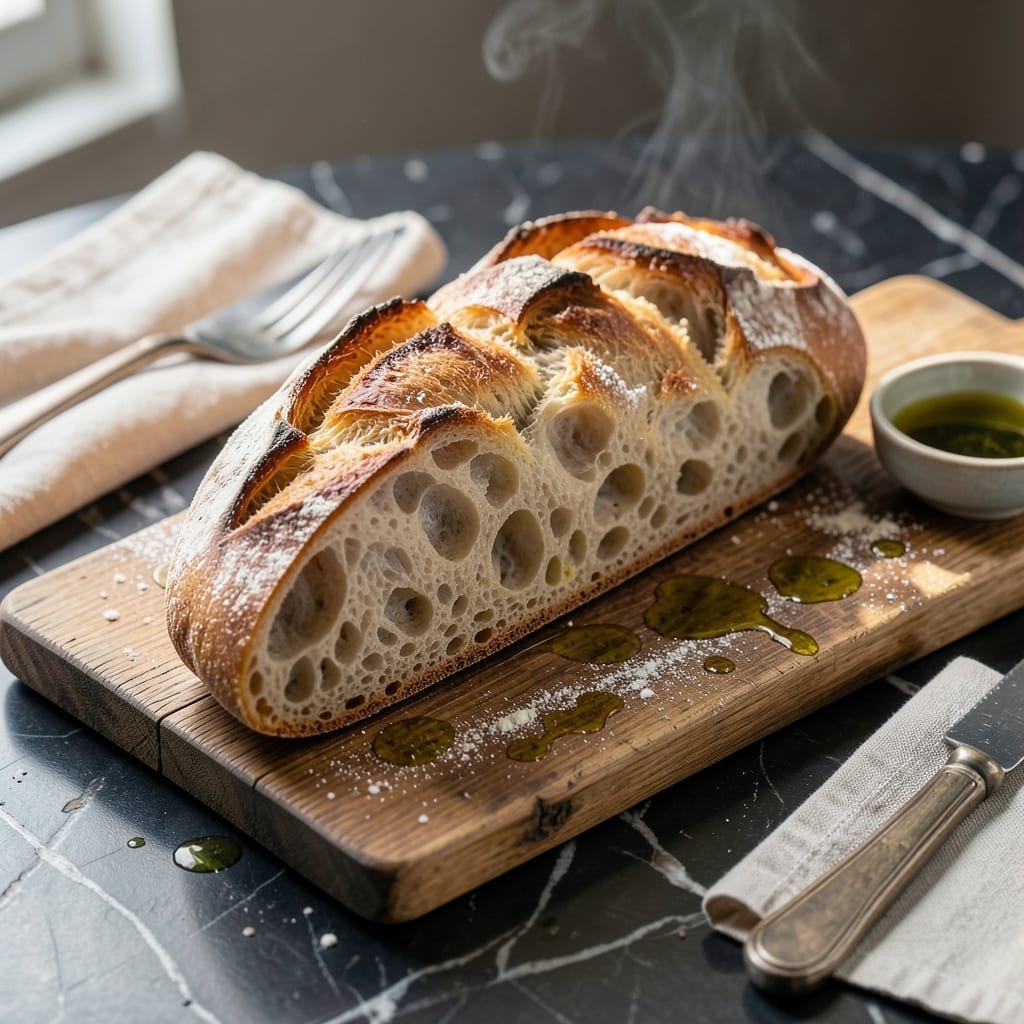
This bread machine method delivers artisan-quality ciabatta with minimal effort. The technique produces an airy interior and crisp crust without hands-on kneading.
Perfect for beginners, the foolproof process uses standard machine settings. You’ll achieve bakery-style results with an open crumb structure every time.
Ingredients for Ciabatta Bread Recipe Bread Machine
These simple ingredients create bakery-quality ciabatta with minimal effort and maximum flavor.
| Ingredient | Amount | Notes |
|---|---|---|
| Bread Flour 🌾 | 3 ¼ cups | High-protein, unbleached preferred |
| Water 💧 | 1 ½ cups | Room temperature, about 80°F |
| Olive Oil 🫒 | 2 tbsp | Extra-virgin for authentic flavor |
| Active Dry Yeast 🍞 | 1 ¼ tsp | Or 1 packet instant yeast |
| Salt 🧂 | 1 ½ tsp | Fine sea salt preferred |
| Sugar 🥣 | 1 tsp | Granulated white sugar |
| Cornmeal 🌽 | 2 tbsp | For dusting pan and loaf |
| All-Purpose Flour 🌾 | ¼ cup | For adjusting dough consistency |
| Milk Powder 🥛 | 1 tbsp | Optional for softer crumb |
| Vital Wheat Gluten 🌾 | 1 tbsp | Optional for chewier texture |
[recipe_ingredient_scaler]
The flour is critical here. King Arthur Bread Flour (available at Whole Foods or Target) delivers the protein content needed for that open crumb structure. Room temperature water activates yeast more effectively than cold—80°F is ideal. Olive oil should be extra-virgin; California Olive Ranch offers consistent quality at grocery stores. Yeast freshness is non-negotiable; test it in warm water first if unsure of its age.
No bread flour? All-purpose flour plus vital wheat gluten works at a ratio of 1 tbsp gluten per cup of flour. Active dry yeast and instant yeast are interchangeable here. For the milk powder, Nested or Hoosier Hill Farm brands dissolve well. Sugar can be omitted, but it helps feed the yeast for a better rise. The cornmeal prevents sticking—Bob’s Red Mill is a reliable choice.
Store flour and yeast in airtight containers in a cool, dark place for up to 6 months. The dough can rest in the refrigerator overnight for enhanced flavor development. Baked loaves keep fresh for 2-3 days at room temperature in a paper bag, or freeze for up to 1 month.
Why You’ll Love This Recipe
- Hands-Off Baking: I just dump the flour, water, olive oil, yeast, and salt in the machine and let it do the work.
- Crispy Chewy Bliss: The olive oil gives it that perfect crisp crust with a soft, airy center.
- Sandwich Superstar: It’s my go-to for paninis, dipping in soup, or just slathering with butter.
- Budget-Friendly Loaf: Five simple ingredients and no fancy tools—honestly, it costs less than store-bought.
Step-by-Step Instructions for Ciabatta Bread Bread Machine
Achieve bakery-quality results with this precise bread machine method for an artisan loaf.
Step 1: Activate the Yeast and Prepare Wet Ingredients
In the bread machine pan, add the 1.5 cups Water first, ensuring it is at room temperature (about 80°F). This temperature activates the yeast without shocking it. Next, add the 2 tbsp Olive Oil—I prefer extra-virgin for its authentic flavor profile.
Sprinkle the 1.25 tsp Active Dry Yeast into the water, allowing it to bloom for 5-10 minutes until it becomes frothy. This step ensures the yeast is active and ready to proof the dough properly. Stir in the 1 tsp Sugar to provide the yeast with a food source for optimal fermentation.
Step 2: Add Dry Ingredients to the Machine
Once the yeast is activated, add the 3.25 cups Bread Flour to the pan. Distribute it evenly to prevent clumping during the mixing phase. Bread flour’s higher protein content is essential for developing the chewy texture characteristic of ciabatta.
Next, add the 1.5 tsp Salt to one corner of the pan and the 1 tbsp Milk Powder and 1 tbsp Vital Wheat Gluten to opposite corners. This spacing prevents the salt from directly contacting the yeast, which could inhibit its activity. The vital wheat gluten enhances the dough’s elasticity for a better open crumb structure.
Step 3: Set the Bread Machine to Dough Cycle
Secure the pan in the bread machine and select the dough cycle. This cycle will handle the mixing and first rise, typically lasting 1 hour 30 minutes to 2 hours. The machine will knead the dough until smooth and elastic, then allow it to rise until doubled in size.
Check the dough consistency after 10 minutes of kneading. If it appears too sticky, add the 0.25 cup All-Purpose Flour, one tablespoon at a time, until the dough forms a soft, slightly tacky ball. If it’s too dry, add water, one teaspoon at a time.
Step 4: Shape and Final Proof the Dough
Once the dough cycle completes, transfer the dough to a lightly floured surface. Gently flatten it into a rectangular shape, approximately 1-inch thick. Ciabatta dough is very wet, so resist the urge to add too much flour—this moisture is key for the open crumb.
Dust a baking sheet with 2 tbsp Cornmeal to prevent sticking and provide a rustic texture. Transfer the shaped dough to the baking sheet, cover with a damp towel, and let it rise in a warm place for 30-45 minutes until puffy and nearly doubled in size.
Step 5: Bake to Golden Perfection
Preheat your oven to 425°F. Once preheated, bake the ciabatta for 20-25 minutes or until the loaf is golden brown and sounds hollow when tapped on the bottom. The high heat encourages a crisp crust and maximum oven spring.
Remove the bread from the oven and transfer it to a wire rack to cool completely. This cooling step is crucial—slicing too soon can result in a gummy texture. Once cooled, your loaf should have a crisp crust, an open crumb, and a light, airy interior.
Pro Tips For Making Ciabatta Bread Recipe Bread Machine
- Check Yeast Freshness: I learned this the hard way—old yeast won’t rise properly, and your ciabatta will turn out dense. Test it in warm water with a pinch of sugar first; if it doesn’t bubble in 5-10 minutes, toss it and grab a new packet.
- Use High-Protein Flour: Skip the all-purpose and go for bread flour with at least 12% protein. The extra gluten gives ciabatta that chewy, open-crumb structure you’re after.
- Don’t Over-Knead: Bread machines can be aggressive, so set yours to the dough cycle and stop it early if the dough looks smooth but still slightly sticky—ciabatta shouldn’t be tough.
- Add Oil Last: Pour the olive oil in after the first minute of kneading. Sounds weird, but it works: the dough absorbs it better, and you avoid a greasy, uneven texture.
Storing and Reheating This Dish
Room Temperature Storage
Let your ciabatta cool completely on a wire rack—about 2 hours. Store in a paper bag at room temperature for up to 2 days. The paper allows just enough airflow to maintain crust crispness while keeping the interior soft. 💡
Freezing for Longer Storage
For longer storage, slice the loaf and wrap individual pieces in plastic wrap, then place in a freezer bag. It’ll keep for up to 1 month at 0°F. I like to freeze half loaves to always have fresh bread on hand.
Reviving Refrigerated Bread
Avoid refrigerating—it dries out bread quickly. If you must, warm slices in a 350°F oven for 5-10 minutes wrapped in foil. This restores moisture better than a microwave.
Reheating Frozen Ciabatta
Preheat oven to 375°F and bake frozen slices directly on the rack for 8-10 minutes. For whole loaves, thaw at room temperature for 2 hours before reheating. Spritz with water before baking for extra crispness. 🔥
Toasting for Breakfast
Day-old ciabatta makes incredible toast. Use a toaster on medium setting or broil for 2-3 minutes until golden. The open crumb structure soaks up butter beautifully.
Nutrition Facts
Frequently Asked Questions
Do I need special flour for this?
Bread flour is ideal for its higher protein content, which creates that signature open crumb. In a pinch, use all-purpose flour with 1 tbsp vital wheat gluten per cup of flour.
Why is my dough so sticky?
Ciabatta dough should be very wet—this moisture creates the airy texture. Resist adding too much flour during shaping, as it can make the bread dense. Lightly oil your hands instead.
Can I bake it directly in the machine?
No, bread machines don’t get hot enough for ciabatta’s crisp crust. Always finish in a preheated oven at 425°F for 20-25 minutes.
How do I get a crispier crust?
Bake on a preheated pizza stone or place a tray of water in the oven. Spritz the loaf with water before baking for extra crunch.

Trained in classic French technique but raised on slow-cooked ribs and spicy rubs, she blends culinary skill with smoke and soul.
- Recipe for Boneless Pork Chops in Cast Iron Skillet: Sear and Baste to Juicy Perfection - October 3, 2026
- Recipe for Boneless Cross Rib Roast: Slow-Roasted Beef with Herb Crust - October 3, 2026
- Hamburgers in Sauce Recipe Crock Pot: Slow-Cooked Savory Delight - October 3, 2026