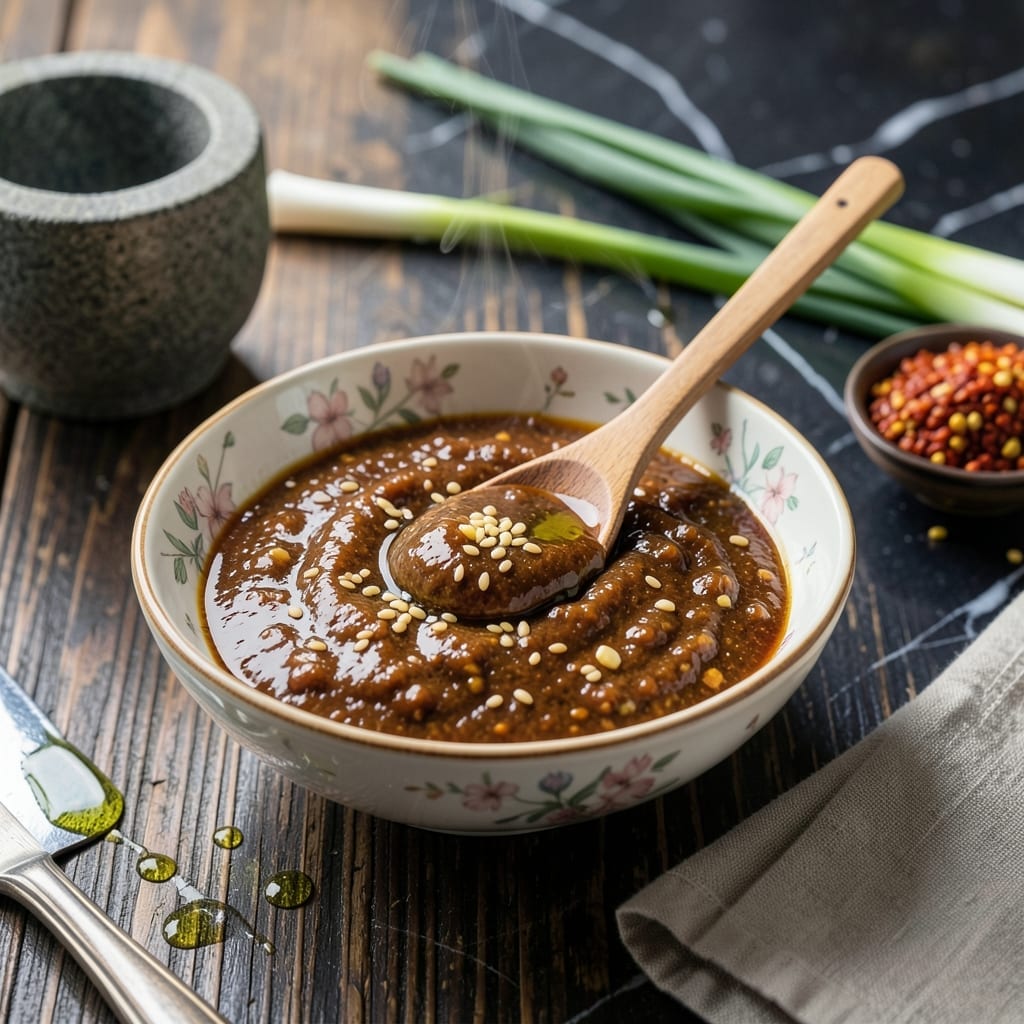
This Korean BBQ sauce strikes the perfect balance between sweet and spicy with a deep umami foundation.
With gochujang as the base, it delivers complex heat while soy sauce and sugar create that signature caramelized glaze. The blend is versatile for marinating, brushing, or dipping.
Ingredients for Cj Korean Bbq Sauce
Nine ingredients create that signature sweet, spicy, umami-rich Korean BBQ sauce glaze.
| Ingredient | Amount | Notes |
|---|---|---|
| Gochujang 🌶️ | ½ cup | Korean fermented chili paste |
| Soy Sauce 🥢 | ¼ cup | Low-sodium preferred for balance |
| Brown Sugar 🍚 | ¼ cup | Packed for sweetness depth |
| Rice Vinegar 🍶 | 2 tbsp | For bright acidity |
| Sesame Oil 🫒 | 1 tbsp | Toasted for nutty aroma |
| Garlic Cloves 🧄 | 4 cloves | Minced for pungent kick |
| Fresh Ginger 🌿 | 1 tbsp | Finely grated for warmth |
| Sesame Seeds 🌰 | 1 tsp | Toasted for garnish |
| Green Onions 🧅 | 2 whole | Thinly sliced for freshness |
[recipe_ingredient_scaler]
Gochujang is non-negotiable here—look for CJ brand at Korean markets or H Mart for authentic heat and depth. The soy sauce should be low-sodium to control salt levels; Kikkoman works well. Brown sugar adds caramelization, but coconut sugar (at 1:1 ratio) deepens the molasses notes. Always check the rice vinegar label—seasoned varieties can add unwanted sweetness.
No gochujang? Sriracha plus miso paste (3:1 ratio) mimics the heat and umami, though the flavor profile shifts. Swap brown sugar for honey or maple syrup if needed. The sesame oil must be toasted—light sesame oil lacks the nutty punch. Fresh ginger is ideal, but ground ginger at half the amount works in a pinch.
Sauce keeps 1 week refrigerated in a sealed jar. For longer storage, freeze in ice cube trays—thaw only what you need. The flavors meld overnight, so make it a day ahead if possible.
Why You’ll Love This Recipe
- 5-Minute Magic: I just dump gochujang, soy sauce, and brown sugar in a bowl—no cooking, no fuss.
- Sweet-Spicy Kick: The brown sugar mellows the gochujang’s heat while sesame oil adds that deep, nutty finish.
- Marinade or Dip: I slather it on chicken for grilling or use it as a dipping sauce for dumplings.
- Stays Fresh: Honestly, it keeps in the fridge for weeks, so I always have some ready for last-minute meals.
Step-by-Step Instructions for CJ Korean BBQ Sauce
Master this balanced blend of sweet, spicy, and umami flavors with precise technique.
Step 1: Sauté Aromatics for Depth
Heat the 1 tbsp Sesame Oil in a saucepan over medium heat until it shimmers. Add the 4 cloves Garlic Cloves and 1 tbsp Fresh Ginger, stirring constantly for 30-45 seconds until fragrant but not browned.
This brief sauté softens the pungency of raw garlic and ginger while releasing their essential oils. Watch carefully—they burn quickly. You want a golden bloom, not dark specks. Remove from heat immediately if they start to color.
The toasted sesame oil enhances the nutty undertones that define this sauce’s character. This foundation step builds complexity before adding the liquid components.
Step 2: Combine Liquid Components
To the same saucepan, add the 0.5 cup Gochujang, 0.25 cup Soy Sauce, 0.25 cup Brown Sugar, and 2 tbsp Rice Vinegar. Stir vigorously to dissolve the packed brown sugar into the thick gochujang paste.
The gochujang’s deep red hue will dominate initially. As the sugar dissolves, the mixture transforms into a glossy, mahogany-colored liquid. Maintain medium-low heat to prevent scorching—gochujang burns easily due to its sugar content.
This combination creates the perfect balance: the gochujang provides heat and fermented depth, the soy sauce adds saltiness, the brown sugar contributes caramelized sweetness, and the rice vinegar offers bright acidity to cut through the richness.
Step 3: Simmer and Thicken
Reduce heat to low and let the mixture simmer gently for 8-10 minutes, stirring occasionally. The sauce should thicken slightly, coating the back of a spoon with a velvety sheen.
During this time, the flavors meld and deepen. The vinegar’s sharpness mellows, the sugar caramelizes subtly, and the gochujang’s fermented complexity becomes more pronounced. Small bubbles will form at the edges—this is normal.
If the sauce reduces too quickly or becomes too thick, add 1-2 tsp water to achieve your desired consistency. The final product should be pourable but thick enough to cling to meats or vegetables.
Step 4: Finish and Garnish
Remove the saucepan from heat and let the mixture cool for 5 minutes. Stir in the 1 tsp Sesame Seeds, reserving a pinch for garnish. The residual heat will toast the seeds slightly, enhancing their nutty flavor.
Transfer the sauce to a serving bowl and sprinkle with the remaining sesame seeds and the 2 whole Green Onions, thinly sliced. The green onions add a fresh, slightly sharp contrast to the rich, developed flavors of the sauce.
Taste and adjust seasoning if needed, though the careful balance of ingredients typically requires no modification. Serve warm or at room temperature with your choice of grilled proteins or vegetables.
Pro Tips For Making Cj Korean Bbq Sauce
- Bloom the Gochujang: Heat the gochujang in the pan for 1-2 minutes before adding liquids—this deepens its flavor and removes the raw paste taste. I learned this the hard way after my first batch tasted flat.
- Dissolve the Sugar: Whisk the brown sugar into the warm rice vinegar first to break up clumps. Sounds fussy, but nothing ruins a smooth sauce like gritty sugar.
- Skip the High Heat: Keep the sauce at a gentle simmer, not a boil, or the soy sauce will reduce too fast and turn bitter. After scorching a batch, I now use medium-low and stir often.
- Finish with Sesame Oil: Stir in the sesame oil at the very end, off the heat, to preserve its nutty aroma. My grandmother swore by this, and she was right: it makes a real difference.
Pro Cooking Tips for cj korean bbq sauce
🔥 Master the Heat
For the best CJ Korean BBQ sauce, simmer on medium-low heat to avoid burning the sugars. Stir frequently to ensure even cooking and prevent sticking. A heavy-bottomed pan helps distribute heat evenly, so your sauce develops deep, caramelized flavors without scorching.
⏰ Timing Secrets
Patience is key! Let the sauce reduce for 10-15 minutes to thicken naturally. If it’s too thin, extend the cooking time slightly, but avoid rushing with high heat. For a glossy finish, remove it from heat just as it coats the back of a spoon.
💡 Flavor Boosters
Enhance umami by adding a splash of soy sauce or a pinch of gochugaru (Korean chili flakes) for extra depth. Taste as you go—adjust sweetness with honey or acidity with rice vinegar. Fresh garlic and ginger elevate the sauce’s aroma and complexity.
✨ Texture Tips
For a smoother sauce, blend or strain it after cooking. If you prefer a chunkier texture, finely mince ingredients like onions or garlic. A final drizzle of sesame oil adds a silky finish and authentic Korean flair.
Nutrition Facts

Trained in classic French technique but raised on slow-cooked ribs and spicy rubs, she blends culinary skill with smoke and soul.
- Recipe for Boneless Pork Chops in Cast Iron Skillet: Sear and Baste to Juicy Perfection - October 3, 2026
- Recipe for Boneless Cross Rib Roast: Slow-Roasted Beef with Herb Crust - October 3, 2026
- Hamburgers in Sauce Recipe Crock Pot: Slow-Cooked Savory Delight - October 3, 2026