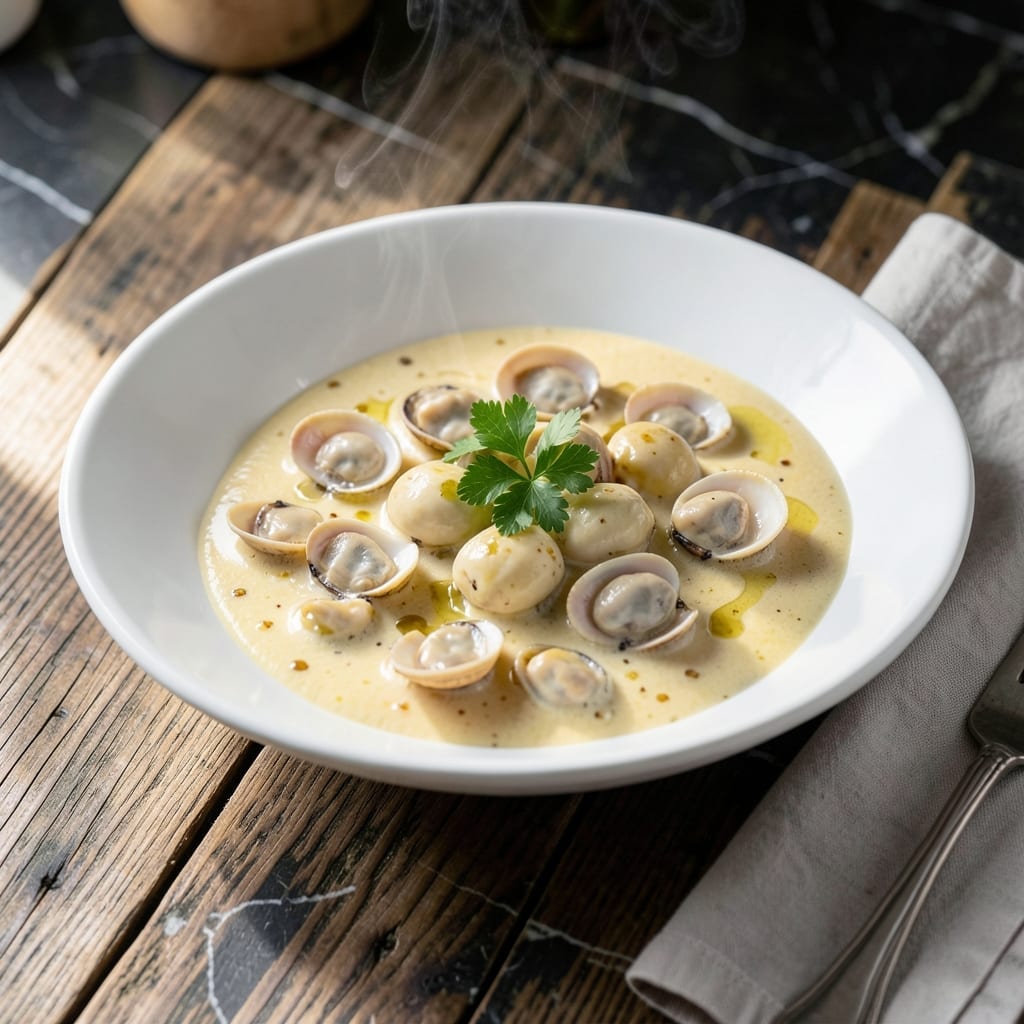
This sauce transforms canned clams into a restaurant-quality pasta topping with minimal effort. The key is balancing briny clam juice with garlic, white wine, and a touch of cream.
Ready in 20 minutes, it delivers sophisticated flavor without fresh seafood. Serve over linguine for an authentic Italian-inspired meal.
Ingredients for Clam Sauce Recipe with Canned Clams
Transform canned clams into restaurant-quality sauce with these ten essential ingredients.
| Ingredient | Amount | Notes |
|---|---|---|
| Canned Clams 🦪 | 2 cans | 6.5 oz each, undrained |
| Clam Juice 💧 | ½ cup | Reserved from canned clams |
| Unsalted Butter 🧈 | ¼ cup | Divided for cooking layers |
| Garlic Cloves 🧄 | 4 cloves | Minced for aromatic base |
| Dry White Wine 🍷 | ½ cup | Sauvignon Blanc or Pinot Grigio |
| Heavy Cream 🥛 | ¼ cup | Full-fat for richness |
| All-Purpose Flour 🌾 | 1 tbsp | For light thickening |
| Fresh Parsley 🌿 | 2 tbsp | Finely chopped for garnish |
| Red Pepper Flakes 🌶️ | ¼ tsp | Crushed, for subtle heat |
| Kosher Salt 🧂 | ½ tsp | Diamond Crystal preferred |
| Freshly Ground Black Pepper 🌶️ | ¼ tsp | Coarse grind for texture |
[recipe_ingredient_scaler]
The canned clams are non-negotiable here. Bumble Bee or Snow’s brands maintain briny integrity without metallic aftertaste. Ensure cans are packed in clam juice, not water—this liquid gold forms the sauce base. Fresh clams won’t improve this; canned delivers consistent quality. For the wine, any crisp dry white with citrus notes complements the seafood perfectly.
No white wine? Substitute with clam juice plus lemon zest for acidity. Heavy cream can be replaced with half-and-half at double the volume, though richness suffers. Unsalted butter is essential—salted throws off the delicate balance. For a gluten-free version, cornstarch slurry replaces the flour thickener effectively. Fresh parsley is ideal, but dried at one-third the amount works.
Sauce keeps 3-4 days refrigerated but freezes poorly due to cream separation. Always use within 2 hours of preparation for best texture. Clam juice can be frozen separately for 2 months if you’re batching sauces. Reheat gently—boiling breaks the emulsion.
Why You’ll Love This Recipe
- I’ll be real: a $2 can of clams plus shelf-stable wine means gourmet taste without a grocery run.
- Open and Serve: I just dump in the canned clams and juice—no shucking, no mess, dinner starts in seconds.
- Garlic-Butter Bliss: The butter and garlic melt into the wine, and the clams soak it all up like flavor sponges.
- Weeknight Lifesaver: Between us, this sauce clings to pasta or crusty bread equally well, so I can switch it up without thinking.
Step-by-Step Instructions for Clam Sauce With Canned Clams
This method ensures a rich, briny sauce with perfectly balanced flavors and velvety texture.
Step 1: Sauté Aromatics in Butter Base
Melt ¼ cup Unsalted Butter in a large skillet over medium heat until it foams but doesn’t brown. Add the 4 cloves Garlic Cloves and ¼ tsp Red Pepper Flakes, stirring constantly for 30-45 seconds until the garlic turns fragrant and just golden.
Watch the heat closely—garlic burns easily and can turn bitter. The red pepper flakes will infuse the butter with subtle warmth, but they shouldn’t darken. This aromatic base is the foundation of your sauce, so take care to develop the flavors without rushing.
Step 2: Build the Sauce with Wine and Clam Juice
Pour in the ½ cup Dry White Wine, scraping up any browned bits from the bottom of the pan. Simmer for 2-3 minutes until the liquid reduces by half and the alcohol smell dissipates.
Add the ½ cup Clam Juice and bring to a gentle simmer. The clam juice adds a deep, briny essence that’s essential for authentic flavor. Let it cook for 3-4 minutes until the mixture is slightly reduced and the flavors begin to meld.
Step 3: Incorporate Clams and Thicken the Sauce
Stir in the 1 tbsp All-Purpose Flour to create a light roux, cooking for 1 minute to eliminate any raw taste. This small amount of flour will thicken the sauce without making it heavy.
Add the 2 cans Canned Clams (undrained) and stir gently to combine. Cook for 2-3 minutes until the clams are heated through and the sauce begins to coat the back of a spoon. Avoid over-stirring to keep the clams intact.
Step 4: Finish with Cream and Seasonings
Reduce the heat to low and stir in the ¼ cup Heavy Cream. Simmer for 1-2 minutes until the sauce is smooth and slightly thickened. The cream adds a luxurious richness that balances the briny clams.
Season with ½ tsp Kosher Salt and ¼ tsp Freshly Ground Black Pepper, tasting as you go. The clams and clam juice are already salty, so adjust cautiously. Finish by stirring in 2 tbsp Fresh Parsley for a bright, fresh note.
Pro Tips For Making Clam Sauce Recipe With Canned Clams
- Sauté Garlic Low: Cook the garlic over medium-low heat until just fragrant—about 1-2 minutes. Any hotter and it’ll turn bitter before the clams even hit the pan.
- Drain But Save Juice: Drain the canned clams but reserve every drop of that briny juice. It adds depth that water or broth just can’t match, and you’ll need about ½ cup for the sauce.
- Skip the Overcook: Add the clams at the very end and just warm them through—30 seconds max. They’re already cooked, and rubbery clams ruin the dish.
- Deglaze With Wine: After sautéing garlic, pour in the white wine and scrape up those browned bits. It’s where the big flavor hides, and it only takes a minute.
Essential Equipment for This Dish
Must-Have Tools
To make a smooth and flavorful clam sauce, start with a medium saucepan or deep skillet for even heat distribution. A wooden spoon helps stir without scratching your cookware, while a chef’s knife and cutting board are essential for prepping garlic, shallots, or herbs. 🥘🔥
Nice-to-Have
For a restaurant-quality finish, consider a microplane to zest lemon or grate Parmesan. A fine-mesh strainer ensures a silky texture if you prefer to filter out any grit from the canned clams. A garlic press can also save time and add consistent flavor.
Budget Alternatives
No fancy tools? No problem! Use a regular knife for mincing and a whisk to blend the sauce. A colander works in place of a strainer, and any sturdy pot will do if you don’t have a saucepan. The key is simplicity and great ingredients!
Nutrition Facts

Trained in classic French technique but raised on slow-cooked ribs and spicy rubs, she blends culinary skill with smoke and soul.
- Recipe for Boneless Pork Chops in Cast Iron Skillet: Sear and Baste to Juicy Perfection - October 3, 2026
- Recipe for Boneless Cross Rib Roast: Slow-Roasted Beef with Herb Crust - October 3, 2026
- Hamburgers in Sauce Recipe Crock Pot: Slow-Cooked Savory Delight - October 3, 2026