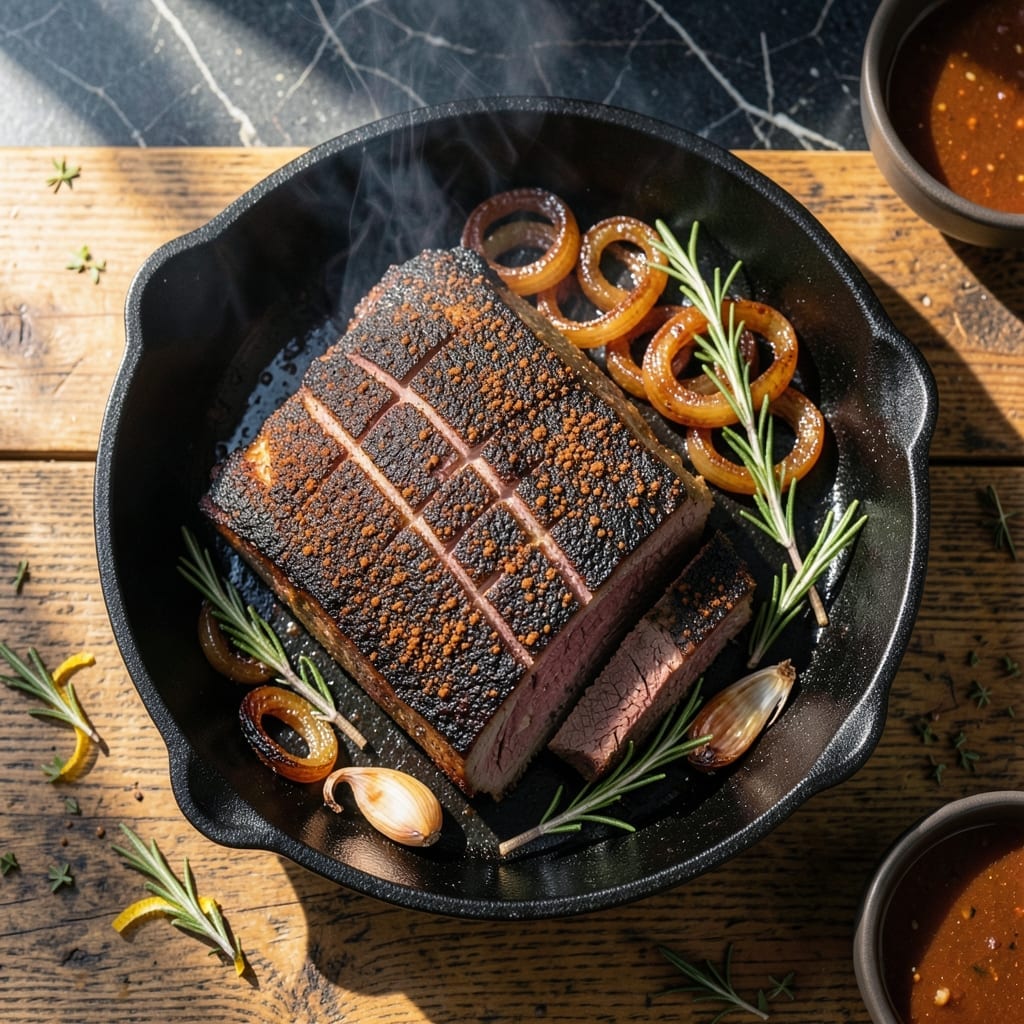
This Texas-style brisket delivers the tender, smoky results that define great barbecue. The key lies in patience and precision—low heat over many hours transforms tough meat into something extraordinary.
I’ve refined this method through countless cooks, focusing on simple techniques that yield consistent perfection. A well-seasoned rub, steady temperature, and proper resting time ensure every slice is juicy and flavorful.
The final product features a dark, caramelized bark on the outside and moist, fall-apart meat inside. This is the kind of brisket that earns compliments at any gathering.
Mastering this dish takes time, but the reward is a tender centerpiece worth the effort. Let’s begin the process.
Ingredients for Claude’s Brisket
Whole packer brisket and a bold dry rub deliver that signature Texas-style bark and tenderness.
| Ingredient | Amount | Notes |
|---|---|---|
| Beef Brisket 🥩 | 4 lb | Whole packer cut preferred |
| Kosher Salt 🧂 | ¼ cup | Diamond Crystal preferred |
| Coarse Black Pepper 🌶️ | ¼ cup | Freshly ground for best flavor |
| Paprika 🌶️ | 2 tbsp | Sweet or smoked variety |
| Garlic Powder 🧄 | 1 tbsp | Not garlic salt |
| Onion Powder 🧅 | 1 tbsp | Fresh ground preferred |
| Brown Sugar 🍚 | 2 tbsp | Light or dark variety |
| Chili Powder 🌶️ | 1 tbsp | Adjust for heat preference |
| Cumin 🌿 | 1 tbsp | Ground, for depth of flavor |
| Mustard Powder 🟡 | 1 tbsp | Enhances bark formation |
| Olive Oil 🫒 | 2 tbsp | For binding rub |
| Apple Cider Vinegar 🍏 | ½ cup | For spritzing during cook |
| Hickory Wood Chunks 🪵 | 4 pieces | For authentic smoke flavor |
[recipe_ingredient_scaler]
The brisket cut is non-negotiable. Whole packer (point and flat together) yields the best results—avoid pre-trimmed cuts as they dry out faster. Costco and Whole Foods carry quality brisket; look for USDA Prime or Choice grades with good fat marbling. The fat cap should be at least 1/4 inch thick to protect the meat during the long cook. Always let the meat temper at room temperature for an hour before seasoning.
Substitutions are limited but possible. No paprika? Use extra chili powder. Out of cumin? A pinch of coriander can stand in. Mustard powder can be omitted, but it contributes to the bark’s structure. For the wood, oak or pecan work as well as hickory. The vinegar spritz can be replaced with apple juice for a sweeter profile (just dilute with water).
Store the raw brisket in the fridge for up to 3 days before cooking, or freeze for 6 months. The dry rub keeps indefinitely in an airtight container. Once cooked, brisket holds beautifully—rest it wrapped in a towel for 1-2 hours before slicing, then refrigerate leftovers for up to 5 days.
Why You’ll Love This Recipe
- Set It and Forget: I rub the brisket with salt, pepper, paprika, and garlic powder, then let the oven do all the work for hours.
- Smoky Depth: That paprika and garlic crust forms a bark so flavorful, it steals the show every time.
- Feeds the Crew: One brisket means leftovers for sandwiches, tacos, or a second dinner—no extra cooking needed.
- Budget Winner: A single affordable brisket stretches across multiple meals, making my grocery bill smile.
Step-by-Step Instructions for Texas-Style Smoked Brisket
Here’s the method I’ve perfected for achieving that ideal balance of bark and tenderness.
Step 1: Apply the Rub to the Beef Brisket
Begin by patting the 4 lb Beef Brisket completely dry with paper towels. This ensures the rub adheres properly and creates a superior bark. In a bowl, combine the 0.25 cup Kosher Salt, 0.25 cup Coarse Black Pepper, 2 tbsp Paprika, 1 tbsp Garlic Powder, 1 tbsp Onion Powder, 2 tbsp Brown Sugar, 1 tbsp Chili Powder, 1 tbsp Cumin, and 1 tbsp Mustard Powder.
Drizzle the 2 tbsp Olive Oil over the brisket, then apply the rub mixture generously, pressing it into the meat so it forms a thick, even coating on all sides. The oil helps the spices stick and promotes even browning. Let the seasoned brisket rest at room temperature for 45-60 minutes while you prepare your smoker.
Step 2: Prepare the Smoker with Hickory Wood
Set up your smoker for indirect heat, maintaining a consistent temperature of 225-250°F. Use the 4 pieces Hickory Wood Chunks as your primary smoke source—hickory provides the robust, classic flavor essential for authentic Texas-style brisket. Place a water pan in the smoker to maintain moisture during the long cook.
Wait until you see clean, thin blue smoke before adding the brisket. Thick white smoke indicates incomplete combustion and will impart a bitter flavor. Position the brisket fat-side up on the grill grates, as the rendering fat will baste the meat throughout the cooking process.
Step 3: Smoke and Spritz for Bark Development
Smoke the brisket undisturbed for the first 4-5 hours. After this initial period, begin spritzing the brisket every 45-60 minutes with the 0.5 cup Apple Cider Vinegar mixed with equal parts water. This keeps the surface moist, enhances bark formation, and adds a subtle tang that balances the rich meat.
Monitor the smoker temperature closely, adjusting as needed to maintain that 225-250°F range. The spritzing step is crucial—it prevents the brisket from drying out and helps build that coveted dark, flavorful crust. Continue this process until the brisket reaches an internal temperature of 165-170°F.
Step 4: Wrap and Finish the Cook
Once the brisket hits 165-170°F, it will likely stall as moisture evaporates. Wrap the brisket tightly in pink butcher paper to push through this phase. The paper allows the brisket to breathe while retaining moisture, preserving the bark you’ve worked so hard to develop.
Return the wrapped brisket to the smoker and continue cooking until it reaches an internal temperature of 200-205°F and a probe slides in like butter. This typically takes an additional 4-6 hours, but rely on the probe test rather than time. The brisket is done when it’s probe-tender throughout, not just in one spot.
Step 5: Rest and Slice Against the Grain
Remove the brisket from the smoker and let it rest, still wrapped, in a cooler or warm oven for at least 1 hour (up to 2 hours for best results). This resting period allows the juices to redistribute, ensuring every slice is moist and flavorful.
Unwrap the brisket and separate the flat from the point if needed. Slice against the grain into ¼-inch thick slices, adjusting your angle as the grain direction changes. Serve immediately while still warm—the meat should pull apart easily with a gentle tug, showcasing the perfect tenderness that defines great brisket.
Pro Tips For Making Claude’S Brisket
- Salt Overnight: I learned this the hard way—dry-brining the brisket with kosher salt 12-24 hours before cooking actually changes the outcome. It seasons deep into the meat and helps form that perfect crust.
- Low and Slow: After burning a brisket by rushing it, I finally figured out: keep the smoker or oven at 225°F and give it 1-1.5 hours per pound. Any hotter and the fat won’t render properly.
- Skip the Fresh Garlic: Sounds weird, but it works: stick to garlic powder in the rub. Fresh garlic can burn and turn bitter during the long cook, while the powder blends right into the bark.
- Rest Under Foil: My grandmother swore by this, and she was right: pull the brisket at 195°F, wrap it in foil, and let it rest for at least an hour. It’ll hold heat and redistribute juices without drying out.
Storing and Reheating This claudes brisket
Refrigerator Storage
After your cook, let the brisket cool to room temperature before storing. I transfer slices to airtight containers or wrap the whole brisket in plastic wrap followed by aluminum foil. It keeps beautifully in the fridge at 40°F or below for 4-5 days. 🥩
Freezer Storage
For longer storage, wrap slices or the whole brisket tightly in plastic wrap, then freezer paper, and place in a gallon freezer bag. Squeeze out all air to prevent freezer burn. This method preserves quality for up to 3 months without significant texture loss.
Stovetop Reheating
My preferred method for maintaining moisture is reheating on the stovetop. Add brisket slices to a skillet with ¼ cup beef broth or water, cover, and warm over low heat for 5-7 minutes. Stir occasionally to distribute the juices evenly. ✨
Oven Reheating
Preheat your oven to 325°F. Wrap the brisket in aluminum foil with 2 tbsp apple cider vinegar or broth, then place on a baking sheet. Heat for 20-30 minutes until the internal temperature reaches 165°F. This method works well for larger portions.
Microwave Reheating
For quick meals, place individual portions on a microwave-safe plate, add 1 tbsp water or broth, and cover with a damp paper towel. Heat on 50% power for 1-2 minutes, then check and repeat if needed. This prevents drying out.
Nutrition Facts
Frequently Asked Questions
What’s the ideal smoker temperature?
Maintain a steady 225-250°F throughout the cook. This low-and-slow approach ensures tender meat without drying it out.
Can I use a different wood than hickory?
Oak or pecan work well too. Each wood adds a unique flavor profile, but hickory delivers that classic Texas taste.
How long should I rest the brisket?
Rest it wrapped for 1-2 hours. This lets juices redistribute, ensuring every slice stays moist and flavorful.
What if my brisket stalls early?
Don’t panic—this is normal! Wrap it in butcher paper and push through. The stall can last 2-4 hours as moisture evaporates.

Trained in classic French technique but raised on slow-cooked ribs and spicy rubs, she blends culinary skill with smoke and soul.
- Recipe for Boneless Pork Chops in Cast Iron Skillet: Sear and Baste to Juicy Perfection - October 3, 2026
- Recipe for Boneless Cross Rib Roast: Slow-Roasted Beef with Herb Crust - October 3, 2026
- Hamburgers in Sauce Recipe Crock Pot: Slow-Cooked Savory Delight - October 3, 2026